

In New York, the success of a pop-up shop depends not only on the neighbourhood but also on the specific street you choose. Even within the same area, streets can vary dramatically in terms of foot traffic, demographics, visibility, and brand synergy. Choosing the right street ensures your pop-up reaches the right audience and achieves its sales, marketing, and experiential goals.
For a full overview of launching a New York pop-up shop, start with our Complete Guide.
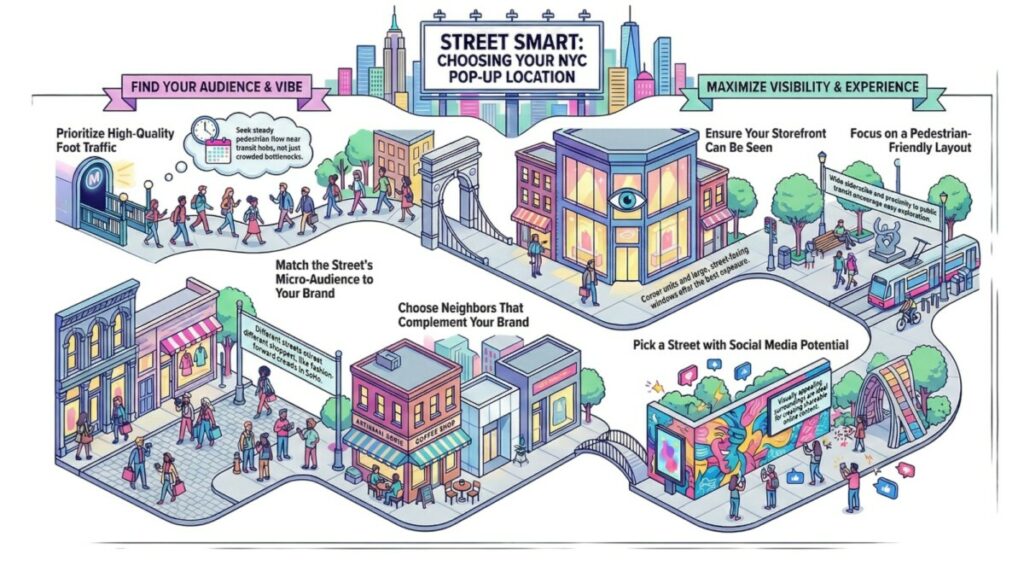
1. Footfall Matters
The number and type of pedestrians passing your store directly impacts sales and brand awareness. Key points to consider:
- High-traffic streets: Streets near subway stops or major intersections naturally attract more visitors.
- Flow vs. congestion: Look for streets with steady movement rather than crowded bottlenecks.
- Peak times: Observe when your target audience is most likely to be in the area, whether weekday evenings or weekend afternoons.
Explore high-footfall areas across New York: Search all NYC pop-up spaces.
2. Align Streets With Your Audience
Every neighbourhood has micro-audiences, and streets can vary significantly:
- SoHo: Streets like Greene, Mercer, and Prince attract fashion-forward shoppers and tourists seeking premium, design-led brands. (Explore SoHo spaces)
- Lower East Side: Ludlow, Orchard, and Allen Street bring culturally engaged, independent-minded shoppers. (Browse LES spaces)
- Chelsea: Washington Street and side streets near galleries draw art and lifestyle-focused consumers. (Discover Chelsea spaces)
Consider how your product and brand personality align with the street’s existing audience.
3. Visibility and Storefront Exposure
A great street is one where your store can be seen and accessed easily:
- Corner units: Offer multiple sightlines and more exposure to passing pedestrians.
- Street-facing windows: Allow you to showcase hero products and create a compelling first impression.
- Signage opportunities: Check local rules for banners or sidewalk displays to increase visibility.
See practical examples of storefront design in: New York Window Displays: Creating a Storefront That Stops Footfall.
4. Neighbourhood Dynamics and Brand Synergy
Choosing a street with complementary businesses can boost your pop-up’s performance:
- Nearby cafés or lifestyle shops can increase footfall through synergy.
- Streets with creative studios or galleries attract audiences receptive to experimental retail.
- Avoid streets dominated by unrelated large retailers where your brand might get lost.
For a neighbourhood overview, read: The Best Neighborhoods for a Pop-Up Shop in New York (2026 Ranking).
5. Consider Street Layout and Accessibility
The physical characteristics of a street affect customer experience:
- Pedestrian-friendly zones: Streets with wide sidewalks encourage window-shopping and exploration.
- Accessibility: Proximity to public transit, parking, and bike racks matters.
- Safety and lighting: Well-lit streets make visitors comfortable during evening activations.
Browse accessible streets: Union Square retail spaces.
6. Seasonal and Event-Based Considerations
Some streets benefit from temporary spikes in foot traffic due to events, markets, or cultural happenings:
- Art fairs, fashion weeks, and food festivals can provide built-in audiences.
- Consider local calendar events when planning short-term activations.
- Align your pop-up timing to capitalise on these bursts of traffic.
For seasonal opportunities: Seasonal Pop-Up Opportunities in New York.
7. Rental Rates and Negotiation
Street choice impacts rental costs:
- Prime streets with heavy foot traffic command premium rents.
- Secondary streets or side streets often offer budget-friendly options without compromising engagement.
- Always factor in fit-out costs, signage, and any seasonal surcharges.
See detailed budgeting tips: How Much Does It Cost to Run a Pop-Up Shop in New York?.
8. Legal Considerations by Street
Some streets may have specific rules or permitting requirements:
- Check for Temporary Event Notices or permits for signage.
- Public liability insurance requirements remain consistent but confirm any street-specific guidelines.
- Consult local authorities or your landlord to ensure compliance.
Full guidance: New York Pop-Up Shop Regulations: Permits, Licences & Legal Requirement
9. Operational Practicalities
Different streets present operational challenges:
- Loading zones and freight access impact deliveries.
- Storage nearby is crucial if your pop-up runs multiple days.
- Staff accessibility and public transport for employees matter for longer activations.
Learn more: Running a Pop-Up Shop in New York: Daily Operations Guide.
10. Marketing Potential of Your Street
A carefully selected street can amplify your marketing efforts:
- Streets with visually appealing surroundings are ideal for social media content.
- Proximity to influencers, photographers, or bloggers increases organic coverage.
- Use street-specific hashtags and geotags to reach local audiences.
See full marketing strategies: How to Build Buzz for Your New York Pop-Up Shop Before Opening
11. Measuring Street Impact
After your pop-up, evaluate how the street influenced results:
- Compare footfall against similar activations in other streets.
- Track conversions and dwell times to measure engagement.
- Collect visitor feedback to understand what attracted them to your location.
Support your analysis with: Pop-Up Shop KPIs: What to Track in a New York Activation
12. Next Steps After Choosing a Street
Once your street is selected and your pop-up launched:
- Test multiple streets over time to determine the optimal location strategy.
- Consider adjacent streets for expansion or recurring activations.
- Share insights with your team to inform future neighbourhood and street choices.
Additional resources:
- Starting Your First Pop-Up Shop in New York: A Step-by-Step Guide
- The Best Neighborhoods for a Pop-Up Shop in New York (2025 Ranking)
Final Thoughts
Choosing the right street can make or break a New York pop-up. By evaluating footfall, audience fit, visibility, and operational factors, brands can optimise their location to drive sales, build awareness, and create memorable experiences. Careful planning ensures each activation contributes meaningfully to your broader retail strategy.
For complete planning and operational guidance, refer to the Complete Guide.

- How Much Does It Cost to Rent an Art Gallery? - February 26, 2026
- Shoreditch Neighborhood London Guide: London’s Hipster Hangout and Pop-Up Capital - February 26, 2026
- Pop-Up Shop Strategies by Industry: How Different Sectors Use Temporary Retail - February 25, 2026
Related posts:
 New York Fashion Week Reinvents Itself
 SoHo NYC Neighborhood Guide: Retail, Fashion & Pop-Up Shop Opportunities
 Nolita Neighborhood Guide: The Vibrant Heart of New York
 Chelsea London Area Guide: The Complete Chelsea Shopping Guide for Brands and Pop-Up Shops
 Pop Up Shops in Chicago: The Complete Guide to Opening a Temporary Retail Space