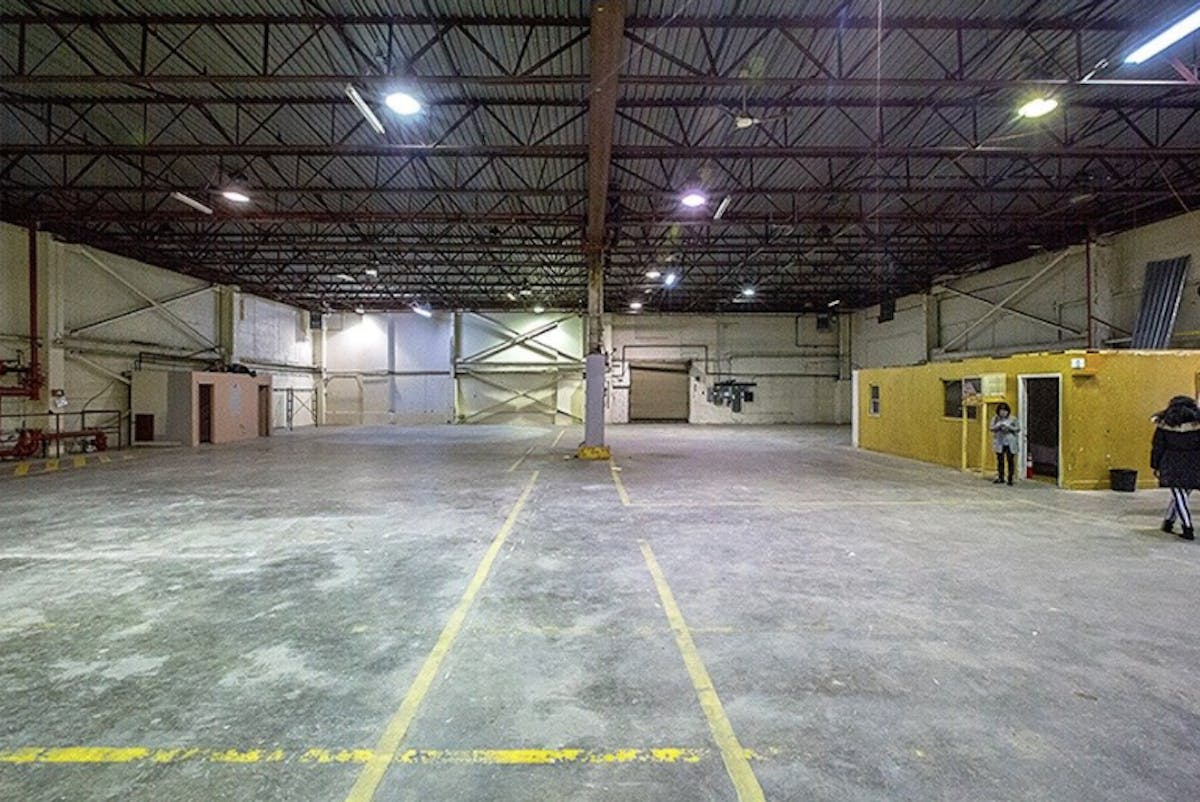



Warehouse space for rent in New York is a short-term or flexible-lease industrial or converted commercial floor, typically offering high ceilings, open column spans, and loading access, rented for retail pop-ups, showrooms, events, fulfillment, or production.
New York's warehouse rental market is fragmented by borough and neighborhood. Each zone has its own building stock, transit profile, and typical tenant mix, so the right neighborhood depends on what you are doing in the space, not just where you want to be.
For warehouse space across New York, use the listings above to filter by size, amenities, and availability.
Warehouse Space by Use Case
Matching the space to the activity is the first decision. Building stock and neighborhood tend to follow from it.
Pop-up retail and brand activations need street-level access, a ground-floor or highly visible entrance, and ceilings high enough to build a temporary fit-out inside. SoHo's cast-iron loft buildings offer wide frontage and height on a high-footfall corridor. Long Island City and Williamsburg carry converted industrial buildings with large, open ground floors suited to flagship-scale events and product launches.
Art installations and exhibitions call for column-free or minimal-column interiors, white or neutral walls, and flexible lighting capacity. Chelsea's gallery district, concentrated in the West 20s, offers large column-free floors in buildings configured for exactly this use. Red Hook and Williamsburg also carry raw industrial space with the ceiling heights and open spans that art installations require.
Showrooms and trade presentations concentrate around the fashion weeks in February and September. The Garment District holds buildings configured for wholesale and market appointments, with upper-floor spaces suited to trade use rather than walk-in customers. SoHo and Chelsea also absorb showroom demand during those periods.
Short-term storage and fulfillment favor outer-borough locations with loading docks, 24-hour access, and easier vehicle access than Manhattan allows. Sunset Park and Long Island City are the two areas with the highest concentration of logistics-oriented stock in the city.
Photo and video production typically needs high ceilings, power capacity, and parking nearby. Red Hook carries raw industrial space with the physical specs production work requires, at rates that run below Manhattan and Williamsburg.
Where to Rent Warehouse Space in New York
The neighborhoods below represent the main clusters for warehouse space rental in New York. Each reads differently depending on what you are doing there.
-
SoHo (Manhattan): The cast-iron loft buildings here were built for manufacturing and converted for commercial use. Ground-floor frontages are wide, ceilings are high, and the street draws some of the densest retail footfall in the city. It is the first address for pop-up retail and brand activations that need visibility over volume. Rates run higher here than anywhere else in the city.
-
Chelsea (Manhattan): The gallery district in the West 20s offers large, column-free floors in buildings that have been running exhibition and showroom use for decades. The High Line runs above Tenth Avenue through this stretch, and buildings that address the park directly draw visitor footfall on top of the gallery trade. Well suited to art, showrooms, and brand activations that benefit from the gallery context.
-
Long Island City (Queens): Two subway lines connect Long Island City to Midtown, making it the best-connected outer-borough warehouse location in the city. The building stock mixes modern converted lofts with raw industrial space, and the waterfront carries larger floorplates than most of Manhattan. Rates run lower than Manhattan but higher than Sunset Park or Red Hook.
-
Williamsburg (Brooklyn): A gentrified industrial corridor with a premium attached. The L train connects it to Lower Manhattan, and the tenant mix skews toward fashion, design, and high-profile events. Suitable for flagship launches and short-term retail where the neighborhood itself is part of the brand signal.
-
Sunset Park (Brooklyn): The F and R trains serve the neighborhood, and it holds a large concentration of brick and mid-century industrial stock. Rates run lower than Long Island City or Williamsburg. The area suits storage, light production, and event hosting where cost matters more than neighborhood cachet.
-
Red Hook (Brooklyn): Fewer transit options than the neighborhoods above, which keeps rates lower and demand more deliberate. The building stock is raw and characterful, which suits production work, art, and emerging brands that want the space to carry an aesthetic.
-
Tribeca and the Garment District (Manhattan): Tribeca's wide loft floorplates and the Garment District's showroom buildings serve different but related needs. Tribeca suits private events and showrooms. The Garment District serves wholesale and trade-facing uses, with buildings configured for sample rooms and market appointments.
Seasonal Demand for Warehouse Space in New York
Demand for warehouse space rental in New York follows a clear seasonal pattern, and booking windows vary by period.
The fashion weeks in February and September are the two sharpest peaks for showroom and pop-up space. Showroom buildings in the Garment District and SoHo fill ahead of those weeks, and brands planning a market presentation or a launch timed to either season should expect to book well in advance.
The Armory Show runs in late September each year, bringing gallery and collector activity across the city. Exhibition and art-installation space in Chelsea and Williamsburg books around that window, alongside the broader autumn art season.
The run-up to the December holidays is the strongest period for retail-facing warehouse space. Brands taking space for a holiday pop-up or a sample sale typically confirm their space in September or October for a November opening.
August is the quietest month. Much of the fashion and media industries leave the city, office districts thin out, and demand for short-term space is at its lowest. Rates are most negotiable then, and same-week bookings are more often available.
Halloween on 31 October drives a distinct wave of short-term openings through September and October, particularly for brands in costume, novelty, or seasonal product categories.
What to Confirm Before Booking
Warehouse space rental in New York varies significantly by building class and intended use. Before confirming a space, check the following.
-
Certificate of Occupancy: The building's certificate of occupancy states what each floor may lawfully be used for and the maximum occupancy it may hold. A space marketed as available for retail or events may carry a certificate that limits that use. Read it before committing.
-
Ceiling height: Pop-ups, installations, and events typically need twelve feet or more. Confirm the usable height, not the structural height, which may be reduced by mechanical runs or low beams.
-
Loading access: A drive-in door at grade and a platform dock serve different operational needs. Confirm which type the space has, and check whether posted loading hours on the block restrict when deliveries can arrive. Combined with Manhattan's congestion toll on most districts south of 60th Street, delivery logistics are worth planning early.
-
Power and utilities: Confirm available amperage and whether utilities are included in the quoted rate or metered separately.
-
Access hours: 24-hour access is not standard across all listings. Events and production work often need setup and breakdown windows outside business hours.
-
Assembly use: A space that legally trades as retail by day may require a separate approval once it gathers a crowd for an event. The threshold is lower than most brands assume. Check with the landlord before planning an evening activation.
For broader context on short-term retail options in the city, the Upper East Side Pop-Up Shops Guide: Where to Launch Retail in NYC (UES) covers how temporary retail operates across Manhattan neighborhoods. For large-format industrial options specifically, see large warehouse space in New York.
If your needs overlap with kiosk or mall-format retail rather than a full warehouse floor, Mall Booth Kiosk Corner Rental covers that end of the market.
For the full picture of available Retail Space For Rent across formats and cities, the project page is the starting point.
FAQ
What is warehouse space for rent in New York?
Warehouse space for rent in New York is a short-term or flexible-lease industrial or converted commercial floor rented for retail, events, storage, production, or showroom use. The term covers a wide range of building types, from raw brick-and-timber loft buildings in Brooklyn to modern converted floors in Queens and large gallery-configured spaces in Chelsea.
Can I rent warehouse space for a single day or a short period?
Yes. Listings on Storefront offer terms from a single day to several months. You enquire with your dates, discuss the details directly with the space owner, and confirm the booking on the platform. Longer rentals may carry a lower per-day rate than a single-day booking.
Which New York neighborhood has the most warehouse space for pop-up retail?
SoHo and Long Island City carry the most active short-term retail stock. SoHo offers street-level visibility and the city's highest walk-in footfall; Long Island City offers larger floorplates at lower rates with strong transit connections. Williamsburg suits high-profile launches where the neighborhood is part of the brand positioning.
How far in advance should I book warehouse space in New York?
For fashion week periods in February and September, the December holiday run-up, and the autumn art season, booking four to eight weeks ahead is advisable for anything with specific size or amenity requirements. In August and in January, the market is quietest and same-week availability is more common.
Are utilities and insurance included in the warehouse rental rate?
This varies by listing. Some landlords quote all-inclusive rates; others meter utilities separately or charge for after-hours access. Review the full listing details and confirm with the space owner before booking. Deposits, insurance, and cleaning terms are agreed directly with the landlord and vary by space and activity type.
Do I need permits to use warehouse space in New York for an event or retail?
Requirements depend on the space, the activity, and the local authority. A space gathering a crowd for an event may require a place-of-assembly approval separate from its retail certificate. Food service, alcohol, street use, and signage each carry their own permit processes. Requirements are worth confirming with the landlord and the relevant local authority before booking.


