

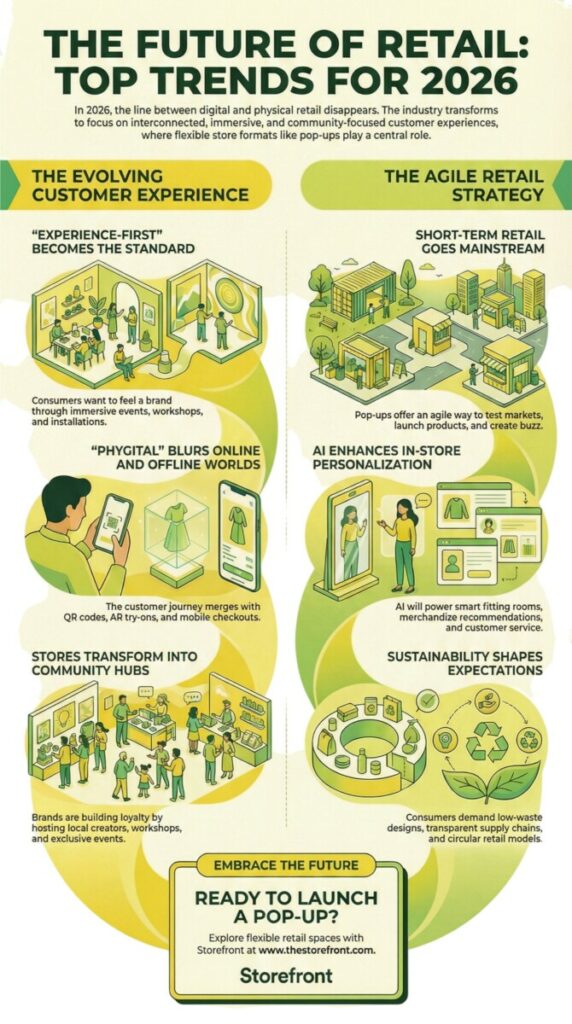
Retail in 2026 is defined by transformation. The past few years reshaped how consumers shop, and now the industry is entering a phase of innovation — where digital and physical retail are no longer separate channels but interconnected experiences.
Brands are reimagining how they engage customers: through immersive design, flexible store formats, AI-driven personalisation, and a renewed emphasis on community and culture. Amid this evolution, physical retail — especially short-term and experiential formats — is playing a pivotal role.
Below, we explore the Top 10 Retail Trends set to define 2026, backed by consumer insights, industry direction, and real-world examples.
1. Experience-First Retail Moves from Trend to Standard
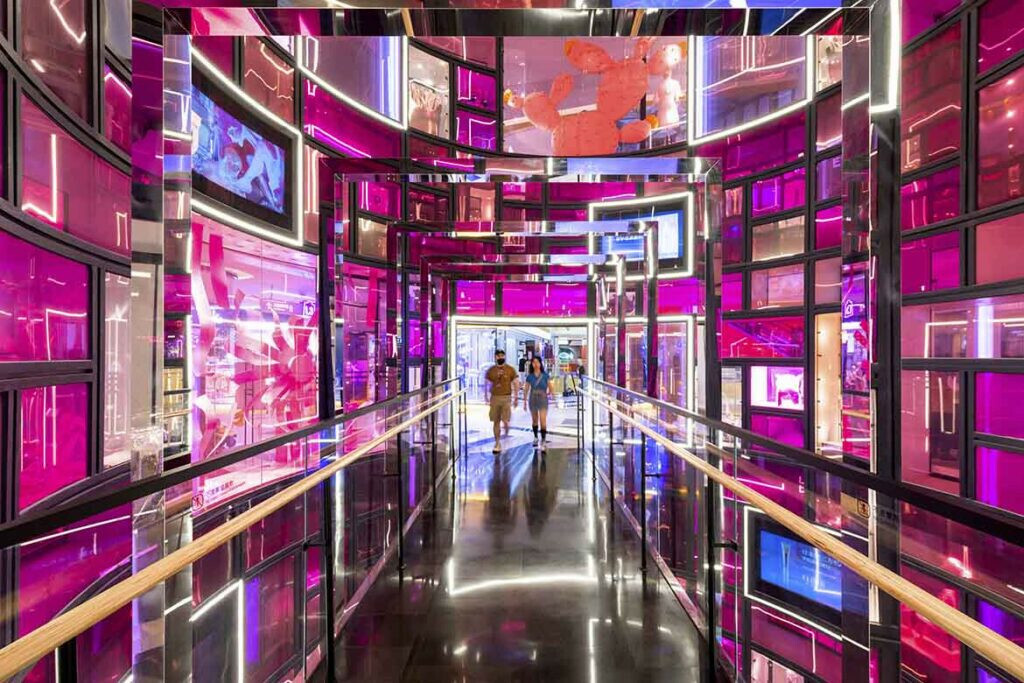
Experience-led retail is becoming the norm. Consumers increasingly want to feel a brand, not just browse its products. Retailers are doubling down on:
- immersive brand storytelling
- interactive installations
- workshops and micro-events
- product demos and community gatherings
Analyses have highlighted that “the future of physical retail is not extinction but transformation,” with experiential formats leading the way. This shift aligns with the growing desire for discovery, connection, and emotional engagement — especially among younger shoppers.
2. Short-Term Retail Goes Mainstream
Pop-up shops, once a seasonal tactic, are now central to retail strategy. They offer agility, speed, and creative freedom. Brands use them to:
- test new markets
- launch exclusive drops
- create social buzz
- build deeper customer relationships
If you’re new to pop-ups, Storefront’s guide on what a pop-up shop is is a perfect starting point. For brand inspiration, explore the London pop-up guide.
You can also browse available short-term spaces directly in London, New York, and Paris (also available in French).
Industry commentary emphasises that pop-ups are increasingly used not only to sell but to create culture — merging commerce with community, design, and media.
3. “Phygital” Retail Blends the Online and Offline Journey
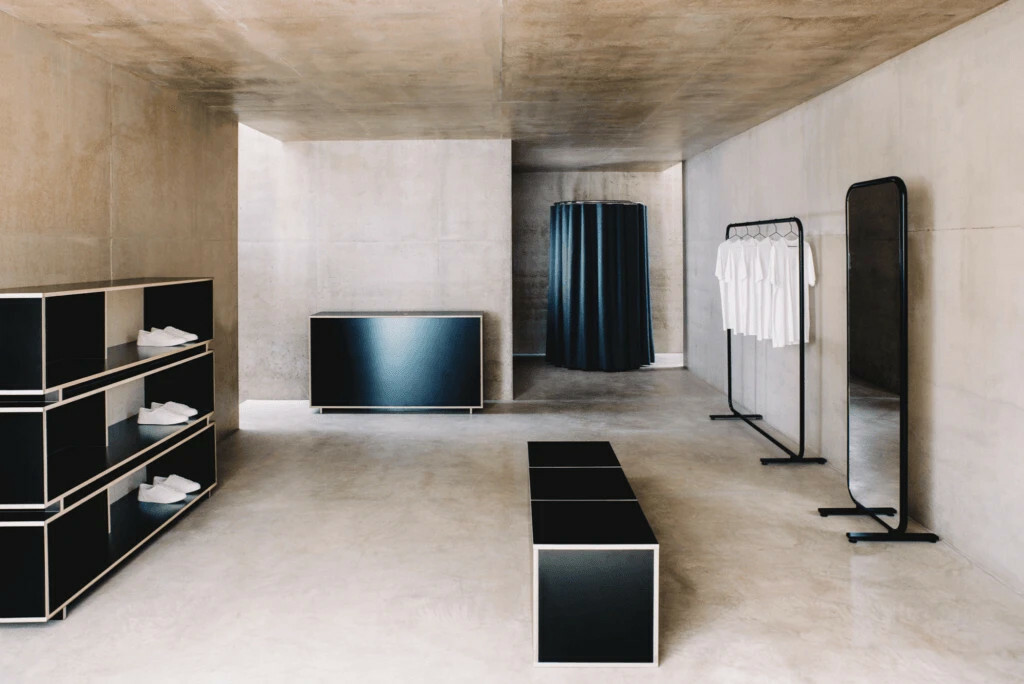
The line between e-commerce and physical retail is dissolving. In 2026, expect deeper integration of:
- QR-led in-store discovery
- mobile checkout
- unified loyalty programmes
- AR product try-ons
- click-to-collect experiences
Pop-up shops are especially powerful “phygital” touchpoints, helping brands activate online communities offline with instant gratification and immersive storytelling.
4. AI-Powered Personalisation Comes to Physical Stores
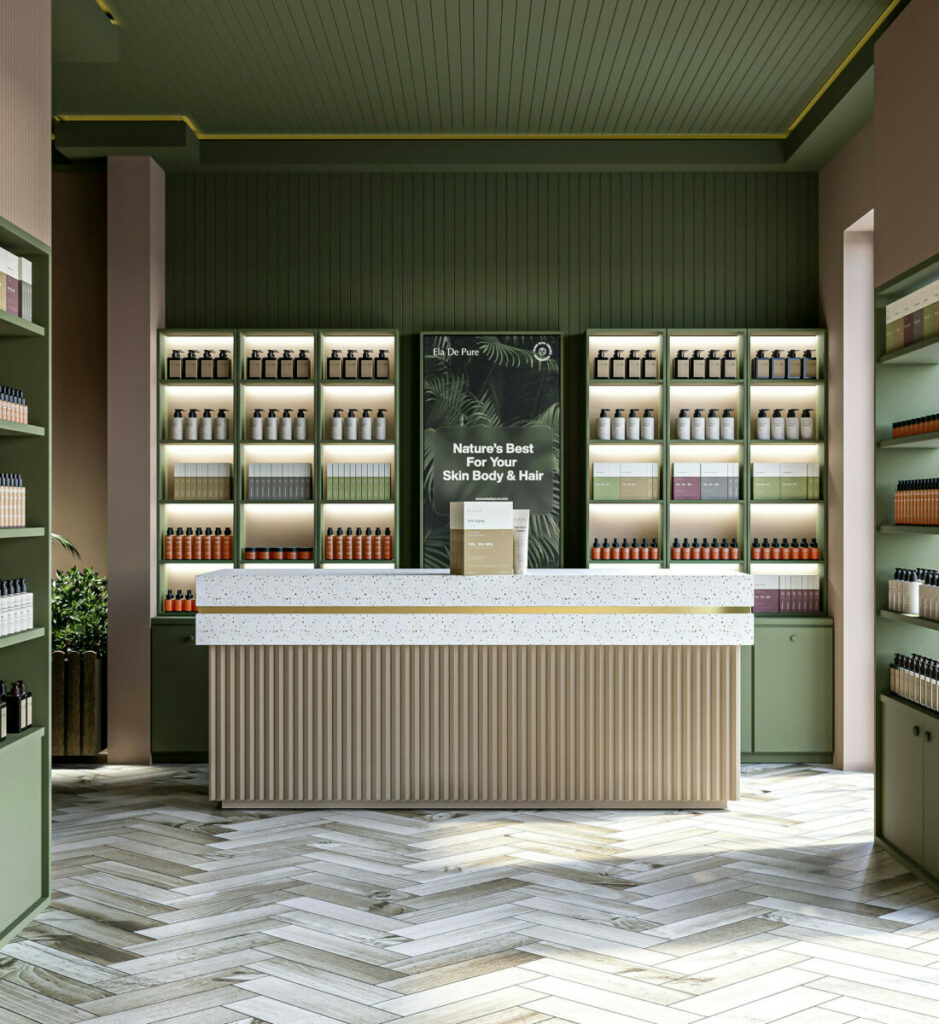
AI has long shaped online retail; now its influence is rapidly expanding into physical environments.
Expect to see:
- smart fitting rooms with AI-generated recommendations
- personalised merchandising based on footfall data
- intelligent stock allocation
- AI-enhanced customer service
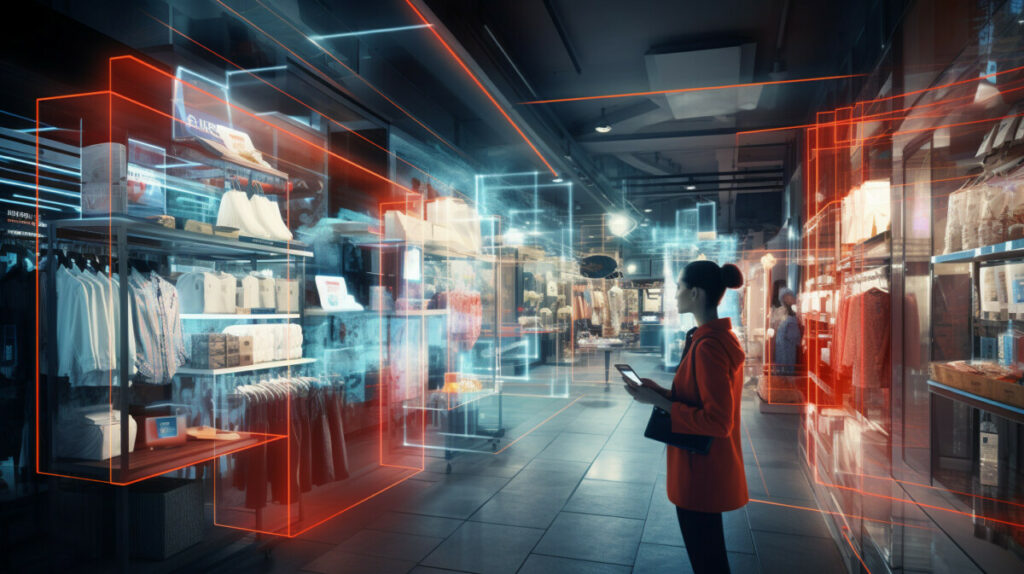
Retailers who use AI to enhance human connection — not replace it — will stand out.
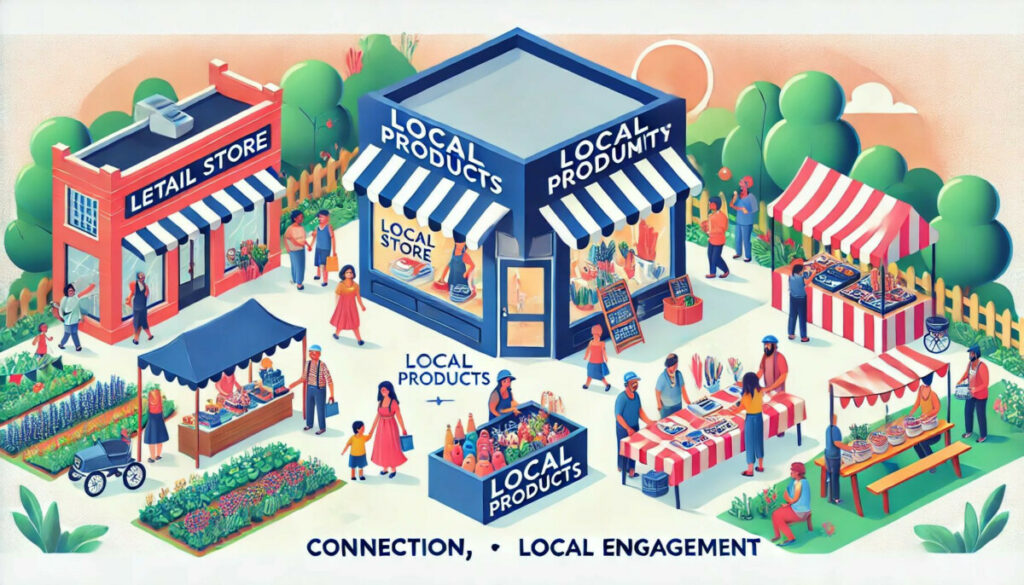
5. Community-Driven Retail Takes Centre Stage
The social aspect of shopping is back. Retail is becoming a cultural hub where brands:
- host local creators
- run exclusive workshops
- build micro-communities
- curate limited series events
Short-term retail formats are well-suited for this shift. Temporary spaces create urgency, draw crowds, and foster community through shared experiences. They also allow brands to be hyper-local — something long-term flagship stores can struggle with.
6. Sustainability and Circular Retail Shape Consumer Expectations
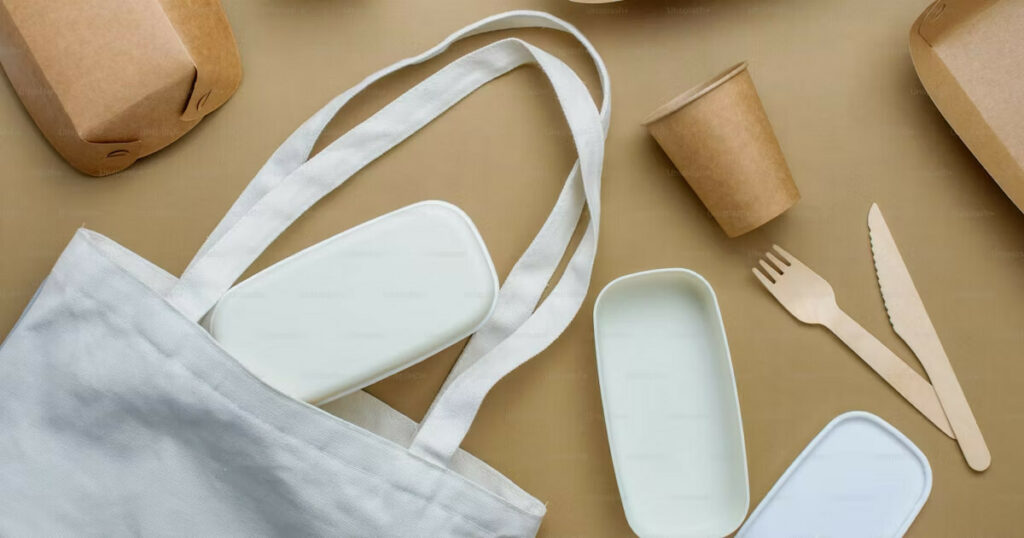
Consumers in 2026 expect real action on sustainability. That means:
- modular store design with reusable materials
- low-waste pop-up buildouts
- resale, repair, and rental services
- transparent supply chains
Short-term retail is surprisingly sustainable — many pop-ups use modular, reusable fixtures that travel from city to city, reducing waste and cost
7. Hyper-Localisation Becomes a Key Retail Advantage
Rather than rolling out the same concept globally, brands are tailoring store experiences to the neighbourhood level.
For brands
Ready to launch your pop-up?
Find and book your short-term retail space with Storefront.
Find a spaceThis includes:
- city-specific collections
- location-led store design
- local partnerships
- culturally relevant storytelling
Pop-ups are ideal for this; brands can deploy highly localised concepts in London, New York, Paris, or any target market without long-term commitment.
8. Data-Driven Retail Accelerates Smarter Decision-Making
Retailers are moving beyond simply collecting data — they’re applying it creatively to improve retail performance. Expect growth in:
- footfall and dwell-time analytics
- social listening to inspire store displays
- market testing using short-term retail
- dynamic product mixes driven by real-time demand
Pop-ups serve as perfect data labs: rapid, low-risk environments that help brands understand new audiences before scaling.

9. Flexible Retail Becomes a Core Growth Strategy
Economic uncertainty and rising commercial rents have made flexibility more valuable than ever.
In 2026, brands are prioritising:
- short-term leases
- modular store buildouts
- hybrid event/retail spaces
- month-to-month activations
Pop-ups are no longer a “backup plan” — they are a strategic tool enabling brands to stay agile and competitive.
10. Limited Drops, Exclusives and Collabs Continue to Drive Footfall
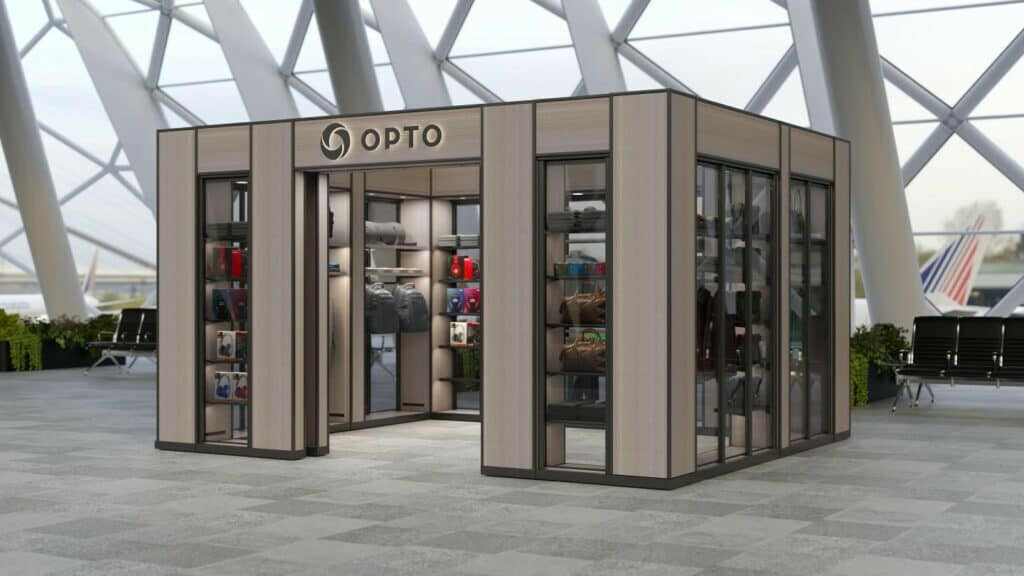
Drop culture thrives in 2026. Shoppers love exclusivity, urgency, and limited access — which naturally aligns with short-term and experiential retail.
Brands are blending:
- exclusive product launches
- influencer and artist collaborations
- micro-collections
- time-limited retail events
These activations perform particularly well in pop-up environments where “limited time only” becomes a powerful driver of footfall.
Conclusion: Retail in 2026 Is Creative, Connected and Experiential
2026 marks a major evolution for retail. Digital innovation continues to reshape the industry, but physical retail is re-emerging as a powerful stage for connection, culture, and creativity.
Whether through pop-ups, experiential stores, hyper-local activations, or flexible formats, brands are discovering that physical space offers something digital never can: human engagement.
To explore how your brand can participate in the future of retail, discover:
- What a pop-up shop is
- How pop-ups work in London (comprehensive guide)
- Launching a pop-up shop in New York (comprehensive guide)
- Short-term retail opportunities in London, New York and Paris.
Frequently Asked Questions (FAQ)
1. What are the biggest retail trends expected in 2026?
Key trends include experiential retail, short-term store formats, AI-powered personalisation, phygital integration, sustainability, community-driven retail, and flexible leasing strategies.
2. Is physical retail still relevant in 2026?
Yes — physical retail is evolving into a more experiential and community-driven space. Consumers still value in-person discovery, tactile experiences, and human interaction.
3. Why are pop-up shops becoming so popular?
Pop-ups are low-risk, high-impact spaces ideal for testing new markets, launching products, energising communities, and creating brand awareness. They’re flexible and cost-effective.
4. What is “phygital” retail?
Phygital retail combines physical and digital experiences — for example, QR codes, AR try-ons, mobile checkout, online-to-offline journeys, and integrated loyalty systems.
5. How is AI influencing retail?
AI offers personalised recommendations, optimises store layouts, predicts demand, enhances customer service, and manages inventory — all contributing to better experiences and higher conversions.
6. Why is experiential retail so important?
Shoppers crave meaningful, memorable interactions. Experiential retail boosts dwell time, engagement, social sharing, and brand loyalty.
7. How can retailers stay competitive in 2026?
By embracing flexible retail formats, leveraging data, integrating digital tools, designing sustainable spaces, and focusing on customer experience — especially through short-term activations and community-led events.
For brands
Ready to launch your pop-up?
Find and book your short-term retail space with Storefront.
Find a space
Written by
Nicholas Roberts-Moore is Chief Marketing Officer at Storefront, based in London. He specializes in AI-powered marketing and the UK retail and real estate markets, helping brands turn short-term retail into measurable growth. A former journalist, he writes on pop-up strategy, retail trends, and the future of physical retail.
More from Nicholas Roberts-Moore →Related posts:
 Pop-Up Shop Marketing: How to Promote and Grow a Successful Pop Up
 The Chinese Retail Market: Pop-up Stores and Massclusivity
 4 Reasons You Should Recommend a Pop-Up Store to Your Clients
 3 Retail Tech Trends Your Pop-Up Shop Needs This Holiday Season
 What Is Phygital Retail? Meaning, Examples and How It Works