

Nolita, NoHo and the Bowery sit in a few blocks of downtown Manhattan, and brands looking for a pop-up shop in New York routinely shortlist all three together. They should not. The three districts have almost nothing in common once you get past the map.
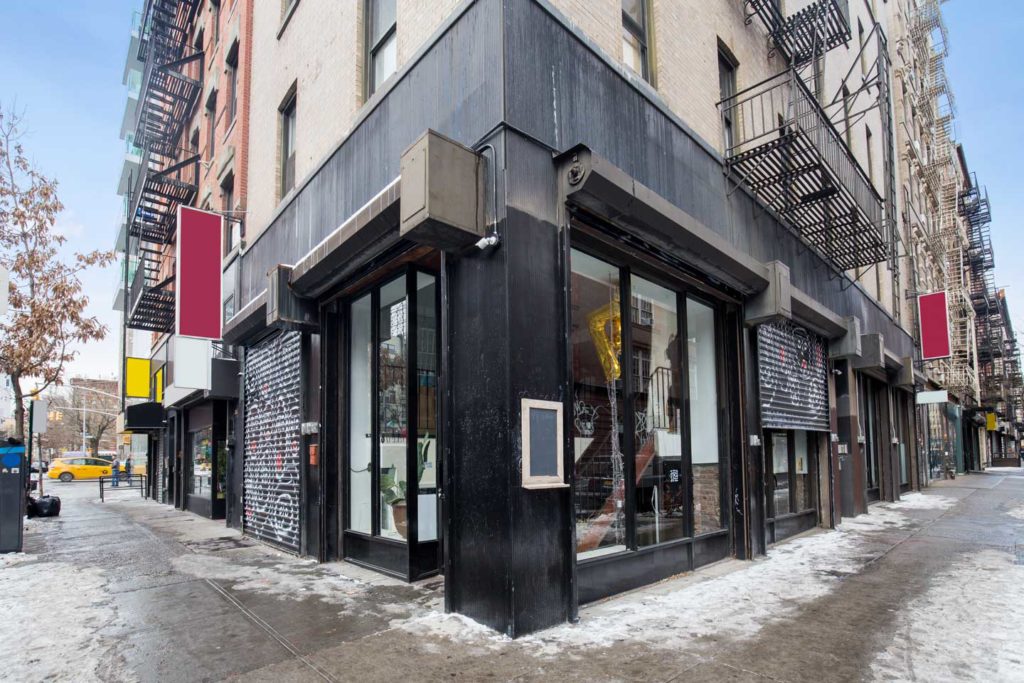
Nolita has the smallest retail units in Manhattan. NoHo has some of the largest, and almost none of them are available at any given moment. The Bowery has wide, deep ground floors built for trucks rather than window shoppers. Picking between them is a decision about the shape of your space and the kind of traffic you need, not about which name sounds right.
This guide sets out what each district actually offers, which one suits which format, and where to look for pop-up shop space in NYC once you have chosen.
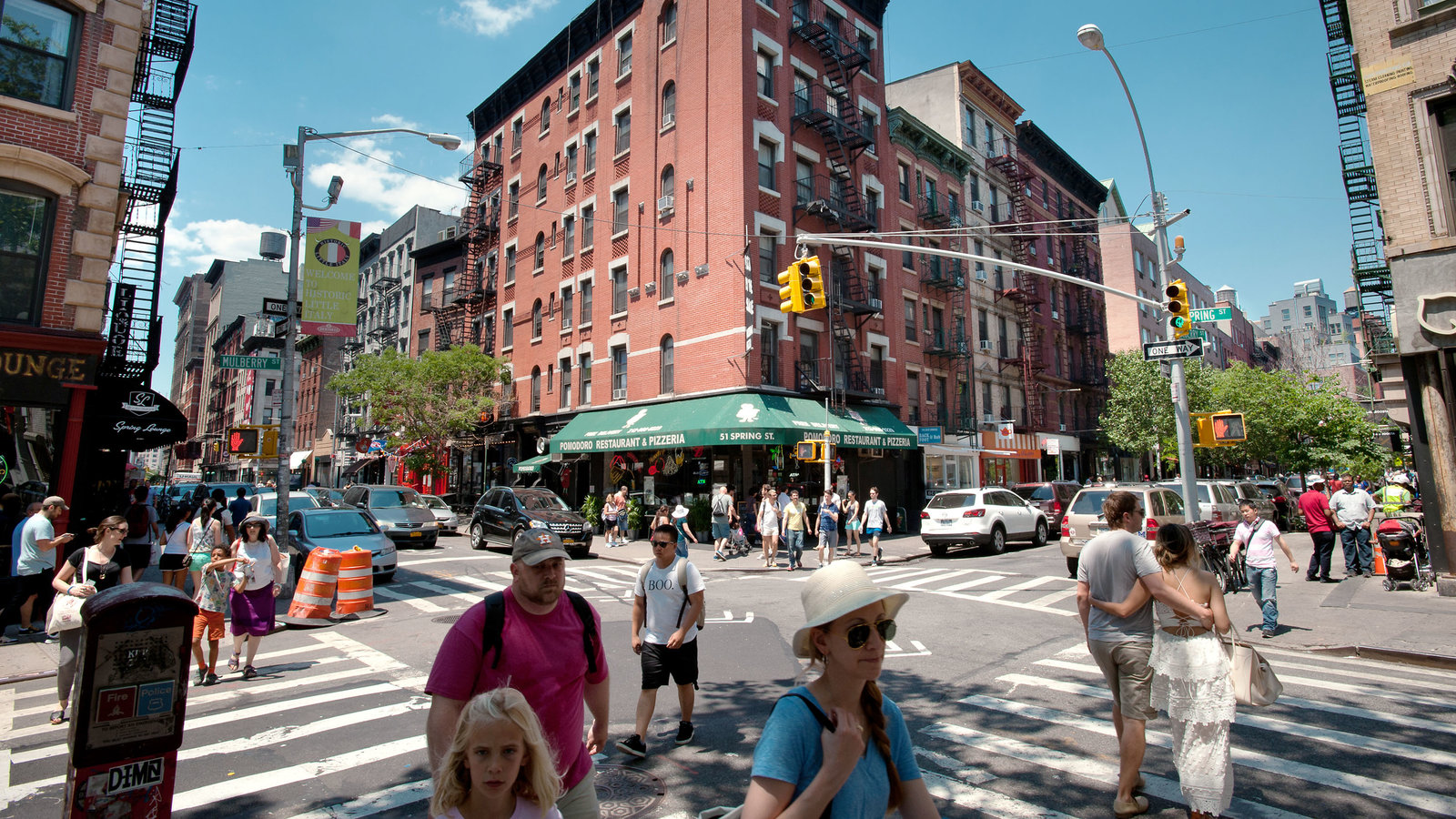
Nolita, NoHo and the Bowery compared
The quickest way to separate them is by unit size, because that is what actually differs and it drives everything else.
| Nolita | NoHo | The Bowery | |
|---|---|---|---|
| Typical unit | Very small, single narrow room | Large loft ground floor | Wide, deep, plain |
| Availability | Steady turnover | Rarely anything free | Occasional, larger lots |
| Street traffic | Local, browsing, weekend-led | Thin, destination only | Passing rather than browsing |
| Best suited to | A first store, tightly edited range | Showrooms and single-brand installations | Builds, launches, anything needing loading |
| Live listings | Nolita | NoHo | the Bowery |
NoHo versus Nolita is the comparison people ask about most, and the two are opposites. They are ten minutes apart on foot. Nolita is a run of narrow tenement shopfronts with constant turnover. NoHo is a handful of protected blocks of large loft buildings where very little comes free. If your requirement is a small room you can fill quickly, Nolita is the answer. If it is a large floor you intend to make an event of, NoHo is.
The Bowery is the odd one out. It is the wide avenue on the western edge of the Lower East Side rather than a district in its own right, and it behaves like an avenue: bigger frontages, vehicle access, and fewer people strolling.
Nolita: the smallest units in Manhattan
Nolita runs on three parallel streets, Mulberry, Mott and Elizabeth, between Houston to the north and Kenmare to the south, with Lafayette Street separating it from SoHo to the west.
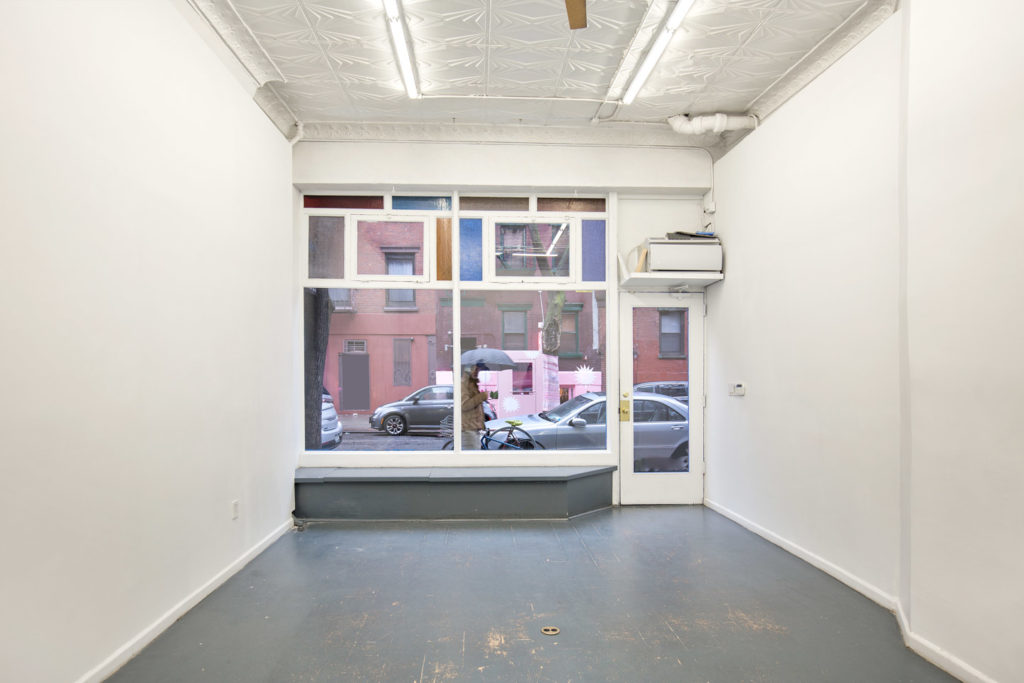
The units are the smallest of any Manhattan district, often a single narrow room in a tenement ground floor with minimal storage. That forces a tightly edited range and rules out anything needing depth. It is also why Nolita is where a young brand most often takes its first New York store: low commitment, an audience of buyers and press, and a crowd that expects to find names it does not recognize.
- Pop-up and retail space in Nolita
- Retail space on Mulberry Street
- Retail space on Mott Street
- Retail space on Elizabeth Street
- Gallery and art space in Nolita
Our full Nolita neighborhood guide covers the streets one by one, who shops there and when, and what taking space involves.
NoHo: a scarcity market of large loft floors
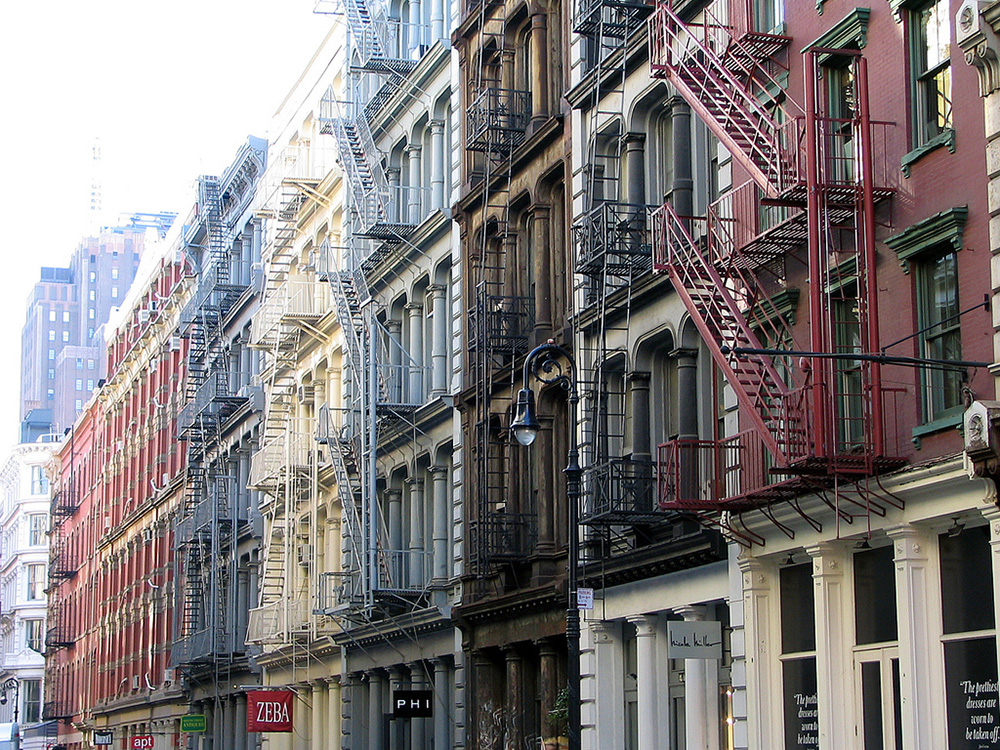
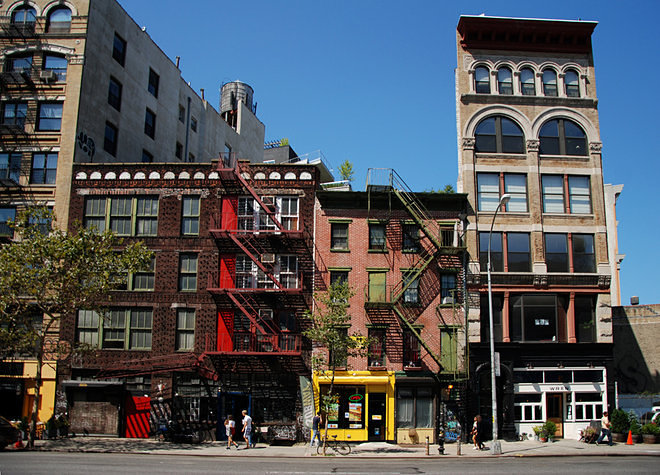
NoHo is a small, architecturally protected district of loft buildings sitting between Greenwich Village and the East Village. It is only a handful of blocks, so very few ground-floor units come available at any time, and the ones that do are large. It is a scarcity market rather than a choice of options.
It is also an address purchase. NoHo carries a fraction of SoHo’s footfall at a similar rent level, and it is quiet enough that a unit has to generate its own reason for someone to walk to it. Nobody stumbles into a NoHo pop-up. That is a problem for a shop and an advantage for a presentation nobody should stumble into.
Bond Street and Great Jones Street
NoHo’s protected cast-iron blocks, and where the large, high-specification ground floors are. Several are landmarked. These are the spaces brands take when the room itself is part of the point.
Lafayette Street
Runs south through NoHo into SoHo and holds a run of design-led independent stores in wide former warehouse frontages. It is noticeably quieter than Broadway a block west, which is the trade brands make when they choose it.
The whole area sits inside the Special SoHo-NoHo Mixed Use District, adopted in 2021 over roughly 56 blocks. It widened the range of commercial uses permitted in the two neighborhoods and set ground floor frontage rules on designated streets, with the explicit aim of supporting their arts, cultural and live-work role alongside retail. NoHo is also covered by the NoHo Historic District, which protects the cast-iron and loft architecture and brings the same review of exterior work that applies in SoHo. Anything you plan to change on the outside of a building is a longer conversation here than elsewhere.
- Pop-up and retail space in NoHo
- Showroom space in NoHo
- Event space in NoHo
- Gallery and art space in NoHo

For brands
Ready to launch your pop-up?
Find and book your short-term retail space with Storefront.
Find a spaceThe Bowery: wide frontages built for volume
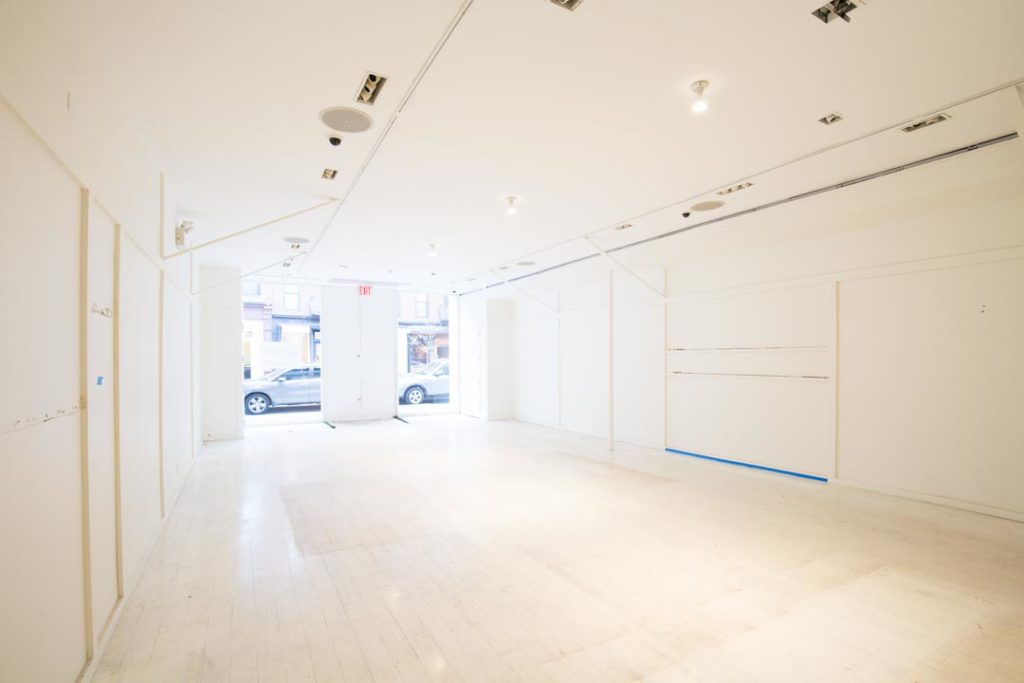
The Bowery is the wide avenue on the western edge of the Lower East Side. It spent a long time as the city’s restaurant-supply corridor, and that history is still visible in the buildings: ground floors built for equipment and volume rather than display, deep and plain, with frontages bigger than anything on the streets behind them.
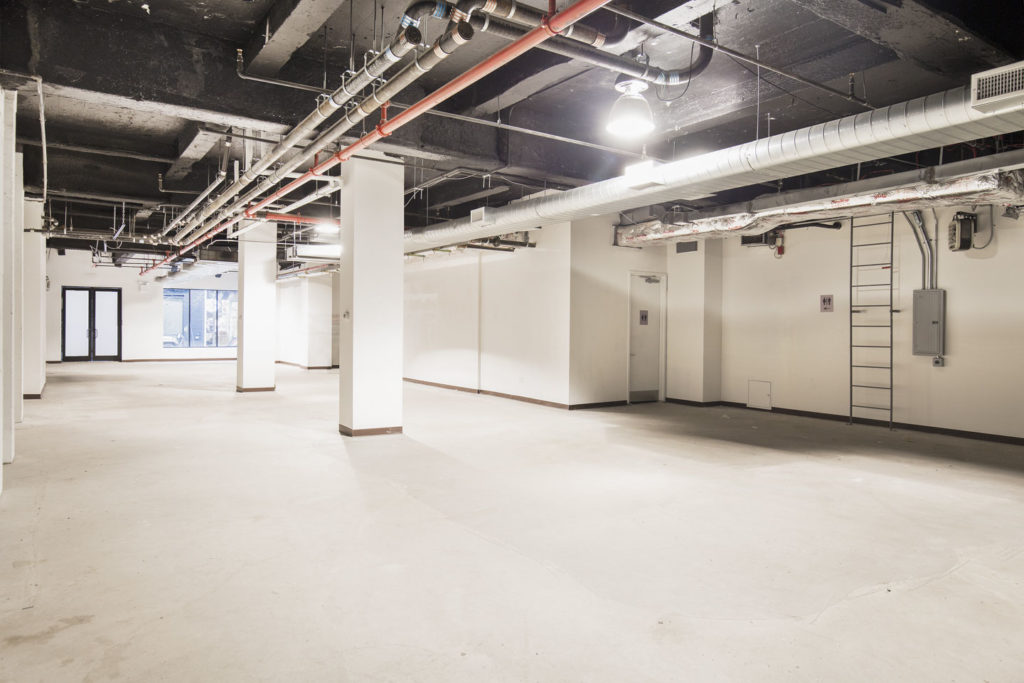
Those plain, deep spaces are unusually adaptable for temporary use. If you are building something, trucking in a set, or running an activation that needs to be assembled rather than merchandised, the Bowery gives you room and vehicle access that the narrow streets east of it cannot.
The trade is browsing traffic. The width that makes the avenue workable for loading is the same width that makes it less pleasant to walk, so footfall passes rather than browses. The street also changes block by block: it now carries hotels, a contemporary art museum and design-led retail alongside the remaining supply businesses, so a description of one stretch will not hold for another. Walk the specific block before you commit to it.
The Bowery is also the answer when a Lower East Side requirement is too big for the district. The Lower East Side runs on a fine grain of narrow tenement ground floors, so anything above a modest footprint has to be assembled or taken on Allen Street or the Bowery.
Which district suits your pop-up
Start from the space, not the postcode.
- A first store, or a tightly edited range. Nolita. Small rooms, low commitment, and an audience that browses independents by default.
- A showroom, press day or single-brand installation. NoHo. The loft floor plates were built for manufacturing, so they carry tall ceilings, large column-spaced floors and freight access that a conventional shop unit could not offer. Appointment-led formats do not need the footfall NoHo lacks.
- A build, a launch, or anything arriving on a truck. The Bowery. Depth, width and access, with the caveat that you are generating your own audience.
- Volume of passing trade above all. None of the three. Walk west across Lafayette to SoHo instead.
If you are still weighing the whole city rather than these three, our ranking of the best New York neighborhoods for a pop-up shop compares them against SoHo, Chelsea and the Lower East Side.
Types of pop-up space in Nolita, NoHo and the Bowery
Across the three districts the same broad categories come up, and each one maps onto a different district more naturally than the others.
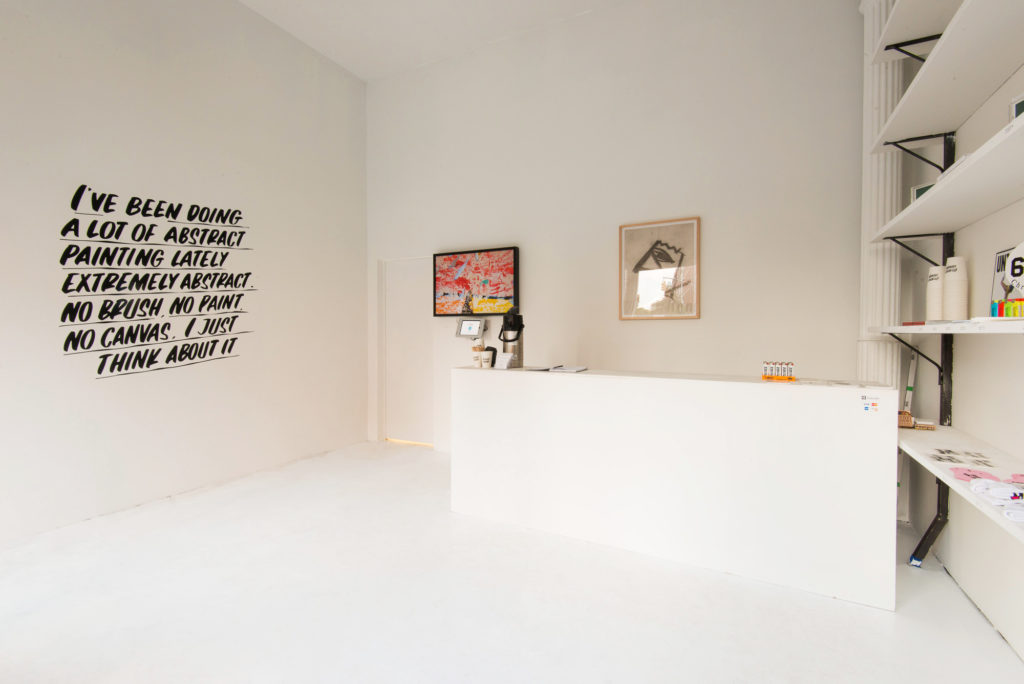
- Boutique storefronts. Street visibility and a window to work with. Mostly Nolita, and small.
- White-box retail. An empty room you fit out yourself, which gives you full control of design and layout. Available in all three, largest on the Bowery.
- Loft floors. Tall, open and column-spaced, suited to showrooms, presentations and sample sales. NoHo’s defining format.
- Gallery and exhibition space. Retail combined with a show. Both Nolita and the Bowery support it, and the Bowery in particular sits in an established gallery context.
If you are planning the whole project rather than the space, our guide to opening a pop-up shop in New York covers permits, insurance, budget and timing.
Getting there
NoHo is served by the 8th Street-NYU, Astor Place, Bleecker Street and Broadway-Lafayette Street subway stations. Broadway-Lafayette Street/Bleecker Street is among the twenty-five busiest stations in Manhattan by annual ridership, which is a useful proxy for the through-traffic a ground-floor unit nearby can expect, and a reminder that NoHo’s quiet comes from its buildings rather than from its position.
Nolita is served by the Bowery, Prince Street and Spring Street stations. The Lower East Side and the Bowery are served by Second Avenue, Bowery, Delancey Street-Essex Street, East Broadway and Grand Street.
For brands
Ready to launch your pop-up?
Find and book your short-term retail space with Storefront.
Find a spaceCommon questions
What is the difference between NoHo and Nolita?
Unit size, mainly. Nolita is narrow tenement shopfronts with steady turnover and a browsing crowd. NoHo is a handful of protected blocks of large loft buildings where very little is available and rents match SoHo without SoHo’s footfall. They are ten minutes apart and suit opposite requirements.
Is the Bowery part of the Lower East Side?
It is the wide avenue along its western edge, and we list it that way. Its buildings are larger than the tenement ground floors behind it, which is why a Lower East Side requirement that is too big for the district usually ends up on the Bowery or on Allen Street.
Which of the three is best for a pop-up shop in NYC?
Nolita, if you mean a shop in the ordinary sense: a small unit, open to the street, selling to people walking past. NoHo is better for a showroom or a presentation, and the Bowery is better for anything you have to build.
Where can I rent a pop-up shop in Nolita?
Live availability sits on our Nolita pop-up and retail listings, with street-level pages for Mulberry, Mott and Elizabeth Street.
Are these neighborhoods good for emerging brands?
Nolita is one of the best places in Manhattan for a first store, because the units are small enough to be a manageable commitment and the audience is already looking for unfamiliar names. NoHo and the Bowery ask more of a brand: both are quiet enough that you have to bring your own audience.
Can I combine a pop-up shop with an art gallery or showroom?
Yes, and it is common in all three. The Special SoHo-NoHo Mixed Use District was written partly to support exactly that mix of arts, cultural and retail use. Look at art space in Nolita, showrooms in NoHo and the gallery run along the Bowery.
When is the best time to launch in these neighborhoods?
Downtown trade builds through the afternoon and peaks at weekends. Across the wider New York calendar, the return in August and the first half of September is one of the sharpest upswings of the year, which makes late summer a strong window for a launch that wants an audience already back in the city.
Where to look next
District by district: the Nolita guide for the three streets in detail, the SoHo guide for the larger units one block west, and the Lower East Side guide for everything east of the Bowery.
East across the Bowery, with NoHo sitting between the two, our East Village guide covers the district that shares this audience and trades latest of any of them.
Or go straight to availability across short-term retail space in New York.

Written by
Adrien Kerbrat is Chief Revenue Officer and co-founder of Storefront. With more than 10 years in commercial real estate, he is an expert on the French market and short-term retail across Europe. Based in Bordeaux and often in Paris, he writes on pop-up strategy, retail location, and the French retail landscape.
More from Adrien Kerbrat →Related posts:
 Nolita NYC Guide: Shopping, Streets and Short-Term Space
 Chelsea London Area Guide: The Complete Chelsea Shopping Guide for Brands and Pop-Up Shops
 Hollywood Neighborhood Guide: Pop-Up Shops, Event Spaces, and Showrooms in Los Angeles
 Shoreditch Neighborhood London Guide: London’s Hipster Hangout and Pop-Up Capital
 How to Start a Pop-Up Shop in London: The Complete Guide