

Virtual Pop-Up Shops: Do They Still Work in 2026?
What brands learned from the metaverse wave — and why physical pop-up retail is driving stronger results today.
For a few years, virtual pop-up shops and metaverse retail experiences were positioned as the future of brand engagement.
From Decentraland activations to immersive 3D storefronts, brands explored new ways to connect with digital-first audiences.
But as retail evolves in 2026, many brands are asking a more practical question:
Do virtual pop-up shops actually drive meaningful business results — or are physical pop-ups still the stronger play?
This guide breaks down what virtual pop-up shops are, what we’ve learned from the metaverse wave, and why physical retail activations are leading the next era of experiential marketing.
What Is a Virtual Pop-Up Shop?
A virtual pop-up shop is a temporary retail activation hosted in a digital environment. This can include:
- 3D metaverse platforms like Decentraland
- Immersive branded environments
- Digital product launches
- Virtual fashion drops
- Online experiential events
The appeal was clear:
- Global reach
- Creative freedom
- Integrated digital commerce
- Access to early crypto and Web3 audiences
At its peak, virtual retail promised to remove physical limitations and unlock entirely new forms of brand storytelling.
Why Brands Experimented With Metaverse Retail
Virtual pop-ups offered several compelling advantages:
Global Accessibility
Anyone could attend from anywhere in the world.
Creative Possibilities
Brands could build environments unconstrained by physics — floating showrooms, gamified product journeys, digital wearables.
Integrated Commerce
Products could be linked directly to eCommerce checkouts.
Emerging Audience Access
Early adopters of Web3 and crypto communities represented a new, digitally native consumer segment.
For innovation-led brands, this felt like the next frontier.
What We’ve Learned Since
While virtual pop-up shops generated significant media attention, most brands discovered practical limitations:
- Limited sustained foot traffic
- Lower conversion rates compared to physical retail
- Reduced emotional engagement
- High production costs relative to ROI
- Rapid platform fragmentation
The metaverse remains an interesting experimental channel — but for most brands, it has not replaced physical experiential retail.
Instead, it highlighted something important:
Physical presence still drives stronger connection, social amplification, and measurable commercial impact.
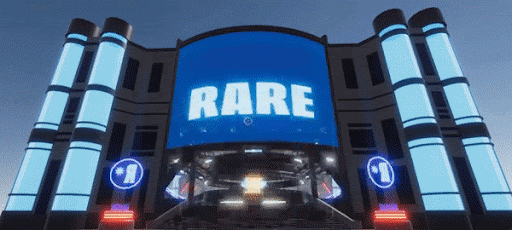
Virtual vs Physical Pop-Up Shops
When comparing outcomes, the differences are clear.
Virtual Pop-Up Shops:
- Accessible globally
- Strong novelty factor
- Lower logistical overhead
- Limited real-world immersion
- Harder to generate organic press coverage
- Lower impulse conversion
Physical Pop-Up Shops:
- Tangible brand immersion
- High social media shareability
- Real-world foot traffic
- Stronger emotional engagement
- Local PR and community impact
- Higher in-person conversion rates
For brands focused on growth, awareness, and revenue, physical activations consistently outperform purely virtual environments.
You can explore how physical retail activations work in practice in our pop-up store rental guide.
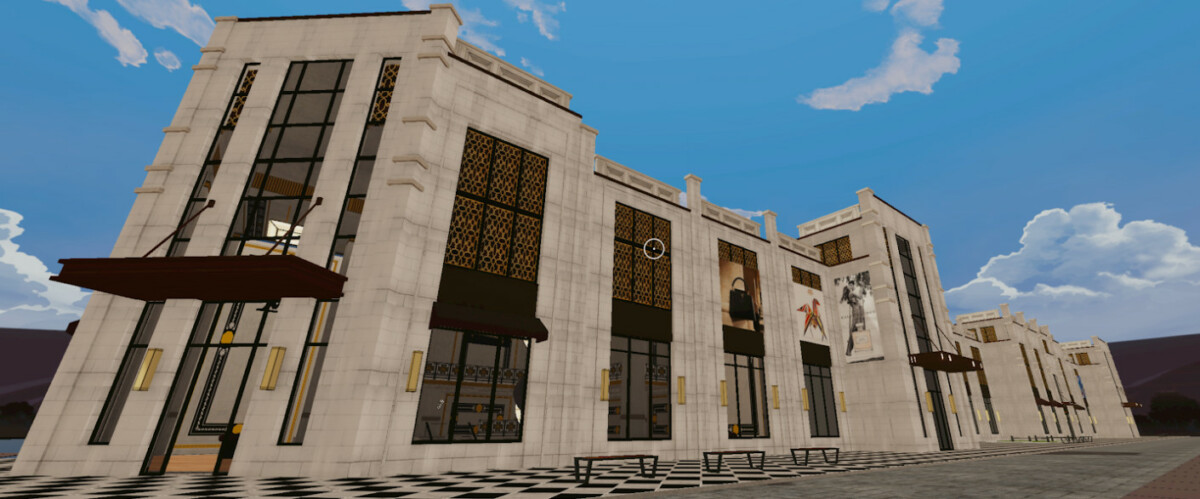
The Resurgence of Physical Experiential Retail
Retail trends in 2026 show a strong return to in-person brand experiences.
Consumers are prioritizing:
- Real-world interaction
- Community-driven events
- Limited-time activations
- Instagrammable retail moments
- Multi-sensory engagement
If you’re exploring future retail strategies, read our breakdown of the Top 10 Retail Trends to Look Out For in 2026.
You can also browse more insights in our Retail Trends category.
Why Brands Are Choosing Physical Pop-Ups
Today, brands use pop-up stores to:
- Test new markets
- Launch products
- Drive customer acquisition
- Generate media buzz
- Support international expansion
- Build community engagement
Whether launching in major retail hubs or entering new markets, physical retail allows brands to create high-impact moments in prime locations.
Browse available spaces in:
Or explore our full pop-up store rental platform.
Real-World Case Studies
Brands across fashion, beauty, and lifestyle continue to use physical pop-up stores to drive expansion and engagement.
- A US retailer launched a European expansion with a Paris activation in Le Marais — read the case study here.
- Huda Beauty created an experiential retail moment in Covent Garden — see the campaign here.
- Howard Johnson unveiled a brand refresh with a candy-themed pop-up in NYC — explore the activation here.
These campaigns demonstrate the measurable power of in-person experiential retail.
Is There Still a Role for Virtual Pop-Ups?
Virtual environments still make sense in specific scenarios:
- Digital-first product drops
- Gaming-native audiences
- Experimental Web3 campaigns
- Hybrid physical-digital activations
But for most brands seeking scalable growth, physical pop-up retail delivers stronger commercial outcomes.
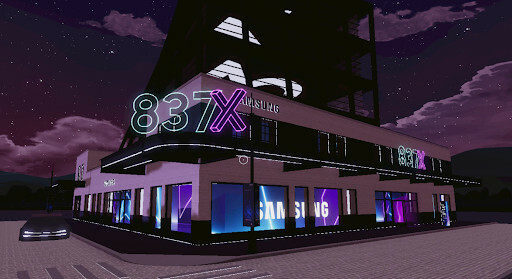
The Future of Pop-Up Retail
The metaverse phase expanded creative thinking in retail.
But in 2026, the brands winning market share are those combining digital reach with physical impact.
Experiential retail isn’t disappearing — it’s evolving.
And physical pop-up stores remain one of the most effective ways to:
- Capture attention
- Build brand affinity
- Test markets
- Drive measurable sales
If you’re planning your next activation, explore available pop-up store rentals and bring your brand into the real world — where attention converts.

Looking for a physical space to rent?
North America: Pop up spaces in Anaheim | Pop up spaces in Atlanta | Pop up spaces in Austin | Pop up spaces in Berkeley | Pop up spaces in Beverly Hills | Pop up spaces in Bronx | Pop up spaces in Brooklyn | Pop up spaces in Chicago | Pop up spaces in Culver City | Pop up spaces in Dallas | Pop up spaces in Denver | Pop up spaces in Glendale | Pop up spaces in Hoboken | Pop up spaces in Houston | Pop up spaces in Jersey City | Pop up spaces in Long Beach | Pop up spaces in Los Angeles | Pop up spaces in Miami | Pop up spaces in Miami Beach | Pop up spaces in Montreal | Pop up spaces in New York | Pop up spaces in Oakland | Pop up spaces in Pasadena | Pop up spaces in Queens | Pop up spaces in San Diego | Pop up spaces in San Francisco | Pop up spaces in San Jose | Pop up spaces in Santa Monica | Pop up spaces in Toronto | Pop up spaces in Washington | Pop up spaces in West Hollywood
Europe: Pop up spaces in Amsterdam | Pop up spaces in Barcelona | Pop up spaces in Birmingham | Pop up spaces in Bordeaux | Pop up spaces in Brussels | Pop up spaces in Cannes | Pop up spaces in Geneva | Pop up spaces in Glasgow | Pop up spaces in Hamburg | Pop up spaces in Leeds | Pop up spaces in London | Pop up spaces in Lyon | Pop up spaces in Madrid | Pop up spaces in Manchester | Pop up spaces in Marseille | Pop up spaces in Milan | Pop up spaces in Munich | Pop up spaces in Oslo | Pop up spaces in Paris | Pop up spaces in Prague | Pop up spaces in Rome | Pop up spaces in Rotterdam | Pop up spaces in Stockholm
Asia: Pop up spaces in Hong Kong | Pop up spaces in Kuala Lumpur | Pop up spaces in Macau | Pop up spaces in Selangor | Pop up spaces in Seoul | Pop up spaces in Shanghai | Pop up spaces in Singapore