We use cookies and similar technologies to track your activity and improve your experience.
Sort by
Recommended
See on map

See on map

See on map
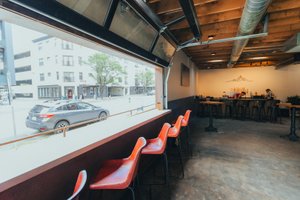
Event Space
∙
Highland
1,000 sq ft
from $1,200 per day
See on map

Event Space
∙
Five Points
900 sq ft
from $840 per day
See on map

See on map

Event Space
∙
Highland
4,000 sq ft
from $4,740 per day
See on map

Art Gallery
∙
City Park
780 sq ft
from $129 per day
See on map

See on map

See on map

See on map

Restaurant / Bar / Cafe
∙
Central
1,425 sq ft
from $2,400 per day
Pop-Up Shops for Rent in Denver
Check our latest articles:
7 Case Studies That Prove Experiential Retail Is the Future;What Is a Pop-Up Shop? Definition, Costs & How It Works
Denver is one of the most active pop-up markets in the American West. A growing base of independent brands, DTC labels, and creative businesses has made the city a reliable testing ground for short-term retail. Spaces across RiNo, LoDo, Cherry Creek, and Five Points are available to rent by the day, week, or month, with no long-term lease required.
A pop-up shop is a temporary retail space rented for a defined period, typically anywhere from a single day to several months, to test a market, launch a product, or capture seasonal demand. On Storefront, you can browse and book a popup store in Denver entirely online, with many spaces available to confirm in under 24 hours.
Best Neighborhoods for a Pop-Up Shop in Denver
The right neighborhood shapes your foot traffic, your audience, and your cost. Denver's commercial districts have distinct identities, and choosing between them is the most consequential decision you will make before booking.
-
RiNo (River North Art District) is Denver's creative core. Warehouses, converted studios, and raw loft spaces attract younger, trend-aware shoppers. It is well suited to streetwear, art, independent food brands, and DTC product launches. Rental rates for short-term retail in RiNo typically range from $150 to $400 per day depending on size and street visibility.
-
LoDo (Lower Downtown) sits around Union Station and the 16th Street Mall. Foot traffic is consistently high year-round, driven by commuters, tourists, and office workers. Spaces here lean toward polished retail and brand activations. Expect $250 to $600 per day for street-facing units.
-
Cherry Creek is Denver's most upscale commercial district. Luxury brands, fashion labels, and premium wellness brands perform well here. The shopper demographic skews affluent and brand-aware. Rates typically run $300 to $800 per day for prime Cherry Creek locations.
-
Larimer Square is the city's historic retail corridor, with strong foot traffic and high tourist visibility. Well suited to lifestyle brands, gift-oriented retail, and seasonal activations. Day rates sit in a similar band to LoDo.
-
Five Points is a historically significant neighborhood with a growing independent retail scene. It suits culturally-driven brands and community-oriented activations. Rates are generally lower than Cherry Creek or LoDo, making it accessible for first-time pop-up operators.
-
South Broadway runs through the Baker neighborhood and draws a mix of vintage, food, and independent retail shoppers. A strong option for brands targeting a local, non-tourist audience.
How Much Does a Pop-Up Shop Cost in Denver?
Short-term retail space in Denver ranges from around $80 per day for a small studio in an emerging neighborhood to over $1,000 per day for a large, high-footfall space in Cherry Creek or LoDo. Most brand activations running one to four weeks fall in the $150 to $500 per day range.
Total cost depends on four variables: the neighborhood, the size of the space, the duration of your rental, and whether the space includes fixtures, Wi-Fi, and A/V equipment. Many spaces listed on Storefront include these as standard. Some require a refundable deposit. Always confirm what is included before booking.
For a two-week pop-up shop in Denver at a mid-range RiNo space, budget approximately $3,000 to $6,000 for the rental itself, plus staffing, fit-out, and any marketing spend on top.
When to Open a Pop-Up Store in Denver
Denver has four distinct retail seasons, and timing your pop-up store correctly materially affects walk-in traffic.
Spring (March to May) is one of the stronger windows. Locals re-engage with the city after winter, tourist numbers begin climbing, and the outdoor event calendar picks up across RiNo and Five Points. Fashion, wellness, and lifestyle brands see solid results in this window.
Summer (June to August) brings peak foot traffic across LoDo, the 16th Street Mall, and Cherry Creek. Tourists and locals overlap, and walk-in conversion rates tend to be higher. Competition for prime spaces also increases, so book at least four to six weeks ahead.
Fall (September to November) covers back-to-school and the lead-in to the holiday season. October and November are particularly strong for gift-oriented products, seasonal food brands, and anything positioned as a holiday destination.
Winter (December to February) splits into two phases. December is high-demand and high-competition across the city, driven by holiday foot traffic. January and February are quieter, though wellness and lifestyle brands often see a new-year uplift in Cherry Creek and LoDo.
What You Need to Know Before Renting Retail Space in Denver
Denver has a clear set of requirements for retail operators, even for short-term or temporary use. These are your responsibility to satisfy, not the landlord's or Storefront's.
You need a Colorado business registration before trading. If you are not already registered with the Colorado Secretary of State, this is the first step. Sole proprietors, LLCs, and partnerships all require it.
You also need a Denver Sales Tax License to collect and remit local sales tax on retail transactions. This applies even to weekend pop-up events. Applications are processed through the Denver Treasury Division.
Zoning matters for short-term use. Confirm with the landlord and, if necessary, the Denver Community Planning and Development office that the space is zoned for retail activity. Some locations require a temporary use permit even when the base zoning is commercial.
If you are selling food or cosmetics, additional health and sanitation requirements apply. Build this into your planning timeline, not your launch week.
Use Storefront's messaging feature to ask landlords directly about prior retail use, zoning confirmation, and accessibility before you commit.
How to Choose the Right Space for Your Pop Up in Denver
Beyond neighborhood and price, the quality of the space itself determines how well your product presents and how easily customers find you.
Foot traffic is the first filter. Street-facing units on high-footfall corridors in LoDo or Cherry Creek command higher rates for a reason. If your brand relies on walk-in discovery rather than pre-booked visits, spend the extra budget on visibility.
Space configuration matters for retail. A long, narrow unit with poor natural light is harder to merchandise than a square space with front windows. Review floor plans and photos carefully before booking. Storefront listings include dimensions, photos, and amenity details for every space.
Flexibility on duration is a real advantage in Denver's market. Many landlords list spaces from one day upward. If you are testing a new neighborhood or product line, start with a shorter rental and extend if it works. A two-week trial in RiNo costs less than a failed four-week commitment in Cherry Creek.
For more background on how pop-up retail works and what to expect as a first-time renter, the guide to what is a pop-up shop covers the fundamentals in detail. For a broader view of how brands use temporary retail to drive results, the 9 Case Studies That Prove Experiential Retail Is The Future is worth reading before you finalize your concept.
Storefront's Pop Up Store Rental hub covers the full range of space types and booking options globally. For Denver-wide availability across all space types, browse Denver spaces directly.
FAQ
How much does a pop-up shop cost in Denver?
A pop-up shop in Denver typically costs between $150 and $600 per day for a mid-sized retail space in a high-traffic neighborhood. Smaller spaces in emerging areas like Five Points or South Broadway can start around $80 per day. Cherry Creek and LoDo command the highest rates, often $300 to $800 per day for street-facing units with good footfall. Total project costs depend on space size, duration, fit-out, and staffing.
What are the best neighborhoods for a pop-up store in Denver?
RiNo, LoDo, Cherry Creek, and Larimer Square are the four most active neighborhoods for pop-up retail in Denver. RiNo suits creative and streetwear brands, LoDo works well for high-footfall brand activations, Cherry Creek draws an upscale shopper, and Larimer Square offers strong tourist visibility. Five Points and South Broadway are lower-cost alternatives with growing independent retail audiences.
Do I need a license or permit for a popup store in Denver?
Yes. Any retail operation in Denver, including a short-term pop up, requires a Denver Sales Tax License and a Colorado business registration. Depending on the space and your use, you may also need a temporary use permit confirmed through the Denver Community Planning and Development office. If you are selling food or cosmetics, additional health inspections may apply.
How long should I rent a pop-up shop in Denver?
Most first-time pop-up operators in Denver book between one and four weeks. Two weeks is enough to test a neighborhood and product range without overcommitting budget. Seasonal campaigns tied to holiday shopping or summer tourism often run four to six weeks. Storefront offers flexible rental periods starting from a single day, so you can scale duration up or down based on early results.
When is the best time of year to open a pop-up shop in Denver?
Summer and the lead-in to the holiday season (October to December) are the strongest windows for pop-up retail in Denver. Summer brings peak tourist and local foot traffic across LoDo and Cherry Creek. October and November capture pre-holiday shoppers. Spring is a solid secondary window, particularly for fashion, wellness, and lifestyle brands launching new lines.
Can I find a pop-up shop in Denver with flexible short-term rental terms?
Yes. Storefront lists short-term retail spaces in Denver available to book by the day, week, or month, with no long-term lease required. Many spaces can be confirmed within 24 hours. Available units range from compact studio spaces in RiNo to larger street-facing retail units in Cherry Creek and LoDo.


