

The Garment District is not a retail district and treating it as one is the fastest way to waste a budget here. It is the historic center of the American apparel trade, it still holds showrooms, sample rooms and suppliers, and its buildings are configured for wholesale and trade use rather than for consumer-facing shopfronts.
Space is taken by the floor, not by the storefront, and the customer is generally a buyer with an appointment rather than a shopper. Understand that and the district is one of the most useful in New York. Miss it and nothing here will work.
See what is available across the Garment District.
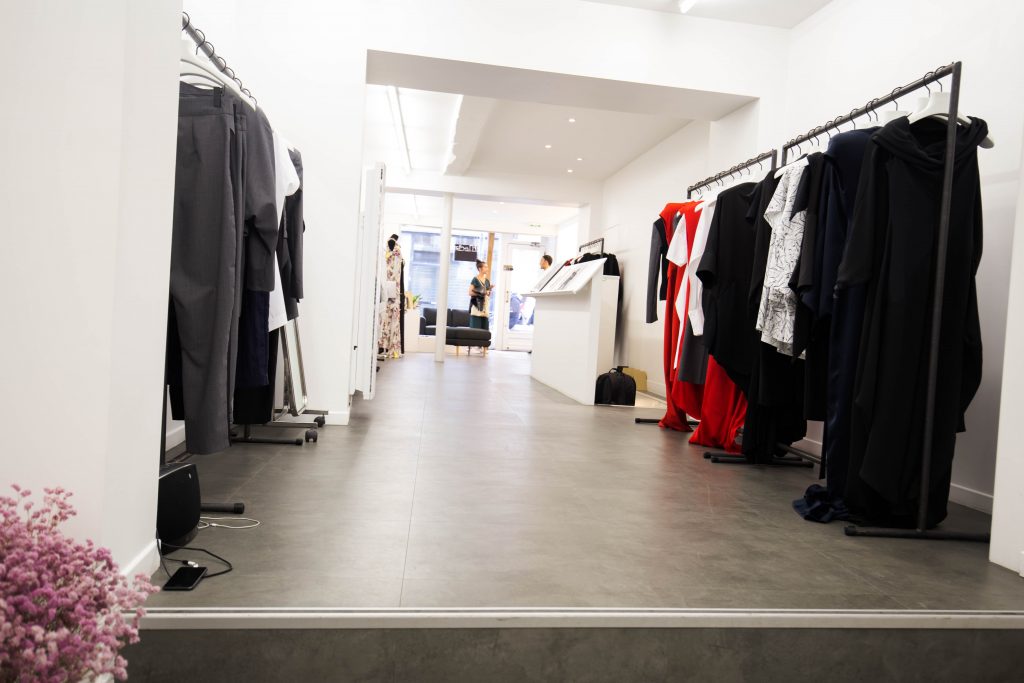
The zoning is the whole story
The Special Garment Center District covers the blocks between West 35th and West 40th Streets from Broadway to Ninth Avenue. It was created to hold on to the apparel trade that has occupied the area for more than a century, and the zoning is written around manufacturing, wholesale and showroom use rather than shopfronts.
That is why the district looks the way it does. Upper-floor trade space rather than street-level windows, freight rather than frontage, and a building stock that has never been converted to retail because it was never meant to be.
The building stock
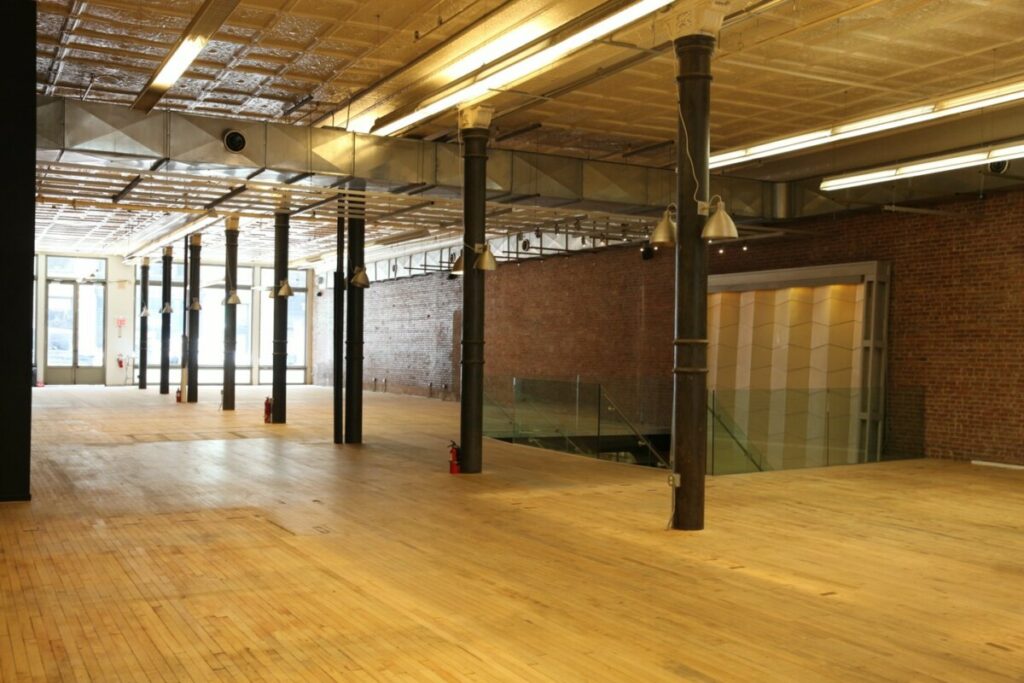
The loft buildings of the Garment District were built for manufacturing, which means tall ceilings, large column-spaced floors and freight access. That is exactly what a market appointment or a sample sale needs and exactly what a street-level shop unit cannot provide.
The West 30s cross-streets hold the showroom and supplier buildings, configured as upper-floor trade space. West 39th Street sits in the heart of it, lined with showroom and supplier buildings, and it is the single densest street in the district for this kind of space. See space on West 39th Street.
Seventh Avenue through the district is signposted as Fashion Avenue and remains the address most associated with the American apparel trade, which is worth something on an invitation even now.
Market weeks, and the only calendar that matters here
Showroom activity clusters around the fashion weeks in February and September, and concentrates in the Garment District, SoHo and Chelsea, where buildings offer the large open floors that market appointments need.
Demand concentrates hard around those market weeks and is comfortable outside them. Showroom floors fill and short-term space in the district becomes genuinely scarce for a few weeks twice a year. In the months between, availability is easy and terms are better. If your dates are flexible, that gap is worth exploiting; if they are not, book further ahead than feels necessary, because market-week space books earlier than anything else in the New York calendar.
See showroom space in the Garment District and event space.
Sample sales
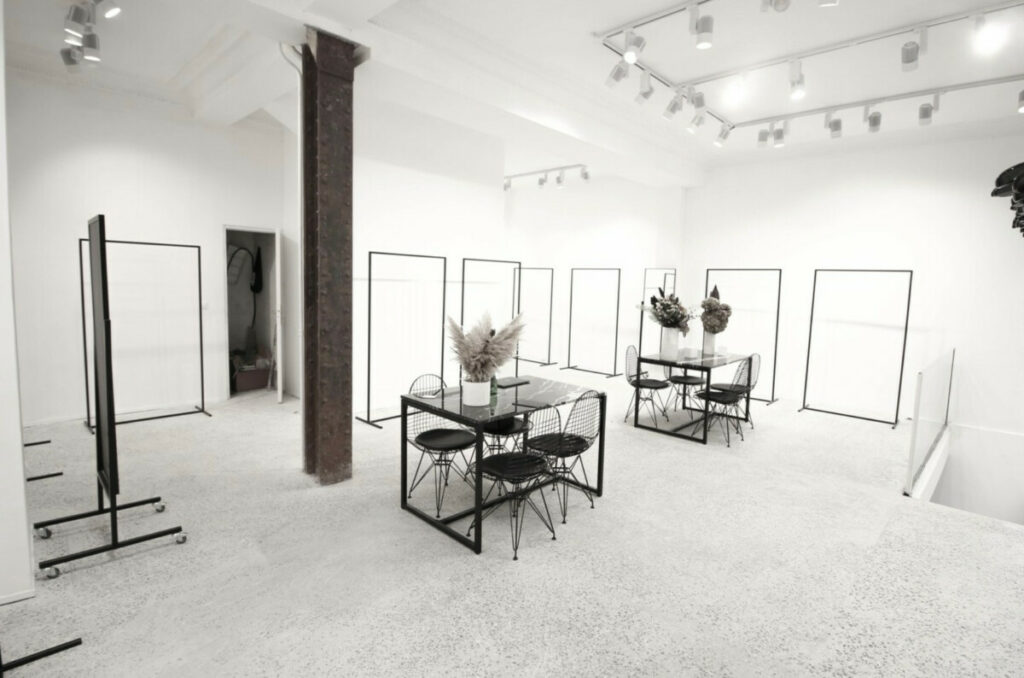
The sample sale is a New York institution and one of the largest single uses of short-term retail space in the city. Brands take a raw or temporary space for a few days to sell through stock, and the Garment District is one of the two or three main locations for it, alongside SoHo and Chelsea.
The SoHo Broadway business improvement district records pop-up and sample-sale tenancies in its occupancy work, which gives some sense of how much of the market this accounts for. Sample sales cluster in spring and again in autumn as brands clear stock between seasons, and demand for raw space tightens noticeably in those windows.
What the Garment District offers a sample sale that a shop unit does not is floor area, freight access and a location every buyer in the city already knows how to reach. See retail and pop-up space in the Garment District.
The edges: Penn Station, Herald Square and Koreatown
The district’s southern edge is where it stops being a trade district and becomes one of the busiest retail corridors in the country.
Penn Station
Penn Station is the busiest transport hub in the western hemisphere by passenger volume, combining commuter rail, intercity trains and several subway lines beneath a single block. The districts around it absorb that flow and are shaped by it more than by their own residents.
Herald Square
The crossing of Broadway, Sixth Avenue and 34th Street, anchored by the largest department store in the United States by floor area. 34th Street around it is one of the highest-volume retail corridors in the country, drawing commuters through Penn Station, visitors to the Empire State Building and shoppers from across the region.
Volume is the entire proposition there, and margin is the constraint. The tenant mix is mass-market national chains in large-format units, which sets the customer’s price expectation. A premium brand at Herald Square is trading against the street’s own positioning rather than with it, which is the reverse of Fifth Avenue twenty blocks north.
Koreatown
Runs along West 32nd Street between Fifth and Sixth Avenues, a dense vertical concentration of restaurants and retail that trades late into the night. It sits between Herald Square and the Empire State Building with Penn Station a short walk west, so it draws on enormous passing volume without being a shopping destination itself. Because the district is only a few blocks, competition is concentrated and availability is scarce, units are small and often oddly shaped, and signage on the building rather than at street level is how a business is found.
Bryant Park
Sits behind the New York Public Library at the district’s north-eastern corner and hosts the city’s largest holiday market, drawing sustained footfall to the surrounding blocks from late autumn. That is a real seasonal lift for anything within a few blocks of it.
Where the Garment District sits in the city
The split across New York is consistent and worth stating plainly. Global flagships take Fifth Avenue, Madison Avenue and SoHo. Emerging and independent labels take the Lower East Side, Nolita and the East Village. Wholesale and trade-facing showrooms sit in the Garment District.
If your format is consumer-facing, one of the others is almost certainly the right answer. If you are selling to buyers, this is.
Getting there
The Garment District is served by the 34th Street-Herald Square, 34th Street-Penn Station, 42nd Street-Port Authority Bus Terminal and Times Square-42nd Street subway stations. The busiest of them is Times Square-42nd Street and Port Authority, one of the three busiest in Manhattan by annual ridership. Access is not the constraint here; it is one of the best-connected districts in the city.
Common questions
Can you open a pop-up shop in the Garment District?
You can take short-term space, but not usually as a conventional street-level shop. The zoning is written around manufacturing, wholesale and showroom use, and the buildings are configured for upper-floor trade space. The formats that work are showrooms, sample sales, market appointments and press days.
What is Fashion Avenue?
Seventh Avenue through the Garment District, signposted as Fashion Avenue. It remains the address most associated with the American apparel trade.
When is the Garment District busiest?
Around the market weeks that follow the fashion shows in February and September, when showroom floors fill and short-term space becomes genuinely scarce. Outside those windows availability is comfortable and terms are easier.
Is the Garment District good for a sample sale?
It is one of the two or three main locations in the city for one. The buildings offer the large open floors, freight elevators and loading that a sample sale needs, and buyers already know how to get there.
What is the difference between the Garment District and Herald Square?
A few blocks and an entirely different business. The Garment District is trade-facing and sold by the floor. Herald Square is one of the highest-volume mass-market retail corridors in the country, where volume is the proposition and margin is the constraint.
Where to look next
Browse showroom space in the Garment District, retail and pop-up space, event space or West 39th Street specifically.
For the other two showroom districts, see our Chelsea guide and SoHo guide. If you are planning the whole project, start with the guide to opening a pop-up shop in New York, or see showroom space across New York.

Written by
Adrien Kerbrat is Chief Revenue Officer and co-founder of Storefront. With more than 10 years in commercial real estate, he is an expert on the French market and short-term retail across Europe. Based in Bordeaux and often in Paris, he writes on pop-up strategy, retail location, and the French retail landscape.
More from Adrien Kerbrat →Related posts:
 SoHo Shopping Guide: The Streets, the Stores and Taking Space in New York
 Nolita NYC Guide: Shopping, Streets and Short-Term Space
 Chelsea London Area Guide: The Complete Chelsea Shopping Guide for Brands and Pop-Up Shops
 Hollywood Neighborhood Guide: Pop-Up Shops, Event Spaces, and Showrooms in Los Angeles
 The Ultimate Guide to Launching a Successful Pop-Up Shop in Dubai