

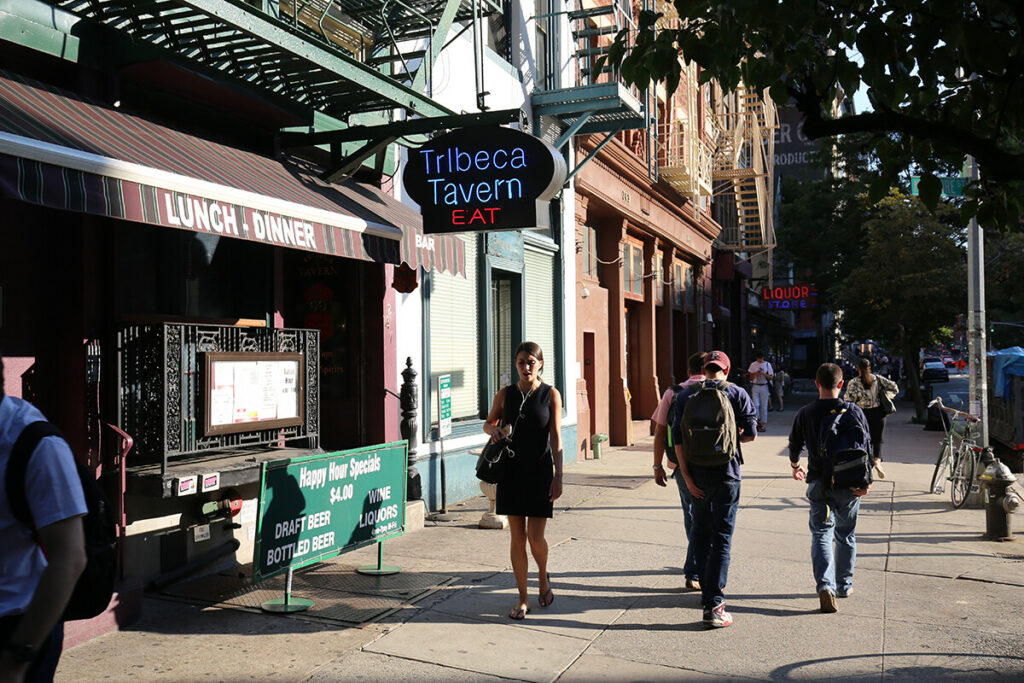
Tribeca is residential, affluent and quiet, with wide streets and the large loft floorplates left from its warehouse past. Retail is sparser and more deliberate than in SoHo a few blocks north, and the district suits showrooms and private events more than walk-in trade.
There is one rule here that exists nowhere else in Manhattan and it shapes everything. The Special Tribeca Mixed Use District caps the size of ground floor retail: in parts of the district a ground-level retail use is limited to 20,000 square feet on a major street and 10,000 square feet elsewhere. The district was written to let light manufacturing and residential use coexist, and the cap is why Tribeca has the retail scale it does rather than the scale its buildings could carry.
See what is available across Tribeca.
The building stock
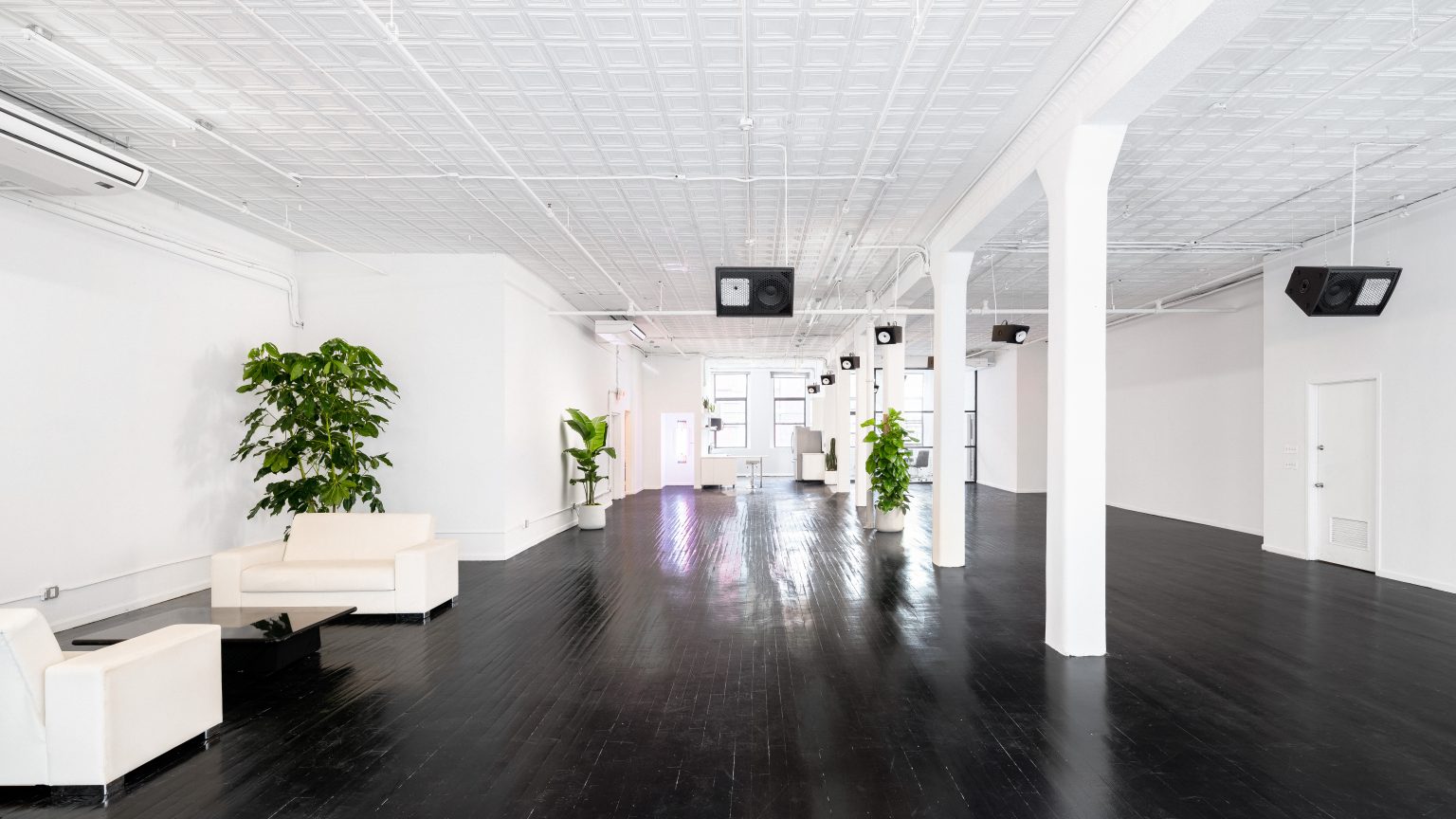
The loft buildings of Tribeca were built for manufacturing, so they offer tall ceilings, large column-spaced floors and freight access. That is what makes them suit showrooms, sample sales and activations that a conventional shop unit could not hold.
Much of the district falls inside one of its four historic districts, covering the warehouse blocks that give the neighborhood both its large floorplates and its protected street frontages. Generous floor area, limited freedom to change the outside. Establish what is permitted before you plan a frontage treatment.
See showroom space in Tribeca and event space in Tribeca.
The streets, and how differently they behave
Franklin, White and Walker Streets
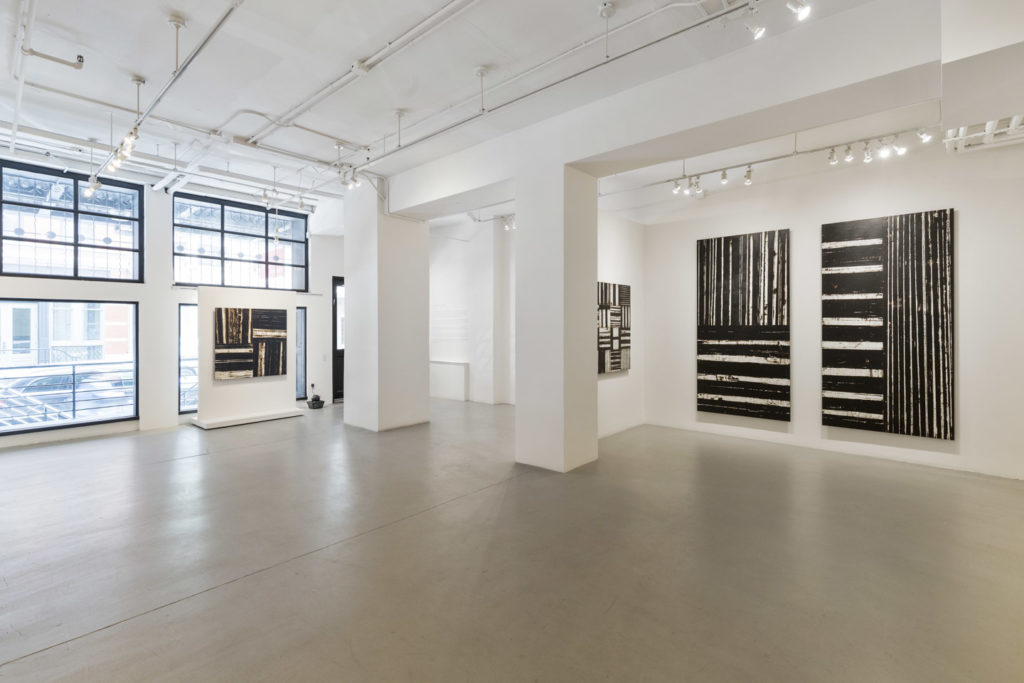
Tribeca’s gallery and showroom clusters, in former warehouse buildings with large floorplates. This is the part of the district brands usually mean, and the part that suits a presentation or an exhibition.
West Broadway
Runs the length of SoHo into Tribeca and holds galleries and upper-end fashion on wider, quieter frontage than Broadway itself. It is the natural bridge between the two districts.
Broadway through Tribeca
Quieter and more mixed than the SoHo blocks north of Canal Street, with office and residential buildings above and a thinner, more local retail frontage below. The change across that one intersection is abrupt, and a claim that is true of Broadway in SoHo is usually false here. See space on Broadway in Tribeca.
Chambers Street
The busiest street in Tribeca and the least like the rest of it. It carries commuter and civic traffic toward City Hall and the courts, which gives it a weekday population with a fixed lunch hour and very little weekend life.
For a short let that is a genuinely useful profile. It offers real weekday volume at Tribeca-adjacent rents and almost nothing on a Saturday. Anything measured across seven days will read badly; measured across five it reads well. Decide which you are measuring before you judge the location.
Warren Street
Residential above and small-scale below, serving Tribeca’s own population rather than any visiting one. Trade is local, steady and quiet, with a family weighting that shows in the mix of shops.
Hudson and Greenwich Streets
Run north from Tribeca into the West Village and hold most of the through-traffic retail on the far west side of downtown. See space in the West Village if you are looking along that corridor.
Canal Street
The dividing line between SoHo and Tribeca to the north and west and Chinatown to the east, and a dense, heavily trafficked retail corridor in its own right. It is a boundary rather than a destination for most brands.
The two weeks that change the district
Tribeca has a sharper calendar than its quiet streets suggest, and both peaks favor exactly the formats the district is built for.
| Window | When | What happens |
|---|---|---|
| The Tribeca Festival | June | The film festival runs across venues in Lower Manhattan and brings an industry and press audience into Tribeca and the surrounding districts for roughly a fortnight, with screenings, talks and brand-sponsored events through the period. |
| The Armory Show | Autumn | The city’s main contemporary art fair, with satellite fairs, gallery openings and collector events filling Chelsea, Tribeca and the Lower East Side for the same week. The strongest week of the year for art-adjacent temporary space. |
If your format is a press day, a private view or a sponsored event, those two windows are worth building a plan around. See art and gallery space in Tribeca.
Who Tribeca suits
- Good fit. Showrooms, private events, press days, single-brand installations, and anything wanting a large quiet room with an affluent address.
- Workable with care. A weekday-facing format on Chambers Street, where the civic and commuter population delivers real lunchtime volume five days a week.
- Poor fit. Anything depending on browsing footfall or weekend passing trade. Retail here is deliberate rather than casual, and the ground-floor size cap limits what you can build at street level.
If you want volume and browsing, SoHo is immediately north across Canal Street and built for exactly that. If you want large floors and an art calendar, Chelsea has more of them. Our ranking of the best New York neighborhoods for a pop-up shop compares the options.
Getting there
Tribeca is served by the Brooklyn Bridge-City Hall, Canal Street, Chambers Street, City Hall, Franklin Street, Park Place, WTC Cortlandt and World Trade Center subway stations. The busiest of them is the Chambers Street, World Trade Center, Park Place and Cortlandt Street complex, among the ten busiest in Manhattan by annual ridership.
That is a lot of transit for a district this quiet, and it is concentrated at the southern end. The blocks around Franklin and White Streets feel considerably further from a station than the map suggests, which is part of why they stayed quiet.
Common questions
Is there a size limit on shops in Tribeca?
Yes, and it is unusual. The Special Tribeca Mixed Use District caps ground floor retail use at 20,000 square feet on a major street and 10,000 square feet elsewhere in parts of the district. It was written to let light manufacturing and residential use coexist.
Is Tribeca good for a pop-up shop?
For a showroom, a private event or a press day, yes, and the loft floors are better than almost anything downtown. For a walk-in shop it is weak: the district is residential and quiet, and its retail is deliberate rather than casual.
What is the difference between SoHo and Tribeca?
Canal Street, and everything. SoHo carries very high pedestrian volumes and flagship retail. Tribeca is quieter, more residential and more affluent, with larger floorplates and far less passing trade. The change across that one intersection is abrupt.
Which is the busiest street in Tribeca?
Chambers Street, which carries commuter and civic traffic toward City Hall and the courts. It has a strong weekday lunchtime and very little weekend life, so it suits a five-day format and penalizes a seven-day one.
When is Tribeca busiest?
The Tribeca Festival in June brings an industry and press audience into the district for roughly a fortnight, and Armory Show week in the autumn fills it with gallery and collector activity. Both suit event and showroom formats rather than retail.
Where to look next
Browse showrooms in Tribeca, event space, art and gallery space or retail and pop-up space.
Nearby: the SoHo guide for the district north of Canal Street, the Chelsea guide for the larger gallery floors, and the Meatpacking District guide for flagship-scale activations. If you are planning the project rather than the location, start with our guide to opening a pop-up shop in New York, or see short-term retail space across New York.

Written by
Adrien Kerbrat is Chief Revenue Officer and co-founder of Storefront. With more than 10 years in commercial real estate, he is an expert on the French market and short-term retail across Europe. Based in Bordeaux and often in Paris, he writes on pop-up strategy, retail location, and the French retail landscape.
More from Adrien Kerbrat →Related posts:
 SoHo Shopping Guide: The Streets, the Stores and Taking Space in New York
 Nolita NYC Guide: Shopping, Streets and Short-Term Space
 Chelsea London Area Guide: The Complete Chelsea Shopping Guide for Brands and Pop-Up Shops
 Hollywood Neighborhood Guide: Pop-Up Shops, Event Spaces, and Showrooms in Los Angeles
 The Ultimate Guide to Launching a Successful Pop-Up Shop in Dubai