We use cookies and similar technologies to track your activity and improve your experience.
Sort by
Recommended
See on map
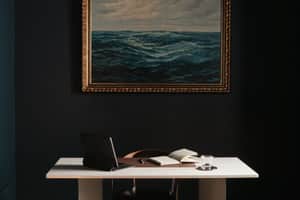
Atelier / Workshop Studio
∙
Madrid
75 m²
from 1.500 € per day
Event Space in Moncloa, Madrid
Moncloa covers the north-west of central Madrid, taking in the Argüelles residential grid and the Ciudad Universitaria campus. The district combines an affluent residential population with one of the largest university communities in Europe, giving event organizers access to a mixed-age audience at rents well below the city's prime corridors. Green space, strong public transport and proximity to the Casa de Campo set it apart from denser central districts.
Why Moncloa works for events
Moncloa offers something most central Madrid districts do not: real outdoor capacity. The Parque del Oeste and the Templo de Debod draw weekend and sunset footfall along the escarpment above the river, while the Casa de Campo across the river is the largest park in the city and holds major event and exhibition grounds.
The district's residential side, centred on the Argüelles grid, provides a settled local audience. The university campus fills the area with a younger demographic during term time. A format that can speak to both groups does well here. If your event targets only a high-spending corporate crowd, the audience is better found in Salamanca or Chamberí.
For a wider view of what is available across the city, browse event spaces in Madrid.
The audience and its rhythm
The catchment is split roughly in half: affluent residents in the Argüelles blocks and students from the nearby campuses. That student half leaves from June to September, which inverts the seasonal pattern of visitor-facing districts. Trade follows the academic calendar, so spring and autumn are the strongest windows, roughly April to June and September to early December.
Madrid eats and trades late. Lunch runs from around two, dinner from nine or ten, and nightlife starts when many cities are closing. An event importing Northern European hours will miss the evening entirely. Plan your programme around the city's actual clock, not the one you are used to.
Seasonality to plan around
Spring and autumn are the strongest trading seasons. The weather is comfortable, the city is full, and the student population is in residence. A summer activation would be trading to a largely empty district: August is genuinely extreme on Madrid's high plateau, much of the population leaves, and independents close.
Winter is cold and dry with bright days. The altitude makes it colder than the Mediterranean coast, so outdoor elements need to account for that, though the sunshine keeps terraces usable more of the year than in Northern Europe. January is thin after Reyes. The municipal Veranos de la Villa programme spreads performance across parks and heritage venues through July and August, but it exists precisely because August is otherwise quiet.
Getting to Moncloa
Moncloa is a major transport interchange for the north-west of the region, bringing a large commuter flow through the district. Fares are integrated across metro, bus and Cercanías by zone, and the whole city sits in zone A, so one ticket type covers your entire activation and a crew does not need to think about zones.
Public transport here is inexpensive against the cost of the event it serves. Madrid also has a large metered taxi fleet and a fixed fare to and from the airport, and private hire is widely available. Guest logistics are straightforward: a car can be had at short notice at almost any hour, which matters for an evening event.
On-street parking in the central area is metered and priced by emissions class, with residents prioritized. A crew should book an off-street car park rather than rely on finding a space. The metro closes overnight, so for late events the night bus network radiates from Cibeles and Sol.
What the district offers beyond events
Moncloa is more than an event district. Brands looking at pop-up retail in Moncloa will find units along Calle Princesa and in the Argüelles grid at moderate rents. The area also suits showroom rentals and art gallery pop-ups, especially formats that benefit from the weekend footfall around the Parque del Oeste.
For an overview of everything available in the district, see the Moncloa hub page.
Spending less on your event space
Rates vary by size, timing and fit-out, but several levers are always in your hands.
-
Timing. Off-peak months and midweek dates cost less than weekends and peak season. Avoiding city-wide moments removes the premium that competition creates.
-
Duration. A longer booking usually earns a better daily rate, because the host is pricing continuity.
-
Size. A smaller footprint in the right spot often outperforms a larger one in the wrong place, and costs less.
-
Fit-out. A finished, furnished space commands more than a raw one. If you are bringing your own build, the raw space is the better buy.
-
Flexibility. Being open on dates, or able to take a space at short notice when a host has a gap, is the single biggest lever a renter controls.
Madrid as a broader market
Madrid is Spain's capital and largest consumer market, the seat of government and the center of Spanish banking. The city's customer base is more domestic than Barcelona's, drawing heavily from the rest of Spain and from Latin America rather than from Northern European city breaks. That changes the language, the price expectation and the seasonal pattern of the trade.
The Madrid city page covers all districts. For broader thinking on how brands use event spaces, read how brands participate with showrooms, pop-ups and event spaces.
Frequently Asked Questions
When is the best time to book an event space in Moncloa?
Spring and autumn are the strongest windows, roughly April to June and September to early December. The student population is in residence, the weather is comfortable and the city is full. Avoid August, when much of Madrid leaves and the district is quiet.
What kind of audience can an event in Moncloa reach?
The district serves two groups: an affluent residential population in the Argüelles grid and a large student community from the Ciudad Universitaria campus. A format that speaks to both does well. The student half is absent from June to September.
How do guests get to an event in Moncloa?
Moncloa is a major transport interchange for the north-west of the region. Fares are integrated across the network and the whole city sits in a single zone. Taxis are widely available with a fixed airport fare, and private hire can be arranged at short notice.
Is there outdoor event capacity in Moncloa?
The district has more green space than anywhere else in central Madrid, including the Parque del Oeste and proximity to the Casa de Campo, which holds major event and exhibition grounds. Winter is cold and dry, so outdoor elements in winter need to plan for the altitude.
How can I reduce the cost of an event space in Moncloa?
Book midweek or during off-peak months, choose a longer booking for a better daily rate, consider a raw space if you are bringing your own build, and stay flexible on dates. Rents in Moncloa sit well below the city's prime corridors.


