We use cookies and similar technologies to track your activity and improve your experience.
Sort by
Recommended
See on map

See on map
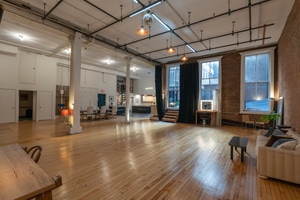
Event Space
∙
New York
2,100 sq ft
from $4,800 per day
See on map

See on map

See on map

Creative Space
∙
Flatiron District
4,000 sq ft
from $10,200 per day
See on map

Photo / Filming Studio
∙
New York
2,200 sq ft
from $4,800 per day
5(2)
See on map

See on map

See on map

See on map
.jpg)
See on map
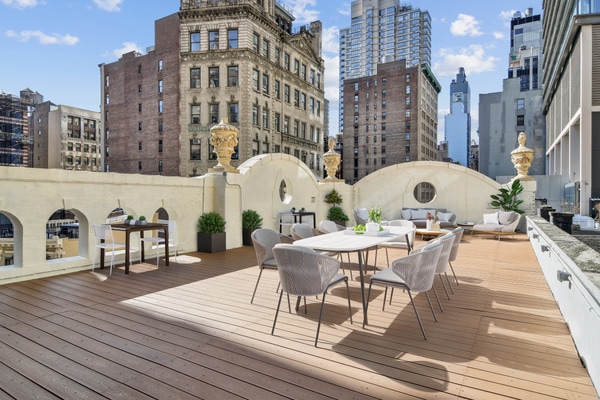
Rooftop
∙
New York
2,769 sq ft
from $4,080 per day
See on map

Office Space
∙
New York
150 sq ft
from $200 per day
See on map

Office Space
∙
New York
240 sq ft
from $90 per day
Art Gallery for Rent in the Flatiron District, New York
The Flatiron District sits at the intersection of Broadway and Fifth Avenue, roughly bounded by 23rd and 30th Streets, and has long drawn artists, designers, and brand strategists to its mix of Beaux-Arts architecture and open-plan commercial lofts. When you rent an art gallery in Flatiron District, New York, you get immediate proximity to Madison Square Park, Eataly, and the NoMad corridor — a built-in audience of culturally engaged locals and design-industry professionals who pass through daily.
Storefront lists short-term art gallery spaces across the neighborhood, from intimate white-cube rooms suited to solo exhibitions to larger raw lofts that accommodate group shows, sculpture installations, and brand art activations. Every space is available on flexible terms — a weekend pop-up, a two-week exhibition run, or a month-long residency.
For a broader look at spaces across Manhattan and the five boroughs, browse Art Space In New York.
What Makes Flatiron a Strong Choice for an Art Gallery Rental
Flatiron's architectural stock is a direct asset for art programming. The neighborhood's pre-war loft buildings — many converted from showroom and manufacturing use — offer high ceilings, original hardwood floors, and north-facing windows that produce the diffuse, even light galleries depend on. These are not purpose-built white-box spaces retrofitted for art; they carry genuine character that collectors and visitors read as credibility.
The neighborhood also benefits from adjacency to Chelsea, which remains New York's highest-density gallery district. Visitors already moving through Chelsea's gallery corridor on West 20th to 27th Streets extend naturally into Flatiron for secondary programming. Positioning an exhibition here during Chelsea gallery openings — typically Thursday evenings — captures that overflow traffic without competing directly with larger institutional galleries.
Neighborhood-specific draws include:
-
Madison Square Park — a recognized cultural gathering point with its own public art commissions, whose visitors skew art-aware
-
The NoMad adjacency — the stretch north of Madison Square Park draws boutique hotel guests, design-press editors, and creative agency staff
-
Transit density — the N, R, W, Q, F, M, 1, 2, 3, 4, 5, and 6 trains all stop within five minutes of the district's core, reducing attendance friction
Types of Art Gallery Space Available in Flatiron
The art gallery spaces listed on Storefront in Flatiron District cover a range of formats. Understanding which format fits your project keeps the booking process efficient.
White-cube gallery rooms are the most requested format for solo and duo shows. These spaces typically run 800 to 2,000 square feet, with painted white walls and track or spot lighting already installed. They suit painting, photography, and works-on-paper exhibitions where wall space is the primary variable.
Raw loft spaces offer more square footage — often 2,500 to 5,000 square feet — at a lower cost per square foot. They require more production work to dress for exhibition but allow sculptural installation, video projection, and large-format work that smaller gallery rooms cannot accommodate.
Retail-to-gallery conversions are storefront spaces with street-level visibility on Broadway, Fifth Avenue, or the side streets between. These work well for brand art activations where foot traffic and window display are part of the communication strategy.
Pricing for a Short-Term Art Gallery Rental in Flatiron
Rates for temporary art gallery space in Flatiron District vary by size, finish, and duration. As a baseline guide:
-
Small gallery rooms (under 1,000 sq ft): from $500 to $900 per day
-
Mid-size loft galleries (1,000 to 2,500 sq ft): from $900 to $2,500 per day
-
Large raw lofts and converted showrooms (2,500 sq ft and above): from $2,500 to $6,000 per day
Weekly and monthly rates are available for most listings and typically reflect a 15 to 25 percent discount against the daily rate. Short-term art gallery Flatiron rentals booked for opening-night events often carry a minimum day commitment rather than a single-day flat fee — confirm this with each host before finalizing.
When to Book: NYC Art Calendar Peaks
Demand for temporary art gallery space in Flatiron tightens around New York's key art-calendar moments. Planning around these dates — or deliberately targeting them — affects both availability and the size of the audience your exhibition reaches.
-
The Armory Show (September, Javits Center): the city's flagship contemporary art fair draws international collectors and press; gallery programming timed to Armory week benefits from the concentrated presence of art buyers already in New York
-
Frieze New York (May, The Shed at Hudson Yards): the city's major May fair; secondary gallery programming in Flatiron during Frieze week taps visitors exploring beyond the main fair
-
Fall gallery season (September through November): the highest-traffic window for gallery openings citywide; collectors return from summer, institutions launch new programs, and press calendars are active
-
TEFAF New York (May, Park Avenue Armory): focused on fine art and antiquities, draws a collector base with purchasing intent
Book art gallery space in Flatiron at least six to eight weeks ahead of these windows. Spaces in this neighborhood move faster during art-week periods than at any other time of year.
Art Gallery vs. Exhibition Space vs. Brand Art Activation
These terms are often used interchangeably in venue searches, but they describe meaningfully different formats that affect which space you should book.
An art gallery rental typically refers to a dedicated space used primarily for displaying and selling original works over a defined exhibition run. The priority is wall space, lighting quality, and an environment that supports focused viewing.
An exhibition space is broader — it accommodates curated experiences that may include interactive elements, video, sound, or mixed-media installation where the spatial environment is itself part of the work. Raw loft spaces in Flatiron handle this format well.
A brand art activation uses art as a marketing vehicle: a brand commissions or licenses works, designs an immersive environment, and invites press, clients, and consumers for a timed event. These activations prioritize street visibility, photographic backdrops, and flow for large groups — storefront spaces and convertible event lofts are the most appropriate format.
For context on how these space types map across the city, see the Art Gallery Exhibition Space For Rent project page.
Flatiron District Compared to Nearby Art Neighborhoods
Flatiron sits between two of New York's most active art corridors. Understanding the distinctions helps you position your exhibition correctly.
Art Space In Chelsea, New York is the city's most institutionally dense gallery district, with galleries ranging from major blue-chip operations to emerging-program spaces along West 20th to 27th Streets. Chelsea commands premium rates and carries the highest baseline foot traffic from art-world regulars.
Art Space In Lower East Side, New York skews younger and more experimental, with a strong emerging-artist gallery scene concentrated on Orchard, Ludlow, and Rivington Streets. Rates are lower and the audience has high discovery intent.
Flatiron sits between these two poles — more accessible than Chelsea in terms of cost, more established than the Lower East Side in terms of audience profile. It is a strong choice for mid-career artists, design-world brand activations, and group shows targeting a mixed collector and industry audience.
For the full range of available spaces in the neighborhood, browse the Flatiron District page or explore all New York listings by neighborhood and use case.
FAQ
How much does it cost to rent an art gallery in Flatiron District, New York?
Rates for a temporary art gallery in Flatiron District start at around $500 per day for smaller white-cube rooms and reach $6,000 or more per day for large converted lofts. Weekly bookings typically carry a 15 to 25 percent discount against the daily rate.
What is the minimum rental period for an art gallery space in Flatiron?
Most Flatiron art gallery rentals are available for a minimum of one day, though spaces with high demand during art-week periods may require a two- or three-day minimum. Check each listing's terms before booking.
Which NYC art events drive the most demand for gallery space in Flatiron?
The Armory Show in September, Frieze New York in May, and the general fall gallery season from September through November are the three windows when temporary art gallery space in Flatiron books fastest. Plan at least six to eight weeks ahead for these periods.
Is Flatiron District better for art exhibitions than Chelsea?
Chelsea has higher institutional density and art-world foot traffic, but Flatiron offers more flexible pricing, architectural variety, and proximity to a design and tech audience that Chelsea does not capture as directly. The right choice depends on your target audience and budget.
Can I use a Flatiron art gallery space for a brand activation?
Yes. Several Storefront listings in Flatiron are well-suited to brand art activations, particularly street-level storefronts on Broadway and Fifth Avenue with strong window visibility and layouts that support large-group events.


