We use cookies and similar technologies to track your activity and improve your experience.
Sort by
Recommended
See on map

See on map
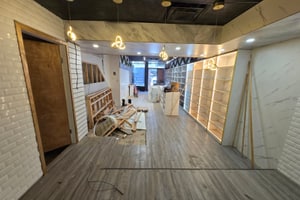
Creative Space
∙
New York
1,450 sq ft
from $260 per day
Art Gallery for Rent on Warren Street, New York
Warren Street sits at the northern edge of Tribeca, one block south of Chambers Street and a short walk from Hudson Square. The street has attracted artists, collectors, and independent galleries for decades, partly because its cast-iron loft buildings offer raw, high-ceilinged floor plates that suit exhibition work, and partly because rents here run below comparable square footage in Chelsea or the Upper East Side gallery district. If you want to rent an art gallery on Warren Street in New York, this page covers what to expect: venue types, pricing, seasonal timing, and how to book.
For a broader look at Art Gallery Exhibition Space For Rent across the country, Storefront's project hub has filtered listings by format and capacity.
Why Warren Street for an Art Gallery
Warren Street occupies a practical middle ground in the New York art market. It is walkable from Hudson Square, where a growing number of design studios and architecture firms have relocated, generating steady foot traffic from an audience already oriented toward visual culture. The Financial District collector base is a 10-minute walk south. Tribeca's residential population skews toward established buyers, not browsers.
The street's specific advantages over nearby alternatives:
-
Lower day rates than Chelsea: Gallery spaces in Chelsea routinely list at $800 to $2,000 per day for 1,500 to 3,000 sq ft. Warren Street and the surrounding Tribeca blocks typically range from $300 to $900 per day for comparable square footage, as of 2025.
-
Loft floor plates suited to large-format work: The 19th-century warehouse buildings along Warren Street and its immediate cross streets (West Broadway, Greenwich Street) offer column-free spans of 1,000 to 4,000 sq ft, relevant for sculpture, installation, and oversized canvas work.
-
Proximity to established gallery infrastructure: Tribeca and Lower Manhattan have hosted significant gallery programs, including Deitch Projects' long-running Grand Street presence nearby, and the area remains associated with serious contemporary work rather than tourist-facing retail art.
-
Easier logistics than Brooklyn: For artists shipping work from outside New York, a Tribeca address simplifies trucking relative to Red Hook or Bushwick, with loading access and freight elevator availability common in the neighborhood's older stock.
What Art Gallery Spaces on Warren Street Look Like
The short-term art gallery spaces available on Warren Street and the immediately surrounding Tribeca blocks fall into three broad formats:
-
Raw loft floors: Whitewashed or polished concrete, 1,200 to 3,500 sq ft, track lighting or natural light from oversized windows, suitable for group shows or solo exhibitions.
-
Ground-floor retail-to-gallery conversions: Street-level storefronts that have been stripped and painted white, typically 400 to 900 sq ft, suited to intimate solo shows, art fair preview exhibitions, or brand art activations.
-
Multi-room gallery suites: Spaces divided into two or three rooms across a single floor, useful when an artist or curator wants to sequence a narrative through the exhibition, a format increasingly requested for immersive or mixed-media work.
All three formats appear on Storefront's Warren Street listings, filterable by size, availability, and price.
Art Gallery Rental Costs on Warren Street, New York
Pricing for temporary and short-term art gallery space in this part of Tribeca varies by size, duration, and finish level. Indicative ranges as of 2025:
-
Small ground-floor storefronts (400–700 sq ft): $300 to $550 per day; $4,500 to $8,000 per month
-
Mid-size loft floors (800–1,500 sq ft): $550 to $900 per day; $8,000 to $14,000 per month
-
Large raw loft or multi-room suite (1,500–3,500 sq ft): $900 to $2,200 per day; $14,000 to $30,000 per month
Week-long bookings typically attract a 10 to 15 percent discount off the day rate. Spaces with professional track lighting, climate control, and security systems sit at the upper end of each bracket.
For comparison: equivalent square footage in Chelsea runs 40 to 80 percent higher. Art Space In New York listings across the city show this spread clearly when filtered by neighborhood.
Use Cases: Who Rents Art Gallery Space on Warren Street
Solo artist exhibitions: Painters, photographers, and sculptors staging their first or second New York show often book a Warren Street loft for 10 to 21 days, combining a private opening on day one with public hours through the run.
Commercial art fair satellites: During Frieze New York (held each May at The Shed in Hudson Yards) and The Armory Show (held each September at the Javits Center), galleries and independent dealers rent temporary Warren Street spaces as satellite venues, capturing collector traffic that spills out from the main fairs.
Brand art activations: Fashion, beauty, and technology brands rent gallery-format spaces in Tribeca to present artist collaborations, limited-edition product launches, or editorial shoots. The gallery aesthetic lends credibility that a conventional event space does not.
Group shows and curatorial projects: Emerging curators without institutional affiliations use short-term Tribeca rentals to produce thematic group exhibitions, often timed to coincide with gallery season openings in September or the spring selling season in March and April.
Seasonal Calendar: When to Book a Warren Street Gallery
New York's art market runs on a loose calendar that affects both availability and pricing for temporary gallery space:
-
September to November: Fall gallery season opens after Labor Day. This is peak demand for short-term exhibition space across New York. Book at least 8 to 12 weeks ahead.
-
March to May: Spring selling season, anchored by The Armory Show (March) and Frieze New York (May). Satellite exhibition spaces book out fast in Tribeca and SoHo. Book 10 to 14 weeks ahead for May.
-
June to August: Lower demand and lower pricing. Useful for artists who want a long run at reduced cost, or brands shooting campaign content without the pressure of a public opening.
-
December to February: Quiet period except for the weeks immediately before and after the holiday selling season in December. January and February offer the best value for experimental or low-budget projects.
How to Rent Art Gallery Space on Warren Street
-
Define your exhibition length and dates: Short-term rentals on Warren Street range from 3 days to 3 months. Knowing your opening date before you search narrows options significantly.
-
Set a realistic budget: Use the indicative ranges above as a baseline. Factor in: space rental, insurance (usually required by the venue), installation labor, lighting adjustments, and opening reception costs.
-
Decide on size and format: Are you hanging 2D work, showing sculpture, or staging an immersive installation? Column-free loft floors suit large-format and 3D work; smaller storefronts suit photography or works on paper.
-
Browse available listings: Filter by neighborhood (Warren Street, Tribeca) and space type on Storefront. Compare with Art Space In Chelsea, New York and Art Space In Soho, New York if your date range is flexible and you want to compare pricing.
-
Contact the host and confirm logistics: Ask about loading dock access, freight elevator capacity, existing lighting rigs, wall hanging systems, and security arrangements before committing.
-
Sign the rental agreement and arrange insurance: Most gallery hosts require short-term renters to carry event liability insurance. Coverage typically costs $150 to $400 for a 2-week booking.
FAQ
How much does it cost to rent an art gallery on Warren Street, New York?
Rates for temporary art gallery space on Warren Street typically range from $300 to $2,200 per day depending on size and finish level, as of 2025. Small storefronts (400 to 700 sq ft) start around $300 per day. Larger loft floors above 1,500 sq ft run $900 to $2,200 per day. Week-long and month-long bookings usually attract a discount off the daily rate.
What is the difference between a pop-up gallery and a permanent gallery on Warren Street?
A permanent gallery maintains a fixed program, staff, and representation relationships year-round. A pop-up gallery is a temporary art gallery occupying a space for days, weeks, or a few months under a short-term rental agreement. The physical spaces can be identical, the distinction is the lease structure and the duration of the program.
When should I book gallery space in Tribeca for a fall art show?
Fall gallery season in New York runs September through November. Demand for short-term exhibition space peaks in September around The Armory Show. Book at least 8 to 12 weeks before your intended opening date to secure a specific Warren Street or Tribeca venue.
Can brands use art gallery space on Warren Street for non-exhibition purposes?
Yes. Many short-term gallery rentals in Tribeca are used for brand activations, editorial shoots, product launches, and press previews. The gallery-format space, white walls, controlled lighting, hard floors, is a common request from fashion and luxury brands. Confirm permitted uses with the host before booking.
Is Warren Street a good location for a first New York exhibition?
Warren Street and the surrounding Tribeca blocks offer a credible address at rates below Chelsea, with a residential collector base nearby. For artists staging their first or second New York show, the area represents a practical balance between visibility, cost, and the quality of available spaces. Art Space In West Village, New York is another option worth comparing for similar price points and foot traffic character.


