Why Book Event Space in East Williamsburg
East Williamsburg is the working half of the Williamsburg story: still substantially industrial, with active workshops, studios and light manufacturing rather than retail frontages. That industrial character is exactly why it works for events. Space here is larger, cheaper and rawer than anything in a retail district, with high ceilings, truck access, column-free floors and yard space. The neighborhood holds no continuous shopfront run, which means an event here trades on an invited audience rather than passing footfall, a different model that suits launches, private parties, art openings and networking events.
The cheapest usable floor area in inner Brooklyn sits on Grattan Street and Johnson Avenue, the center of the East Williamsburg workshop district. Single-storey and low industrial buildings with roller shutters, yard access and truck parking line these blocks. Bogart Street and Morgan Avenue form the broader studio district around the Morgan Avenue subway station, in active industrial buildings housing working photographers, fabricators and production companies. That proximity means you are renting space in a genuine creative community rather than an empty shell.
Rents here run half or less of what you would pay for comparable space in North Williamsburg or the retail districts of Manhattan. The neighborhood's manufacturing zoning allows commercial and industrial uses while restricting new residential development, which keeps the stock affordable and the character authentic.
What Kinds of Events Thrive Here
East Williamsburg's raw warehouses and high-ceiling lofts suit events that need scale and a working aesthetic. Private parties and celebration dinners work well in spaces with character and room to move. Art openings, gallery installations and creative exhibitions play to the neighborhood's studio identity. Product launches and showroom activations benefit from large, flexible floor plates and authentic industrial backdrops. DJ nights and music events use the technical infrastructure and acoustic qualities of converted warehouse lofts. Networking events and creative conferences thrive on the artist community and the sense of being in a working creative district.
Unlike retail pop-ups that depend on passing traffic, these events succeed by bringing an audience: you control who attends, how they arrive and what they experience. That model makes East Williamsburg's isolation from retail corridors an advantage rather than a drawback.
Space Types and What to Expect
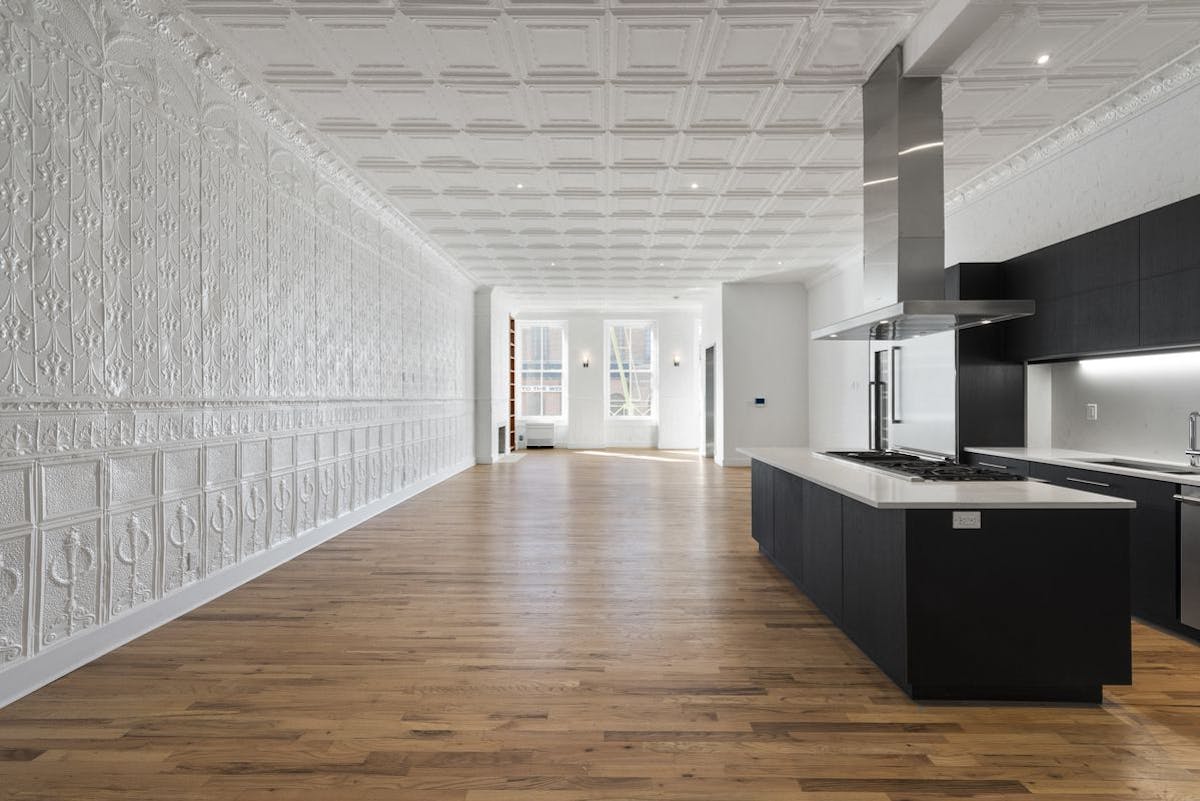
East Williamsburg's usable stock is mostly converted industrial: single-storey works with freight access, warehouses, artist studios and garment lofts. Ground-floor units with roller shutters and yard space are common. High ceilings, often twelve feet or more, and large column-spaced floors allow flexible layouts. Truck access and loading facilities are standard, making setup and breakdown straightforward. Many spaces retain their working character: exposed brick, polished concrete, steel beams and skylights rather than commercial fit-out.
Because so much stock is former industrial, the practical requirements of an event are often simpler than in a retail building. Freight access, goods lifts and street-level vehicle access exist because the buildings were designed for them. That matters if you are moving sets, equipment or large objects.
The neighborhood sits in a manufacturing zoning district, where industrial and most commercial uses are permitted. A space here is commercial space in an industrial building, typically larger and cheaper than high-street units, with different expectations about finishes and services.
Getting There
East Williamsburg is served by the Grand Street, Jefferson Street, Montrose Avenue and Morgan Avenue subway stations. Several lines run through the neighborhood, making it reachable from across the city. The area sits on the L line, which runs across Brooklyn and Queens and connects to Manhattan. A short walk from the nearest station gets you to most spaces in the district.
Things to Plan For
Because a space holds a crowd rather than shoppers once, the fire department sets the limit. A place of assembly certificate governs how many people may be inside, how many exits are needed and whether a fire guard is required. The number a loft can legally hold is routinely far below the number it looks like it could hold, so confirm the capacity with the host before committing.
Permits depend on what the event is. Serving or sampling food brings in the city health department. Anything that uses the pavement or street goes through the Street Activity Permit Office and typically needs ten days to three weeks notice. Alcohol requires a state liquor license, and the workable routes for a commercial event are to hire a licensed caterer or take a space that already holds a license.
Most practical: confirm the space's certificate of occupancy with the host. Brooklyn's converted industrial stock frequently still says manufacturing or storage even though the unit looks like event-ready space. Using it for public assembly without a matching certificate is the commonest way a Brooklyn project stalls.
FAQ
What counts as cheap event space in Brooklyn?
East Williamsburg delivers cheap space because it is industrial rather than retail: warehouse lofts and studios in neighborhoods where manufacturing zoning holds rents down. Compared with retail districts or Manhattan, rates here are substantially lower for the same floor area. The trade-off is that you are inviting your audience rather than relying on passing footfall.
How much does event space cost in East Williamsburg?
Rates vary by location, size, time of year and how long you book. Industrial warehouse and loft space typically costs less per square foot than retail frontage or Manhattan equivalents, but the specific rate depends on the space and the host. Ask the host for current rates when you enquire.
Can I rent event space by the hour or the day?
Spaces on Storefront list their rates and terms individually. Some accept hourly bookings for short events, others prefer daily or weekly bookings. The listing shows the owner's terms and you can ask about flexibility when you enquire.
What kinds of events work best in East Williamsburg?
Private parties, art openings, product launches, creative conferences and networking events all thrive in the neighborhood's warehouse lofts and artist studios. These are events built on an invited audience rather than walk-in traffic. The industrial character and large floor plates suit gatherings that need scale and authenticity.
How do I compare East Williamsburg with other Brooklyn neighborhoods for events?
East Williamsburg competes on price and space size: you get the cheapest usable floor area in inner Brooklyn and room to move. North Williamsburg, Bushwick and Astoria also offer good value. Explore event space in Brooklyn to see listings across neighborhoods and find the fit for your event, dates and budget.
What should I check before booking?
Confirm the space's certificate of occupancy with the host, it must allow public assembly or events. Check the fire department's occupancy limit for your guest count. Verify truck access and loading if you need it. Ask about the host's cancellation terms and what is included. If your event needs a permit, confirm lead times with the host and plan ahead.
Explore more: Event Space Rental