

A fitting room is one of the most powerful conversion tools in a pop up shop.
Customers may browse displays and admire merchandising, but many purchase decisions are finalized inside the dressing room. A well-designed fitting room increases confidence, comfort, and ultimately sales.
While overall pop up store design shapes atmosphere and layout, fitting rooms require specific attention to privacy, lighting, ventilation, and space planning. If you’re looking for a broader framework, start with our guide to pop up store design.
Below are 16 practical fitting room design tips tailored specifically for temporary retail environments.
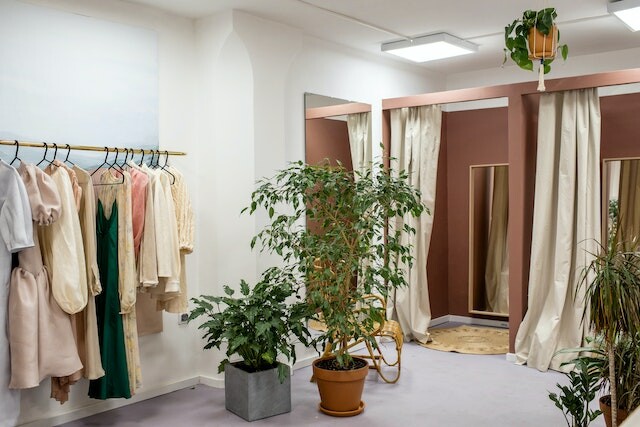
What Is a Fitting Room in a Pop Up Shop?
A fitting room (or dressing room) is a designated space where customers can try on products before purchasing.
In pop-up environments, fitting rooms must balance:
- Limited square footage
- Temporary installation constraints
- Customer privacy
- Brand aesthetics
- Fast setup and removal
Done correctly, a boutique dressing room becomes a high-impact conversion zone rather than just a functional necessity.
1. Ensure Adequate Space
Even in compact pop-ups, fitting rooms should not feel cramped.
Customers need enough room to:
- Move comfortably
- Turn fully
- Store personal items
- Invite a friend or family member inside
If your footprint is limited, review our guide to small pop up shop design to ensure your layout allocates enough square footage for fitting areas without disrupting flow.
Whenever possible, ensure at least one ADA-compliant fitting room to accommodate all customers.
2. Incorporate Seating
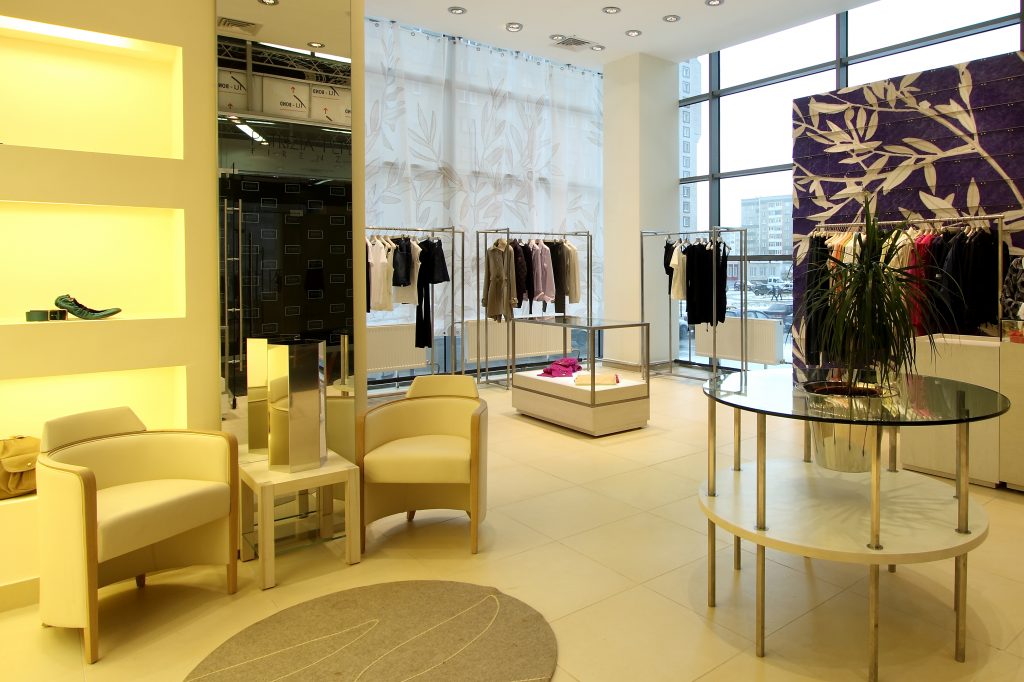
A small bench or chair improves both comfort and usability.
Seating allows customers to:
- Rest while changing
- Place bags and personal belongings
- Shop with companions
Even a simple upholstered cube can elevate the experience significantly.
3. Use Flattering, Neutral Lighting
Lighting is arguably the most important element of fitting room design.
Harsh overhead spotlights create shadows that distort perception. Instead:
- Combine vertical and overhead lighting
- Use neutral or warm light temperatures
- Avoid strong directional beams
Balanced lighting helps customers see accurate color and fit, increasing purchase confidence.
4. Prioritize Privacy
Privacy is non-negotiable.
Options include:
- Curtains
- Half-doors
- Full doors (premium option)
While doors create a luxury feel, half-doors often offer a cost-effective middle ground for temporary installations.
Customers who feel secure are more likely to spend time trying products and making decisions.
5. Keep Decoration Minimal
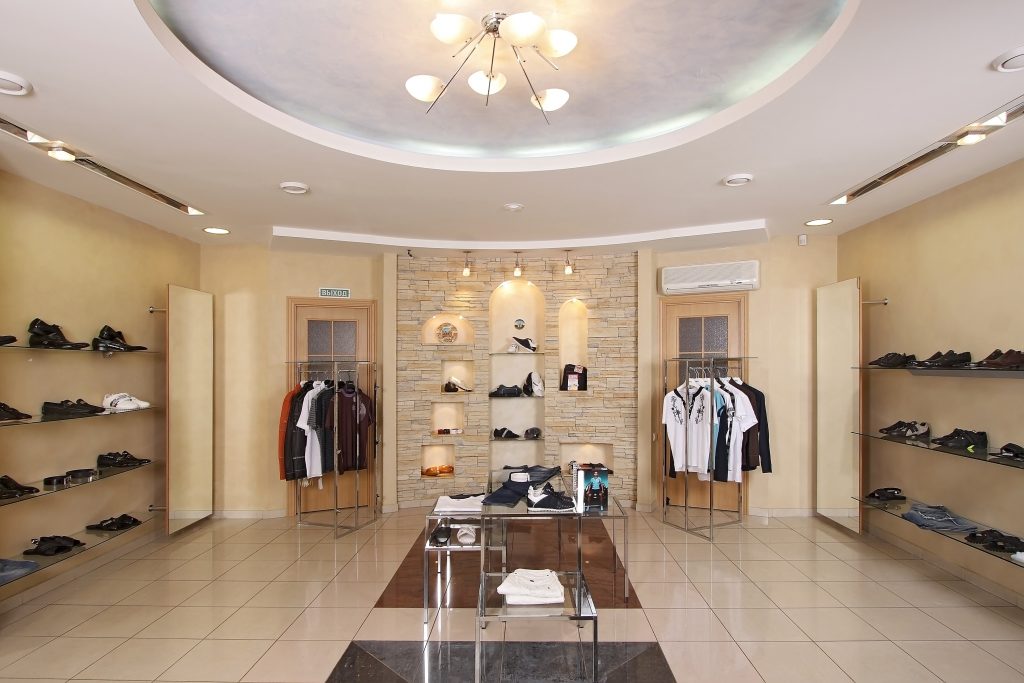
Fitting rooms should feel calm and distraction-free.
Avoid:
- Overly busy wallpaper
- Distracting graphics
- Excessive decorative elements
Neutral tones allow customers to focus on products rather than the surroundings.
6. Maintain Impeccable Cleanliness
Cleanliness directly impacts brand perception.
Mirrors should be spotless. Floors should be clear. Trash and discarded items should be removed regularly.
In pop-ups especially, where first impressions matter, hygiene builds trust.
7. Install Full-Length, High-Quality Mirrors
Full-body mirrors are essential.
Avoid narrow or distorted mirrors that misrepresent fit. Clear, accurate reflections improve self-perception and confidence.
For brands
Ready to launch your pop-up?
Find and book your short-term retail space with Storefront.
Find a spacePosition mirrors to avoid awkward angles and ensure adequate lighting surrounds them.
8. Staff Strategically
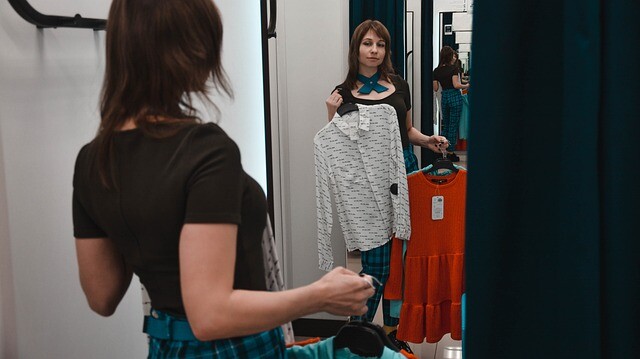
If space allows, assign staff near fitting rooms to:
- Assist with size exchanges
- Offer styling advice
- Manage traffic
Attentive service increases average transaction value and enhances customer experience.
9. Manage Sound Levels
Music that feels energetic on the shop floor may feel overwhelming inside a fitting room.
Keep volume balanced and consider softer acoustics near dressing areas.
Comfort encourages longer decision-making time.
10. Create a Premium Experience
Even in temporary retail, small touches elevate perception.
Consider:
- Quality curtains
- Soft seating
- Subtle fragrance
- Branded hooks
Luxury is often conveyed through detail rather than expense.
11. Incorporate Smart Technology (When Appropriate)
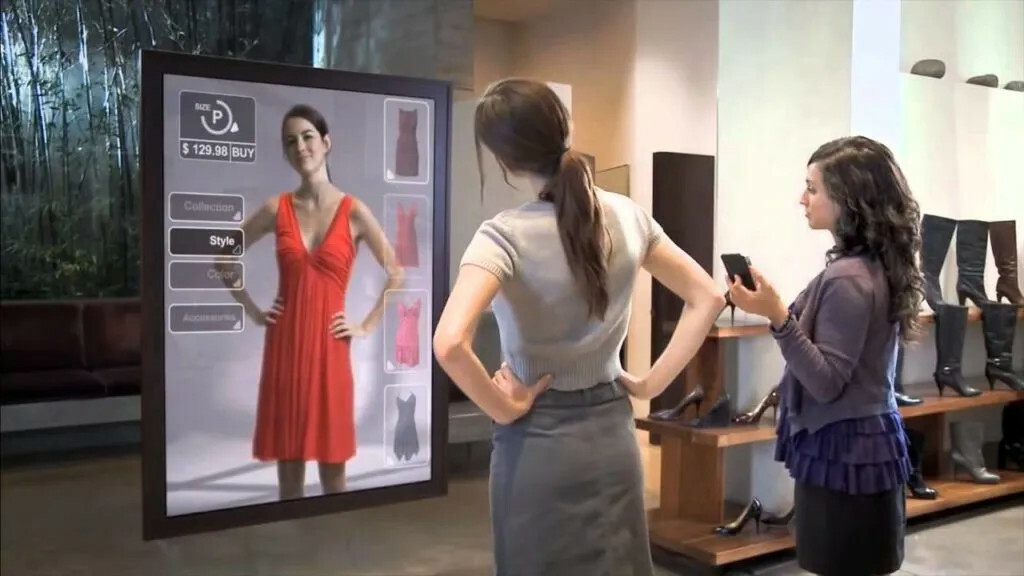
For larger activations or tech-forward brands, consider:
- Smart mirrors displaying product details
- RFID inventory tracking
- Virtual try-on solutions
These technologies can improve efficiency and reduce staff strain, though they may not suit every short-term activation.
12. Optimize Ventilation
Fitting rooms can become warm quickly, particularly in high-traffic activations.
Ensure:
- Adequate airflow
- Air conditioning access
- Breathable materials
Comfort significantly affects purchase behavior.
13. Merchandise Nearby Strategically
Position complementary items near fitting rooms:
- Accessories
- Alternative sizes
- Suggested pairings
This encourages upselling and impulse purchases.
Ensure placement does not obstruct entry or exit.
14. Use Texture to Enhance Comfort
Soft rugs, fabric curtains, and warm materials increase perceived quality.
Subtle textural variation makes fitting rooms feel inviting rather than sterile.
15. Design for Traffic Flow
Fitting room placement should align with overall layout.
Avoid placing dressing rooms directly at the entrance or blocking circulation paths. If you are planning your store’s flow, revisit our guide to pop up store layout to ensure fitting rooms integrate smoothly with customer pathways.
16. Plan for Efficient Garment Handling
In higher-volume activations, consider systems that streamline garment return and organization.
This could include:
- Dedicated return rails
- Staff-managed rotation systems
- Conveyor-style solutions in large spaces
Efficiency prevents congestion and improves customer experience.
Choosing the Right Space for Fitting Room Integration
The success of a fitting room depends partly on the retail unit itself.
If you are launching in major fashion markets, explore:
Selecting a space with adequate depth and ceiling height simplifies fitting room integration.
Final Thoughts on Pop Up Shop Fitting Room Design
A fitting room is more than a functional necessity — it is a conversion engine.
When designed thoughtfully with privacy, lighting, ventilation, and comfort in mind, it increases confidence, dwell time, and sales.
In temporary retail environments, where impressions are immediate and competition is high, investing in fitting room quality often delivers measurable returns.
For brands
Ready to launch your pop-up?
Find and book your short-term retail space with Storefront.
Find a space
Written by
Nicholas Roberts-Moore is Chief Marketing Officer at Storefront, based in London. He specializes in AI-powered marketing and the UK retail and real estate markets, helping brands turn short-term retail into measurable growth. A former journalist, he writes on pop-up strategy, retail trends, and the future of physical retail.
More from Nicholas Roberts-Moore →Related posts:
 How to Use Color to Increase Sales in Your Pop-Up Shop
 Pop Up Store Layout: Floor Plans and Flow Strategies That Convert
 How to Create an Instagrammable Pop-Up Shop
 How to Design a Pop-Up Shop Layout That Creates an Unforgettable Experience
 Pop Up Store Display Ideas: 16 Creative Central Features That Attract Customers