
Some streets are worth crossing a city for. A handful are worth crossing a continent. The addresses below are the ones that people plan trips around, that brands build their reputations on, and that have been the commercial center of their cities for a century or more.
What makes a shopping street great is a combination of things. Sheer footfall matters, though the busiest street is seldom the best one. Fame matters, and so does how long it has been held. The density of brands along the frontage counts for a great deal, and so does their quality, because thirty luxury houses in half a mile creates something that thirty scattered across a city never will. The best streets also carry history the shops themselves did not create and cannot walk away from.
We weighed all of it. Here are the ten.
1. New Bond Street, London
London’s money has shopped here since the 1700s, when the street was laid out for an aristocracy moving west into Mayfair. Nelson lived at number 147. Sotheby’s has been at 34 since 1917.
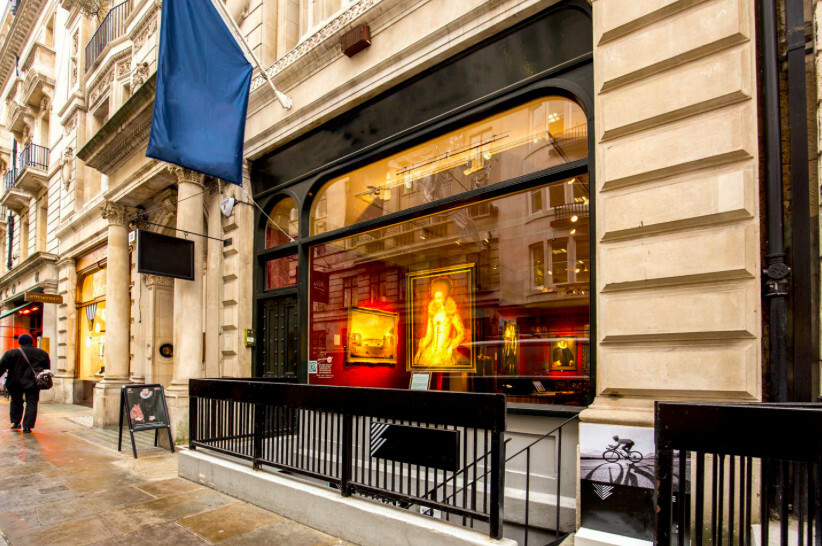
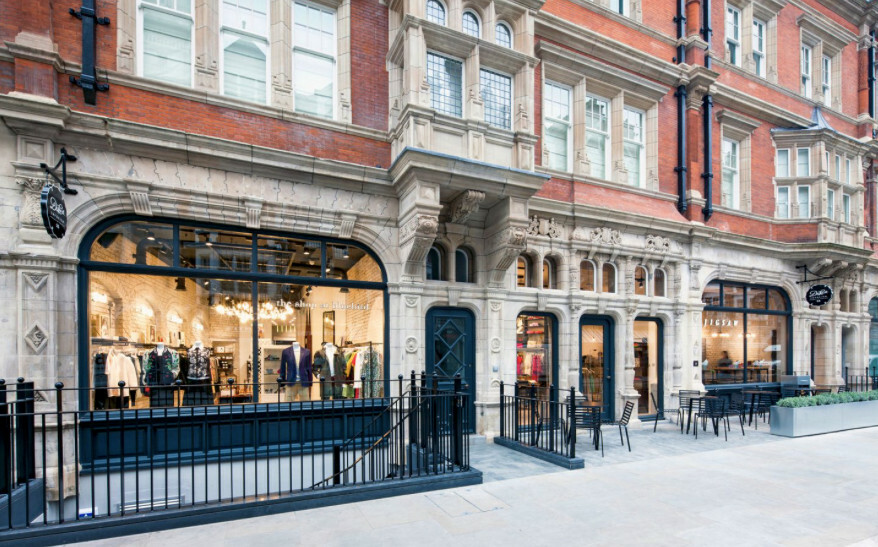
The tenants have turned over completely and the job of the street has not changed at all, which is about as close to a definition of a great shopping address as you can get.
Today it holds the tightest concentration of luxury houses in Europe. Cartier, Tiffany, Louis Vuitton, Chanel and Hermès sit within a few hundred paces of each other, with the Mayfair jewelry trade filling in around them and the auction houses drawing a particular kind of buyer through several times a year.
It is also the most expensive retail address on earth. Rents climbed 22 percent in a single year to pass Milan and New York, pushed up by new flagship arrivals and by luxury groups buying their buildings outright instead of leasing them. Anyone looking at retail space on Bond Street will find very little of it, and most short-run activity ends up as pop-up space in Mayfair instead.
2. Via Montenapoleone, Milan
Armani, Prada, Versace, Valentino and Dolce & Gabbana, all within a few blocks of each other. The Quadrilatero della Moda packs a single country’s entire fashion industry into four streets, and Montenapoleone is its spine.
What separates it from every other address here is proximity. Most of the brands along it are headquartered within a few kilometers of their own shop, so the stores read as showrooms for the city itself. Milan produced these houses. It did not have to attract them. The street was cut in the early 1800s along the line of a Roman wall, and it turned to fashion after the war, when the designers who would go on to define the industry set up within walking distance of one another.
Twice a year, during Fashion Week and Salone del Mobile, the surrounding blocks fill with brands taking space for days at a time. Most of that lands in Brera and San Babila, and anyone hunting retail space in Milan will find far more of it there than on Montenapoleone itself. Pop-up space in Brera is the closest thing to a Quadrilatero address that a short-term brand can realistically take.
3. Fifth Avenue, New York
Fifth has been New York’s premier address since the Gilded Age, when Vanderbilt and Astor mansions lined it. The department stores that replaced them inherited the status, and the avenue has spent a century as the place American retail shows off: Bergdorf Goodman at the top, Saks and Rockefeller Center at the bottom, Tiffany at 57th since 1940, the Apple cube outside the Plaza, Central Park closing the view north.
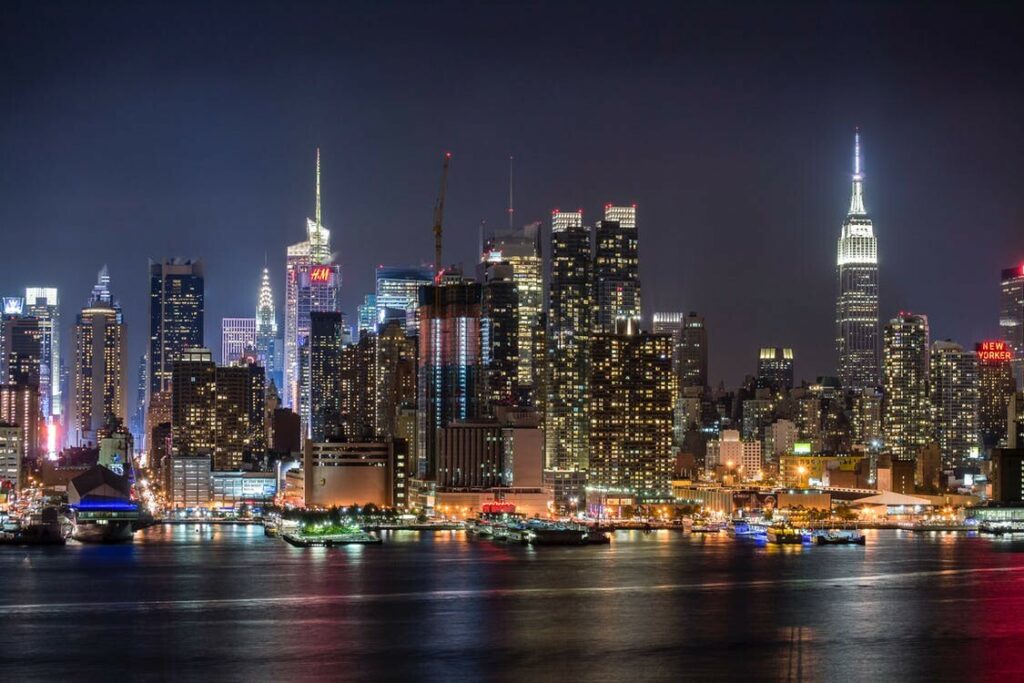
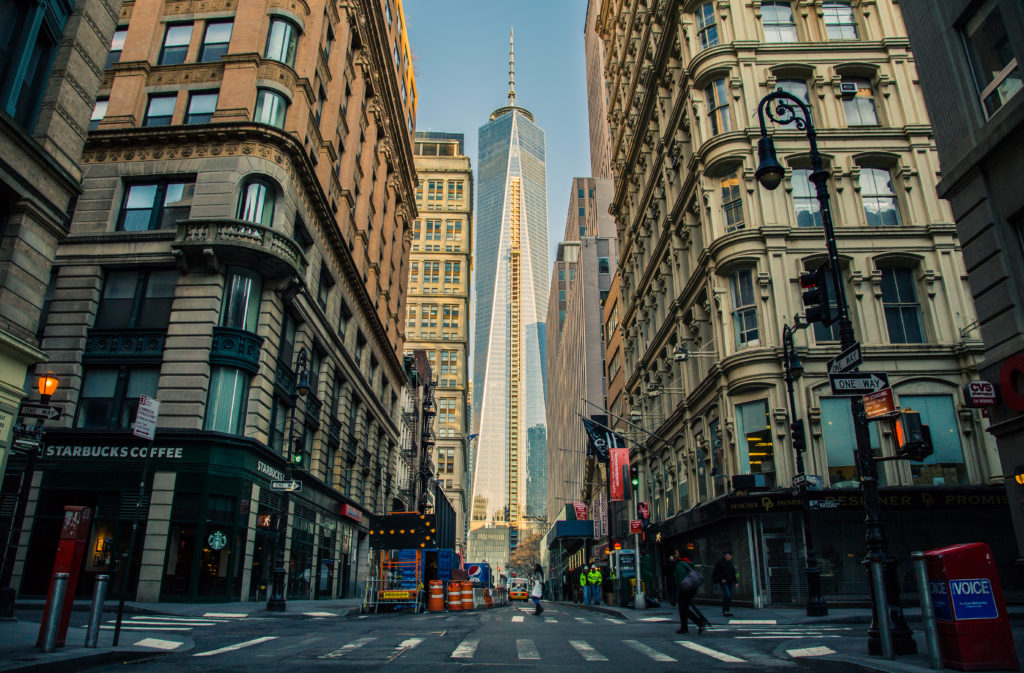
The seasonality here is extreme even by luxury standards. December weekends run around 2.3 times busier than a normal weekend, and last December pulled in 27,000 more weekend visitors than the year before. The holiday windows draw crowds who have no intention of buying anything, which is precisely why a December slot on Fifth gets budgeted as a media placement. New York is now widening the sidewalks, having concluded that what limits the street is pedestrian capacity and not demand. Brands wanting retail space in New York at short notice look downtown, and pop-up space in SoHo does far more of this work than Fifth Avenue ever has.
4. Avenue des Champs-Élysées, Paris
The ceremonial spine of Paris, running 1.9 kilometers from the Arc de Triomphe down to Place de la Concorde, carrying the Bastille Day parade and the finish of the Tour de France. Haussmann rebuilt the city around it. Calling itself the most beautiful avenue in the world is the kind of boast that would grate if Paris had much competition for it.
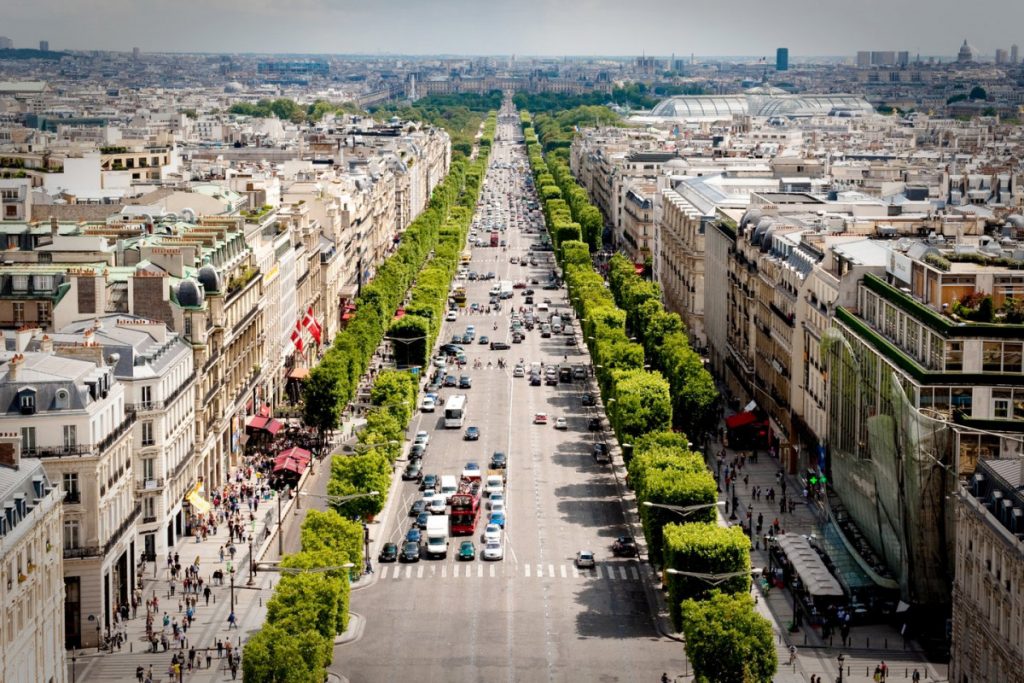
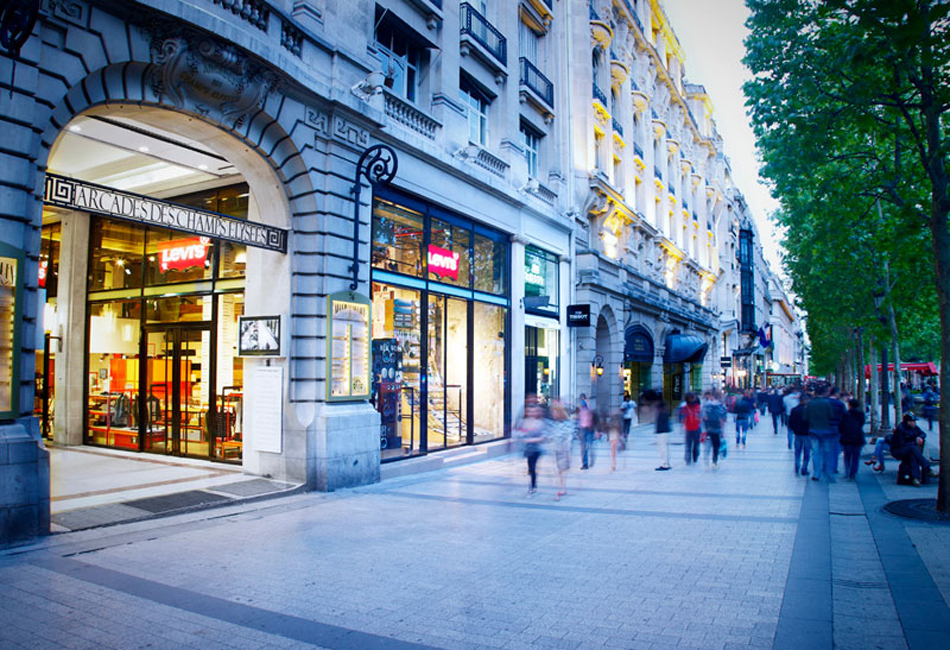
Sixty-seven million visitors came through in a record year, an average of 200,000 a day, touching 300,000 on sixteen separate days in December. A boutique on the avenue sees roughly a million people pass its door every month.
This is where the flagship as billboard reaches its purest form. The Louis Vuitton building, Dior, Cartier and the Galeries Lafayette store are understood by everyone, their owners included, as statements first and shops second. Pop-up space on the Champs-Élysées does come up, but most short-term fashion activity lands just behind the avenue: showroom space in the Triangle d’Or during market week, and retail space in Paris across the wider 8th.
5. Oxford Street, London
Harry Gordon Selfridge opened at 400 Oxford Street on 15 March 1909, in a building designed by Daniel Burnham. Ninety thousand people came through on the first day and more than a million in the opening week. Selfridge had spent twenty-five years at Marshall Field’s in Chicago before he crossed the Atlantic, and he brought the American department store playbook with him.
Oxford Street has been London’s main shopping thoroughfare ever since. Selfridges still anchors the western end, the mass-market flagships fill the middle, and roughly half a million people walk it every day, making it the busiest shopping street in Europe. For brands weighing it up, our guide to taking space on Oxford Street covers what short-term space there is really like.
It runs on volume, not luxury. That is the whole point: it reaches more people in a week than Bond Street manages in a season.
Footfall rose 3.4 percent across 2025 with transactions up 2.1 percent, and when the street went traffic-free for a Sunday in September 2025, footfall ran 45 percent above the previous week, with Oxford Circus station alone handling 109,693 entries and exits in a day. The pedestrianization program now underway is the biggest change to the street in decades. Units here turn over faster than anywhere else on this list, which means a pop-up shop on Oxford Street does appear, though rarely for long and never cheaply. Retail space on Regent Street, curated as a single estate, is the other side of the same West End footfall.
6. Ginza, Tokyo
The district takes its name from a silver mint set up there in 1612. It became Tokyo’s Western-facing luxury quarter after the 1923 earthquake, when the whole area was rebuilt in brick, and it has held the position since. On weekends the main avenue closes to traffic and turns into a promenade, which is Ginza at its best.
Ginza is the only street here that works vertically. Where Bond Street and Montenapoleone spread along a single frontage, Ginza stacks: Ginza Six, the Wako building with its clock tower, the department stores, and tower flagships from Uniqlo, Dover Street Market and the luxury houses climbing six or seven floors from street level. One address can hold what an entire European block holds. It is also where retail standards get set, since Japanese service, packaging and store presentation are the benchmark much of the industry works from, and part of the reason brands open in Ginza is to be measured against it.
7. Rodeo Drive, Los Angeles
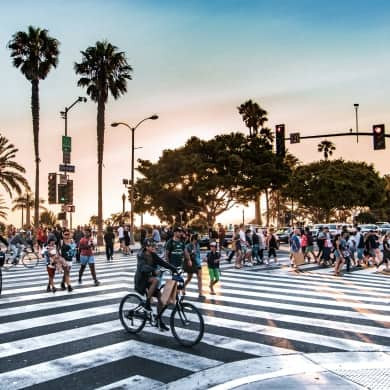
Julia Roberts shopped here in Pretty Woman. Eddie Murphy caused chaos on it in Beverly Hills Cop. Cher worked her way along it in Clueless. Three blocks of Beverly Hills have done more for the image of American luxury than any marketing campaign, and Via Rodeo, the cobbled pedestrian lane cutting through the middle, was purpose-built in 1990 to look as though it had always been there.
For brands
Ready to launch your pop-up?
Find and book your short-term retail space with Storefront.
Find a spaceAlmost none of the trade is walk-in. Rodeo runs on appointment and clienteling, which makes it the least footfall-dependent street on this list and the most dependent on prestige. Chanel, Dior, Gucci, Cartier and Tiffany all hold positions along it, and the capital keeps arriving: LVMH has committed more than $900 million to Rodeo Drive real estate, and rents rose 19 percent in a year to $1,100 per square foot, second only to Fifth Avenue in the United States.
The street is effectively fully let. Retail space in Beverly Hills turns up in the blocks around it rather than on Rodeo itself, and pop-up space in West Hollywood reaches the same customer for a fraction of the money.
8. The Magnificent Mile, Chicago
The Water Tower still stands on North Michigan Avenue, one of the few structures to come through the Great Fire of 1871. A developer coined the Magnificent Mile name in the 1940s, and the street became the retail heart of a city that already knew how to sell. In 1892, a few blocks south on State Street, Marshall Field told a manager arguing with a customer to “give the lady what she wants.” It became company policy and then the store’s motto. Field is also one of three people credited with “the customer is always right,” alongside Harry Selfridge and César Ritz, and nobody has ever settled it.
Chicago builds its retail around anchors instead of a luxury spine, and the Mag Mile shows it: vertical malls, department stores and the Water Tower Place complex doing the work individual flagships do elsewhere. The district draws 15.1 million visitors a year across more than 460 shops, and the Lights Festival in November brings out over 700,000 people in a single evening.
The last decade has been brutal here. Vacancies ran high and several anchor tenants left outright. What recovery there has been came mostly from shorter commitments and experience-led tenants, with pop-up space in River North immediately west taking much of it. Most retail space in Chicago available on short terms now sits off Michigan Avenue rather than on it.
9. Kalverstraat, Amsterdam
It was a livestock market in the fifteenth century, which is where the name comes from, and it has been the busiest shopping street in the Netherlands for most of the modern era. Today it is a pedestrianized 750-meter run from Dam Square to Muntplein, carrying more than 50,000 people a day across over 150 stores, with Zara, H&M, Uniqlo and the Dutch chains holding the frontage.
Amsterdam splits its retail more cleanly than most cities. Kalverstraat is the volume end. P.C. Hooftstraat, out by the Museum Quarter, is the luxury end, with Chanel, Gucci and Louis Vuitton facing the Rijksmuseum. And the Nine Streets, the grid of canal crossings between the two, is where the independents and the concept stores sit. For a brand taking pop-up space in Amsterdam short-term, retail space in the Nine Streets is usually the better fit: a much closer match on customer, at a fraction of Kalverstraat’s rent.
10. Lincoln Road, Miami Beach
Morris Lapidus, the architect who defined Miami Beach modernism, redesigned Lincoln Road in 1960 as one of the first pedestrianized shopping streets in America. His shade structures and planters are still the reason people photograph it, and it remains a walkable street in a city that otherwise refuses to be walked.
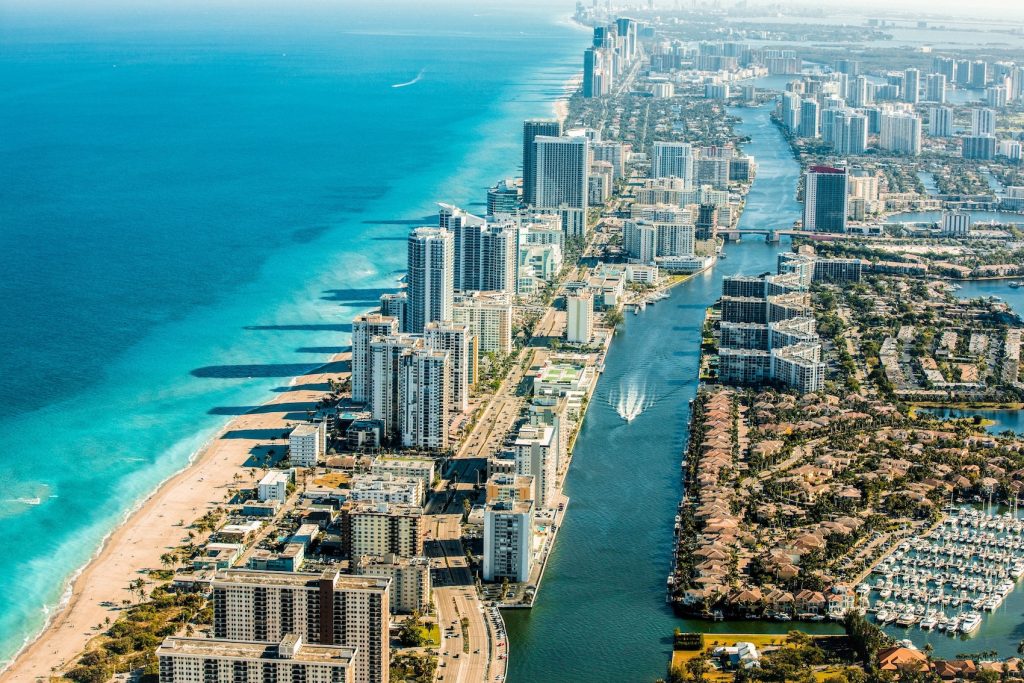
It draws over 10 million visitors a year. The Business Improvement District recorded 8.1 million domestic visitors in 2023 and estimated a comparable number of international arrivals on top of that.
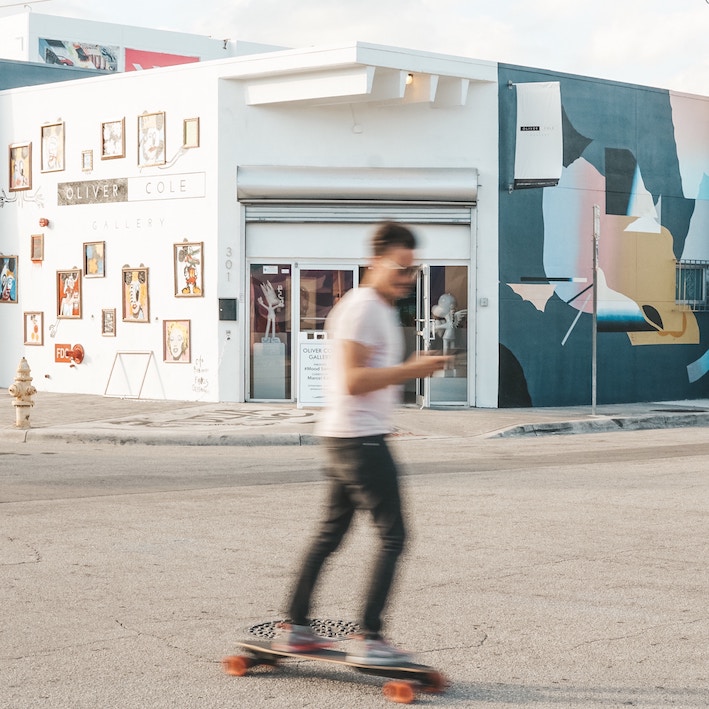
Lincoln Road has spent several years shifting away from mass-market chains toward food, galleries and experience-led tenants, and that repositioning has freed up more short-lease space than at any recent point in its history. Art Basel week each December turns Miami Beach and the Design District into a temporary retail market for two weeks, and it is the clearest annual demonstration anywhere of what short-term retail can do to a city. Retail space in Miami Beach gets scarce in that window, which pushes brands toward pop-up space in Wynwood and the wider pool of retail space in Miami.
Just outside the ten
Via Condotti in Rome anchors the luxury grid below the Spanish Steps and would make most versions of this list, though retail space in Rome tends to sit away from it. Regent Street in London is a single-landlord estate curated as one portfolio, unusual enough to deserve its own piece. Passeig de Gràcia in Barcelona, Nanjing Road in Shanghai, Myeongdong in Seoul and Tsim Sha Tsui in Hong Kong all carry more weight than their absence here suggests. And Broadway through SoHo, no one’s idea of a luxury street, has grown foot traffic around 15 percent since 2023 and now runs ahead of pre-pandemic levels, which makes retail space on Broadway in SoHo one of the strongest short-term markets anywhere.
What these streets cost, and why it matters
These ten set the price of retail for everywhere else. What a unit costs on New Bond Street or Fifth Avenue becomes the reference point every other address is measured against, and the brands paying those rents rarely expect the shop to cover its costs out of its own till. They are buying the address.
That has changed what the streets are for. A flagship used to mean a twenty-year commitment. The same unit now often turns over several times a year: a fashion label during market week, a beauty brand for a launch, a gallery during a fair, a direct-to-consumer name finding out whether physical retail works for it at all. Rents have held. Leases are far shorter than they were.
If these streets are out of reach
Most brands cannot justify Bond Street or Rodeo Drive, and most have no need to. What these addresses sell is proximity to a particular customer, and that customer does not disappear one block over. Mayfair reaches the Bond Street shopper. West Hollywood reaches the Rodeo shopper. The Nine Streets reaches a closer-matched Amsterdam customer than Kalverstraat does. The Triangle d’Or is where fashion week activity actually happens.
The approach that works is taking space near a great street and spending the difference on getting people to walk the extra block. A short lease in the right adjacent neighborhood, properly promoted, beats an address you cannot afford to activate. Our guide on how to open a pop-up shop covers the mechanics, and there is more on choosing where to open and on the retail campaign ideas that make an off-pitch location work.
What we see at Storefront
We list short-term retail space in most of the cities on this list, which gives us a view these rent surveys do not capture. Not what the flagship frontage costs, but what a brand can realistically get when it wants six weeks instead of six years.
The honest answer on the ten streets themselves is that they are hard. Bond Street, Via Montenapoleone and Rodeo Drive are effectively fully let, and have been for years. Where space does come up on a street like this, it goes quickly and it goes expensively, and the rent is only part of it: fit-out, staffing and insurance on a landmark address all scale with the postcode. Most brands that ask us about these streets end up somewhere else, and the good ones end up somewhere else on purpose.
What we see working is proximity plus promotion. The customer walking Bond Street is also walking Mayfair. The crowd on the Champs-Élysées is a ten-minute walk from the Triangle d’Or, which is where fashion week activity actually happens. Kalverstraat’s footfall spills into the Nine Streets, which suits an independent brand far better anyway. Take a space a block or two off the landmark street, put real marketing behind it, and you can pull a meaningful share of that footfall to your door for a fraction of what the frontage would have cost. The brands that do this well treat the famous street as the reason their location works, not as the location itself.
One thing that surprised us in our own numbers: Paris consistently carries more short-term retail inventory than any other city we operate in, ahead of both New York and London. That runs against how these markets are usually ranked, and it is the most useful thing we know about the Champs-Élysées. The avenue is close to impossible. The streets behind it are not.
Frequently asked questions
What is the most expensive shopping street in the world?
New Bond Street in London, at roughly €20,482 per square meter per year. It overtook Via Montenapoleone in Milan and Fifth Avenue in New York after rents rose 22 percent in a year.
Which shopping street has the highest footfall?
Oxford Street in London, at around half a million people a day, is the busiest in Europe. The Champs-Élysées in Paris averages 200,000 a day and reached 67 million visitors across a record year.
What makes a shopping street one of the best in the world?
Footfall, the density and quality of the brands along it, how long it has held its reputation, and how strongly the address itself signals something to a customer. The strongest streets score on all four.
Can you rent a shop short-term on these streets?
Rarely on the streets themselves. New Bond Street, Via Montenapoleone and Rodeo Drive are close to fully let, and even where space does come up on a street like Oxford Street or Lincoln Road it moves fast and prices accordingly. Most short-term activity around these addresses happens a block or two away, in the neighborhoods that share their footfall.
Which city is best for opening a pop-up store?
It depends what you sell. Paris and New York carry the deepest short-term inventory, Paris also has the strongest fashion calendar, Milan concentrates design, and Miami peaks sharply around Art Basel in December.
Sources
- Cushman & Wakefield, Main Streets Across the World 2025
- Comité Champs-Élysées footfall barometer
- New West End Company, CEO update February 2026
- Mayor of London, Oxford Street traffic-free day data, October 2025
- Britannica, on Harry Gordon Selfridge and London Museum, on the 1909 opening
- WTTW Chicago Stories, on Marshall Field’s
- Quote Investigator, on the disputed origin of “the customer is always right”
- NYC Economic Development Corporation, holiday foot traffic
- CoStar, on Rodeo Drive rents
- The Magnificent Mile
- WWD, on Lincoln Road retail real estate
- SoHo Broadway Initiative, foot traffic
For brands
Ready to launch your pop-up?
Find and book your short-term retail space with Storefront.
Find a space
Written by
Nicholas Roberts-Moore is Chief Marketing Officer at Storefront, based in London. He specializes in AI-powered marketing and the UK retail and real estate markets, helping brands turn short-term retail into measurable growth. A former journalist, he writes on pop-up strategy, retail trends, and the future of physical retail.
More from Nicholas Roberts-Moore →Related posts:
 Pop-Up Shop Marketing: How to Promote and Grow a Successful Pop Up
 The Chinese Retail Market: Pop-up Stores and Massclusivity
 4 Reasons You Should Recommend a Pop-Up Store to Your Clients
 3 Retail Tech Trends Your Pop-Up Shop Needs This Holiday Season
 What Is Phygital Retail? Meaning, Examples and How It Works