

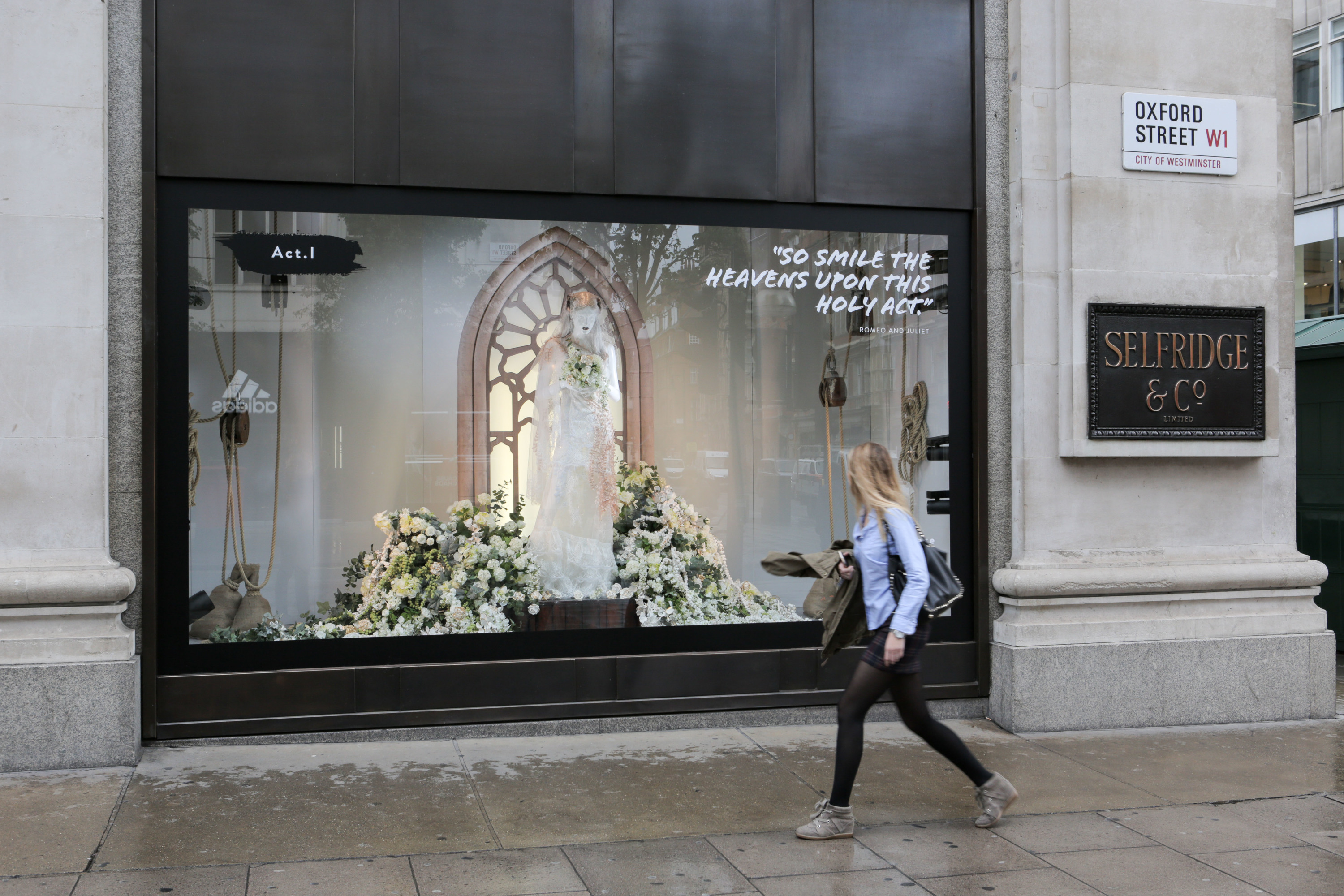
Oxford Street is the busiest shopping street in Europe. It runs from Tottenham Court Road to Marble Arch, it is the spine of the West End, and its units are large-format with national and international chains in them.
It is taken for reach rather than for margin. That single line is the most useful thing anyone can tell you about it, and it is the reason the right question is not which West End street to choose. It is whether Oxford Street is the street you should be on at all. Browse retail space to rent on Oxford Street.
Who Oxford Street is actually for
London’s retail splits three ways, and it is consistent enough to plan against.
- International flagships take Oxford Street, Regent Street, Bond Street and Sloane Street. Scale, reach, and a name that has to be seen by everyone.
- Independent and emerging labels take Shoreditch, Dalston and the smaller Notting Hill streets, where the rent is survivable and the audience is looking for discovery.
- The managed estates sit between the two: Covent Garden, Seven Dials, Carnaby, Marylebone High Street and Coal Drops Yard, where the tenant mix is curated rather than incidental.
If your brand belongs in the first group, Oxford Street does something no other address in the country does. If it belongs in the second, taking space here is an expensive way to be ignored by a crowd that is walking somewhere else. Most briefs that arrive naming Oxford Street belong in the third group and have not realised it yet.
For brands
Popping up on Oxford Street?
Explore short-term retail space on Oxford Street with Storefront.
Explore Oxford Street spacesWhat a short-term brief looks like here
Short-term space on Oxford Street exists, but it is not the same product as a shop on a high street. It is bought for a moment rather than a trading period: a launch, a campaign, a seasonal activation, a press week. The value is in who walks past and what that does for a brand’s standing, not in the week’s takings.
| What | Why Oxford Street suits it | Browse |
|---|---|---|
| Brand launches and activations | The highest reach available in the United Kingdom, in front of a national and international audience. | retail and pop-up space on Oxford Street |
| Press and industry moments | An address that does work in a headline before anyone has read the copy underneath it. | event space on Oxford Street |
| Showroom and buyer days | Central, unambiguous to find, and a short walk from Mayfair and Marylebone. | showroom space on Oxford Street |
| Shoots | Recognisable frontage and a streetscape that reads as London instantly. | shoot space on Oxford Street |
| The wider district | If the street itself is wrong, the surrounding West End often is not. | retail space across the West End |
The Elizabeth line moved the footfall, and not everyone has noticed
The Elizabeth line added a second entrance at Bond Street on Hanover Square. That pulled a large volume of new arrivals into the eastern end of the district and changed the footfall pattern around Oxford Street’s western half.
This matters because most received wisdom about which end of Oxford Street is busy predates it. If you are working from a pitch someone described to you a few years ago, check it against the street as it is now rather than as it was.
The streets around it, and when each is the better answer
Oxford Street is one of four in the immediate West End, and the others are not lesser versions of it. They are different products.
Regent Street
Owned almost entirely by a single landlord, which is why the frontages are uniform and the tenant mix is curated. Flagship-scale units on the curve between Oxford Circus and Piccadilly. If you want West End reach with a more controlled setting, this is the one. Browse retail space on Regent Street.
Piccadilly
Not a continuous shopping run, and briefs get this wrong regularly. Piccadilly is a major traffic route from Piccadilly Circus to Hyde Park Corner, with long stretches of hotels, institutions, airline and travel offices and club buildings. Retail appears in pockets, so the frontage either side of a unit matters more than usual. Check the neighbours, not the street name. Browse space on Piccadilly.
Jermyn Street
One block south of Piccadilly, quieter, narrower and far more browsable, with small frontages and deep narrow shops behind them. It holds the traditional English shirtmaking and menswear trade, much of it in businesses that have occupied the same addresses for generations. That gives it a coherent identity and a customer who arrives already knowing what the street is for, which is rarer in the West End than it sounds. Browse space on Jermyn Street.
Bond Street
The single most expensive retail address in the United Kingdom, running between Oxford Street and Piccadilly and occupied almost entirely by luxury houses, jewellers and auctioneers. Two streets in practice, with the Old Bond Street end toward Piccadilly holding the highest concentration of jewellers and the highest rents in the country.
If Oxford Street is the wrong answer
This is worth saying plainly, because the honest recommendation for a lot of brands is a few minutes’ walk away.
- Marylebone sits immediately north and stays independent-leaning because a single estate manages it that way. Village scale, affluent habitual customer, and the same brands that would be priced out of the street below.
- Fitzrovia is one block north of Oxford Street’s eastern end. Smaller in scale, weekday and business-facing, and upper floors are viable there in a way they are not on a footfall street.
- Soho is dense and small-unit with narrow frontages, suiting a compact characterful space rather than a flagship.
- Mayfair for luxury positioning, and Hackney or Dalston for an independent brand that needs its rent to be survivable.
Christmas, which is the one time the calculation changes
The Christmas trading period runs from the switch-on of the West End lights in November through to Christmas Eve, and it is the densest stretch of the retail year. Oxford Street, Regent Street, Bond Street and Covent Garden each run their own installations, and the lights are a genuine draw in their own right.
West End footfall in the run-up to Christmas is the highest of the year, which is the one period where paying for reach on Oxford Street stacks up for brands that could not justify it in March. Book far earlier than feels necessary.
The rules
- Use Class E covers shops, offices, cafes and gyms in one category, so moving between those uses inside a unit generally does not need planning permission.
- Sunday trading is set by shop size. A shop up to and including 280 square metres can open any day or hour. Above that it is restricted on a Sunday, and on Oxford Street a great many units are above it, so this is one of the few districts where the threshold genuinely bites.
- Single-estate ownership is common across the West End, and on a managed stretch the landlord is choosing a tenant mix rather than filling a void. Expect to be asked what you are.
- The Congestion Charge and ULEZ shape your fit-out. The charge runs 07:00 to 18:00 Monday to Friday and 12:00 to 18:00 at weekends and bank holidays, and Oxford Street itself has heavy restrictions on vehicle access. Plan deliveries around both.
Common questions
Can you actually rent short-term space on Oxford Street?
Yes, but it is a specific product. Units are large-format and the street is dominated by national and international chains, so what comes up short-term tends to suit a launch, a campaign or a seasonal activation rather than a trading period. Browse what is available now.
Is Oxford Street worth the money?
For reach, yes, and nowhere else in the country matches it. For margin, usually not. The street is taken for who walks past and what the address does for a brand’s standing, not for the week’s takings. If the numbers have to work on sales alone, look one street north or east.
Which end of Oxford Street is busiest?
Check rather than assume. The Elizabeth line’s second Bond Street entrance at Hanover Square pulled a large volume of arrivals into the eastern end and changed the pattern around the western half, so guidance more than a couple of years old may describe a street that no longer trades that way.
How is Regent Street different?
It is owned almost entirely by one landlord, so the frontages are uniform and the tenant mix is curated. Flagship scale, but a more controlled setting than Oxford Street.
Why is Piccadilly not like the others?
Because it is a traffic route rather than a shopping parade. Hotels, institutions and offices occupy long stretches of it, and retail appears in pockets, so what sits either side of a unit matters more than the street name does.
When should I book for Christmas?
Earlier than feels necessary. The period from the West End lights switch-on in November to Christmas Eve is the densest stretch of the retail year and the highest footfall the district sees.
Where to look next
Browse retail and pop-up space on Oxford Street, event space, showrooms, shoot space or everything on Oxford Street.
Nearby streets: Regent Street, Piccadilly and Jermyn Street, or the West End as a whole.
Our guide to London’s best pop-up streets ranks these against every other street in the city, the world’s best shopping streets sets Oxford Street against its global peers, and the London pop-up shop guide and neighbourhood ranking cover the wider city.

Written by
Nicholas Roberts-Moore is Chief Marketing Officer at Storefront, based in London. He specialises in AI-powered marketing and the UK retail and real estate markets, helping brands turn short-term retail into measurable growth. A former journalist, he writes on pop-up strategy, retail trends and the future of physical retail.
More from Nicholas Roberts-Moore →Related posts:
 Pigalle Neighborhood Guide: Pop-Up Shops, Showrooms and Creative Spaces
 Exploring the Benefits of Opening a Pop-Up Store in Shanghai
 Pop Up Shops in Chicago: The Complete Guide to Opening a Temporary Retail Space
 The Ultimate Guide to Launching a Successful Pop-Up Shop in Dubai
 East Village NYC Guide: Pop-Up Shops and Small Stores