

Sephora, owned by LVMH, is a global leader in prestige beauty retail, operating more than 2,700 stores across 35 countries. The brand continues to generate strong revenue growth, including a highly successful partnership with Kohl’s that exceeded $1.4 billion in sales in 2025 and is projected to surpass $2 billion per year.
Yet even with strong brand equity and scale, Sephora faces the same pressures affecting modern retail: shifting consumer demographics, rising operational complexity, and intensifying competition — particularly from Amazon in the online beauty space.
What sets Sephora apart is not just its size. It is the way the brand continuously adapts its retail model around experience, omnichannel integration, and community.
Here are the key lessons retailers — especially DTC and ecommerce brands — can apply to their own pop-up and physical retail strategies.
1. Master Omnichannel Integration, Not Just Multichannel Presence
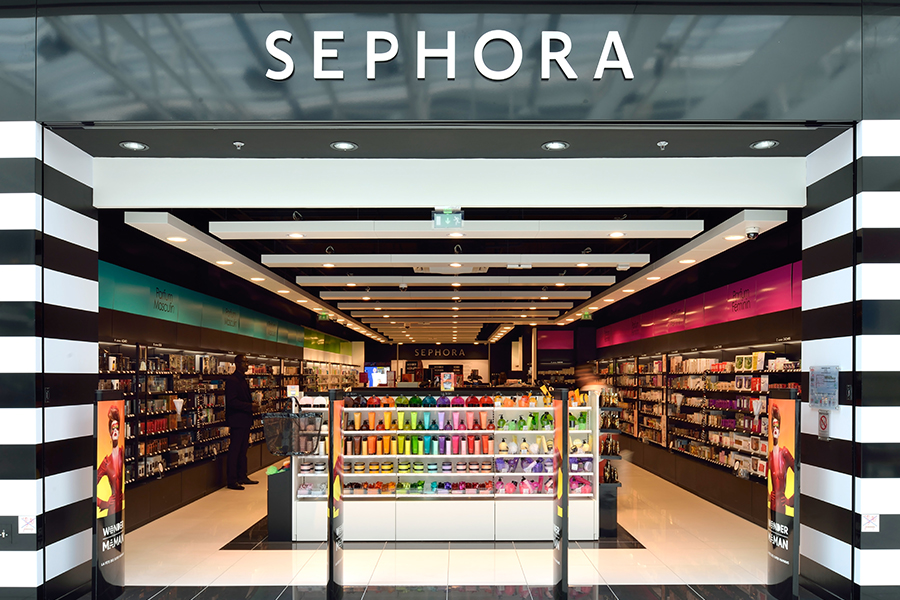
Sephora’s competitive advantage lies in its seamless integration between digital and physical retail.
Approximately 25% of in-store transactions now occur on mobile devices. Customers browse online, test in-store, reorder via app, and move between channels without friction. This behavior reflects broader trends such as showrooming and webrooming, where customers research digitally and purchase physically — or vice versa.
For brands launching pop-up shops, this lesson is critical. Temporary retail should strengthen ecommerce, not compete with it.
Pop-ups can integrate:
- Mobile checkout
- QR codes linking to online inventory
- Loyalty program capture
- Digital wish lists
- Order-in-store and ship-to-home options
If you are designing a physical activation to support omnichannel behavior, this guide explains how to structure your store for both webrooming and showrooming:
Sephora proves that retail success today depends on channel integration, not channel separation.
2. Rethink the Store as an Experience Hub
Sephora’s stores function as interactive beauty destinations, not just product shelves. Through digital mirrors, augmented reality try-ons, skincare diagnostics, and expert-led tutorials, the brand turns shopping into participation.
This experience-first model is one reason Sephora continues to perform strongly despite growing ecommerce competition.
Pop-up shops offer smaller brands the same opportunity.
A temporary retail space can become a high-impact experiential hub without the overhead of a permanent flagship. The key is to design for engagement, not just transactions.
If you are new to temporary retail, start here:
And if you are planning your first activation:
Sephora shows that when retail becomes interactive, customers stay longer, engage more deeply, and convert with greater confidence.
3. Build Community, Not Just Transactions
Sephora has invested heavily in community-building through its loyalty ecosystem and digital platforms. Customers share looks, review products, participate in discussions, and influence trends.
This strategy strengthens trust and keeps customers inside Sephora’s ecosystem — even as online competition increases.
For DTC and ecommerce brands, pop-up shops can act as offline extensions of digital communities. Events, workshops, tutorials, and influencer meetups transform temporary retail spaces into gathering points rather than simple stores.
This approach is explored further in:
Community-driven retail builds brand equity that extends far beyond a single transaction.
4. Use Flexible Formats to Stay Close to Customers
Sephora has experimented with smaller, curated store formats in neighborhood locations, allowing it to reach customers beyond traditional mall environments and adapt to changing foot traffic patterns.
Flexibility is central to modern retail resilience.
Pop-up stores offer the same strategic advantage. They allow brands to:
- Test new neighborhoods
- Validate demand before signing long-term leases
- Experiment with store size and layout
- Reduce financial exposure
If you are evaluating the financial side of a temporary activation, this breakdown explains typical costs:
Sephora’s approach demonstrates that proximity and adaptability often outperform scale alone.
5. Drive Foot Traffic With Intentional Marketing
Sephora’s retail success is amplified by strong marketing infrastructure, loyalty programs, and strategic partnerships.
For pop-up operators, marketing is even more critical. Temporary stores operate on limited timelines, making awareness and visibility essential.
Before launching a pop-up, brands should plan for:
- Local digital advertising
- Influencer partnerships
- Email marketing
- Press outreach
- Social activation
These guides outline practical strategies:
How to generate footfall to your pop-up store
How to successfully market your pop-up store
Experience alone is not enough. It must be discoverable.
6. Focus on Strategic Benefits, Not Just Sales
Sephora’s dominance is not built solely on transactional volume. It is rooted in:
- Customer data
- Loyalty infrastructure
- Omnichannel integration
- Brand authority
- Long-term customer value
Pop-up stores can deliver similar strategic advantages for emerging brands.
Temporary retail can:
- Increase brand visibility
- Collect qualitative customer insights
- Strengthen omnichannel growth
- Reduce reliance on paid digital acquisition
- Validate new markets
If you are evaluating whether a pop-up aligns with your business goals, this overview explains the broader strategic benefits:
The most successful retailers treat physical retail as a long-term brand investment, not a short-term revenue tactic.
The Core Lesson from Sephora
Sephora’s continued growth in a competitive and rapidly evolving market demonstrates that retail success today requires:
- Customer-centric design
- Seamless digital integration
- Experiential environments
- Community engagement
- Format flexibility
Even global leaders must adapt to new consumer behaviors and rising online competition. Sephora does this by strengthening the relationship between physical and digital retail — not choosing one over the other.
For brands considering physical expansion, pop-up shops provide the most agile way to apply these same principles while minimizing long-term risk.

- How Pandora Hosted a Press Day in Paris to Showcase Its New Collection - March 14, 2026
- How Bulletin Uses Pop-Up Stores to Build Its Brand in New York - March 13, 2026
- How MM.LaFleur Uses Pop-Up Stores to Grow Its Retail Strategy - March 12, 2026
Related posts:
 Shakespeare Refashioned: Selfridges opens Pop-Up Store Theatre
 Millennials’ shopping habits are reshaping the retail industry
 Storefront and Oui Open merge to become the world’s largest Pop-Up real estate marketplace
 Art Basel Miami: How Retailers Can Find Success With Our Top Spaces For Rent
 Inside The RealReal’s Pop-Up Strategy with Its Associate Director of Pop-Ups