We use cookies and similar technologies to track your activity and improve your experience.
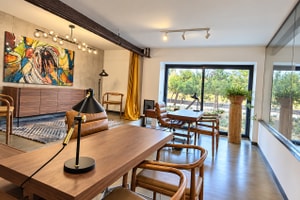
Pop-Up Gallery and Exhibition Space in Arganzuela, Madrid
Arganzuela is where Madrid's gallery scene is heading. Formerly industrial, the district along the Manzanares river south of the center now offers converted buildings with large floorplates, raw character and rates well below what the same square metres cost further north. With Matadero Madrid on its doorstep and Madrid Rio drawing weekend crowds, the area carries real cultural footfall and suits exhibitions, installations and art pop-ups that need scale.
Why Arganzuela works for a pop-up gallery
The clearest live trend in Madrid is the move south. Galleries, studios and independent operators priced out of the center have taken the industrial stock along the riverside in Arganzuela, and the cluster has reached the point where it draws its own audience. For an art activation, that context matters: your visitors arrive expecting to see new work, not stumbling across it between shops.
The district mixes converted industrial buildings around Legazpi and Delicias with newer residential blocks, giving it larger and more flexible space than the districts north of it. Vehicle access is common, ceilings are generous, and the buildings lend themselves to installation-scale work that would not fit in a standard gallery unit. If you are looking for art space in Madrid more broadly, Arganzuela is the value end of the range.
Matadero and the cultural anchor
Matadero Madrid is the city's most important cultural venue for a brand. A vast former slaughterhouse at Legazpi converted into a contemporary arts center of separate halls, it programs design, film, performance and exhibitions, and its raw industrial spaces are used for major installations. The venue is institutionally programmed and brand-friendly, which makes it a natural neighbor for a pop-up exhibition rather than a competitor.
A gallery activation in Arganzuela benefits from the traffic Matadero generates. Visitors coming for one exhibition walk the area and find another, and the district's identity as a cultural destination reinforces each space within it.
Madrid Rio and weekend footfall
Madrid Rio is a very large linear park along the river, created by burying the motorway that once cut the district off from the center. It is heavily used for running, cycling and family leisure, and it gave the whole southern arc a public realm it never had.
For a pop-up gallery, the park provides something conventional gallery districts do not: casual, non-art-world foot traffic. A ground-floor space visible from the park path reaches families, runners and weekend visitors who would never enter a gallery in Salamanca. That broadens the audience for a launch, a brand activation or a public-facing installation. The riverside is at its best in spring and autumn, when the weather is comfortable and the city is full.
The space you can expect
Stock in Arganzuela is converted industrial buildings with large floorplates and vehicle access, at costs per square metre far below the center. For an exhibition or an installation, this is the best value in inner Madrid.
The opportunity here is space, not frontage. The district has almost no continuous commercial street for conventional retail, but that is beside the point for an art activation that draws visitors by programme rather than passing trade. A raw industrial shell suits a gallery build-out, a sculpture show or an immersive installation, and the loading access means large-format work can come in and out without the logistical headaches of a narrow city-center doorway. Spaces for event use in Arganzuela share the same converted stock.
When to book
Spring and autumn are the strongest seasons in Madrid, roughly April to June and September to early December. The weather is comfortable, the city is full, and cultural programming runs at its highest density.
August empties the city. Madrid sits on a high plateau with very hot, very dry summers, and much of the population leaves. The riverside is punishing in a Madrid July and largely unusable in the afternoon. Do not plan a gallery opening for August.
Winter is cold and dry with bright days, and the altitude makes it colder than the Mediterranean coast. Indoor exhibitions work well through winter, and the run-up to Christmas brings strong traffic. January is thin after Reyes.
Getting there
Arganzuela sits minutes from Atocha, the main high-speed rail terminus, which is an unusually good position for the price. Metro stations ring the district at Legazpi, Arganzuela-Planetario and Delicias, and fares are integrated across metro, bus and Cercanias in a single zone that covers the whole city.
Distances within the district are large and it is not walkable end to end, so direct guests to the nearest station for the specific space. Public transport in Madrid is inexpensive, and a taxi fleet with a fixed airport fare makes guest logistics straightforward at almost any hour.
How to manage costs without a price sheet
Rates vary by size, fit-out, timing and duration. The real levers for an art activation in Arganzuela are these:
-
Timing. Off-peak months and midweek dates ask less than peak season and weekends.
-
Duration. A longer booking usually earns a better rate per day than a single day, because the host is pricing continuity.
-
Fit-out. A raw industrial shell costs less than a finished, furnished space. If the exhibition brings its own build, the raw space is the better buy.
-
Flexibility. Being open on dates, or able to take a space at short notice when a host has a gap, is the single biggest lever a renter controls.
For practical guidance on planning the show itself, read the full walkthrough on how to set up a pop-up art gallery.
Frequently Asked Questions
What kind of exhibition space is available in Arganzuela?
Most stock is converted industrial buildings with large floorplates, high ceilings and vehicle access. These spaces suit installations, sculpture shows, immersive exhibitions and any format that needs scale. Raw shells and partially fitted units are both available.
Is Arganzuela a good location for a pop-up gallery in Madrid?
Yes. Galleries and studios have been moving south into Arganzuela as central rents rose, and the cluster now draws its own audience. Matadero Madrid and the Madrid Rio park add cultural and weekend footfall that supports art activations.
When is the best time to open a pop-up gallery in Arganzuela?
Spring (April to June) and autumn (September to early December) are the strongest windows. The weather is comfortable and the city is full. Avoid August, when heat empties Madrid, and January, which is thin after Reyes.
How do I get to Arganzuela?
The district is well served by metro, with stations at Legazpi, Arganzuela-Planetario and Delicias. Atocha, the main rail terminus, sits at its northern edge. Fares are integrated across the whole city in a single zone.
How much does exhibition space in Arganzuela cost?
Rates vary by size, fit-out and timing. Arganzuela offers some of the best value in inner Madrid for large-format space. Booking for a longer run, choosing a raw shell and being flexible on dates are the strongest levers for managing cost. Ask the host for current rates.


