We use cookies and similar technologies to track your activity and improve your experience.
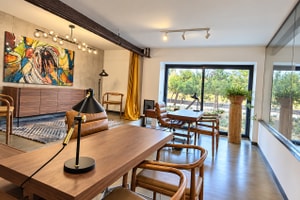
Conference Room Rental Arganzuela Madrid
Arganzuela offers flexible conference and meeting spaces in converted industrial buildings with the scale and access that central Madrid cannot match. The district has transformed from industrial use into a cultural and residential hub, anchored by Matadero Madrid, the city's premier venue for design, performance and exhibitions, and fronted by the Madrid Río park. For a seminar, a corporate event or a product launch that needs floor area, loading access and a location within reach of the center, Arganzuela delivers on all three at costs materially below central Madrid.
Why Arganzuela for conference space
Arganzuela sits along the Manzanares river south of the historic center, in postal codes 28045 and 28005. The district is built on converted industrial stock, large floorplates with vehicle access, suited to events and production work. New residential blocks have brought a young population, while Matadero Madrid and the river park have given the district real cultural footfall and weekend use.
The economics here favor scale. Spaces are larger and more flexible than in the districts north of the center, with room for breakout sessions, catering, and exhibition alongside your main conference. The trade-off is footfall: Arganzuela rewards cultural activations and events, not continuous street retail. A conference or a corporate gathering reads as a natural use here; casual passing trade does not.
Transport links the district well. Metro lines 3 and 6 serve the district at Legazpi, Delicias, Arganzuela-Planetario and Méndez Álvaro, and Atocha, the city's main high-speed rail terminus, sits at the northern edge. Public transport across metro, bus and commuter rail is integrated by zone, and the whole city sits in zone A, so a crew or a group does not need to think about multiple fare systems.
The calendar: when to book
Spring and autumn are the strongest booking seasons in Madrid, roughly April to June and September to early December. The weather is comfortable, the city is full, and corporate calendars are active. Those windows are when a conference will draw the most attendance and the most energy.
Avoid August. Madrid sits on a high plateau with very hot, very dry summers, and in August much of the population leaves, independents close and administrative processing slows. It is the city's genuine dead season. January thins out after the New Year, and July is punishing in the afternoon heat, though the river park and Matadero remain active.
Winter is cold and dry with bright days. The altitude makes it colder than the Mediterranean coast, so outdoor spaces or riverside elements need to account for that, though the winter sun keeps terraces usable more of the year than in Northern Europe.
Matadero Madrid and cultural programming
Matadero Madrid is the city's most important cultural venue for a brand. A vast converted slaughterhouse at Legazpi, it houses separate halls programming design, film, performance and exhibitions. The raw industrial spaces are used for major installations and the venue is brand-friendly and institutionally programmed year round.
The space sits within Arganzuela and is the district's anchor. If your conference or event aligns with Matadero's calendar or draws participants from the design and cultural sectors, the proximity is genuine strategic value. The venue itself books independently, but the district's infrastructure, hotels, transport, supporting restaurants and bars, has grown around it.
Getting there and moving around
Madrid's metro is one of the largest networks in the world by length, dense, cheap and reaching almost everywhere in the city. Metro lines 3 and 6 serve the district at Legazpi, Delicias, Arganzuela-Planetario and Méndez Álvaro. Atocha, at the district's northern edge, is the main high-speed rail terminus and connects the center to Barcelona in around two and a half hours and Seville in roughly the same.
The Cercanías suburban rail network links the center to the wider region through interchanges at Atocha and other points, bringing commuter and regional shopper flow. Madrid-Barajas, Spain's largest airport and a principal hub for Latin America, is connected by metro and Cercanías.
Within the district, distances are large and it is not walkable end to end, but a short walk reaches several stations nearby. The central districts are compact and walkable, so guests arriving from elsewhere in the city will find transport straightforward. Taxis and private hire are widely available at short notice.
Dining and hospitality
Madrid eats and trades late. Lunch runs from around two o'clock, dinner from nine or ten, and nightlife starts when many cities are closing. A conference schedule that imports Northern European hours will miss the evening entirely, so plan catering and social events to align with the city's rhythm rather than against it.
Madrid's hospitality culture runs on tapas, small plates taken standing and moving between bars, and the city has an exceptionally high density of bars per head. Food and drink is the easiest category to launch into and the most crowded, so if your conference includes catering or networking meals, the district and the wider city have the infrastructure to support it.
The move south: why Arganzuela matters
The clearest trend in Madrid is movement southward. Galleries, studios and independent operators priced out of the center took the industrial stock in Carabanchel and the riverside in Arganzuela. That cluster has reached the point where it draws its own audience, cultural, professional and residential. It is no longer a secondary option; it is where real activity is happening.
For a conference, a seminar or a product launch, Arganzuela offers a location that reads as intentional, not as a consolation. Matadero's programming, the river park's footfall, and the district's emerging cultural reputation give an event here context that a generic office or hotel ballroom does not. The space itself is larger, the costs are materially lower than the center, and the story is stronger.
Space and cost
Arganzuela's converted industrial buildings offer large floorplates and vehicle access at costs per square meter far below the center. For an event, a conference or a production space it is the best value in inner Madrid.
The district suits scale. A launch, a seminar, an exhibition or an event that needs floor area and loading within reach of the center will find both here. Budget-conscious options exist on every side street; premium possibilities sit along the river and near Matadero. The real lever is flexibility: being open on dates, or able to take a space at short notice when a host has a gap, is the single biggest way a renter controls cost. Longer bookings usually earn better rates per day than single days do, and smaller footprints in the right location often beat larger spaces in the wrong place while costing less.
Rates vary by location, size, timing and season. Ask the host for current terms, and discuss what flexibility you can offer: a longer booking, or acceptance of a date others have turned down, typically moves the needle on what you pay.
Other uses in Arganzuela
Arganzuela is not limited to conference space. The district also works for event space, showroom, photo studio and art gallery uses. Conference space across Madrid is available in other districts as well. If your needs extend beyond Arganzuela, explore the wider search options across Madrid.
Frequently Asked Questions
What makes Arganzuela different from central Madrid for a conference?
Arganzuela offers larger spaces, vehicle access, and materially lower costs than central Madrid, with the scale to handle breakout sessions, catering and exhibitions. Matadero Madrid anchors the district culturally, giving an event here context and credibility. The trade-off is footfall: this district rewards events and activations, not continuous retail.
How do I get to Arganzuela and move around the district?
Metro lines 3 and 6 serve the district at Legazpi, Delicias, Arganzuela-Planetario and Méndez Álvaro. Atocha, the main rail terminus, sits at the northern edge. Within the district, distances are large, but a short walk reaches several stations. Public transport is cheap and integrated across metro, bus and commuter rail.
When is the best time to book a conference space in Arganzuela?
Spring and autumn, roughly April to June and September to early December, are the strongest seasons when the weather is comfortable and the city is full. Avoid August, when Madrid's heat is extreme and much of the population leaves. January thins out after the New Year.
What is Matadero Madrid and why does it matter?
Matadero Madrid is the city's premier cultural venue, a converted slaughterhouse at Legazpi housing separate halls for design, film, performance and exhibitions. It is brand-friendly and institutionally programmed year round. Its proximity to Arganzuela conference spaces is strategic if your event aligns with design or cultural sectors.
How much does a conference room in Arganzuela cost?
Rates vary by location, size, timing and season. Arganzuela is materially cheaper than central Madrid per square meter. The real lever is flexibility: longer bookings usually earn better daily rates, and taking a space at short notice when a host has a gap can significantly reduce cost. Ask the host for current rates and discuss what dates or durations you can be flexible on.


