We use cookies and similar technologies to track your activity and improve your experience.
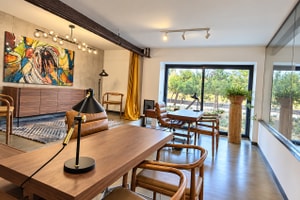
Pop-Up Restaurant, Bar and Cafe Space in Arganzuela, Madrid
Arganzuela is the district along the Manzanares river south of central Madrid, formerly industrial and now home to converted buildings with the kind of floor area and flexibility that food pop-ups need. The district suits operators looking for space rather than frontage, with raw venues that can be fitted to a kitchen concept, a tasting bar or a supper club without the cost of a prime central address.
Why Arganzuela works for a food pop-up
Madrid's hospitality culture runs on tapas and small plates taken standing and moving between bars, and the city has an exceptionally high density of bars per head. Food and drink is the easiest category to launch into and the most crowded, which makes choosing the right location critical.
Arganzuela offers something the central districts do not: large, flexible, converted industrial buildings with vehicle access at costs per square meter far below the center. For a pop-up restaurant or bar that needs a kitchen build, loading space and room for guests, these former warehouses and workshops are a strong fit. The district mixes this converted stock around Legazpi and Delicias with newer residential blocks, and that young resident population is an audience the area's food offer has not yet caught up with.
Matadero and Madrid Rio: the draw
Matadero Madrid is the city's most important cultural venue for a brand. A vast former slaughterhouse at Legazpi converted into a contemporary arts center, it programs design, film, performance and exhibitions, and its raw industrial halls host major installations year round. A food pop-up timed to a Matadero opening or festival taps directly into the audience the venue already brings.
Madrid Rio is the large linear park created by burying the ring road, heavily used for running, cycling and family leisure. It gave Arganzuela a public realm it never had, and with Matadero on it the area now carries real weekend and cultural footfall. The riverside is best used in spring and autumn; a Madrid July makes afternoon outdoor service impractical.
The southward movement working in your favour
The clearest live trend in Madrid is the move south. Galleries, studios and independent operators priced out of the center have taken the industrial stock in Carabanchel and along the Arganzuela riverside, and the cluster has reached the point where it draws its own audience. For a pop-up cafe or bar, this means arriving in a district where the cultural infrastructure already exists and the food scene is still forming, not saturated.
If you are also considering other space types in the area, pop-up retail in Arganzuela and event space in Arganzuela draw on the same converted stock.
When to book
Spring and autumn are the strongest trading seasons in Madrid, roughly April to June and September to early December. The weather is comfortable, the city is full, and the riverside and Matadero audiences are at their peak. These are the windows a temporary food concept should target.
Avoid August. Madrid sits on a high plateau with extreme summer heat, much of the population leaves, and independents close. January is thin after Reyes. For a pop-up bar or restaurant, the sweet spot is the months when terraces are usable and the resident population is present.
Madrid eats and trades late. Lunch runs from around two, dinner from nine or ten. A brand importing Northern European trading hours will miss the evening entirely, and the evening is where a pop-up bar makes its margin.
Getting there and getting stock in
Arganzuela is well served by public transport, with several metro stations ringing the district and Atocha at its northern edge. Distances within the district are large, so plan for that when choosing a site relative to the nearest station.
For a food pop-up, vehicle access matters as much as guest access. The converted industrial stock here was built for loading, and many units retain that capability. Fares across the city are integrated by zone and the whole of Madrid sits in zone A, so crew and guests travel on one ticket type. Guest logistics are straightforward: taxis are widely available at short notice at almost any hour, which matters for a late dinner service.
How to keep costs down
Arganzuela already sits at the affordable end of inner Madrid. Beyond that baseline, the real levers are timing, duration and fit-out.
A longer booking usually earns a better rate per day than a single night, because a host is pricing continuity. Midweek dates and off-peak months ask less than weekends in peak season. A raw space costs less than a finished one, and if your concept brings its own kitchen build, you are paying for walls and power rather than someone else's fit-out.
Flexibility is the single biggest lever. Being open on dates, or able to take a space at short notice when a host has a gap, consistently secures the best terms. For current availability across the city, browse pop-up food space in Madrid.
What a food pop-up looks like here
The opportunity in Arganzuela is space, not frontage. Conventional street retail has almost no footfall in the district, so a pop-up restaurant or supper club here works as a destination rather than a walk-in. That suits concepts with a following, a booking list or an event tie-in.
The district rewards food activations alongside cultural programming at Matadero, tasting events in warehouse-scale rooms, and pop-up bars that can use the riverside park as their front garden in the right season. If you are earlier in the planning stage, our guide on how to open a pop-up restaurant covers the practical steps from concept to launch.
Frequently Asked Questions
What kind of food pop-up space is available in Arganzuela?
The district's converted industrial buildings offer large floorplates with vehicle access, suited to kitchen builds, supper clubs and tasting events. These are raw or semi-fitted spaces rather than turnkey restaurant units, and rates per square meter sit well below central Madrid.
When is the best time to run a pop-up restaurant in Arganzuela?
April to June and September to early December are the strongest windows. The weather is comfortable, the city is full, and Matadero and Madrid Rio draw their biggest audiences. Avoid August, when extreme heat empties the city.
Is Arganzuela easy to reach for guests?
The district has several metro stations and Atocha is at its northern edge. Public transport is inexpensive and integrated across the city. Taxis are widely available at short notice, which is useful for a dinner service that runs late.
What is a pop-up restaurant?
A pop-up restaurant is a temporary food concept that operates from a short-term space for days, weeks or a few months. It lets chefs and brands test a menu, a market or a location without the commitment of a permanent lease. Read our full explanation of what a pop-up restaurant is and how they work.
How do I find affordable pop-up bar space in Madrid?
Book for longer stretches to secure a better daily rate, stay flexible on dates, and look at raw spaces where you bring your own fit-out. Arganzuela's converted stock is already among the most affordable in inner Madrid. Rates vary by size, location and season, so ask the host for current terms.


