We use cookies and similar technologies to track your activity and improve your experience.
Sort by
Recommended
See on map
See on map

See on map

Apartment / Loft
∙
Madrid
110 m²
from 124 € per day
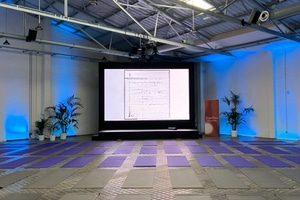
Pop-Up Shop in La Latina, Madrid
La Latina is the oldest part of Madrid, a tangle of medieval streets south of Plaza Mayor where tapas bars line the Cava Baja and El Rastro flea market fills the quarter every Sunday morning. For brands selling vintage, craft, food or anything that suits a weekend browse, it is one of the most characterful retail locations in the city. Browse available pop-up stores in La Latina and book by the day, the week or the season.
Why La Latina works for a pop-up shop
La Latina draws a crowd that is more local than tourist. The catchment is Madrileños out for the day, particularly on Sundays, plus a settled residential population and visitors who come for the food and the flea market rather than for high-street shopping. That mix rewards formats built around discovery: vintage, antiques, craft, food and drink, and anything a browser picks up on impulse.
El Rastro is the anchor. One of the largest open-air flea markets in Europe, it runs every Sunday morning down the Ribera de Curtidores with hundreds of stalls and a genuine commercial institution behind it, complete with its own pitch allocation. The footfall it generates is the single biggest weekly retail event in central Madrid, and a pop-up store nearby benefits directly from it.
If you are exploring retail space across Madrid, La Latina sits at the affordable end of the city's rent spectrum, well below the prime corridors of Salamanca or Gran Vía.
The district's rhythm and what it means for trading
La Latina runs on a weekend rhythm. Sunday morning is the peak by a wide margin, the evenings carry the bar and restaurant trade, and weekday daytime is comparatively quiet. A brand that depends on Monday-to-Friday footfall has almost nothing to trade on here.
Madrid itself keeps late hours. Lunch runs from around two, dinner from nine or ten, and nightlife starts when many cities are closing. A pop-up shop in La Latina should plan its opening hours around that pattern rather than importing Northern European trading times and missing the evening entirely.
Spring and autumn are the strongest trading seasons, roughly April to June and September to early December, when the weather is comfortable and the city is full. August empties the city: Madrid sits on a high plateau with very hot, dry summers and much of the population leaves. January is thin after Reyes. Plan a La Latina pop-up for the windows when the locals are present.
What the spaces look like
Stock in La Latina is small units in medieval buildings with irregular shapes, low ceilings and difficult access. The streets are steep and narrow, and vehicle access is very restricted. Fit-out here can cost more than the rent suggests, because the architecture does not accommodate a standard retail shell.
For a brand bringing its own build, expect to work around the building rather than inside a blank box. If the format is simple, a finished and furnished space avoids that problem entirely, though it asks more per day. A raw unit is the better buy only when the brand has the budget and the time to fit it out.
The district falls principally in postal codes 28005 and 28012, with the Rastro running down through 28005.
How to keep costs down in La Latina
La Latina sits toward the affordable end of central Madrid's retail spectrum. Rates vary by size, street, floor and timing, and several levers are in the renter's hands.
-
Timing. Off-peak months and midweek dates ask less than peak season and weekends. Booking outside the spring and autumn windows, or accepting a midweek start, brings the rate down.
-
Duration. A longer booking usually earns a better daily rate than a single day, because a host is pricing continuity.
-
Position. A side street a few doors off the Cava Baja or the Rastro route asks materially less than a frontage on either, while keeping much of the passing trade.
-
Floor. Ground floor with a window commands the most. Basement or first-floor space in the same building asks less.
-
Flexibility. Being open on dates, or able to take a space at short notice when a host has a gap, is the single biggest lever a renter controls.
For a broader view of what is available across the city, browse pop-up shop options in Madrid.
Getting to La Latina
The district is well connected by public transport, with several metro stations nearby and Sol a short walk north. Fares are integrated across metro, bus and Cercanías through a single zone that covers the whole city, so one ticket type is enough for a crew working an activation.
On-street parking in central Madrid is metered and priced by emissions class, with residents prioritized. Combined with the low emission zone, a crew should book an off-street car park rather than hope for a space. Guest logistics are straightforward: Madrid has a large metered taxi fleet and a fixed fare to and from the airport, and private hire is available at short notice at almost any hour.
The metro closes overnight, which matters in a city that eats at ten. The night bus network radiates from Sol and Cibeles and covers the gap.
What sells in La Latina
The district rewards formats that match its crowd and its calendar. Vintage, antiques and craft are natural fits, because they align with the Rastro audience and the browsing pace of a Sunday market crowd. Food and drink is the easiest category to launch into, though it is also the most crowded: the Cava Baja is a continuous run of tapas bars and the competition is deep.
Beyond the Rastro, the Mercado de la Cebada is a large municipal market that has resisted the food-hall conversion its neighbours underwent. It remains a working market, and a counter in a market that still serves its own neighborhood is a stronger position than one in a market that has become a visitor attraction.
If your format is better suited to a gallery or a brand activation than a retail unit, La Latina also has spaces for art pop-ups and events.
Madrid vs Barcelona for a pop-up launch
The two Spanish cities are different markets and a brand should not treat them as one. Madrid is bigger, wealthier per head at the top end, more corporate, more domestic in its customer base and open every Sunday. Barcelona is smaller, more international, more design-led, more visitor-dependent and restricted on Sunday trading.
Madrid has no regional language obligation, which Barcelona does. Signage, labelling and service are in Castilian Spanish with no Catalan equivalent to comply with. For a brand entering Spain through Madrid, the language compliance burden is materially lighter.
The customer here is more domestic than Barcelona's, drawing heavily from the rest of Spain and from Latin America rather than from Northern European city breaks. That changes the language of the activation, the price expectation and the seasonal shape of the trade. New to the format? Read more about what a pop-up shop is and how short-term retail works.
Frequently Asked Questions
What types of pop-up shop work best in La Latina, Madrid?
Vintage, antiques, craft, food and drink, and any format that suits a Sunday browse. The district's footfall peaks on Sunday mornings around El Rastro, and the local crowd rewards discovery-led retail over high-street formats.
When is the best time to open a pop-up store in La Latina?
Spring and autumn are the strongest windows, roughly April to June and September to early December. August empties the city and January is thin after Reyes. Within the week, Sunday is the peak trading day by a wide margin.
How much does a pop-up shop in La Latina cost?
Rates vary by size, street, floor and timing. La Latina sits toward the affordable end of central Madrid's rent spectrum. Booking a longer duration, choosing a side street or taking a space at short notice when a host has a gap all bring the daily rate down. Ask the host for current pricing.
What should I know about the spaces in La Latina?
Units are small, in medieval buildings, with irregular layouts, low ceilings and restricted vehicle access. Fit-out can cost more than the rent suggests because of the architecture. A finished space avoids that problem; a raw unit is better value only if the brand has the budget to adapt it.
How do I measure the success of my La Latina pop-up?
Track footfall, conversion rate, average basket size and any brand awareness metrics relevant to the activation. Sunday trading numbers are the headline figure here, given the district's calendar. For a full framework, see the guide on how to measure pop-up shop success.


