We use cookies and similar technologies to track your activity and improve your experience.
Sort by
Recommended
See on map

See on map
See on map

Apartment / Loft
∙
Madrid
110 m²
from 124 € per day
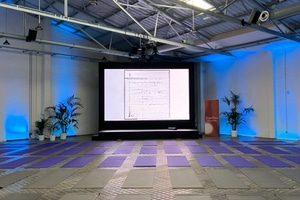
Pop-Up Gallery and Exhibition Space in La Latina, Madrid
La Latina is the oldest quarter of Madrid, a district of medieval streets south of Plaza Mayor where tapas bars line the Cava Baja and the weekly Rastro flea market draws one of the largest crowds in central Spain. For a temporary art exhibition or pop-up gallery, the district offers something rare: a local audience that outnumbers the tourists, a street rhythm built around Sunday browsing, and compact spaces with genuine character.
Why La Latina suits a pop-up gallery
La Latina rewards formats that fit a weekend rhythm. The Rastro flea market fills the streets every Sunday morning, bringing thousands of visitors through the district on foot. That crowd is browsing, not commuting, and the pace suits art, vintage and craft far better than a weekday office district would.
The catchment is largely Madrileño rather than tourist-driven, which means the audience already knows the neighborhood and returns week after week. For a gallery showing emerging work or a limited run of prints, that repeat local traffic is more valuable than a one-off visitor surge. If your format works alongside a Sunday browse, La Latina is one of the strongest positions in the city.
The character of the spaces
Units in La Latina are small, old and irregular. The medieval street pattern produces rooms with uneven walls, low ceilings and narrow access. That is part of the appeal for an art exhibition: the intimacy of a space that was never designed as a white cube gives a show a texture that a purpose-built gallery cannot match.
Fit-out here deserves attention. The character of the buildings means that adapting a space can cost more than the headline rate suggests. A raw shell with exposed stone will photograph well but may need temporary lighting, hanging systems and flooring before it is ready for a private view. Factor that into the budget and ask each host what comes included.
Trading rhythm and timing
The district runs on a weekend cycle. Sunday morning is the peak by a wide margin, when the Rastro is running and the streets are full. Evenings carry the bar and restaurant trade along the Cava Baja. Weekday daytimes are comparatively quiet.
A pop-up gallery planned around a Thursday evening opening and a full weekend of viewing fits the district naturally. A format that depends on Monday-to-Friday footfall is working against the grain. Spring and autumn, roughly April to June and September to early December, are the strongest trading seasons in Madrid. August empties the city and is best avoided entirely.
What to show and who comes
La Latina's audience is domestic. Madrid draws heavily from the rest of Spain and from Latin America rather than from Northern European city breaks, and this district amplifies that: locals out for the day, families at the Rastro, neighbours heading for tapas. The language of the crowd is Spanish and the price expectation is grounded.
Art that connects to craft, street culture, vintage aesthetics or local making sits well here. A gallery selling limited-edition prints, a ceramics exhibition, a photography show tied to the neighborhood itself: these formats match what the audience is already looking for. If you are also considering a pop-up retail space in La Latina, the two formats can reinforce each other on a busy Sunday.
Getting the most from your budget
La Latina sits toward the affordable end of central Madrid's rent spectrum. That does not mean cheap, because the city is no longer the bargain it was a decade ago, but it does mean the entry cost for a temporary exhibition is materially lower than in Salamanca or along Gran Vía.
The real levers are timing and flexibility. Off-peak months and midweek dates cost less than peak weekends. A longer booking usually earns a better daily rate, because a host is pricing continuity. A first-floor or basement unit in the same building as a ground-floor shop asks less, and for an art show the enclosed atmosphere can be an advantage. Being open on dates, or able to take a space at short notice when a host has a gap, is the single biggest lever a renter controls.
Reaching the district
La Latina is well connected by public transport, with metro stations nearby and Sol a short walk north. Fares across the city sit in a single zone, so one ticket type covers a whole activation without worrying about zone boundaries. Public transport in Madrid is inexpensive against the cost of the activation it serves.
Vehicle access into the medieval streets is very restricted, and the low emission zone applies. A crew bringing equipment should book off-street parking rather than rely on finding a metered space. Guest logistics are straightforward: taxis are widely available at short notice, including a fixed fare from the airport, which matters for an evening private view. Madrid keeps late hours: dinner starts at nine or ten, so an opening that runs into the night is working with the city rather than against it.
Exploring other formats in La Latina and beyond
If your project spans more than a gallery, La Latina hosts event spaces suited to private views and launch nights, and showroom spaces for product-led exhibitions. For a broader search across the capital, browse art space in Madrid to compare districts and price points.
For practical guidance on planning a temporary show from scratch, the guide on how to set up a pop-up art gallery covers everything from selecting the right space to planning the opening night.
Frequently Asked Questions
What type of art exhibition works best in La Latina?
Formats that suit a weekend browse perform strongest: limited-edition prints, photography, ceramics, vintage art and anything connected to craft or local making. The audience is largely local and returns weekly for the Rastro, so work that rewards repeat visits and word of mouth does well.
When is the best time to open a pop-up gallery in La Latina?
Spring (April to June) and autumn (September to early December) are the strongest trading seasons. August empties the city and should be avoided. Within the week, plan around Sunday morning when the Rastro is running and the district is at its busiest.
How much does exhibition space in La Latina cost?
Rates vary by size, floor level, fit-out and timing. La Latina sits toward the affordable end of central Madrid. Booking for a longer run, choosing off-peak dates, or taking a first-floor unit rather than street level all reduce the daily cost. Ask the host for current rates and what is included.
Are the gallery spaces in La Latina easy to fit out?
Units are small and built into medieval structures, so expect irregular layouts, low ceilings and narrow doorways. The character suits intimate exhibitions but temporary lighting, hanging systems and flooring may need to be brought in. Confirm access dimensions and included fixtures with each host before booking.
Is La Latina easy to reach by public transport?
Yes. Metro stations serve the district and the whole city sits in a single fare zone. Vehicle access into the narrow streets is restricted, so guests arrive most easily on foot or by metro, and taxis are widely available for evening events.


