We use cookies and similar technologies to track your activity and improve your experience.
Sort by
Recommended
See on map

See on map
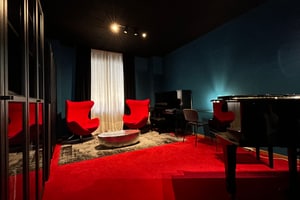
Meeting Room Rental in Sol, Madrid
Sol is the symbolic heart of Madrid and Kilometre Zero of Spain's road network, where metro Lines 1, 2 and 3 meet a major Cercanías station, making it one of the best-connected hubs in the city. It is the arrival point for a huge share of the region's shoppers and visitors. A meeting room here puts your team steps away from clients arriving by train, metro or car, with transport connections across the entire metro network and Cercanías suburbs integrated on a single ticket. The district rewards formats that capitalize on its connectivity and its passing professional traffic.
Why Sol for a meeting room
Sol sits at the junction of Gran Vía to the north, Barrio de las Letras to the east and La Latina to the southwest. Each is a few minutes' walk away, and the center of Madrid is genuinely small. This means a single room here serves teams across multiple districts without requiring anyone to travel far.
The area is dominated by visitors and passing shoppers rather than resident populations. That makes it ideal for a boardroom or a training space where your attendees are traveling in from elsewhere in the city or the region. One ticket covers the whole metro network and suburban Cercanías, so your guests do not need to worry about zones or transfers.
Sol is also the point Spanish road distances are measured from, and it anchors the densest visitor and business footfall in the city. That visibility carries weight in Madrid's corporate landscape.
Transport and accessibility
Sol is the single best-connected point in Madrid, with three metro interchanges and a major Cercanías station that brings regional commuters and shoppers into the core. The metro network is one of the largest in the world by length and reaches almost everywhere in the city. Fares are integrated across metro, bus and Cercanías by a single zone system covering the whole city, so your team and guests can use any combination without thinking about transfers or surcharges.
Long-distance coaches arrive at several regional interchanges, and Madrid-Barajas airport is connected by metro and Cercanías. A car can be had at short notice at almost any hour through the large metered taxi fleet or private hire services, which matters if you are hosting an evening session. On-street parking in the central area is metered and priced by emissions class, so it is usually better to book an off-street car park if attendees are driving in.
The district's rhythm and seasonality
Madrid eats and trades late. Lunch runs from around two o'clock, dinner from nine or ten, and professional activity extends well into the evening. If you are hosting working sessions or evening networking, Sol's location means attendees can move directly into dinner without traveling across the city.
Spring and autumn are the strongest trading seasons in Madrid, from around April to June and September to early December, when the weather is comfortable and the city is full. January is thin after the Epiphany celebrations, and July and August see the city empty considerably. If you are planning a regular meeting series, aim for the stronger shoulder months. Christmas and Epiphany bring a peak in activity, and the New Year's Eve event in Puerta del Sol draws enormous crowds if you are planning an activation around that window.
Meeting space across Madrid
Sol is part of a larger Madrid market for meeting space in Madrid that spans multiple districts, each with different characteristics. If you are looking at options across the city, check the availability across Madrid to compare neighborhoods and the full range of space types and configurations available.
If you are interested in other space types in Sol itself, showroom rental, event space, and retail space are also available in the neighborhood. Each serves different formats and brand moments.
Booking a short-term meeting room
Meeting rooms in Sol book by the day, week or longer, depending on the space and host availability. Rates vary by location, size, timing and duration. Shorter bookings typically ask more per day than longer runs, because a host is pricing a single let rather than continuity. Off-peak months and midweek dates ask less than peak season and weekends, which is a real lever if you can shift your timing.
Smaller spaces in side locations often ask materially less than the main commercial arteries while keeping good access and connectivity. A finished, furnished room costs more than a raw space, but saves on equipment and setup time. Being flexible on dates or willing to book at short notice when a host has a gap is the single biggest way to negotiate a better rate.
The project page for Meeting Room For Rent has more detail on what to expect from the format across markets.
Frequently Asked Questions
What makes Sol central to Madrid?
Sol is the point Spanish road distances are measured from and the symbolic center of both Madrid and Spain. It sits at the junction of three major metro lines and a Cercanías interchange, making it the single best-connected point in the city. The neighborhood is dominated by professional and visitor traffic rather than residents, which makes it a natural hub for meetings and events.
How easy is it to reach Sol from other parts of Madrid?
Sol is a few minutes' walk from Gran Vía, Barrio de las Letras and La Latina, and the central districts are genuinely compact and walkable. The metro network is dense and inexpensive, with integrated fares across all zones in the city. Guests arriving by train use the Cercanías station, and taxis are widely available at any hour.
What is the best time of year to book a meeting room in Madrid?
Spring and autumn are the strongest seasons, roughly April to June and September to early December, when the weather is comfortable and the city is full. January is quieter after Epiphany. July and August see the city empty considerably, so those months are better suited to formats targeting visitors. Christmas and Epiphany bring a peak in activity.
How do I find the right meeting room for my team?
Start by listing your requirements: how many people, for how long, and what date or season. Being flexible on size, location and timing gives you more options and usually better rates. A smaller space on a side street costs less than the main commercial run while keeping good access. Longer bookings and off-peak dates are priced better per day than single-day bookings in peak season.
Can I book a meeting room for just a few hours?
Each host sets their own minimum booking duration and cancellation terms. Some offer hourly or half-day rates, and others work on a daily minimum. Check the specific listing to see what that host offers, and contact them directly if you need something outside the standard options.


