We use cookies and similar technologies to track your activity and improve your experience.
Explore more spaces worldwide:
Basement Retail Spaces For Rent in Amsterdam | Basement Retail Spaces For Rent in Dubai | Basement Retail Spaces For Rent in London | Basement Retail Spaces For Rent in Milan | Basement Retail Spaces For Rent in Montreal | Basement Retail Spaces For Rent in Paris | Basement Retail Spaces For Rent in Seoul
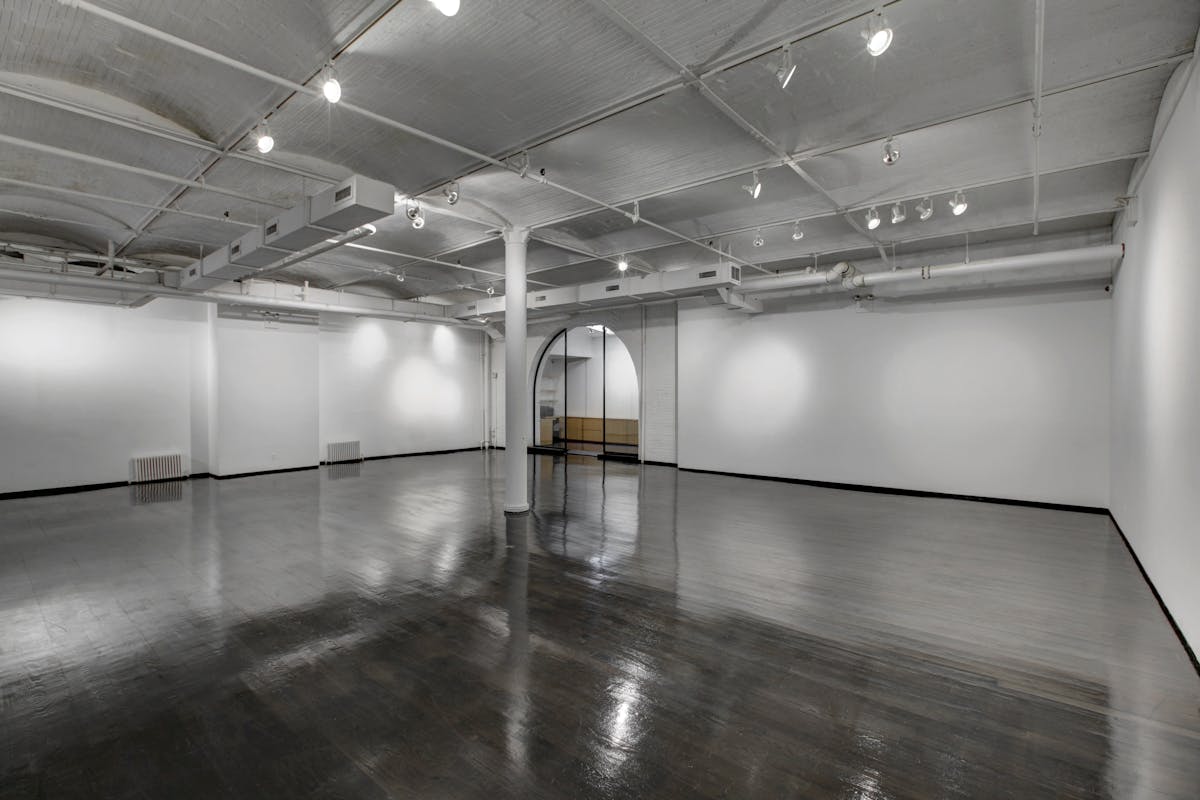
Basement retail space is a specific kind of short-term commercial space: below street level, often in a building that fronts a main shopping corridor, with direct stair or ramp access from the sidewalk above.
The modifier matters. A basement retail space is not a discount version of ground-floor retail. It is a different product, suited to a different set of uses, and brands that understand when it wins book it deliberately rather than by default.
When Basement Space Wins
Several retail formats are genuinely better suited to a basement than to a window unit on the street.
-
Sample sales and private sale events. The enclosed, below-grade format creates a focused shopping environment. Guests arrive knowing why they are there, dwell longer, and the space naturally controls access.
-
Brand archives and showroom pop-ups. A basement with clean walls and good lighting works as a controlled environment where the product, not the street outside, is the whole experience.
-
Storage-integrated pop-up shops. Ground-floor retail rarely has the back-of-house to hold meaningful stock. A basement unit often combines the selling floor and the stockroom in one footprint.
-
Art installations and gallery activations. Underground proportions, often with low ceilings and uninterrupted walls, suit immersive and installation-led formats that would be diluted by natural street-facing light.
-
Speakeasy and discovery concepts. Retail formats built around a sense of arrival, or that reward the customer who seeks them out, translate naturally to a below-street address.
How to Book Smarter
Basement retail space prices differently from street-level retail. These are the levers a renter controls:
Timing. Off-peak months and midweek dates typically ask less than peak season and weekends. A basement running alongside a city-wide event or sale period will price accordingly.
Duration. A longer booking usually earns a better daily rate than a single-day let, because a host carries no void between your dates.
Fit-out. A finished, furnished basement costs more than a raw one. If you are bringing your own build, the raw space is often the better buy and gives you more control over the environment anyway.
Flexibility. Being open on dates, or able to take a space at short notice when a host has a gap, is the single biggest lever a renter controls regardless of city or format.
Basement Retail Across Cities
Below-ground retail is most common in cities with dense, multi-story commercial buildings and a history of converting lower floors to retail use. Availability varies by city, so the city pages below are the fastest way to see what is bookable.
For city-specific listings, browse retail space in London or retail space in New York. For the full landscape of short-term retail formats, the Pop-Up Store Rental project page covers the category at a national level.
For brands looking at retail alongside live-in arrangements, Storefront With Apartment is a related format worth considering. For budget-led searches on the West Coast, cheap retail space in Los Angeles covers that market.
For a broader introduction to the format, What is a pop-up shop? Everything you need to know to try short-term retail explains the core concept and who it suits.
FAQ
Can you run a pop-up shop in a basement?
Yes. A basement retail space works well for pop-up formats that prioritize a controlled environment over passive street traffic. Sample sales, brand activations, art-led retail and archive events are all formats that translate naturally below street level.
Is basement retail space cheaper than street-level retail?
Generally, below-grade space asks less per day than an equivalent ground-floor unit on the same street. How much less depends on the building, the city, the duration and the time of year. Rates vary by host, and the listing will show the current asking rate.
Who typically rents basement retail space?
Brands running sample sales, artists staging immersive installations, fashion labels holding private showroom events, and retailers needing storage-integrated pop-up space are the most common renters. The format suits any activation where the experience is the draw rather than passing foot traffic.
How do I light a basement retail space?
Most hosts provide basic lighting, and the listing will describe what is installed. If you need a specific lighting setup for product display or installation work, ask the host before booking. Many basement spaces have exposed ceilings that make rigging additional lighting straightforward.
Storefront helps you find the right venue in three easy steps:
Choose a location
Storefront features flexible rentals in areas with high foot traffic and visibility to give your project maximum exposure.

Connect
Find spaces that meet your criteria. Our Storefront team is here to assist you.
Launch your project
Storefront offers advice and guarantees to streamline your short term opening process.


