Halls by Neighborhood
Hall availability and pricing vary sharply by neighborhood in San Francisco, shaped by the city's topography, transit access, and local character.
SoMa
SoMa holds San Francisco's supply of large-floorplate spaces: warehouses with high ceilings, roll-up doors and clear floor area suited to tech conferences, trade shows, product launches and corporate events. The neighborhood is flat and well served by BART at Powell and Civic Center, so it draws from the whole Bay Area on weekdays. The Moscone Center on Howard Street is the single largest venue in the city; the blocks around it fill and empty according to what is booked inside, making the immediate surroundings a natural fit for satellite brand activity and concurrent events.
Mission
The Mission hosts private parties, weddings, gallery openings and intimate gatherings in converted Victorian and Edwardian buildings. Most halls here are single-bay storefronts or modest second-floor spaces in older structures, which suits smaller events and single-brand activities better than large conferences. The neighborhood is the warmest and sunniest part of San Francisco and is busiest at the weekend, so event bookings here trend toward Saturday celebrations rather than weekday business functions. The BART stations at Sixteenth and Twenty-fourth connect the neighborhood to the rest of the city and the peninsula.
Hayes Valley
Hayes Valley combines cultural cachet with strict independent-business rules, making it a preferred location for creative launches, fashion events, art openings and brand activations. Spaces are typically small ground floors in Victorian buildings with high ceilings and large display windows. The neighborhood is close to the Civic Center cultural district, home to the opera, ballet, symphony and museums. Hayes Valley is one of the few San Francisco shopping streets with consistent footfall at the weekend and on weekday evenings, which suits evening events and cultural programming.
Financial District
The Financial District trades on a weekday clock. Footfall concentrates between Tuesday and Thursday, peaks at lunchtime, and falls away almost completely at weekends. Halls here suit corporate functions, business conferences, and workday events rather than private celebrations. Montgomery Street is the spine and carries banking halls, lobbies and service uses rather than destination venues. Embarcadero Center is an indoor office complex with ground-floor retail and a captive audience of workers above, making it reliable for workday trade. The Ferry Building at the foot of Market Street is a working terminal converted into a food hall and cultural venue, drawing both workers and weekend visitors.
Downtown / Union Square
Union Square and the surrounding blocks make up San Francisco's densest concentration of retail and hospitality. Halls here trade to hotel guests, convention attendees and visitors, so demand follows the tourism calendar and the convention schedule. The blocks around Stockton Street are closed seasonally for public programming, which can create opportunities for outdoor or semi-outdoor events during those windows.
Types of Halls
Halls in San Francisco fall into a few broad categories, each suited to different events and budgets.
Event Halls
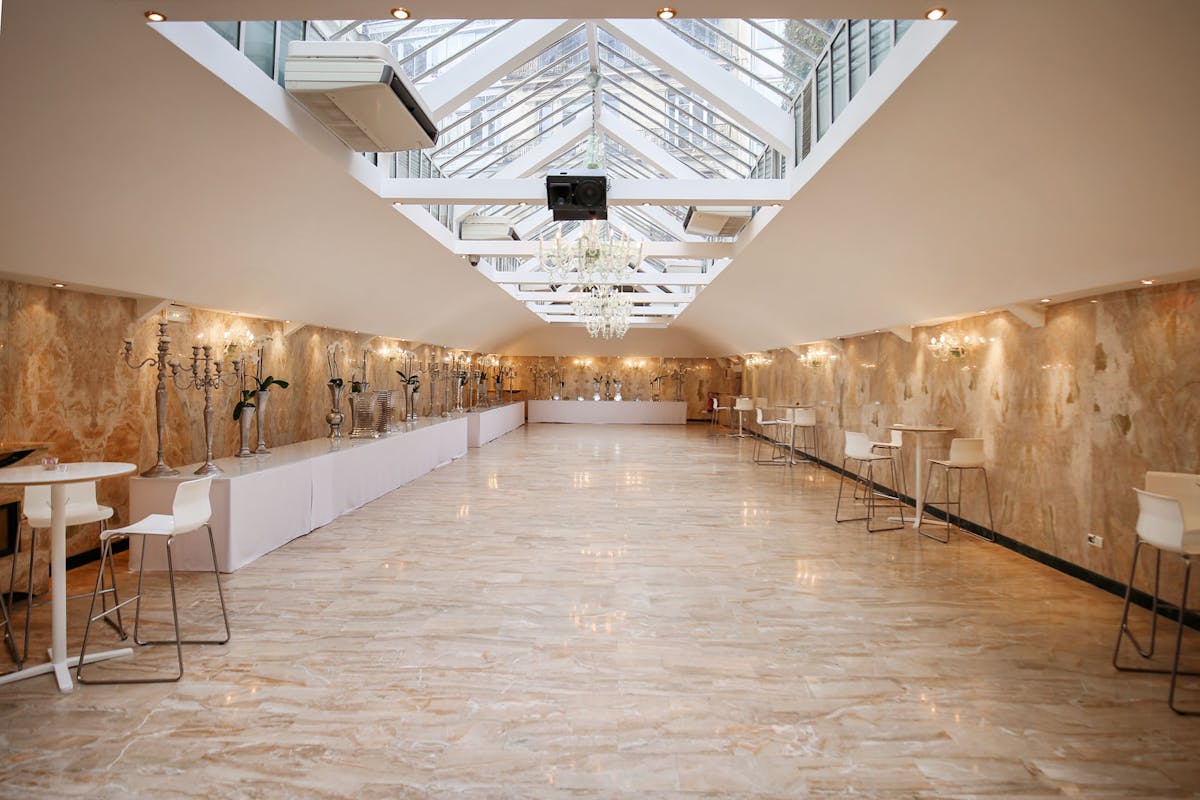
Purpose-built event spaces with flexible seating, sound systems, and climate control. These typically range from 1,500 to 10,000 square feet and are common in the Financial District and SoMa. They suit conferences, galas, product launches and large private events. Capacity and amenities vary widely; confirm electrical capacity, loading access, and parking arrangements before booking.
Function Halls
Older buildings converted into event spaces, common in the Mission and Hayes Valley. These often have original architectural detail: high ceilings, exposed brick, skylights, and large windows. They suit weddings, celebrations, gallery openings and cultural events. Many have residential or office use above, so noise restrictions and event hours are binding conditions worth clarifying upfront.
Ballrooms and Multi-Use Spaces
Larger formal spaces, frequently found in hotels and downtown buildings. These come with built-in catering, coat check, and climate control. They suit galas, formal dinners and high-attendance events. They are typically the most expensive category and require the longest booking lead times.
Warehouse and Loft Spaces
Industrial and converted manufacturing spaces in SoMa, Dogpatch and the eastern neighborhoods. These offer clear floor, high ceilings, roll-up loading doors and flexible layouts. They suit fashion shows, art installations, product launches and experiential events. Load-in and technical setup are usually straightforward; parking and pedestrian access are the real constraints.
Booking a Hall in San Francisco
How far in advance should I book?
Booking lead time depends on the event size and the time of year. Small private events (under 100 people) can often be booked four to six weeks ahead. Larger events and peak seasons (holiday season, June for Pride, late September through October when weather is best) should be booked two to three months ahead. Major corporate conferences often require six months or more. Weekday events typically have shorter lead times than weekend events at the same venue.
Which season is busiest?
San Francisco's peak season is September and October, when the weather is warmest and clearest. June brings Pride Month, which is a significant commercial season. The winter holidays, November through December, see heavy bookings on neighborhood streets and lighter bookings downtown. August is typically quietest because visitor numbers peak (in the fog) while residents are traveling. The city hosts around thirty-eight major conventions annually, concentrated around technology and industry conferences; their dates can create local demand spikes.
What permits do I need?
Permits depend on the type of event, the space's zoning and what you plan to do inside. A private event in a space already zoned for assembly (most halls are) typically requires less approval than a public event or one involving food service, alcohol, live music or amplified sound. The space owner can usually guide you on what applies; confirm the requirements before committing to dates.
How do I choose between neighborhoods?
Consider your event type, your guest profile and your timing. Weekday corporate events suit the Financial District and SoMa. Weekend private celebrations and weddings are more common in the Mission and Hayes Valley. Large product launches and conferences favor SoMa for space and transit access. Hayes Valley is the right choice if you want design-forward aesthetics and an independent-business audience. Union Square and downtown suit tourism-facing events and convention satellite programming.
What should I expect to pay?
Rates vary significantly by neighborhood, space size, season and duration. Prime locations like Union Square and the Financial District command premium rates. Neighborhood corridors (Mission, Hayes Valley, Valencia) are typically mid-range. SoMa warehouse and event spaces cover a wide spectrum depending on size and amenities. Weekend bookings generally cost more than weekday ones. Off-season bookings (August, early January) often come with better rates. Ask the space owner for current rates specific to your dates and event type.
Do halls come with furniture and catering?
Some do, most do not. Many halls are raw space and require you to bring in tables, chairs, sound, lighting and catering. Others are turnkey with built-in amenities. This varies by neighborhood and venue type. Confirm what is included before booking, and budget for rentals if the space does not provide them.
Why Rent a Hall in San Francisco
San Francisco halls offer flexibility, character and access to one of the largest visitor and professional networks on the West Coast. The city draws over twenty million visitors a year and hosts major technology, industry and cultural events throughout the calendar. Renting a hall gives you access to that audience without the commitment of a permanent lease. Neighborhood character is strong and distinct, so choosing the right location amplifies your brand message: Hayes Valley signals design and creativity, SoMa signals scale and innovation, the Mission signals community and culture. Halls are available for short runs, days, weeks or a few months, making them ideal for launches, pop-up events, conferences and seasonal programming.
Explore more: Mall Booth Kiosk Corner Rental · San Francisco