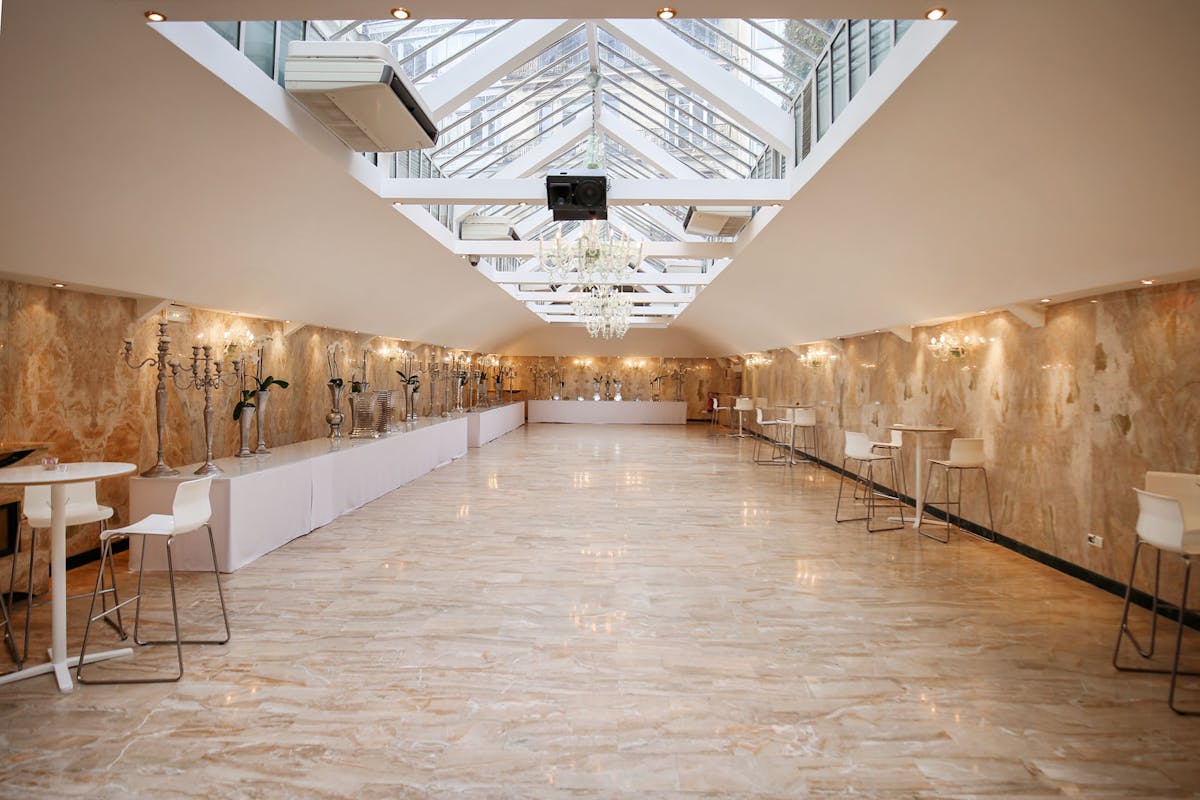




Hall Hire in London: What to Know Before You Book
London offers an unusually wide range of halls for hire, from Victorian market buildings and Georgian townhouse rooms to converted industrial spaces and purpose-built event floors. The right hall depends less on size alone than on where in the city you need to be and what the event requires.
Hall rental in London operates across two broad categories: managed estates where space is let directly by a single landlord, and independently listed spaces available through platforms like Storefront. The managed estates, covering areas such as Covent Garden, Seven Dials and Carnaby, offer curated environments with predictable tenant mixes. Independent listings give more variety in layout, price and availability.
Hall Types Available in London
London's hall inventory covers several distinct use cases, each with its own requirements.
-
Private dining halls suit seated dinners, tastings and member events. These tend to be found in Mayfair, Marylebone and South Kensington, where the residential and office population supports a consistent hospitality trade.
-
Conference and meeting halls prioritise connectivity, natural light and layout flexibility. Fitzrovia, Shoreditch and the areas around King's Cross carry a strong concentration of these, serving the technology and media companies based nearby.
-
Event and function halls cover launches, receptions, screenings and exhibitions. Shoreditch and Hackney offer the most volume here, with former warehouse stock giving wide ground-floor frontage and raw interiors that brands adapt quickly.
-
Exhibition and gallery halls suit art shows, brand installations and design presentations. Covent Garden, Mayfair and the areas around South Kensington's museum cluster draw both visitor footfall and press, which makes them the default choice for cultural programming.
London Neighbourhoods for Hall Rental
Neighbourhood choice shapes who attends as much as what the space looks like.
-
Shoreditch holds the largest concentration of flexible hall space in east London. Its former warehouse and light-industrial stock gives wide ground-floor frontage and raw interiors. Brand activations and independent labels are regular occupiers, and trade is busiest at weekends.
-
Covent Garden is a managed retail and events estate built around the former market building, with consistently high visitor flow. Hall hire here suits product launches and cultural events with a public-facing component.
-
Mayfair is the luxury address. Halls here are taken for prestige adjacency as much as for footfall, and the streets around Bond Street and Mount Street carry established gallery and showroom space.
-
Marylebone reads as a village high street despite sitting minutes from Oxford Street. Its halls tend toward the intimate: independent spaces serving a wealthy local and professional catchment.
-
Camden is market-led and heavily weekend-weighted, with high visitor numbers. Hall hire here suits consumer events, pop-up markets and entertainment formats.
For loft spaces and flexible venues across London, the same principles apply: match the neighbourhood to the audience you need in the room.
When to Book Hall Hire in London
Demand for hall hire in London peaks around London Fashion Week in February and September, through the London Design Festival in September, and during the run-up to Christmas. Frieze London and Frieze Masters in October drive a secondary spike, particularly for gallery and exhibition formats.
August is the quietest month for central London hall rental: office footfall drops and a large share of the resident population leaves. For neighbourhood-focused events in Hackney, Hackney, or Dalston, that pattern inverts slightly, with visitor demand continuing into the summer.
Booking well ahead of a peak period gives the widest choice of space. Outside peak periods, availability is generally shorter-notice.
Private Hall Hire in London: Function and Event Formats
Private hall hire in London covers a broad range of function formats. Key considerations before enquiring:
-
Layout requirements (seated, standing, theatre, classroom, cabaret)
-
Access and loading (central London spaces often have restricted vehicle access during Congestion Charge hours, which run Monday to Friday and Saturday to Sunday at weekends)
-
Sunday trading rules apply to halls over 280 square metres; most temporary hire spaces fall below that threshold and are unrestricted
-
Food registration with the local authority is required at least 28 days before trading if the event involves selling or serving food; this deadline is frequently the first one missed
For smaller-format retail and market-style activations, mall booth and kiosk rental is a separate route worth considering alongside hall hire.
For a broader starting point across all retail space for rent, Storefront's project pages cover use cases beyond halls. And for insurance obligations specific to temporary occupation, Insurance for Pop-Up Shops in London: Key Types of Cover and What to Know covers what applies to short-term hall hire as well.
FAQ
What is the difference between a hall and an event space?
In practice the terms overlap. A hall typically refers to a dedicated, self-contained room or building hired as a blank or semi-fitted environment. An event space can describe the same thing or a space within a larger venue, such as a hotel or club. The distinction matters mainly for planning purposes: a dedicated hall hire gives full control over layout, access and timing, whereas a space within a venue usually means sharing infrastructure.
How far in advance should I book a hall in London?
For peak periods, including September Fashion Week, the Frieze week in October and the Christmas run-up, booking several weeks to a couple of months ahead gives the widest choice. Outside peak periods, availability is generally more flexible and shorter-notice bookings are realistic, depending on the size and the neighbourhood.
What hall sizes are available in London?
London's hall hire stock runs from small intimate rooms suitable for a seated dinner of ten or twelve, up to large converted industrial floors that can accommodate several hundred standing. Outside the flagship streets and managed centres, a typical ground-floor London unit is a narrow Victorian or Georgian frontage over one or two floors, so brands used to larger international floorplates should plan to work vertically.
Can I decorate or brand a rented hall in London?
Most halls available on short-term hire can be dressed and branded, but the extent of what is permitted varies by space and is agreed directly with the owner. In conservation areas or listed buildings, external signage and frontage changes may require consent from the local authority, and that process takes time. Internal dressing is generally unrestricted, subject to the specific lease or licence terms.
Do halls in London come with catering facilities?
Some do and some do not. Catering provision ranges from a fully equipped commercial kitchen to a basic prep area or nothing at all. The listing will specify what is included, and any food-service activity at the event requires registration with the local authority at least 28 days in advance. Confirm what the space includes before committing to a catering format.


