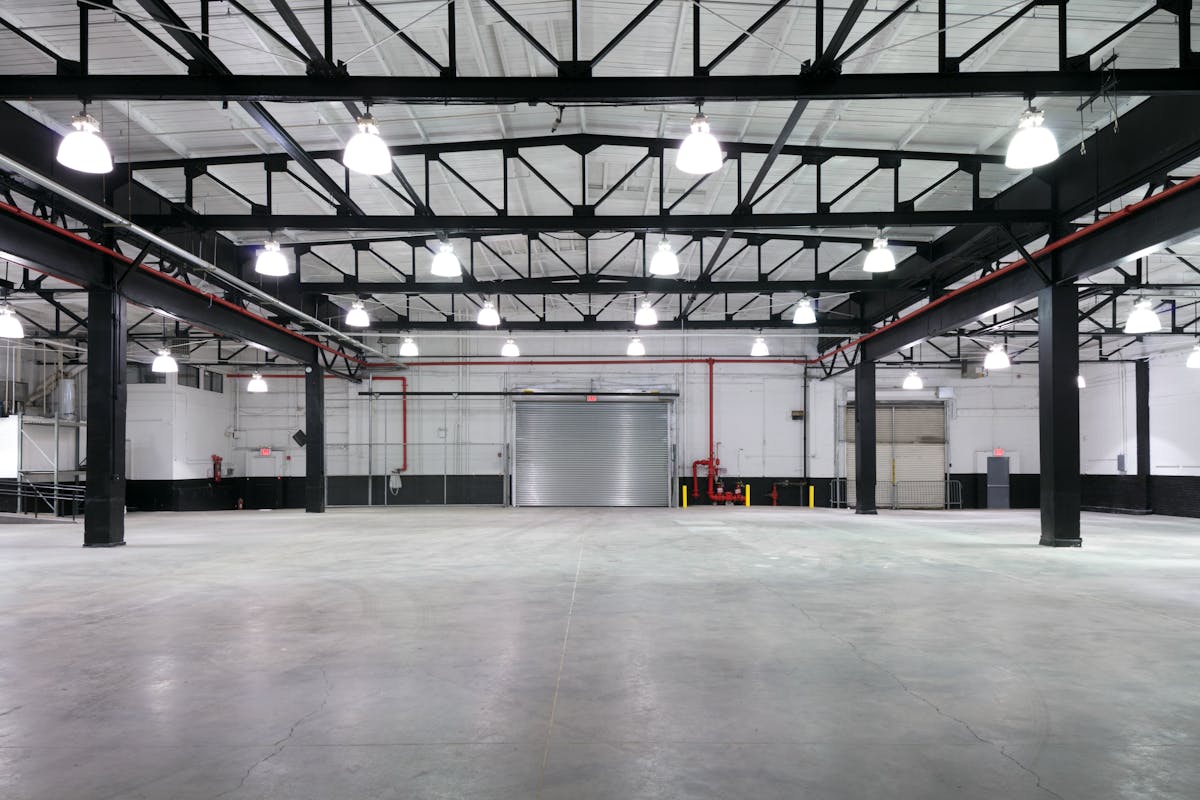


Large warehouse space in New York is the format of choice when a project needs raw square footage, serious ceiling clearance, and the structural capacity to take a full film or event load. Unlike finished venues, a warehouse lets a production team or brand build the environment from the floor up: rigged lighting grids, custom set builds, temporary retail fixtures, or open exhibition floors. The neighborhoods below each offer a different version of that brief, matched to the kind of project that fits them best.
Warehouses by Use Case and Neighborhood
Film Production and Photography: Long Island City and Sunset Park
Long Island City in Queens and Sunset Park in Brooklyn carry the deepest stock of production-grade warehouse space in the city. Both neighborhoods retain the building scale of their manufacturing past: ceiling heights that routinely reach between 14 and 28 feet, street-level loading docks, and floor plates large enough to stage multiple sets simultaneously. Several buildings have dedicated truck turnaround areas on site, which is rare in Manhattan and worth confirming before committing to a space.
Sunset Park's buildings along the 4th Avenue and 5th Avenue corridors near Industry City tend toward raw concrete and timber, with substantial power capacity for production lighting rigs. Long Island City, around the Court Square and Jackson Avenue corridor, includes both converted industrial buildings and newer facilities, some with climate control. Both neighborhoods are well served by subway, which matters for crew call times and daily movement.
Events, Fashion Shows, and Trade Shows: Long Island City and Meatpacking
For a runway presentation, corporate event, or multi-day trade show, the combination of open floor area, high ceilings for rigging or projection, and dock-level load-in for staging equipment makes a warehouse more practical than most ballrooms or event halls. Long Island City spaces regularly host fashion week presentations and brand activations during the September and February NYFW windows, when demand across the city peaks and availability tightens across the best-spec'd buildings.
The Meatpacking District in Manhattan offers a smaller set of warehouse-format spaces with the advantage of foot traffic and a central address. Ceiling heights there run roughly 14 to 20 feet and the spaces have often been lightly renovated, which suits a luxury event or fashion activation where the finish level matters as much as the raw volume.
Pop-Up Retail and Temporary Galleries: Williamsburg and Bushwick
Williamsburg and Bushwick warehouse spaces attract brands running short-term retail, art fairs, and gallery openings. The raw aesthetic reads well against design-forward product; the neighborhoods carry a customer already oriented toward discovery retail. Ceiling heights across converted loft warehouses in both neighborhoods range from 12 to 22 feet. Williamsburg waterfront spaces carry higher rates; Bushwick inland spaces offer larger footprints at more accessible pricing.
The New York listings cover both, alongside retail space for rent options across the city if a warehouse footprint is more than the project needs.
Showrooms and Sample Sales: Red Hook and the Garment District
Red Hook warehouses, concentrated near the Van Brunt Street and Imlay Street waterfront grid, range from 2,000 to 15,000 square feet and carry the loading bay access that a sample sale or trade showroom needs for inbound stock. The Garment District in Midtown Manhattan is the historic center of the American apparel trade and its buildings are configured for wholesale and showroom use, with freight elevators, sample room capacity, and proximity to the buyers and press who attend market appointments.
Showroom demand clusters around the February and September fashion weeks. Brands planning around those windows should allow more lead time, as the best-specified spaces in both neighborhoods fill early in the cycle.
When to Book: Demand Cycles in New York
Warehouse demand in New York follows a predictable pattern across the year. The two fashion week windows in February and September are the most compressed: productions, brands, and showrooms compete for the same buildings on the same dates, and Long Island City and Meatpacking spaces book out earliest.
Spring brings a second wave of sample sales and gallery openings, concentrated from March through May. The Armory Show runs in late September 2026 and draws collector and gallery activity across the city, adding to the autumn competition for event-scale space. The run-up to the December holidays generates a third peak, with brands taking warehouse space for pop-up retail through November and early December.
August is the quietest month of the year in Manhattan. The fashion and media industries largely pause, office buildings thin out, and warehouse space is at its most available. It is the easiest period to secure a specific building on short notice. The weeks immediately after the holidays carry similar availability and tend to be the most negotiable period for rate.
New York's congestion toll applies to all vehicles entering Manhattan south of 60th Street, introduced in January 2025. Production vehicles, fit-out vans, and delivery trucks to any Manhattan warehouse are tolled trips during peak hours on weekdays and weekends. Long Island City and Sunset Park sit outside the Congestion Relief Zone and are not affected.
What to Confirm Before You Book
A warehouse listing describes a space, but the building's certificate of occupancy determines what it may legally be used for and how many people it may hold. Reading it is the first step before committing to a space for a public event or large production. A space that trades lawfully as a warehouse by day may need a separate place of assembly certificate for an event that gathers a crowd, and the Fire Department sets the occupancy limit and egress conditions for that use.
Production teams should confirm power capacity and distribution directly with the host: the voltage and amperage available on site determines what a lighting rig can run without a generator supplement. Ceiling height should be measured to the lowest obstruction, not to the structural peak, and sprinkler head clearance matters for any rigging plan.
For any activation serving food or alcohol, New York's permit requirements run through separate city and state agencies. Food service at a public temporary event needs a temporary food service establishment permit. Alcohol is licensed by New York State rather than the city, with its own timeline through the State Liquor Authority. Both add lead time that a short-term project should plan around from the start.
Large parts of Manhattan sit inside Landmarks Preservation Commission historic districts, which means exterior signage and facade changes need commission review. A warehouse in a landmarked building cannot receive new exterior branding on the same schedule as one in a non-designated block.
FAQ
What is a large warehouse in the context of New York short-term rentals?
A large warehouse is typically a single contiguous space of 2,000 square feet or more, with a ceiling height above 12 feet, structural flooring rated for heavy equipment, and direct loading access. In New York that category is concentrated in Long Island City, Sunset Park, Red Hook, Williamsburg, and Bushwick, with a smaller set of warehouse-format spaces in the Meatpacking District and Garment District.
How far in advance should I book a warehouse for rent in New York?
For the September and February fashion week windows, and for the weeks around the Armory Show in late September, the most production-ready spaces fill four to eight weeks out. For summer bookings or the post-holiday January period, availability is wider and lead times are shorter. The earlier you can confirm dates, the better the choice of building.
Do large warehouses in New York include loading dock access?
Many do, particularly in Long Island City and Sunset Park, where the buildings were purpose-built for industrial use. Dock configurations vary: some have street-level roll-up doors, some have dock-height bays, and some have both. Confirm the specific configuration with the host before booking, along with truck turnaround space and posted loading hours, since commercial loading restrictions apply on most Manhattan blocks.
Which neighborhoods offer the largest warehouse footprints in New York?
Long Island City and Sunset Park have the highest concentration of spaces above 5,000 square feet with production-grade infrastructure. Red Hook carries several large waterfront buildings. Williamsburg and Bushwick offer large loft-warehouse conversions. Manhattan options tend toward smaller footprints and higher rates, with the exception of a limited number of Meatpacking and Garment District buildings.
Can I use a large warehouse for both a pop-up retail event and storage?
Yes, and that combination is one of the most common short-term uses in New York. A warehouse that serves as a pop-up shop or sample sale during the day can hold back-of-house storage in the same footprint, which is an efficiency that a conventional retail unit cannot offer. Confirm the certificate of occupancy covers both uses, and check whether the listing allows split-use bookings.
Is insurance required to rent a warehouse in New York?
Many hosts require proof of liability insurance, particularly for events, film productions, and any activation open to the public. Requirements vary by space and use type. Check the specific listing for the host's conditions and confirm before booking. For an event that gathers a crowd, public liability coverage is also a practical necessity independent of the host's requirement.
For mall booth and kiosk rentals or mall booth kiosk options in New York, the listings above cover those formats alongside the warehouse inventory. For smaller spaces in SoHo, where warehouse-format units give way to the cast-iron loft buildings better suited to pop-up retail, those listings sit on a separate page.


