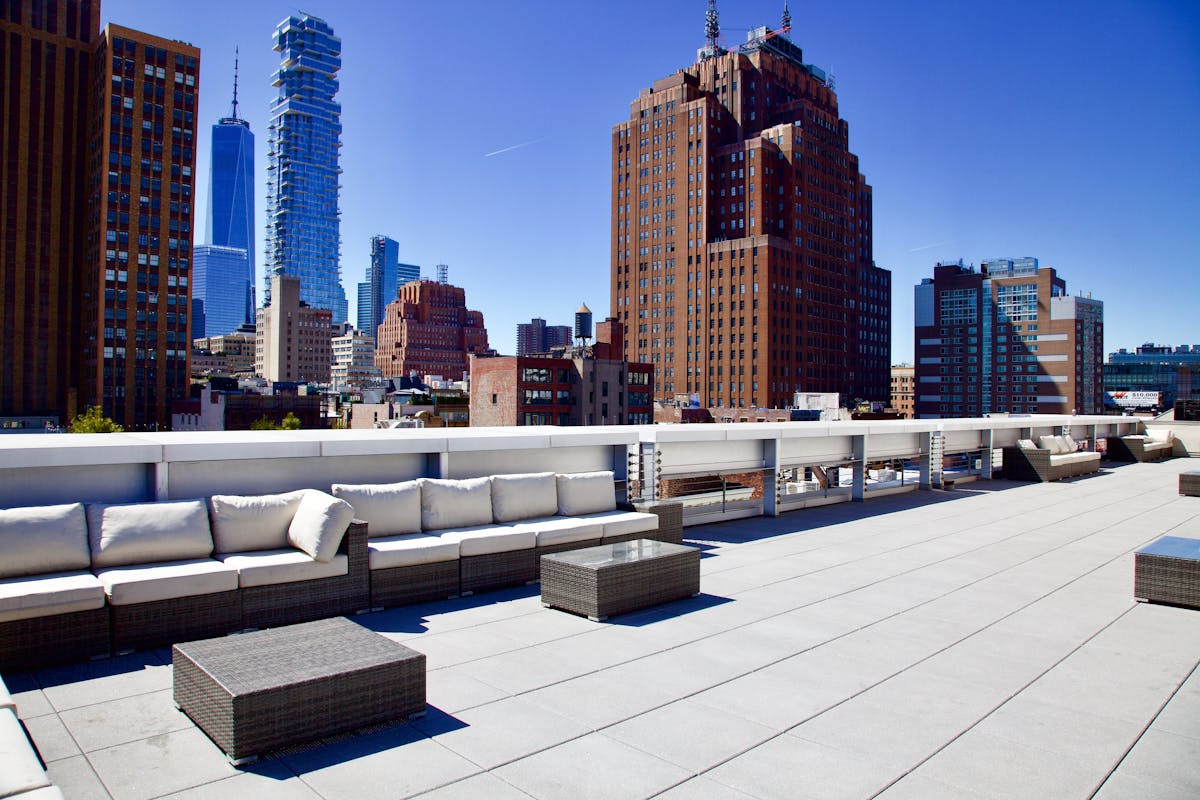



A rooftop event space is an open-air or partly covered venue set above street level, offering city skyline views and a format that works for product launches, private dinners, fashion presentations, corporate mixers, and celebrations. In New York, where outdoor space at height is genuinely scarce, rooftop venues carry a distinctly different atmosphere from ground-floor ballrooms or basement bars.
This page covers where to find rooftop event space in New York, what different neighborhoods offer, what the rental costs, and what to know before you book.
Top neighborhoods for rooftop event space in New York
The best rooftop event space in New York varies significantly by neighborhood. Here are the areas where rooftop venues concentrate, and what each brings to an event.
-
SoHo and NoHo: Cast-iron loft buildings with large rooftop footprints and strong sightlines across lower Manhattan. The area draws a fashion, art, and brand-launch crowd and is the highest-demand short-term event district in the city. Suited to product launches, brand activations, and fashion presentations.
-
Tribeca: Wide loft floorplates from the neighborhood's warehouse past, with a quieter, more residential character. The clientele skews affluent and the setting suits private dinners, showroom openings, and events where discretion matters as much as the view.
-
Chelsea: The center of New York's contemporary gallery scene, concentrated in the West 20s. Rooftop spaces here often sit above gallery buildings with large column-free floors below, making them a natural choice for art openings, collector events, and creative industry gatherings.
-
The Lower East Side: A dense bar and music economy gives rooftop events here strong evening energy. Spaces tend to be smaller and more characterful, well suited to launch parties, pop-up events, and brand activations aimed at a younger or independent-label audience.
-
Midtown: High buildings, high sightlines, and a large weekday corporate population. Rooftop venues here work well for corporate mixers, client entertainment, and conference-adjacent events, particularly those timed around Grand Central's commuter flow.
For a broader view of event space in New York across all neighborhoods, including ground-floor and indoor formats, the city search covers the full range.
How much does rooftop event space rental cost in New York?
Rooftop event space in New York typically runs from $1,200 to $2,500 per day for most listings, and from $5,000 to $10,000 per week. Monthly arrangements start from around $15,000 for spaces that accommodate longer-term activations.
Several factors move the rate within that range:
-
Location: Manhattan venues, particularly in SoHo, Tribeca, and Midtown, sit at the higher end. Brooklyn and Queens offer more accessible entry points for the same rooftop format.
-
Exclusivity and duration: A full weekend buyout costs more per day than a mid-week single-day booking. Longer commitments often come with more negotiable terms.
-
Event timing: Peak season (April through June, and September through November) commands stronger rates. August and January are the quietest months, and space owners are more flexible then.
-
Amenities: Spaces with built-in AV, HVAC, covered sections, or catering infrastructure are priced accordingly.
Final rates depend on duration, exclusivity, and event timing. Pricing shown reflects typical asking ranges for spaces in the area; final booking terms are negotiated directly with the host.
When to book a rooftop event in New York
New York has genuine seasons, and rooftop events are shaped by them more directly than indoor formats.
Spring (April through early June) and fall (September through November) are the strongest windows for rooftop events. Temperatures are comfortable, rain is manageable, and the city is at full population. Demand is highest then, and rooftop event space rental books out further in advance during these periods.
The Armory Show arrives in late September 2026, and New York Fashion Week for Spring/Summer 2027 runs in September 2026. Both bring a concentrated wave of international buyers, press, and brand activity to the city, which pushes demand for event space across all formats and neighborhoods.
Summer (June through August) brings heat and humidity that can make open-air rooftops uncomfortable without shade or cooling. August is the quietest month in Manhattan: a large portion of the creative and media industry leaves the city, and street footfall in the main commercial districts drops significantly. It is the most negotiable period to book.
Winter (December through February) is the most challenging for open-air rooftop formats. Heated and covered rooftop spaces operate year-round; open-air terraces are effectively dormant from mid-December to March. The run-up to the December holidays is the exception: demand spikes sharply for corporate parties and brand events in late November and early December.
What to know before booking a rooftop event space
Rooftop events in New York involve permit and access considerations that ground-floor bookings typically do not.
Once a space gathers a crowd, it becomes a place of assembly and requires its own certificate of occupancy, with the Fire Department setting occupancy and egress conditions. The threshold is lower than most brands expect. A space that trades legally as a retail or office floor by day may need a separate approval for an evening event.
Serving alcohol requires a permit from the New York State Liquor Authority, not the city. Lead times are longer than most brands plan for, and they are the constraint that most often shifts an event date. Serving alcohol free at a private event does not automatically remove the licensing requirement.
Signs, external lighting, and staging on a building in a historic district require review by the Landmarks Preservation Commission. Much of SoHo, NoHo, and Tribeca sits inside a designated historic district, so a brand planning any exterior installation should allow time for that approval.
New York's congestion toll applies to vehicles entering Manhattan south of 60th Street, which covers almost every rooftop venue on this page. Vendor vehicles, AV trucks, and catering delivery all pass through the tolled zone.
For events that use the sidewalk, a queue barrier, or any street-level installation, a separate street activity permit runs through the local community board and takes weeks.
Rooftop event space for rent: common use cases
Rooftop event space in New York suits a wide range of formats. The most common bookings on the platform include:
-
Product launches: The city skyline as a backdrop makes a natural stage. Brands in fashion, tech, and consumer goods use rooftop venues to create visual content alongside the event itself.
-
Fashion presentations: New York Fashion Week in February and September draws international press and buyers who expect venues that match the brand's visual identity. Rooftops in SoHo and Tribeca are a recurring choice for off-calendar presentations and showroom appointments.
-
Private dinners and receptions: Tribeca and Chelsea rooftops, in particular, suit small-to-medium seated dinners where the setting is part of the offer.
-
Corporate mixers and client entertainment: Midtown and the Flatiron District offer rooftop spaces within walking distance of the major office clusters, with easy access via Grand Central and the surrounding transit interchange.
-
Art openings and gallery events: Chelsea's gallery buildings, and a number of spaces in NoHo and the Lower East Side, connect rooftop events to the city's established art-going audience.
For a specific neighborhood, Soho has one of the strongest concentrations of rooftop and loft event venues in the city. If you want to compare raw and unfinished formats alongside finished rooftop spaces, the raw event space in New York selection covers that tier directly.
For broader research on the format, the Event Space Rental guide covers what to look for across all event space types.
FAQ
Do rooftop events in New York require permits?
Yes, in most cases. A space that assembles a crowd needs a certificate of occupancy covering that use, with the Fire Department setting occupancy and egress terms. Alcohol service requires a separate New York State Liquor Authority permit, which runs on its own timetable. Any installation that touches the building facade in a historic district also requires Landmarks Preservation Commission review.
What is the best season for a rooftop event in New York?
Spring (April through early June) and fall (September through November) are the strongest windows. Weather is predictable, the city is at full population, and open-air space is comfortable without cooling or heating. Late November and early December are a secondary peak for covered rooftop formats tied to the corporate party season. August and January are the slowest periods.
Can you hold a fully catered event on a New York rooftop?
Yes, if the space has the right equipment and the operator has the relevant permits. Serving food to the public, including sampling, requires a temporary food service establishment permit from the city health department, and a supervisor with a food protection certificate must be present. Many rooftop venues work with approved caterers who carry these permits as standard.
What is the typical guest capacity for a rooftop event space in New York?
Capacity varies widely by building and by the certificate of occupancy the space holds. Rooftop venues on this platform range from intimate settings for 15 to 20 guests to larger terraces that accommodate several hundred. The certificate of occupancy governs the legal maximum, not the size of the terrace, so it is the first document to request when comparing spaces.
Are rooftop event spaces available year-round in New York?
Covered or heated rooftop spaces operate year-round. Open-air terraces are practical from April through November; the coldest months from December to March are close to unusable for unheated outdoor formats. Some buildings offer hybrid spaces with retractable covers or partial enclosures that extend the usable season on both ends.


