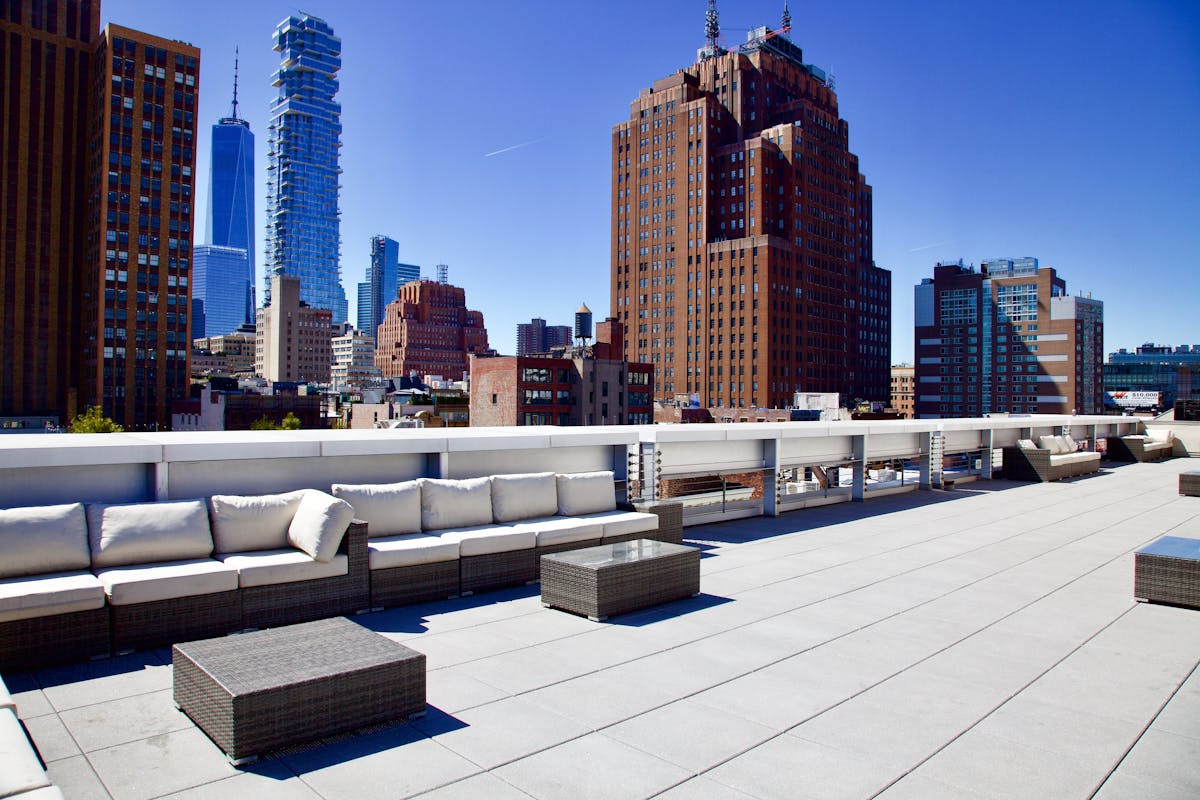



A rooftop rental in New York gives a brand or event organizer something an indoor space rarely does: open sky, a Manhattan skyline backdrop, and a setting that earns its place in campaign photography before a single piece of furniture goes up. The listings on this page cover short-term rooftop rental in New York across Manhattan and beyond, bookable by the day, the week, or for longer runs without a long-term lease.
For broader short-term space across the city, browse New York listings on Storefront.
Neighborhoods for rooftop activations in New York
Where a rooftop sits in the city determines its audience, its access, and the kind of event it suits.
-
SoHo is the highest-demand short-term rental district in Manhattan. Its cast-iron loft buildings carry wide roof decks above the cast-iron cornice line, and the area draws the densest concentration of pop-up and brand activation in the city. A rooftop here puts a brand at the center of the city's most photographed retail corridor.
-
Tribeca is affluent and residential, with large loft floorplates from its warehouse past. Rooftop access tends to come with wide open terraces suited to private events, showroom presentations, and evening receptions rather than high walk-in footfall.
-
Chelsea concentrates the contemporary gallery scene in the West 20s. Rooftop space here suits brand activations that want an art-world adjacent setting, particularly during gallery openings and The Armory Show in late September.
-
The Lower East Side has a dense bar and music economy that makes it the strongest evening footfall district in downtown Manhattan. A rooftop here works well for late events, influencer gatherings, and activations aimed at a younger audience.
-
NoHo holds a small number of large, high-specification loft buildings with limited rooftop inventory. What is available there tends to book early because the supply is genuinely constrained.
-
The Flatiron District sits at a weekday office intersection with wide avenues and easy subway access. A rooftop rental here suits midweek corporate launches and trade presentations with a professional audience arriving from across the city.
For retail space for rent in any of these neighborhoods, that project page covers the full range of ground-floor and temporary formats alongside rooftop options.
When rooftop demand peaks in New York
New York rooftop rental demand is seasonal, and the calendar shapes availability and competition for the best spaces.
The core outdoor season runs from late May through early September. Memorial Day weekend opens the summer trading period and Labor Day closes it. In that window, rooftop spaces in SoHo, Tribeca, and the Lower East Side are in direct competition with each other, and the most sought-after decks book weeks in advance.
New York Fashion Week in September is a secondary peak. Showroom presentations and brand activations cluster around that period, and rooftop settings add a distinct visual layer to runway-adjacent events. The spring circuit in February is smaller but draws the same pattern of short-term space demand across SoHo and the Garment District.
The Armory Show, held at the Javits Center in late September 2026, draws collector and gallery audiences across the city for the week. Rooftops in Chelsea and Tribeca see elevated interest from brands targeting that audience.
November is a transitional month. The New York City Marathon closes long corridors of streets on its Sunday in early November and draws large crowds to specific blocks, which creates both an opportunity on the route and an access constraint everywhere else. The holiday retail run-up from mid-November into December is the last strong outdoor window before winter closes rooftop use for most of the year.
January and February are the softest months for rooftop events. Cold and real snowfall make outdoor formats impractical for most activations, and the period from early January through Valentine's Day on 14 February is the most negotiable stretch of the year for short-term space.
Permits, access, and logistics for NYC rooftop events
A New York rooftop event involves several approval layers that an indoor space does not.
The building's certificate of occupancy governs what a rooftop may lawfully be used for and how many people it may hold. A space marketed as an event rooftop may carry a certificate that says otherwise. That document is the first thing to confirm with any host before committing to a date.
Once a gathering exceeds the threshold for a place of assembly, the Fire Department sets occupancy and egress conditions separately from the building permit. That threshold is lower than most brands expect, so an activation that looks like a product showcase can require a separate approval for the event itself.
Alcohol is licensed by New York State, not by the city. A temporary permit runs through the State Liquor Authority on its own timetable, and lead time is the constraint that most often shifts an event date. Confirm with your host early whether a license is in place or whether you need to apply.
Anything using the street, the sidewalk, or a pedestrian plaza, including a queue barrier, a delivery vehicle, or a production truck, goes through the street activity permit process. The application passes through the local community board, which adds weeks and introduces a body with its own view on the event.
New York introduced a congestion toll in January 2025 for vehicles entering Manhattan south of 60th Street. Almost every rooftop venue in this selection sits inside the Congestion Relief Zone. A fit-out van, a catering truck, or a production vehicle is a tolled trip, and commercial loading hours are restricted on most Manhattan blocks. Build both into the logistics plan before booking.
Rooftop rentals vs. indoor event space
A rooftop and an indoor event space suit different briefs.
A rooftop earns its place through atmosphere: open sky, a skyline backdrop, natural light, and a setting that reads immediately in photographs and on social. That atmosphere is also its constraint. Weather, wind, temperature, and time of year all shape what the space can do. An activation planned for June is a different proposition from one planned for October, and a rain contingency is not optional for an outdoor event in New York.
An indoor space trades atmosphere for reliability. Climate control, covered loading, predictable acoustics, and no weather dependency make indoor formats easier to execute at scale. For a brand that needs absolute certainty on the day, a covered or indoor venue removes the variable a rooftop introduces.
Many activations combine both: a rooftop for the photography and the opening reception, an indoor space for the main programming. Browse mall booth and kiosk rentals in New York and the broader mall booth and kiosk rental collection for covered formats that pair with outdoor spaces.
For anything anchored to SoHo specifically, that neighborhood page covers both indoor and rooftop options in the city's highest-demand short-term rental district.
FAQ
What is a rooftop rental in New York typically used for?
New York rooftop rentals are used for pop-up retail, product launches, press activations, fashion presentations, influencer events, and experiential brand campaigns. The setting suits any activation where atmosphere and photography matter as much as square footage.
How far in advance should I book a rooftop space in New York?
For the summer season between Memorial Day and Labor Day, and for periods around the September fashion weeks, the most in-demand rooftops in SoHo and Tribeca book several weeks ahead. For quieter months, shorter lead times are workable, and hosts tend to be more flexible on dates and setup.
Do I need permits to host an event on a rooftop in New York?
Most rooftop events in New York require at least one permit, and often more than one. The building's certificate of occupancy, fire department assembly approval, and any alcohol license each run through separate city or state bodies on their own timetables. Confirm with your host what approvals are in place before setting a date, and build permit lead time into your planning.
Are rooftop spaces in New York suitable for retail activations?
Yes, where the format suits an outdoor setting. Sample sales, limited-edition drops, and experiential retail moments work well on rooftops with good access and natural light. For a high walk-in retail format, a ground-floor space in SoHo or the Lower East Side is usually a stronger commercial choice.
What happens if it rains on the day of my rooftop event?
That is a question to put directly to your host before booking. Some rooftops have partial cover or can accommodate temporary structures. Cancellation and modification terms vary by listing and are set out in the individual booking. Plan a rain contingency before the event date, not on the day.
Can I book a rooftop in New York for a single day?
Yes. Short-term rooftop rental in New York is available by the day with no long-term lease requirement. Longer runs by the week or month are also available for brands running extended activations or seasonal programming.


