

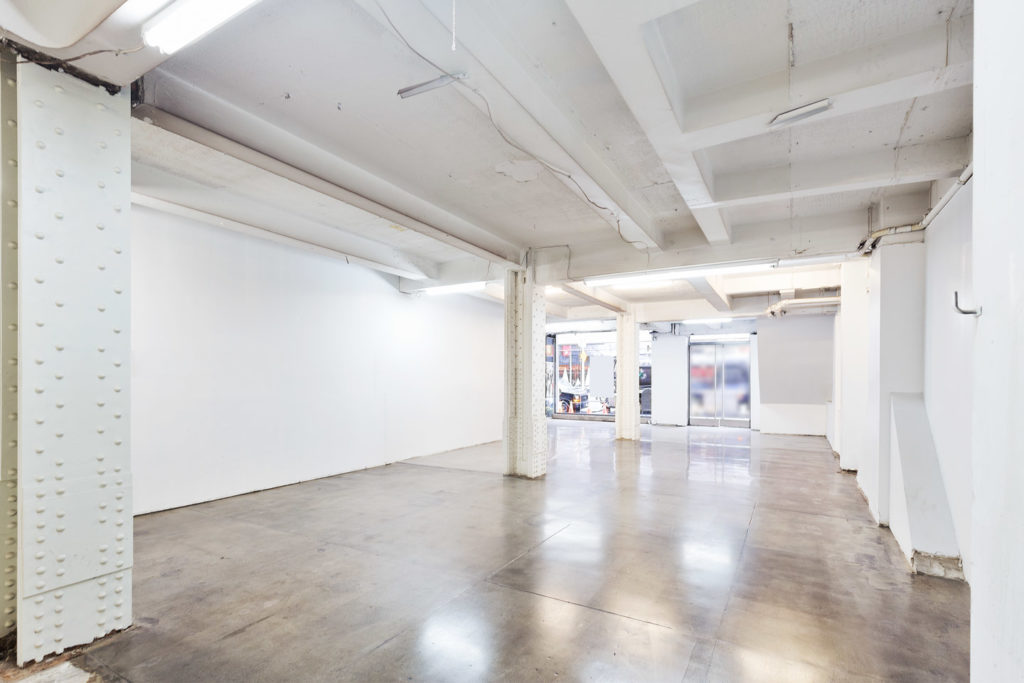
Chelsea is not really a shopping district, and treating it as one is the most common mistake brands make here. It is the district of large floors. The gallery buildings in the West 20s were built and adapted to hold big column-free rooms, and those rooms are what Chelsea rents out when they are not showing art.
That is why there is so much short-term space in Chelsea, and why it skews large.
If you want a shop window on a busy pavement, this is the wrong neighborhood and SoHo is the right one. If you want a room big enough to build something in, Chelsea has more of them than anywhere else in Manhattan.
The gallery district, and what it means for space
Chelsea is the center of the New York contemporary gallery scene, concentrated in the West 20s between Tenth and Eleventh Avenues. Tenth Avenue is its spine.
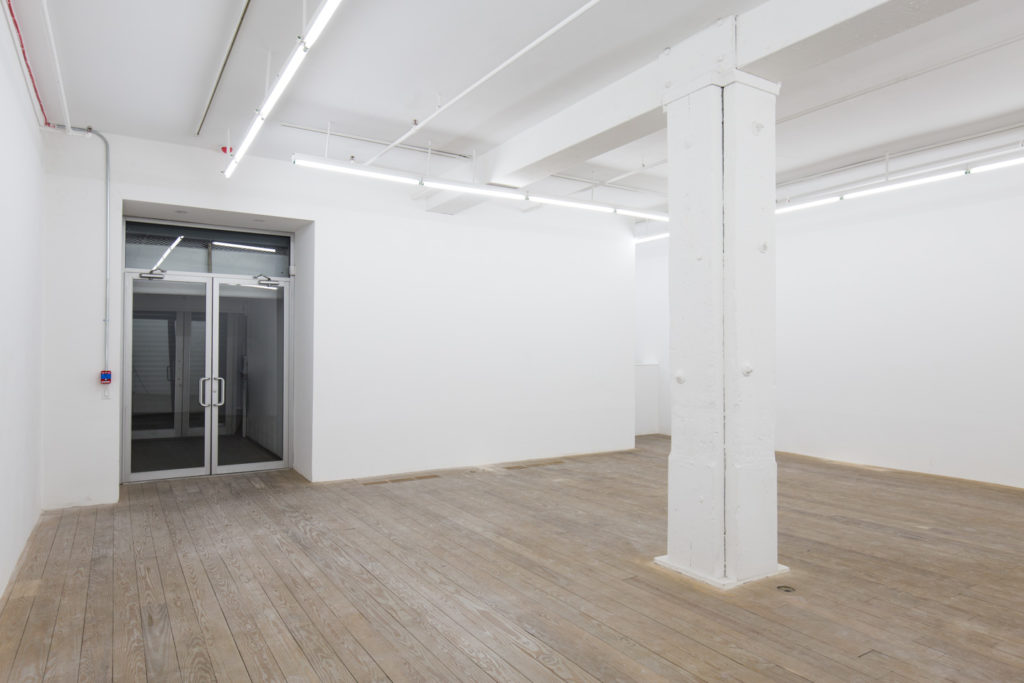
The gallery buildings of West 24th, 25th and 26th Streets between Tenth and Eleventh hold the largest exhibition floors available for short-term hire in Manhattan. Large, column-free, high, and built to be looked at. That is a specific kind of room, and it suits exhibitions, showrooms, presentations and brand activations rather than a conventional shop unit. Brand activations and showroom weeks land here rather than on a shopping street for exactly that reason.
Browse gallery and art space in Chelsea, or widen it to art and exhibition space across New York.
Chelsea Market and the High Line
These are the two things that bring people to Chelsea who did not come for the galleries, and they sit at the district’s southern end.
Chelsea Market is a food hall and retail arcade in the former Nabisco factory, and one of the highest-footfall indoor destinations on the West Side. It is a managed building rather than a street, so a space inside it is a different transaction from a storefront lease. What it does for the rest of the district is deliver a steady, all-week crowd to the blocks around it, which is worth more to a nearby unit than most brands realize.
The High Line is a public park built on a 1.45-mile elevated rail structure running from Gansevoort Street to 34th Street on the West Side, and it carries sustained pedestrian footfall through the Meatpacking District, Chelsea and Hudson Yards along a corridor that had almost none before it opened. Its own figures set out the scale.
Through Chelsea it runs above Tenth Avenue at roughly the third-floor level. That detail matters: ground-floor units beneath and beside it get a flow of park visitors on top of the gallery trade, and the buildings that address the park directly command the attention. Crucially, much of that audience arrives from an elevated walkway rather than the sidewalk, so where a unit is entered matters as much as where it faces. See space near the High Line.
For events specifically, Chelsea’s combination of large floors and two footfall anchors is unusual in Manhattan. See event space in Chelsea.
Showrooms and fashion week
New York Fashion Week runs twice a year, in February and September, and opens the international fashion month ahead of London, Milan and Paris.
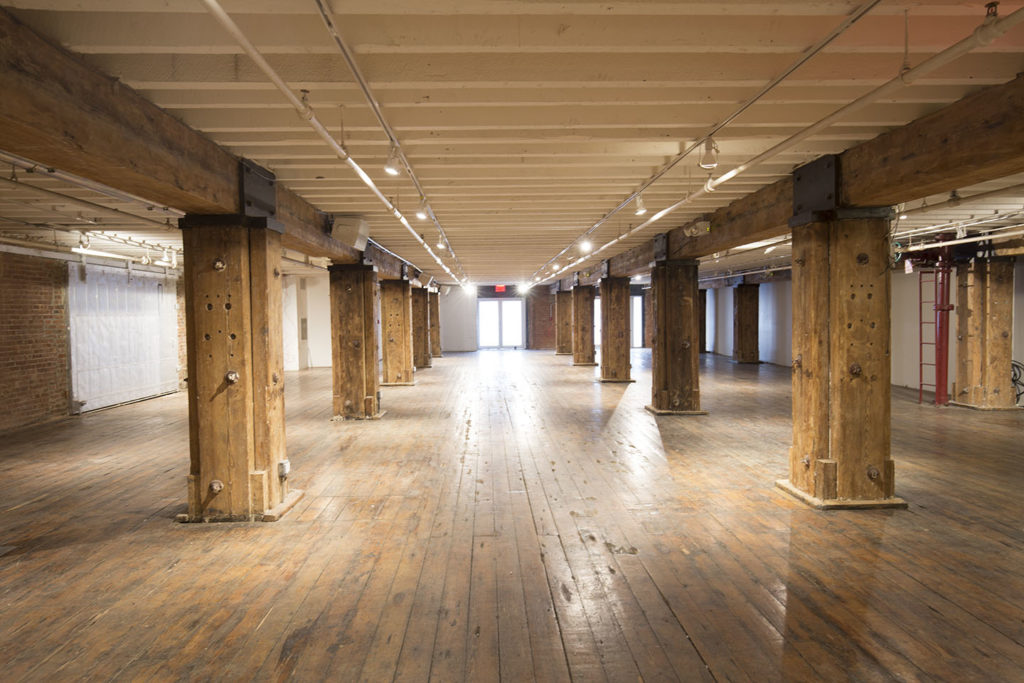
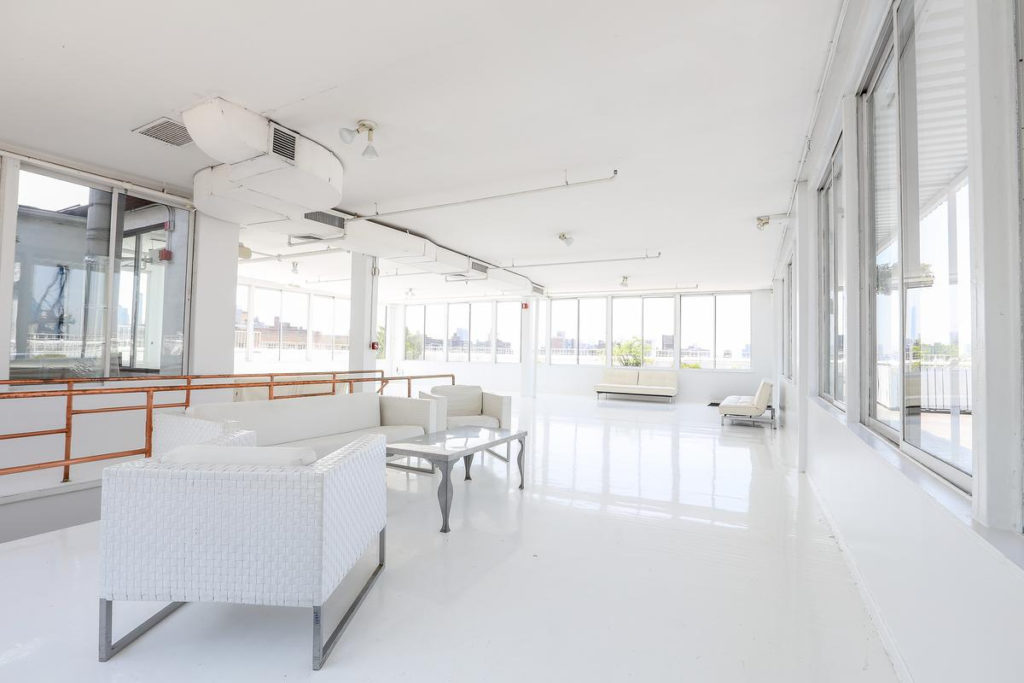
The demand lands away from the runway venues. Showroom, presentation and press-day space concentrates in the Garment District, SoHo and Chelsea, because those are the buildings with the large open floors that market appointments need. It also books further ahead than anything else in the New York calendar, so a February showroom is a conversation you have in the autumn, not in January.
Chelsea’s advantage over the Garment District is the room itself and the address; the Garment District’s advantage is freight and proximity. Look at showroom space in Chelsea, space in the Garment District and space in SoHo together rather than one at a time, and read our guide to renting a showroom if the format is new to you.
Sample sales
The sample sale is a New York institution and one of the largest single uses of short-term retail space in the city. Brands take a raw or temporary space for a few days to sell through stock, and they do it most often in SoHo, Chelsea and the Garment District.
They cluster in spring and again in autumn as brands clear stock between seasons, and demand for raw space in those three districts tightens noticeably in those windows. If you are planning one, book early in the window rather than late. See retail and pop-up space in Chelsea.
The Chelsea calendar
More than most districts, Chelsea trades on a calendar rather than a weekly rhythm. Four windows matter.
| Window | When | What it does to space |
|---|---|---|
| New York Fashion Week | February and September | Showroom and press-day demand concentrates here, the Garment District and SoHo. Books furthest ahead of anything in the calendar. |
| The Armory Show | Spring | The city’s main contemporary art fair. Satellite fairs, gallery openings and collector events fill Chelsea for the week. The strongest week of the year for art-adjacent temporary space. |
| Sample sale season | Spring and autumn | Raw space tightens across Chelsea, SoHo and the Garment District as brands clear stock between seasons. |
| Summer Fridays | Memorial Day to Labor Day | Manhattan empties on Friday afternoons, which makes Friday the weakest weekday of the summer in the business districts. Plan around it rather than into it. |
Shopping in Chelsea
Chelsea’s retail is not concentrated the way SoHo’s or the Lower East Side’s is, which is why people asking where to shop here often come away without a clear answer. It sits in three distinct places.
- Chelsea Market, which is the closest thing the district has to a single shopping destination, and is food-weighted.
- Ladies’ Mile, the historic department store quarter running up Broadway and Sixth Avenue from Union Square. The historic district was designated in 1989 and generally covers the blocks between Broadway and Sixth Avenue from 15th Street to West 24th Street, running from Union Square through the Flatiron District into Chelsea. Its cast-iron buildings were built for retail with large show windows, and now hold large-format chain retail on unusually wide frontages.
- Sixth Avenue, which runs north from the Village through Chelsea and carries large-format retail, in contrast to the small frontages on the side streets either side of it.
The galleries are the fourth answer, and for a lot of visitors the real one. They are not shops, but they are what the West 20s are for.
Streets and edges
Tenth Avenue and the West 20s
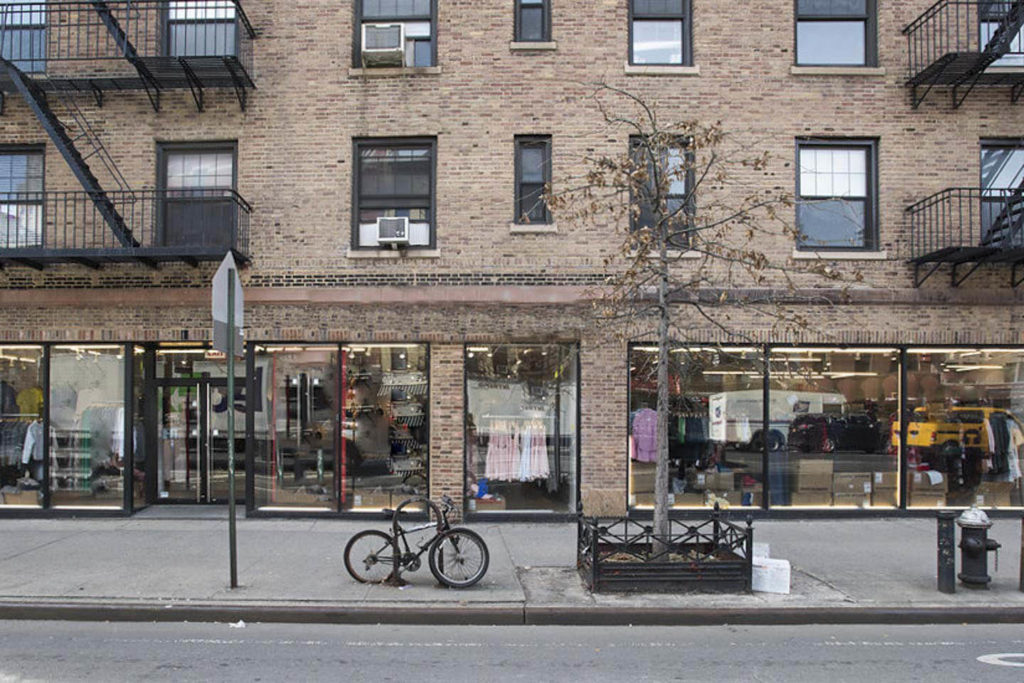
The spine of the gallery district and where the big floors are. This is the part of Chelsea worth walking if you are deciding whether the district suits you.
Washington Street and the Meatpacking edge
Washington Street is the cobbled spine of the Meatpacking District, running under the southern end of the High Line. Its ground-floor units are among the largest and most visible downtown and are taken for flagship-scale activations rather than everyday retail. Buildings there are former market structures with wide loading frontages, canopies and large open ground floors, and both the cobbles and the canopies are protected: generous floor area, very little freedom to alter the exterior. The presentation standard set by neighboring occupiers is high enough that a temporary fit-out has to meet it or look out of place. See retail space on Washington Street, showrooms on Washington Street and the wider Meatpacking District.
14th Street
Worth one specific warning. 14th Street operates as a busway, with private vehicle traffic heavily restricted along much of its length. That speeds the crosstown buses and changes loading access for anything fronting onto it. If your fit-out arrives on a truck, check the restrictions rather than assuming them.
The western edge
Hudson River Park runs the length of Manhattan’s west side and brings weekend and summer footfall to the western edges of the neighborhoods behind it, Chelsea included. It is a seasonal lift rather than a year-round one.
Getting there
Chelsea is served by the 14th Street, 18th Street, 23rd Street, 28th Street, 34th Street-Herald Square, 34th Street-Hudson Yards, 34th Street-Penn Station, 42nd Street-Port Authority Bus Terminal, Sixth Avenue, Eighth Avenue and Times Square-42nd Street stations. That is an unusually long list, and it is one of the district’s real advantages.
One pattern worth knowing: the crosstown line under 14th Street is the main link between Manhattan and north Brooklyn, which is why the districts at its Manhattan end draw so heavily on a Brooklyn audience in the evenings and at weekends. If your audience is in Williamsburg or Bushwick, southern Chelsea is closer than the map suggests.
Common questions
Can you rent event space at Chelsea Market?
Chelsea Market itself is a managed building, so space inside it is arranged with the operator rather than through a storefront lease. What we list is the surrounding district, which is where most brands end up: the same footfall, larger rooms, and a normal short-let transaction. See event space in Chelsea.
Is Chelsea good for a fashion showroom?
It is one of the three districts the market actually uses, alongside the Garment District and SoHo, because it has the large open floors that market appointments need. Demand concentrates around New York Fashion Week in February and September and books further ahead than anything else in the New York calendar. See showroom space in Chelsea.
What are Chelsea’s boundaries?
Chelsea sits on Manhattan’s West Side, running north from 14th Street, west of Sixth Avenue to the Hudson. The Meatpacking District is immediately south, the Flatiron District east across Sixth Avenue, and Hudson Yards north.
Where are the stores in Chelsea?
In three places rather than one: Chelsea Market, the Ladies’ Mile stretch running up Broadway and Sixth Avenue from Union Square, and Sixth Avenue itself, which carries the large-format retail. The side streets in the West 20s are galleries rather than shops.
How busy is the High Line?
Busy enough to have created a retail corridor where there was none. It runs 1.45 miles from Gansevoort Street to 34th Street and carries sustained footfall through three districts. The thing to watch is that much of that flow arrives from an elevated walkway, so a unit’s entrance matters as much as its frontage.
Is Chelsea better than SoHo for a pop-up?
For a shop, no. SoHo has the pavement traffic and the browsing crowd. For an exhibition, a showroom, a sample sale or anything needing a large room, Chelsea is better and it is not close. Our ranking of New York neighborhoods for a pop-up shop sets them side by side.
Where to look next
Nearby: the SoHo guide for browsing traffic and larger brands, the Lower East Side guide for the other gallery district, and the Nolita, NoHo and Bowery guide for the small-unit districts downtown.
The Garment District guide covers the other side of the showroom market, where space is sold by the floor to buyers rather than to consumers, and the Hell’s Kitchen guide covers the district north-west of here. If you are choosing between neighborhoods, our ranking of the best New York neighborhoods for a pop-up shop compares them all. If you are planning the project rather than the location, start with the guide to opening a pop-up shop in New York.
Or go straight to available space in Chelsea and short-term retail space across New York.

Written by
Adrien Kerbrat is Chief Revenue Officer and co-founder of Storefront. With more than 10 years in commercial real estate, he is an expert on the French market and short-term retail across Europe. Based in Bordeaux and often in Paris, he writes on pop-up strategy, retail location, and the French retail landscape.
More from Adrien Kerbrat →Related posts:
 Chelsea London Area Guide: The Complete Chelsea Shopping Guide for Brands and Pop-Up Shops
 Hollywood Neighborhood Guide: Pop-Up Shops, Event Spaces, and Showrooms in Los Angeles
 Shoreditch Neighborhood London Guide: London’s Hipster Hangout and Pop-Up Capital
 Mayfair Neighborhood Guide: Luxury Pop-Up Shops, Showrooms, and Galleries in London
 The Best Neighborhoods for a Pop-Up Shop in New York