

A pop-up in New York is not a harder version of a pop-up somewhere else. It is a different job. The city decides what a building may lawfully be used for, the state wants you registered before your first sale, anything touching the sidewalk needs its own permit, and a set of real costs never appears on a single listing.
This guide is for anyone opening their first pop-up in New York. That covers three kinds of brand, and they hit most of the same walls: a label arriving from outside the United States, an American brand coming in from another city, and a New York brand that has only ever sold online. If you already run stores here, most of this will be familiar.
It follows the order the work actually happens in, and each step hands off to a longer piece where the detail sits. Where something is genuinely a legal, tax or insurance question, we point you at the body that decides it. Those rules change, and they are not ours to interpret.
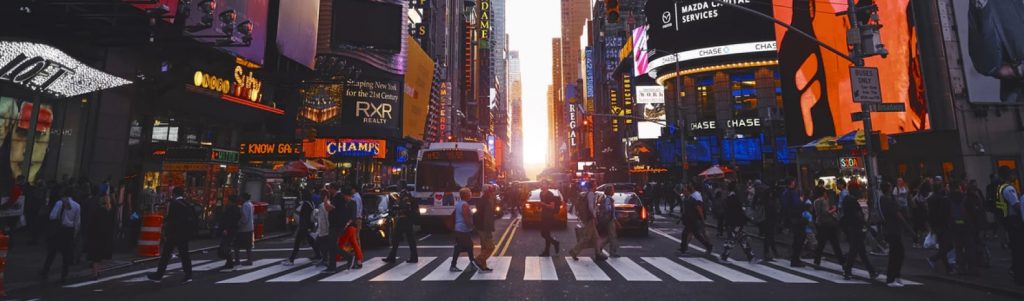
Step 1. Work out which starting point you are in
The three routes into New York share most of their problems, but not all of them, and the differences sit right at the front of the timeline where they do the most damage if you miss them.
Arriving from outside the United States
You carry the longest lead time. Stock has to clear customs, you need a US tax registration before you can legally sell, and card processing usually has to be solved separately from whatever you use at home. None of it is difficult. All of it takes longer than people expect, and it is sequential rather than parallel. There is a fuller walkthrough of the customs side in step 8 below.
Coming in from another US city
Customs disappears, but the tax registration does not. Selling in New York means registering with New York State whatever your home state arrangement looks like, and the city has its own permit culture that a brand used to Los Angeles or Austin will find slower and more paperwork-heavy.
A New York brand that has only ever sold online
You have the fewest structural barriers and the least leverage. No landlord here has rented to you before, so you have no track record to point at, and the practical documents a landlord asks for on signing are the part that catches direct-to-consumer brands out. Everything else you already know: the city, the neighborhoods, the customer.
Step 2. Choose the area before you choose the space
The most common way a first pop-up goes wrong is falling for a unit and working backwards. Area sets the footfall you get, what that footfall came out to do, the rent band, and which permit regime you land in. A space is a detail inside that decision.
New York’s retail districts are genuinely different from one another in ways that matter over a two-week trade, not just in tone:
- SoHo runs on destination shopping and tourism, with the highest brand density downtown. Read our SoHo neighborhood guide before you shortlist anything here.
- The Lower East Side skews younger and later, with galleries and independents mixed through it. Covered in our Lower East Side guide.
- Nolita is small-format and browsing-led, which suits a first pop-up better than almost anywhere. See the Nolita guide and our wider look at Nolita, NoHo and the Bowery.
- Chelsea carries the largest short-term supply in the city and an art-led audience. Our Chelsea guide covers how it trades.
- The Meatpacking District is event-heavy and brand-led, with evening footfall that other districts do not get. More in the Meatpacking guide.
- The West Village and Tribeca trade on residential affluence rather than volume, so they reward considered concepts over impulse. Our Tribeca guide covers the loft floors and the ground-floor size cap.
- The East Village trades late and cheap, on small tenement ground floors with a low tolerance for polish. See the East Village guide.
- Hell’s Kitchen gives you Midtown reach at well below Midtown rents, on a restaurant corridor rather than a shopping street. More in the Hell’s Kitchen guide.
- The Garment District is trade-facing rather than consumer-facing, and space is taken by the floor. Covered in our Garment District guide.
- Williamsburg sits across the river with its own independent scene. See the Williamsburg guide.
If you want the comparison done properly rather than summarized, our ranking of the best neighborhoods for a pop-up shop in New York weighs footfall, rent and fit against each other, and you can see what is actually available right now across short-term retail space in NYC.
One thing worth saying plainly: the streets everybody names first are the hardest to get onto and the most expensive when you do. Fifth Avenue and Madison Avenue behave the way the world’s great shopping streets behave everywhere, which is to say they are bought as addresses rather than rented as shops. The block behind them is usually the better first move.
Step 3. Read the certificate of occupancy before you fall in love
The binding document on a New York building is its certificate of occupancy. It states what each floor may lawfully be used for and how many people it may hold. A space marketed as retail can carry a certificate that says something else, and the certificate governs, not the listing. The NYC Department of Buildings explains what it covers and how to check one.
Ask for it before you negotiate, not after. It is the cheapest piece of diligence available and it is the one that most often kills a space late.
There is a second threshold behind it. Once a space gathers a crowd rather than shoppers, it becomes a place of assembly and needs its own certificate, with the Fire Department setting occupancy and egress conditions. The threshold is lower than most brands assume, which means a shop trading legally as retail by day can need a separate approval for a launch party the same evening. If an opening event is part of the plan, raise it at the start.
Step 4. Register for sales tax before your first sale
This is the step that catches European brands hardest, and it is not a formality. New York State and New York City sales tax combine into a single rate charged at the till, and a seller must register with the state for a certificate of authority before making any taxable sale. Registration runs through the New York State Department of Taxation and Finance.
Two things follow from that, and both change how your shop looks to a customer.
- Prices in the United States are displayed excluding tax. That is the opposite of the United Kingdom and the European Union. A brand porting its price architecture straight across shows the wrong number on the shelf and gets an uncomfortable conversation at the register.
- Clothing and footwear under $110 per item are exempt from New York State sales tax. It applies per item rather than per basket, which is unusual, and for a fashion pop-up it changes pricing, the point-of-sale setup and how a receipt reads. Local sales taxes are treated separately, and the state publishes which jurisdictions apply the exemption alongside the rule itself in its clothing and footwear exemption bulletin. Check the current threshold and the local position before you price anything.
If you are selling apparel, get this right before you configure a till rather than after. It is also worth looking at what fashion pop-up spaces in New York actually cost before you build the pricing around them.
For brands
Popping up in New York?
Explore short-term spaces in New York with Storefront.
Explore New York spacesStep 5. Work out which permits actually apply to you
Most first-time brands assume there is one pop-up permit. There is not. There is a set of separate approvals, issued by different bodies on different timetables, and which ones you need depends entirely on what you plan to do inside and outside the space. Our guide to New York pop-up permits and licenses goes through them one at a time. The short version:
- Signage. Signs and awnings are regulated by the Department of Buildings separately from the use of the space, and most permanent signage needs a permit filed by a registered design professional.
- Landmarks. Large parts of Manhattan sit inside designated historic districts. Most exterior changes to a facade there need review by the Landmarks Preservation Commission, and installing or replacing signs and lighting needs a permit. If external branding is central to the idea, allow for that approval in the timeline.
- Anything touching the sidewalk. A queue barrier, a stanchion, a truck or a stage goes through the street activity permit process rather than being a matter between you and the landlord. It runs past the local community board, which adds weeks.
- Food, including sampling. Serving or even sampling food brings in the city health department, with a temporary food service establishment permit and a supervisor holding a food protection certificate. Sampling is the step brands most often overlook, because it does not feel like operating a kitchen.
- Alcohol. Licensed by New York State rather than the city, through the State Liquor Authority, on its own timetable. Serving it free at a private event does not automatically remove the requirement, and the lead time here moves opening dates more often than anything else on this list.
One route that is effectively closed: selling from a public space rather than inside a leased premises needs a General Vendor license, and the number issued is capped with a long waiting list. If you are used to London, where a borough can issue a temporary street trading license to test a pitch, that option does not exist here in the same form.
We are not the authority on any of this and the rules change. Treat the list above as the map of what to ask about, then read the relevant city or state page, and take professional advice on anything that carries a penalty.
Step 6. Insurance, and what the landlord will ask for
Expect to be asked for proof of insurance before you get keys, and expect the specific requirements to come from the building rather than from any general rule. What is wanted, at what level, and whose name goes on the certificate varies from landlord to landlord, and a building manager can have requirements the landlord did not mention.
The practical advice is to ask what the building requires in writing at the point you start negotiating, not at signing, because arranging cover to a specification you have not seen yet is what delays handover. Our guide to pop-up shop insurance in New York covers the questions worth asking. For what any given policy must actually contain, talk to a broker rather than to us.
What a building asks for sits between you and the landlord, and it depends on the space, the length of the booking and what you are doing in it. A weekday event space and a six-week retail lease are not the same conversation, and the deposit and conditions attached to each will not be either.
Step 7. Budget the things that are not on the listing
The rent is the number everybody plans around and it is rarely the number that breaks a budget. The costs that do the damage are the ones nobody quoted, and in New York several of them are structural rather than incidental.
- The congestion toll. New York charges a toll to drive into Manhattan south of and including 60th Street. Almost every district a first pop-up would consider sits inside that zone, so a fit-out van, a delivery or a production vehicle is a tolled trip, repeatedly. The MTA publishes the current rates and hours.
- Loading and deliveries. Commercial vehicles must stay on designated truck routes and may leave them only for the final approach, and commercial loading is restricted by posted hours on most Manhattan blocks. Combined with a scarcity of loading docks, deliveries are the most commonly underestimated line in a Manhattan fit-out.
- Trade waste. A business arranges its own waste collection with a private carter rather than using residential collection, and the city is moving commercial carting onto a zoned system. For a short occupancy this is an account that has to exist before the doors open.
- Staffing across the actual opening hours. Not the hours you plan to trade, the hours the lease and the neighborhood expect you to trade.
Our breakdown of what a New York pop-up costs puts numbers around the parts that can be sized in advance. If the budget is the binding constraint, start from cheaper retail space in New York or smaller New York retail units and design the idea to fit, rather than the other way around. A kiosk or booth is a legitimate first New York format and carries a fraction of the commitment.
Step 8. Getting your stock into the country
This step only applies if you are shipping from outside the United States, and it is the one most likely to be started too late. Goods entering the country are subject to customs entry and duty, classification decides the rate, and the paperwork is unforgiving of guesswork.
Two practical points. Use a customs broker rather than attempting the entry yourself for a first shipment, because the cost of the broker is small against the cost of stock sitting at a port while a pop-up runs without it. And build the timeline backwards from your opening date with real slack in it, because a delayed clearance cannot be solved with money once the lease has started.
For the rules themselves, US Customs and Border Protection is the authority. Our guide to launching a New York pop-up as an international brand covers how this sits alongside the tax registration in step 4.
Step 9. Check how people actually get in, and what you may change
A store open to the public is a place of public accommodation under the Americans with Disabilities Act, which requires accessible entry and service and the removal of architectural barriers where that is readily achievable. A great many Manhattan storefronts have a stepped entrance or sit below grade. How a space is entered should be established before it is committed to, not designed around afterwards. The Department of Justice guidance sets out what the standard covers.
What you may change is also constrained in ways that vary block by block. Manhattan carries a layer of special purpose zoning districts that govern what ground-floor space may be used for, how large a retail unit may be, and in one case what signage it must carry. In parts of Times Square, ground-floor premises fronting Seventh Avenue or Broadway are required to carry illuminated signage, so a deliberately plain shopfront is not compliant there. In parts of Tribeca, ground-floor retail size is capped. Neither is intuitive, and both are the kind of thing that surfaces late.
If the concept needs a clean rectangle, white box spaces in New York avoid a lot of this. If it needs to trade at street level with a real window, ground-level retail space is the category to search, and spaces with fitting rooms matter more than brands expect once apparel is involved.
Step 10. Open, measure, and decide what it told you
A first pop-up is an experiment whether or not you framed it as one, so decide before you open what would count as a result. Revenue alone is the weakest available measure, because a two-week shop in a city you do not operate in is rarely priced to pay for itself.
The things worth capturing are the ones you cannot get from an online channel: who walks in versus who buys, what they pick up first, what they ask about, how many arrived knowing the brand, and what the street looks like at different hours. Those answers are what justify a second New York project, and they are what a landlord or a permanent site decision will actually be argued from.
Our look at what worked for New York pop-ups recently is a useful calibration on what good looks like before you set your own targets.
How long the whole thing takes
There is no single answer, because the longest item on your list sets the date, not the average one. But the shape is consistent, and it is worth planning backwards from the opening rather than forwards from today.
- The things that run on someone else’s clock: an alcohol permit, a street activity permit that goes past a community board, landmarks approval on a facade, and customs clearance on a first shipment. These are the ones that move dates.
- The things you control but cannot rush: tax registration, insurance arranged to the building’s specification, a trade waste account, and fit-out.
- The things that are fast once the rest is done: finding the space itself, staffing, and the marketing around opening.
The practical rule is that the space is almost never the bottleneck, which is the opposite of what most first-time brands assume. Start the permit and registration work in parallel with the search rather than after it, and treat any date that depends on a third party as provisional until it is confirmed in writing.
Common questions
Do you need a permit for a pop-up shop in New York?
There is no single pop-up permit. Trading from inside a leased retail space with a suitable certificate of occupancy may need nothing extra, while signage, food, alcohol, an event crowd or anything on the sidewalk each bring their own approval from a different body. Work out which of those you are doing, then check each one. Our permits and licenses guide goes through them individually.
Do you need a license to sell at a pop-up in New York?
You need to register with New York State for a certificate of authority before making a taxable sale, which is a tax registration rather than a trading license. Selling from public space rather than a leased premises is different again and needs a General Vendor license, which is capped and hard to obtain. Specific product categories can carry their own requirements, so check yours against the city and state guidance.
How much does a pop-up shop in New York cost?
It varies too widely for an average to be useful. A weekend in a small downtown storefront and a six-week ground-floor space in SoHo are different orders of magnitude, and rent is only part of it once fit-out, staffing, insurance, waste and deliveries are counted. The honest way to size it is to price a real shortlist rather than work from a figure. Our cost guide breaks down what to include.
How far in advance should you book?
Further than the space itself requires. If your plan includes alcohol, a sidewalk presence, exterior branding in a historic district, or stock arriving from overseas, those approvals set your date. Without any of them, the timeline is much shorter.
Which New York neighborhood is best for a first pop-up?
For a first project, the districts with small-format space and browsing footfall tend to work better than the famous avenues, because the commitment is lower and the audience is there to discover things. Nolita, the Lower East Side and parts of Chelsea are the usual starting points. The neighborhood ranking compares them properly.
Can an international brand run a pop-up in New York?
Yes, and many do. The extra work is tax registration, customs clearance on stock and US card processing, none of it difficult but all of it sequential. Start it early. See the guide for international brands for the full sequence.
Where the space actually comes from
Short-term retail in New York is not listed in one place, and the brands that find the best spaces usually work more than one route at once.
Alongside searching the short-term retail listings directly, one underused route is the city’s business improvement districts. Each is funded by the commercial property owners on a defined corridor to manage and market it. A business improvement district knows its own vacancies, actively wants them filled, programs its own public space, and will often make an introduction that a broker will not. For a first project with no local track record, that is a door worth knocking on.
If you know the format you want rather than the district, it is often faster to start there: small storefronts, newly listed storefront spaces, or showroom space around market weeks if the trip is really about wholesale.
For brands
Popping up in New York?
Explore short-term spaces in New York with Storefront.
Explore New York spaces
Written by
Nicholas Roberts-Moore is Chief Marketing Officer at Storefront, based in London. He specializes in AI-powered marketing and the UK retail and real estate markets, helping brands turn short-term retail into measurable growth. A former journalist, he writes on pop-up strategy, retail trends, and the future of physical retail.
More from Nicholas Roberts-Moore →Related posts:
 Pop Up Shops in Chicago: The Complete Guide to Opening a Temporary Retail Space
 The Ultimate Guide to Launching a Successful Pop-Up Shop in Dubai
 How to Start a Pop-Up Shop in London: The Complete Guide
 The Best Neighborhoods for a Pop-Up Shop in New York
 What Is Local SEO and How Do I Get My Business Found?