

Paris regulates retail more closely than most cities a brand will have opened in, and it does it at street level rather than city level. The same activation can be straightforward on one road and complicated two streets away, which is not obvious from outside and is the reason this page exists.
Before anything else: we rent short-term retail space. We are not lawyers, planning consultants or licensing agents. Everything below reports what a French or Paris authority publishes, and names the body that publishes it so you can read the original and take it to someone qualified. Treat this as a list of what to ask about, not as an answer. Rules change, they turn on the specific address and the specific activity, and a guide is always a snapshot.
If you have not chosen a space yet, browse pop-up shops for rent in Paris first. Several of the questions below are answered by the address, so they are easier to work through once you have one in mind.
The lease you will actually sign
France has a specific legal instrument for short-term commercial occupation, and a pop-up normally signs it rather than a standard commercial lease. It is called the bail dérogatoire, sometimes the bail précaire. Under the French code de commerce it lets both parties set aside the protective commercial-lease regime, on one condition: the total duration of the lease, or of successive leases, must not exceed three years.
The reason that ceiling exists is worth understanding even for a four-week activation, because it explains why landlords behave the way they do. If a tenant is still in the premises after those three years and is left there, a full nine-year commercial lease comes into being automatically under the protective regime, and no further short lease can be signed for the same business in the same premises. That conversion is the central legal risk in a temporary occupation that runs on, and it falls on the landlord at least as heavily as on the brand.
The alternative is the standard French commercial lease, which runs nine years with a tenant break at the end of each three-year period, universally known as a trois six neuf. It carries a right of renewal and compensation on eviction. Those protections are exactly why a landlord will usually prefer the short derogatory lease for a temporary occupier, and why an unusually relaxed attitude to a rolling extension is worth a second look rather than gratitude.
One point that only matters if the pop-up becomes permanent: French commercial rents are indexed to the indice des loyers commerciaux, published quarterly by INSEE. Indexation is never automatic. The lease clause has to name the index it uses, and revision normally falls every three years. Irrelevant to a short occupation, decisive the moment a location becomes long-term.
The street is a legal category, not just an address
This is the part that catches people who have opened in other cities.
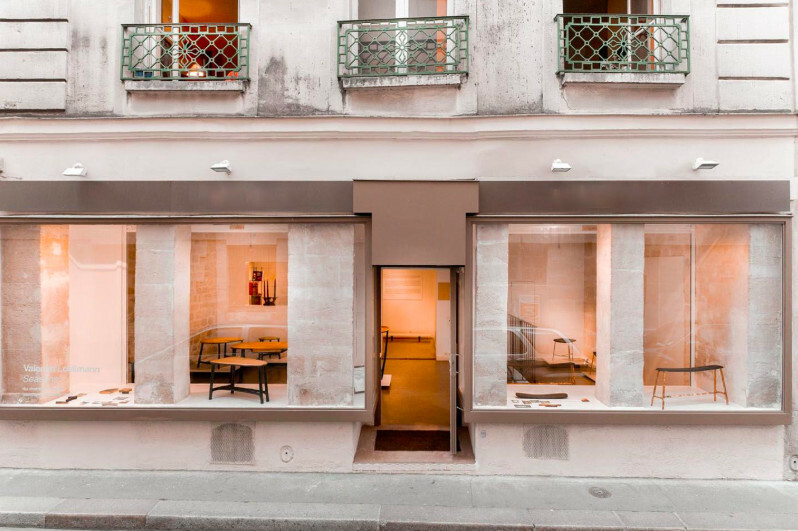
The City of Paris grades its own streets into five commercial categories, and that grading sets the fee for occupying public land outside a shop. The city therefore maintains its own commercial ranking of Paris streets, independent of market rents. A well-placed address is not necessarily in the top category, and the reverse is also true.
That matters because putting anything onto the pavement is a regulated act. The City is explicit that installing a display or a terrace on public space constitutes an occupation of the public domain, requiring authorization and payment of a fee known as droits de voirie. This catches more than a café terrace. A single display stand outside the door, a clothing rail, a sandwich board, anything projecting beyond the shopfront is within scope.
If your activation concept involves spilling onto the street, and a lot of them do, that is a question for the City with a fee attached and a lead time, not a detail to settle on opening morning.
For brands
Popping up in Paris?
Explore short-term spaces in Paris with Storefront.
Explore Paris spacesWhether the unit can legally be a shop at all
The Paris local plan protects retail street by street as a matter of law. On a street carrying a linéaire de protection du commerce et de l’artisanat, the use of a ground-floor unit on the street frontage cannot be changed: a shop cannot become housing, a warehouse or, depending on the level of protection, an office. On reinforced stretches the protection excludes offices and services too.
For a pop-up this usually works in your favor, since it protects the supply of ground-floor retail. It becomes relevant if you are looking at a unit that is not currently a shop and assuming you can simply use it as one, or if your activation is closer to an office or a service than a store.
The protection lines are published as open data by the City of Paris, so whether a given ground floor is protected can be checked street by street. The City itself notes that this data is provided for information only and carries no regulatory force, and that the binding reference remains the official urban-planning portal. That distinction is worth respecting: use the open data to get oriented, then verify against the official source before anything depends on it.
One more thing with no equivalent in most markets: Paris intervenes directly in its own retail mix. SEM Paris Commerces, formerly SEMAEST, holds a delegated urban right of pre-emption allowing it to buy commercial units and re-let them to independent traders at rents their business can carry. Paris has a public commercial landlord. It is unlikely to affect a four-week activation, but it explains some of what you will see on the ground.
Safety and access obligations for a shop open to the public
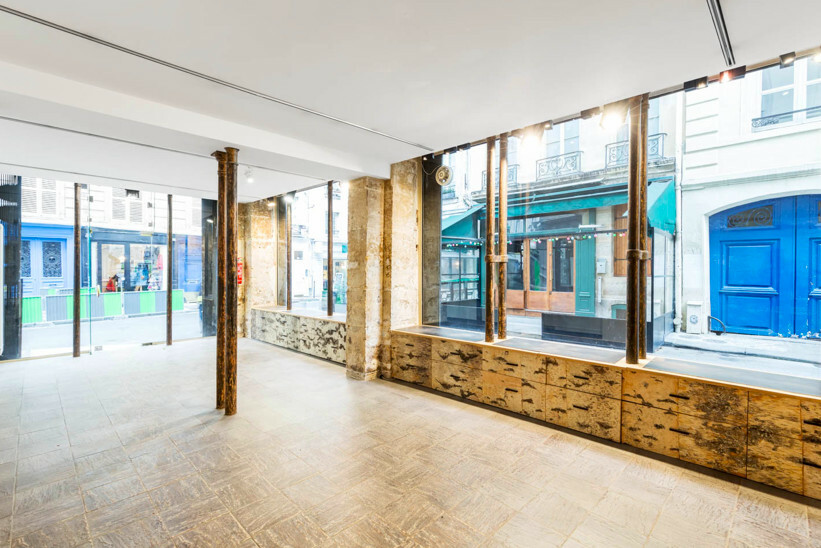
A shop open to the public is a type M établissement recevant du public under French safety rules. The lightest tier, the fifth category, covers stores admitting up to 200 people across all floors, with 100 in a basement and 100 on upper floors. Usefully for a launch, staff are not counted alongside the public in that tier, which matters when you have a large team on site for an opening night.
Accessibility is the obligation most often underestimated, because it covers the whole route rather than the entrance alone. The published requirements run to approaches outside, vehicle parking, access and reception, horizontal and vertical circulation inside, rooms and toilets open to the public, doors and exits, floor and wall surfaces, and fittings and furniture.
Derogations exist for a unit inside an existing building, on grounds of technical impossibility, heritage conservation constraints, or works costing out of proportion to the benefit. That is the ordinary Paris case rather than the exception: a shop on the ground floor of a protected Haussmannian building with a step at the door typically qualifies on heritage grounds. Where a derogation applies, an existing fifth-category establishment is generally expected to put a substitute measure in place rather than simply do nothing.
None of that is something to work out from a web page. It is a conversation with the landlord about what the unit already holds, and if the answer is vague, with someone qualified before you sign.
For spaces of this kind, see our selection of small stores and boutique spaces in Paris.
Sunday is settled address by address
The starting point in French employment law is that employees rest on Sunday, so Sunday opening runs on derogations rather than on a retailer’s own choice. Paris has zones touristiques internationales which are an exception to that rule, which is precisely why Sunday has to be settled address by address in Paris rather than assumed city-wide.
If your commercial case depends on Sunday trading, and for a short activation it often does, establish that for your specific address before you commit rather than after. It is one of the few questions where the answer genuinely changes across a single street.
Two rules that change your shop floor
These are small, cheap to comply with, and easy to miss until the day you open.
French retail prices are shown tax-inclusive and in euros. The figure on the label is the total sum the customer will actually pay. A brand used to displaying a pre-tax price and adding sales tax at the till has to relabel before opening. That is a practical difference rather than a formality, and it affects every price point you had planned.
Second, any retail item on show to the public must carry a price, and the rule names the shop window explicitly alongside outdoor displays and the interior of the store. For a pop-up whose frontage is doing the selling, the window display needs prices on it, not only the shelves inside.
Where to check any of this
The commercial lease provisions sit in the French code de commerce, published on Légifrance. The rules on terraces, displays and street commercial categories are published by the Ville de Paris. The retail protection lines in the local plan are on Paris Data, with the binding version on the City’s urban-planning portal. The établissement recevant du public classification and the accessibility requirements and their derogations are set out on service-public.fr. The commercial rent index is published by INSEE.
Those are the originals. They are more current than this page and they are the versions that count. For anything where being wrong is expensive, which on this page is most of it, the right next step is a French commercial property lawyer or a licensing consultant who works in the arrondissement you are looking at.
The checklist worth taking to a landlord
- Is this a bail dérogatoire, and what is the total occupation across any successive leases?
- Is the ground-floor use protected under the local plan, and does that affect what I want to do?
- What commercial category is this street in, and what would droits de voirie cost if I want anything on the pavement?
- What ERP category does this unit already hold, and what does it seat or admit?
- Does the unit hold an accessibility derogation, and if so what substitute measure is in place?
- Is this address inside a zone touristique internationale for Sunday opening?
Six questions, and a landlord who knows their unit will have all six answers. The quality of the answers is itself a useful signal about how the occupation will go.
Once the rules are mapped, the next questions are commercial. Read the full guide to opening a pop-up shop in Paris, or start looking at pop-up shops for rent in Paris.

Written by
Nicholas Roberts-Moore is Chief Marketing Officer at Storefront, based in London. He specializes in AI-powered marketing and the UK retail and real estate markets, helping brands turn short-term retail into measurable growth. A former journalist, he writes on pop-up strategy, retail trends, and the future of physical retail.
More from Nicholas Roberts-Moore →If that is the shape of space you need, browse affordable commercial property in Paris.
Related posts:
 What is a pop-up shop? Everything you need to know to try short-term retail
 How to Set Up a Pop-Up Art Gallery: 8 Steps to Renting and Launching Your Exhibition
 Offline Marketing Ideas for Pop-Up Shops
 The 5 Types of Pop-Up Shops (With Examples) & How to Choose the Right One
 Automotive Pop-Up Shops: How Car Brands Use Temporary Showrooms to Launch, Test and Sell