

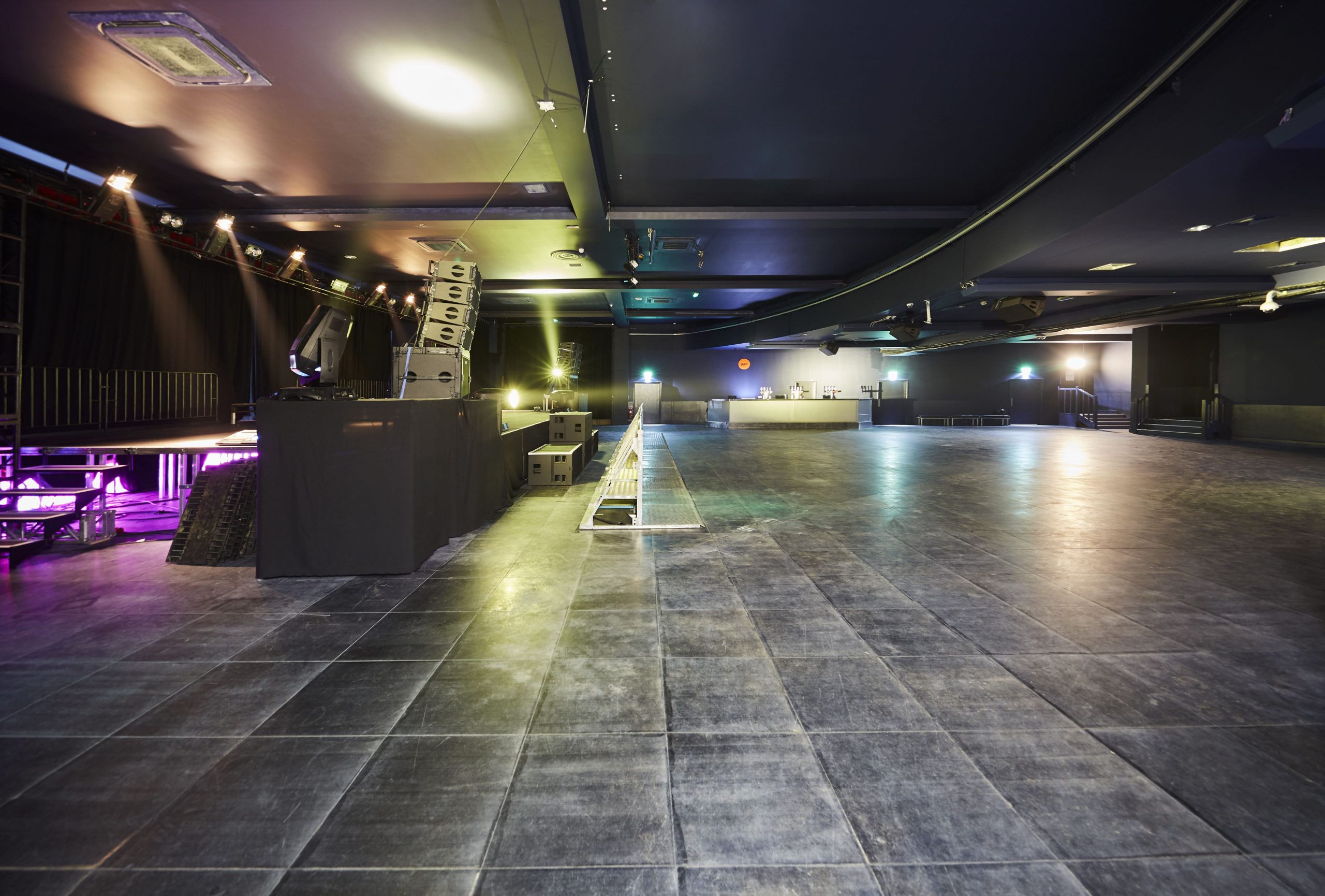
Dalston trades after dark. That is the whole brief in four words, and it is the thing most people get wrong about it. The bars, venues and late licences along Kingsland Road carry the district’s strongest trade in the evening, so a ground-floor unit here is worth more at nine at night than it is at eleven in the morning.
Plan a project around that and Dalston is one of the better value addresses in inner London. Plan against it and you have taken a shop on a street that is quiet exactly when you wanted it busy. Browse commercial space to rent in Dalston.
The two economies, and they run at different hours
Dalston has a daytime trade and an evening trade, and they barely share a customer.
- Daytime belongs to Ridley Road Market. It trades six days a week on Caribbean, Turkish and West African produce and goods, serving a genuinely diverse local catchment rather than a visitor one. It is one of the last unreconstructed street markets in inner London.
- Evening belongs to Kingsland Road. One of the strongest after-dark economies in London, dense with bars, music venues and late licences, weighted to the evening and the weekend far more than to daytime shopping.
The commercial consequence is a constraint worth knowing before you price anything. Ridley Road sets the price expectation for the streets around it. A format arriving with central London positioning and central London prices is landing next to a market where everyday food and goods set the reference point. That is not a reason to avoid Dalston. It is a reason to be clear about which of the two economies you are selling into.
What works here
| What | Why Dalston suits it | Browse |
|---|---|---|
| Food and drink | The strongest evening economy in the area and a Turkish and Kurdish food corridor running south. | food and drink space in Dalston |
| Events and venues | A district built around late licences, with an audience that already comes out at night. | event space in Dalston |
| Retail and pop-up | Small Victorian ground floors at rents well below the central districts. | retail and pop-up space in Dalston |
| Galleries and studios | Canal-side yards and arches nearby converted to studio and gallery use. | gallery and studio space |
| Shoots | Unpolished frontages, market colour and period stock, all within a short walk. | shoot space in Dalston |
| Showrooms and project space | Cheap floor area for a brand that wants room rather than a prime address. | showrooms and project space |
For brands
Popping up in Dalston?
Explore short-term spaces in Dalston with Storefront.
Explore Dalston spacesThe streets
Kingsland High Street and Kingsland Road
The commercial spine. Kingsland Road runs north from Shoreditch through Dalston and carries the whole corridor, small units one after another, with the evening economy concentrated along it. The stretch running south towards Shoreditch holds London’s densest concentration of Turkish and Kurdish restaurants and food shops, and it is a destination in its own right for that.
Ridley Road
The market street, immediately behind the high street. Six days a week, everyday goods, and the reason the area’s food offer is what it is. Anything taking space near it is trading in its shadow, for better and for worse.
Dalston Lane
Runs east off the high street and carries the rest of the district’s retail. Quieter than Kingsland and more mixed in condition.
The stock, and why a good frontage goes further here
Small Victorian ground floors under flats, generally narrow, plain and in mixed condition, in a long continuous run along Kingsland High Street. Rents sit well below the central districts.
The fit-out standard of neighbouring units varies widely, and that is an opportunity. A well-executed frontage has unusual prominence in Dalston precisely because the run it sits in is inconsistent. The same spend that would be invisible on Regent Street is conspicuous here.
Getting there, and what the station tells you
Dalston is served by Dalston Junction, Dalston Kingsland and Haggerston, all on the Overground rather than the Underground.
Dalston Junction sits outside the hundred busiest stations in London. That is the useful number, and it says footfall here is local rather than passing. It suits a destination space more than an impulse one: people come to Dalston on purpose, which means your job is to be worth the journey rather than to catch an eye.
On catchment, Dalston holds the London Plan’s Major centre grade, meaning a borough-wide draw and more than fifty thousand square metres of retail and service floorspace. That is a real step down from the West End and a real step up from a local parade.
How Dalston compares with what is around it
- Shoreditch. South down Kingsland Road, and the same corridor. More creative, more visited, considerably more expensive, and the reason the stretch between them is a transitional zone rather than a boundary.
- Hackney. East and north. No single centre, running instead on separate high streets miles apart, so naming Hackney alone has not yet chosen a location.
- Camden. West across north London. Also youth-led, but visitor-driven in a way Dalston is not.
- Fitzrovia. Central, and the exact inverse: a weekday daytime district that empties at the weekend.
Our London pop-up shop guide covers the city end to end, the neighbourhood ranking compares the main districts, and the best streets guide goes street by street.
The rules, which are London-wide
- Use Class E covers shops, offices, cafes and gyms in one category, so moving between those uses inside a unit generally does not need planning permission.
- Sunday trading is set by shop size. Up to and including 280 square metres, any day or hour. Larger than that and Sunday is restricted. Dalston units sit well under the threshold.
- Late licences are the local variable. In a district whose value is in the evening, what a unit is licensed to do after eleven matters more than its floor area. Establish that before you sign anything.
- The Congestion Charge and ULEZ shape deliveries. The charge runs 07:00 to 18:00 Monday to Friday and 12:00 to 18:00 at weekends and bank holidays; the emissions zone covers every borough around the clock.
Common questions
Is Dalston good for a pop-up shop?
For an evening or weekend-led project, yes, and at a rent well below the central districts. For weekday daytime retail it is much weaker, because the district’s trade is concentrated after dark and around the market.
What is Ridley Road Market?
A long-established street market trading six days a week on Caribbean, Turkish and West African produce and goods. It anchors the daytime economy and sets the price expectation for the surrounding streets, which is worth knowing if you are arriving with central London pricing.
How does Dalston compare with Shoreditch?
Same corridor, different position. Shoreditch is more creative, more visited and considerably more expensive. Dalston is cheaper, more local and stronger after dark. The Kingsland Road stretch between them is a transition rather than a line.
Can people get there easily?
By Overground rather than Underground: Dalston Junction, Dalston Kingsland and Haggerston. Dalston Junction is outside the hundred busiest stations in London, so the traffic is local and deliberate rather than passing.
What kind of unit will I be looking at?
Small Victorian ground floors under flats, narrow and plain, in a long run along Kingsland High Street. Condition varies a lot between neighbours, which means a good frontage stands out more here than it would on a uniform street.
When is Dalston busiest?
Evenings and weekends along Kingsland Road, and market days on Ridley Road. Weekday mornings are the quietest part of its week.
Where to look next
Browse food and drink space in Dalston, event space, retail and pop-up space, galleries and studios, showrooms or everything in Dalston.
Nearby: Shoreditch, Hackney and Camden. For the wider city, see our London guide, the neighbourhood ranking and the Fitzrovia guide.

Written by
Nicholas Roberts-Moore is Chief Marketing Officer at Storefront, based in London. He specialises in AI-powered marketing and the UK retail and real estate markets, helping brands turn short-term retail into measurable growth. A former journalist, he writes on pop-up strategy, retail trends and the future of physical retail.
More from Nicholas Roberts-Moore →Related posts:
 Shoreditch Neighborhood London Guide: London’s Hipster Hangout and Pop-Up Capital
 Mayfair Neighborhood Guide: Luxury Pop-Up Shops, Showrooms, and Galleries in London
 Pigalle Neighborhood Guide: Pop-Up Shops, Showrooms and Creative Spaces
 Exploring the Benefits of Opening a Pop-Up Store in Shanghai
 How to Start a Pop-Up Shop in Paris: The Complete Guide