
Los Angeles is a car-first city, and almost everything that is true about taking space here follows from that. Most customers arrive by car, which makes parking, curb access and visibility from a busy street more commercially important than the distance to a rail station. That is the reverse of the priority in most European markets, and it is the first thing to unlearn.
The second is that a street name tells you more here than a neighborhood name does. Vacancy across the city is unevenly distributed rather than uniformly high or low: prime stretches hold their tenants while long arterials carry persistent gaps, sometimes within the same district. Naming the district is rarely enough to describe a location.
We have hundreds of spaces across Los Angeles.
What people actually rent in Los Angeles
This is the thing that surprises most briefs: Los Angeles is an events city first, a city of project and office space second, and a retail one third. That is not the order anywhere else we operate, and it is worth knowing before you shape a brief around a shopfront.
| Format | What it is used for | Browse |
|---|---|---|
| Event space | Launches, premieres, press events, parties. The largest single category of LA demand. | event space in Los Angeles |
| Office and coworking | Short-term teams, production offices, project space. Unusually strong here. | office space in Los Angeles |
| Retail and pop-up | Brand activations and short-run stores. | retail space in Los Angeles |
| Studios and galleries | Shoots, exhibitions, working rooms. | art and studio space |
| Warehouses | Builds, installations, anything needing volume. | warehouse space for rent |
If budget is the constraint rather than the format, start from cheap retail space in Los Angeles or cheap commercial property in Los Angeles. And if you are sharing rather than taking a whole unit, shop share space is a category in its own right here.
Downtown Los Angeles
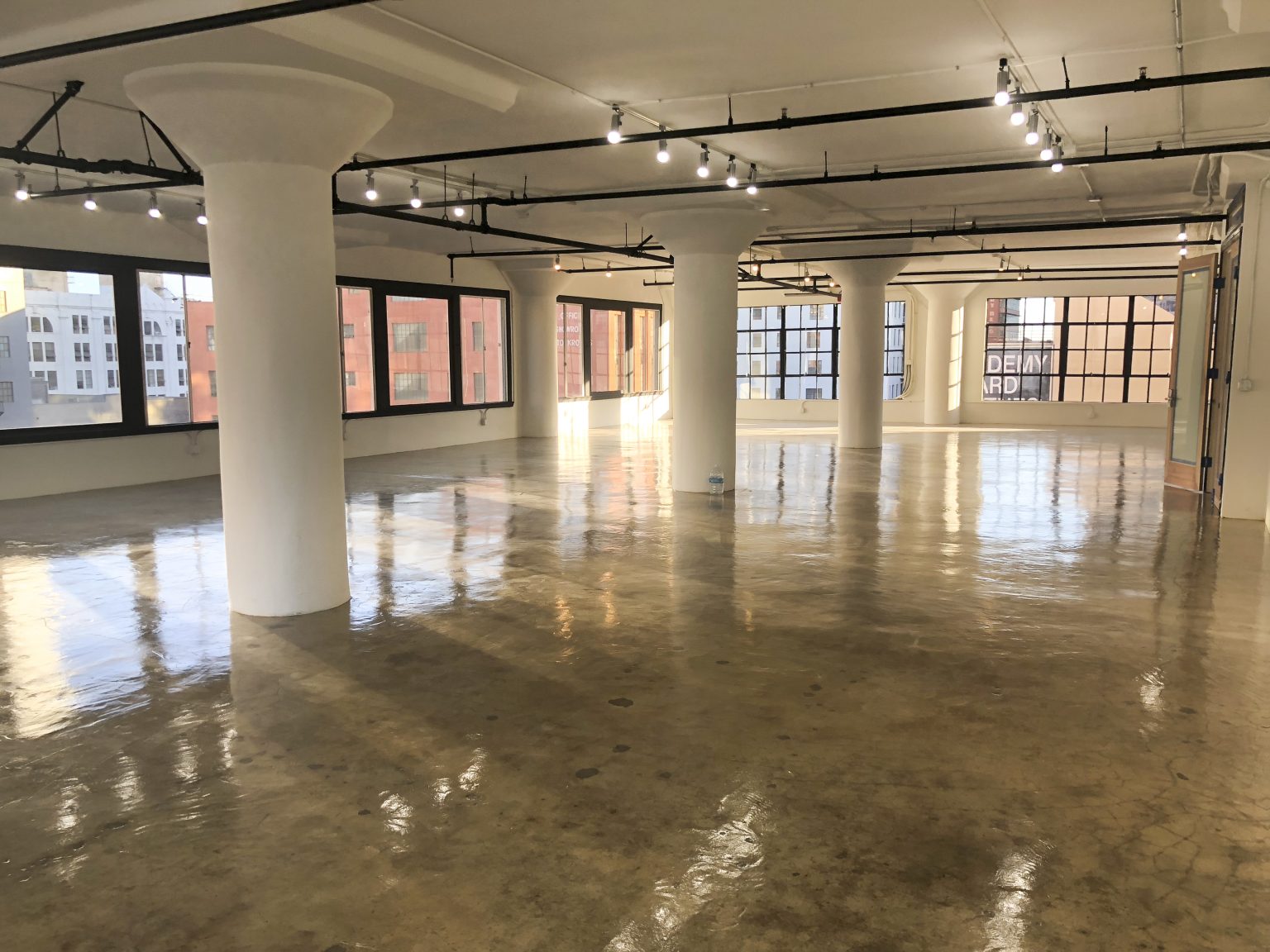
Downtown is not one place. It is a collection of distinct districts and treating it as a single retail area is the most common mistake in an LA brief. Bunker Hill is civic and cultural. The Historic Core is nightlife and adaptive reuse. The Fashion District is wholesale. Little Tokyo is food and specialty retail. The Arts District is galleries and warehouses. Rents and opening hours differ across all of them.
Most of Downtown is busiest on weekdays, driven by office and civic traffic, and noticeably quieter at weekends. The exceptions are the Arts District, the Fashion District and the entertainment blocks around the arena, which invert that pattern completely. Decide which days your space needs to work before you choose between them.
It is also the one part of the city with genuine rail. The Regional Connector opened through Downtown in 2023, joining light-rail lines that previously terminated separately and adding Little Tokyo/Arts District, Historic Broadway and Grand Av Arts/Bunker Hill stations. Between the A and E lines, a space here is reachable by rail from the San Gabriel Valley, the harbor and the coast without a car, and Union Station on the northeastern edge is the regional hub.
It is the deepest pool of short-term space in the city. See space in Downtown LA, event space downtown or office space downtown.
The Arts District
Galleries and warehouses, and one of the few parts of Downtown that trades harder at weekends than midweek. The Regional Connector put it on the rail network for the first time. See space in the Arts District.
Hollywood
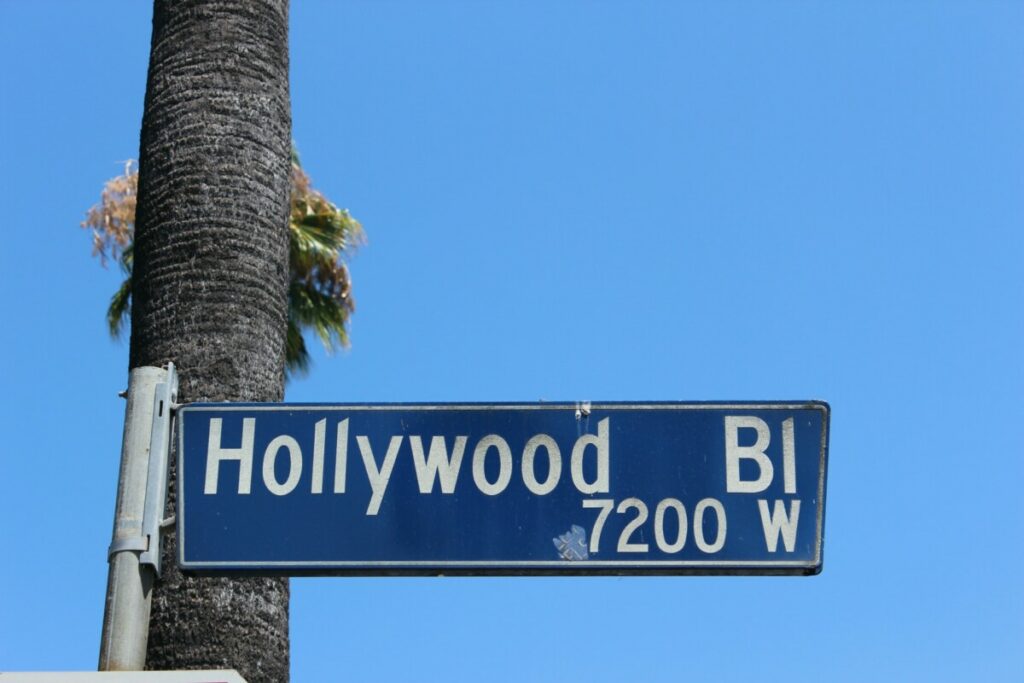
The most visitor-driven retail street in the city. The Walk of Fame runs along Hollywood Boulevard and part of Vine Street with more than two thousand stars set into the sidewalk, which is why the street carries continuous tourist footfall from morning until late evening, every day of the year. The TCL Chinese Theatre forecourt is the single busiest pedestrian magnet on it.
Hollywood Boulevard stays busy into the late evening, which is unusual for a Los Angeles retail street. Its footfall is visitor and nightlife driven rather than tied to office or residential hours, so later opening is viable here in a way it is not on Abbot Kinney or Ventura Boulevard.
Four blocks south, Sunset Boulevard through Hollywood is a completely different proposition: a working commercial street of studios, post-production facilities, music businesses and large-format retail, with rents and character to match. Same neighborhood, different business.
Hollywood also has the one rail line that genuinely matters for retail footfall. The B Line runs from Union Station in Downtown to North Hollywood with stations at Hollywood/Vine and Hollywood/Highland, surfacing directly into the busiest blocks.
Our Hollywood neighborhood guide covers the district in full. See space in Hollywood.
The Eastside: Echo Park and Silver Lake
Echo Park
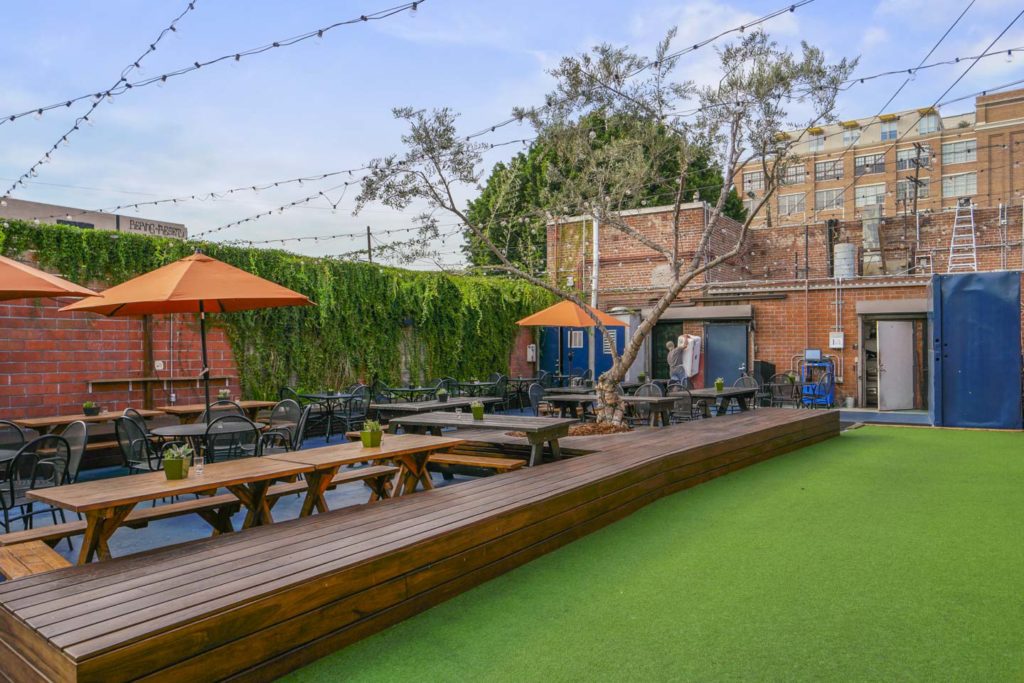
The retail spine is Sunset Boulevard, roughly between Echo Park Avenue and Alvarado Street, lined with independent stores, cafes, bars and record shops. It is a genuinely independent street with very little chain presence, which is rarer than it sounds.
The mix leans to small independents, vintage, books, records and design, and the customers are local and weekend-led. That makes it a good fit for a brand that wants credibility with a young Eastside audience and a poor fit for volume. Echo Park Lake anchors the neighborhood and draws a steady weekend crowd, and the blocks around it are the most walkable, because the neighborhood is steeply hilly away from Sunset and the topography keeps retail confined to the flat commercial strips.
Several long-standing small music venues sit on and around Sunset, which gives the strip a busy late-evening economy. A space here can share an audience with a gig rather than compete with one. The one practical warning is parking: it is limited and largely on-street, with permit restrictions on the residential streets behind, and for an evening event it is the single most common complaint. A space with dedicated spaces has a real advantage.
See space in Echo Park.
Silver Lake
Sunset Junction, where Sunset Boulevard meets Santa Monica Boulevard, is the commercial center and the most walkable stretch. The angled intersection creates a cluster of corner units, which is why retail here concentrates rather than stringing out along a single arterial. The reservoir that gives the neighborhood its name is residential in character, so it shapes who lives here more than where anyone shops.
See space in Silver Lake.
Venice Beach and the coast
The coast trades on a different calendar from the rest of the city, and the seasonality here catches people out more than anywhere else in Los Angeles.
The beach season runs from Memorial Day weekend in late May to Labor Day in early September, when Venice and Santa Monica carry their heaviest visitor traffic. But late spring brings a coastal overcast, known locally as June gloom, where the beach neighborhoods sit under cloud into the afternoon while inland areas are clear and warm. It measurably dampens beach footfall in a month people assume is peak summer, which is why a Venice launch often plans for July rather than June.
Abbot Kinney runs a First Friday each month, an evening event with food trucks and late store hours. It is a predictable footfall spike for a single street rather than a citywide event, and it is the date to open on if that street is the plan.
Searching Los Angeles by street
Los Angeles retail is talked about by street rather than by district, and the two do not map onto each other neatly. A few of the best-known addresses are worth understanding before you search.
- Melrose is an address rather than a district, running across several neighborhoods. Check what is open on Melrose and widen to the surrounding area if the dates matter more than the street.
- West Hollywood, Beverly Hills and Santa Monica are separate cities, not Los Angeles neighborhoods. That changes the permit route and the business tax registration as well as the search, so it is worth establishing which city a space sits in early. Abbot Kinney sits inside Venice.
The practical route for any of them is to search the whole city and filter by what the space needs to do, then narrow by area. That usually surfaces more than searching a single street name would. Our ranking of the best shopping streets in the world covers Rodeo Drive, which carries the second-highest retail rents in the United States.
The Los Angeles calendar
More than most cities, LA trades on a calendar. Four windows matter.
| Window | When | What happens |
|---|---|---|
| Awards season | January to March | The most distinctive commercial season in Los Angeles. Nowhere else does a two-month stretch of ceremonies and press generate this much short-term demand for showrooms, gifting suites and brand space. It concentrates in Hollywood, West Hollywood and Beverly Hills. |
| The art weeks | Early January and February | The art calendar opens with a large fair at the Downtown convention center in early January, several weeks before the February fair week. Two distinct windows rather than one. |
| Fashion market weeks | Several times a year | The Fashion District showroom buildings run market weeks when buyers come to place orders. Those weeks are the district’s real commercial rhythm, more so than the public fashion week schedule. |
| Beach season | Late May to early September | Venice and Santa Monica peak. Inland neighborhoods do the opposite, as summer heat pushes shoppers indoors and into the evening. |
The holiday season builds from early November, and Los Angeles leans on outdoor shopping destinations rather than covered malls, so mild December weather keeps evening trading viable throughout. For design-led activations, Design Week venues in Los Angeles is the curated set.
Two things that catch people out
Filming needs a permit, and it comes up here far more than anywhere else. Filming in a Los Angeles space, including a brand shooting its own content inside its own pop-up, generally goes through FilmLA, which coordinates permits for the city and much of the county. Many spaces are rented as film locations as well as retail, so establish what is covered before you bring a camera crew in.
Registration is by city, not by region. Anyone selling or leasing tangible goods subject to sales tax in California needs a state seller’s permit, which applies the same everywhere. But businesses operating in the City of Los Angeles register separately with the Office of Finance for a Business Tax Registration Certificate, and a space in West Hollywood, Beverly Hills or Santa Monica registers with that city instead. Check which city you are actually in.
One more, less formal: drive times vary enormously by hour, and a journey that takes twenty minutes at eleven in the morning can take an hour at five. That affects opening hours and event timing more than it affects the choice of address. A weekday evening launch downtown draws a different crowd from the same launch on a Saturday.
Common questions
Which Los Angeles neighborhood is best for a pop-up?
Downtown if you want scale, rail access and a weekday audience. Hollywood if you want visitor footfall and late trading. Echo Park or Silver Lake if you want credibility with an Eastside audience rather than volume. The Arts District if you want galleries and warehouses. There is no single answer, which is why the street matters more than the district here.
What is the biggest category of space rented in LA?
Event space, by a clear margin, followed by office. Retail is third. That ordering is unusual and it is worth knowing if you assumed a pop-up market looks the same everywhere.
Is Downtown LA busy at weekends?
Mostly not. Office and civic traffic make it a weekday district, and it goes noticeably quiet at weekends. The Arts District, the Fashion District and the blocks around the arena are the exceptions and invert that pattern.
Do I need a permit to film inside my own pop-up?
Usually yes. Filming in a Los Angeles space generally goes through FilmLA even when it is your own space and your own content. It comes up far more often here than in other markets.
How do I search by street rather than by neighborhood?
Search the whole city and filter by format first, then narrow by area. Los Angeles streets cross neighborhood lines and sometimes city lines: Abbot Kinney sits inside Venice, and West Hollywood, Beverly Hills and Santa Monica are separate cities from Los Angeles, which affects permits and registration as well as the search.
When is the best time to launch in Venice?
July through early September. The coastal overcast known as June gloom keeps the beach neighborhoods under cloud into the afternoon through late spring, while inland areas are clear, so June footfall is weaker than the month suggests. From July the beach season runs hard to Labor Day.
Where to look next
Browse event space, office space, retail and pop-up space, galleries and studios, showrooms or food space across Los Angeles.
By district: Downtown LA, Hollywood, Echo Park, Silver Lake, the Arts District and Venice Beach.
The neighboring cities have their own pages: West Hollywood, Beverly Hills and Santa Monica. Our West Hollywood guide and Downtown LA guide go into each in detail, and the Santa Monica guide covers the coast, and the Beverly Hills guide covers the Golden Triangle.

Written by
Adrien Kerbrat is Chief Revenue Officer and co-founder of Storefront. With more than 10 years in commercial real estate, he is an expert on the French market and short-term retail across Europe. Based in Bordeaux and often in Paris, he writes on pop-up strategy, retail location, and the French retail landscape.
More from Adrien Kerbrat →Related posts:
 Hollywood Neighborhood Guide: Pop-Up Shops, Event Spaces, and Showrooms in Los Angeles
 Shoreditch Neighborhood London Guide: London’s Hipster Hangout and Pop-Up Capital
 Mayfair Neighborhood Guide: Luxury Pop-Up Shops, Showrooms, and Galleries in London
 Pigalle Neighborhood Guide: Pop-Up Shops, Showrooms and Creative Spaces
 What Is Local SEO and How Do I Get My Business Found?