Brickell is the financial district of Miami and the densest high-rise neighborhood in the city, holding banks, law firms and a large professional resident population in towers. Its retail serves people who live and work within the same few blocks, which makes it one of the most self-contained markets in Miami.
It is also the district where the building matters more than the street. Almost every ground-floor unit sits beneath a residential or office tower, and that single fact decides your catchment, your counterparty and your fit-out. This guide covers how that works, why Brickell is one of the only walkable parts of Miami, how the two retail centers split the week between them, and which projects should go somewhere else.
The tower above sets your terms
This is the most useful thing to understand about Brickell and the thing brands discover after they have started negotiating.
Most street-level units sit beneath residential or office towers. The building above supplies a captive audience, so it is effectively your catchment, and the landlord is often the building’s owner rather than a retail specialist. The practical consequence is that the condominium or the building owner sets rules on hours, servicing and signage, and your terms and fit-out constraints follow from the building rather than from the retail market.
Read those rules before committing rather than after. Deliveries windows, permitted opening hours and what you are allowed to put on the frontage are decided upstairs, and for a short project they are more likely to break your plan than anything about the location itself.
One of the only walkable parts of Miami
Miami is a car-first city. For most of it, parking and visibility from the road matter more than transit, and a unit is bought for the people who will drive to it rather than the people passing. Brickell is one of the few genuine exceptions, alongside Downtown and South Beach.
It is served by the free Metromover, whose Brickell loop is one of three covering Downtown, Omni and Brickell across 21 stations seven days a week, and by Metrorail. It also has a resident population dense enough to support street-level trade on its own. Transit proximity is worth stating in your invitations here in a way it simply is not elsewhere in the city, because it is the rare Miami address where a guest without a car is not at a disadvantage.
For brands
Need an event space in Brickell?
Find your space in Brickell with Storefront.
Explore Brickell event spacesTwo centers, and they split the week
Brickell’s footfall does not sit in one place. It is split between two very different anchors, and picking the wrong one puts you in front of the wrong half of the district.
- Brickell City Centre. Open-air and multi-level, under a suspended climate canopy.
- Mary Brickell Village. Older, low-rise dining and retail, a short walk west.
Brickell City Centre is the district’s principal retail complex and the closest thing Brickell has to a mall, and it anchors the surrounding blocks. Mary Brickell Village trades more on evenings and weekends than the towers around it do, which makes it the better side for anything social or food-led, and the weaker side for anything that depends on weekday office traffic.
The customer is affluent and time-poor
The Brickell customer is affluent, professional, international and short of time, and the neighborhood’s retail reflects that. Services, fitness, food and convenience outweigh browsing.
That is a real constraint and it is worth being honest about it. A brand that needs customers to slow down, wander and discover will do better in Wynwood or the Design District. Brickell rewards a proposition that can be understood in seconds and completed in minutes, and it punishes one that needs a long visit.
What kind of space you actually get
Miami’s inventory splits into three broad types, and Brickell only has one of them. Converted warehouses with ceiling height and roll-up doors are in Wynwood and Allapattah. Purpose-built luxury frontage is in the Design District and Bal Harbour. Brickell, like Edgewater, is street-level units beneath residential towers.
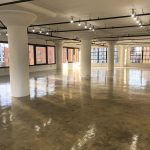
So if your concept needs volume, a roller shutter or a raw industrial shell, Brickell is the wrong district and no amount of searching will change that. What it offers instead is modern, serviced, well-finished space with an audience already living and working upstairs.
The weekday rhythm, and the one March weekend
Metrorail serves commuting rather than shopping, so it brings a weekday audience to Brickell and Downtown rather than a weekend one. Combine that with the office towers and the district’s baseline is Monday to Friday, softened by the resident population in a way Downtown’s is not.
The exception is the large electronic music festival held in Downtown over a weekend in March, which draws an international audience and fills Downtown and Brickell hotels. Its crowd is young and concentrated, which suits a brand activation better than conventional retail. If you want that weekend, book well ahead of it.
Worth noting for planning: unlike South Beach, Brickell is not strongly seasonal. A twelve-month view of South Beach footfall looks nothing like a twelve-month view of Brickell, which is steadier and therefore easier to forecast.
Permits are City of Miami
Miami is several cities rather than one, and which you are in decides which rules apply. Brickell is in the City of Miami, along with Downtown, Wynwood, the Design District, Edgewater and Coconut Grove. South Beach and Mid Beach are in the City of Miami Beach, Bal Harbour is its own village and Coral Gables is a separate city again.
So permits, the Certificate of Use and the Business Tax Receipt follow City of Miami process here. Remember that the building’s own rules sit on top of the city’s, and in Brickell the building is usually the tighter of the two.
For brands
Looking for space in Brickell?
Explore short-term spaces in Brickell with Storefront.
Explore Brickell spacesCommon questions
Who do I actually negotiate with in Brickell?
Usually the owner of the tower above rather than a retail landlord, because most ground-floor units sit beneath residential or office buildings. That means a condominium board or a building owner is setting hours, servicing and signage rules alongside the lease itself.
Is Brickell good for an event?
Yes, particularly a professional or corporate one. The audience is affluent and international, the district is walkable, and the free Metromover and Metrorail mean guests can arrive without a car, which removes the parking problem that shapes most Miami events.
Brickell or Downtown?
Brickell for an affluent professional audience concentrated in a few walkable blocks, with a steadier week thanks to its residents. Downtown for scale, for a wider transit catchment including Brightline, and for event-driven footfall around the arena.
Can I find a warehouse or raw space in Brickell?
No. Brickell’s stock is street-level units beneath towers. For ceiling height, roll-up doors and a raw shell you want Wynwood or Allapattah, and for purpose-built luxury frontage the Design District or Bal Harbour.
Which part of Brickell should I choose?
Brickell City Centre for weekday office traffic and a mall-like setting under its climate canopy. Mary Brickell Village for evenings and weekends and anything food-led or social. The two centers split the district’s footfall, so pick the one whose week matches your project.
Where to look next
Brickell suits a project that wants an affluent, captive, walk-up audience and can work inside a building’s rules. It does not suit a project that needs space, a long dwell time or a weekend crowd. Decide which you are before you shortlist a unit, because the district will not bend.
To see what is available: event spaces in Brickell, meeting rooms, pop-up and retail space, showrooms, or the whole of Brickell.

Written by
Adrien Kerbrat is Chief Revenue Officer and co-founder of Storefront. With more than 10 years in commercial real estate, he is an expert on the French market and short-term retail across Europe. Based in Bordeaux and often in Paris, he writes on pop-up strategy, retail location, and the French retail landscape.
More from Adrien Kerbrat →