

A shop fit-out is the work that turns an empty retail unit into a space you can trade from: flooring, lighting, walls, fixtures, counters, signage and the power and data behind them. For a short-term space it is usually a light refit rather than a build, because the unit already works as a shop and the agreement limits what you can change.
A note on the word. “Fit-out” is the usual term in the UK, Ireland, Australia, New Zealand and much of Asia. In the United States the same work is normally called a build-out. The job is the same wherever you are; only a few specifics, such as how property taxes are handled and what consents are needed, change by country.
The short-term shop fit-out checklist
The whole job in order, from before you sign to after you hand the keys back. Each line stands on its own, so you can work straight down it.
Before you sign
- Confirm in writing what you are allowed to fix to the walls, floor and shopfront.
- Confirm whether you must return the space to its original condition at the end, and who pays for that work.
- Confirm the install window, including whether you can work outside the building’s trading hours.
- Confirm whether local property taxes, utilities and service charge sit inside the fee or are billed on top.
- Photograph the unit on handover, including any existing damage, before anything is moved.
Before the install
- Measure the unit yourself rather than relying on the dimensions in the listing.
- Check the lighting: how many circuits there are, whether they switch separately, and whether track fittings can be moved.
- Check delivery access, including door width, lift dimensions, loading restrictions and permitted delivery hours.
- Confirm who signs off anything electrical, and that they are qualified to issue that certificate.
- Decide what you hire and what you buy, because hired fixtures cost more per week and far less over a short run.
- Order long-lead items first, which usually means signage, printed graphics and anything bespoke.
During the install
- Build the focal point first, because every other fixture is positioned relative to it.
- Keep the sightline from the door clear so the back of the space is visible from the street.
- Run power and data before fixtures go in, not after them.
- Test the lighting at the time of day you will actually be trading, not only in the morning.
Before you open
- Walk the customer journey from the pavement inward and fix anything that interrupts it.
- Test the payment setup on the network in the actual space, not on your phone’s hotspot.
- Check that signage is readable from across the street rather than only from the doorway.
- Make sure your insurance certificate is with the owner before you take the keys.
- Agree who holds keys, who locks up, and what happens if something fails out of hours.
Before you leave
- Book the strip-out at the same time as the install rather than arranging it at the end.
- Return the space to the condition you agreed, and photograph it again when you do.
- Decide what gets stored for the next pop-up and what is disposed of, before the van arrives.
The three levels of shop fit-out
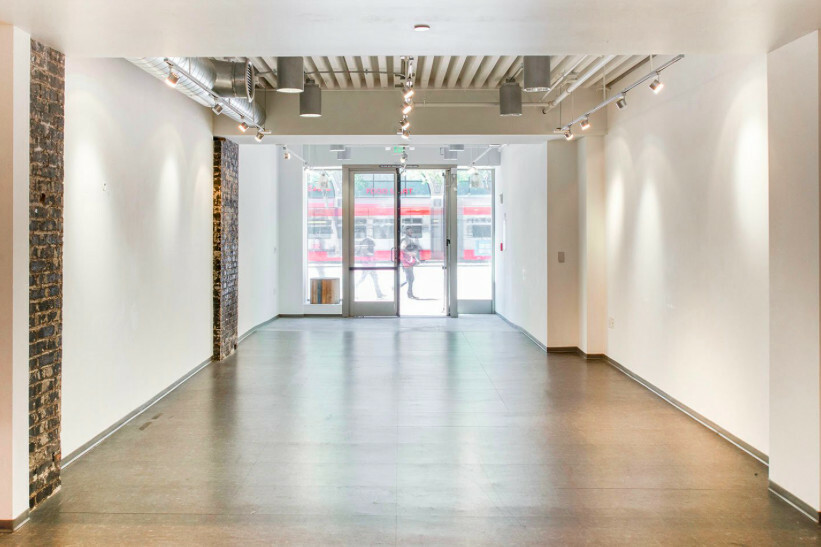
Almost every quote you receive will sit at one of three levels, and knowing which one you need is most of the cost conversation.
| Level | What it covers | Typical for |
|---|---|---|
| Shell and core | Bare unit. Services brought to the space but nothing finished. | Long leases, new developments |
| Light refit | Paint, lighting tweaks, fixtures, signage, merchandising. | Most pop-ups and short-term space |
| Full fit-out | New flooring, ceilings, partitions, joinery, electrics. | Permanent stores, flagship sites |
If you are opening for weeks rather than years, you want the middle row. The unit already has what it needs; the job is to make it look like yours and work for your product.
How much does a shop fit out cost?
There is no single number, and anyone quoting one without seeing the space is guessing. What actually moves a shop fit out cost is a short list, and you can read most of it off the space before you ask for a quote.
- Condition on handover. A unit handed over clean and white is a fraction of the cost of one that needs stripping back first.
- How long you have. A compressed install means more people on site and out-of-hours work.
- What you are allowed to fix to the walls and floor. This is set by the agreement, not by your plans.
- Whether you must make good at the end. Restoring the space is part of the budget, and it is routinely forgotten.
- Electrics and lighting. Changing the lighting layout is usually the single biggest line in a light refit.
- How much is hired rather than bought. Hired fixtures cost more per week and far less overall on a short run.
For what the rest of a launch costs alongside the fit-out, our London pop-up shop budget guide breaks down rent, staffing, stock and insurance line by line.
For brands
Looking at short-term retail space?
Browse short-term pop-up and retail spaces with Storefront, in London, New York, Paris and beyond.
Explore pop-up spacesFit-out ambition should follow the length of the run. A typical booking in Paris or Amsterdam is under two weeks, which rarely justifies anything beyond a light refit, while London and Hong Kong run considerably longer and change that calculation. Our Pop-Up Index covers how demand varies between cities.
What your agreement lets you do
Before you design anything, read the occupation agreement. Short-term space is normally booked on a short agreement rather than a lease, and that agreement sets what you may fix to the walls, what hours you can be on site for the install, and what condition the space has to be returned in. The instrument has different names by country. In the UK it is a licence to occupy, and our guide to what a licence to occupy covers walks through the clauses to look for, most of which have an equivalent wherever you are opening.
The practical version: ask three questions before the first quote. Can I drill into the walls? Can I change the lighting? What state does this need to be in when I leave?
Layout and customer flow
Layout decides how people move, where they stop and what they see first, and it is cheaper to get right on paper than on site. Our guide to designing an effective layout for a pop-up store covers zoning and flow, and pop-up store design is the fuller walkthrough of the whole approach.
Walls, shelving and storage
In a small unit the walls do the work the floor cannot. Vertical storage keeps stock visible without eating the space customers stand in. Ten wall storage ideas for small stores covers pegboard, slatwall, suspended shelving and crates, most of which can be installed and removed without damage.
Displays and focal points
Every shop needs one thing people look at first. Sixteen ideas for a central display covers the focal point itself, and decoration and display ideas covers dressing the rest of the room around it.
Small spaces
A tight footprint is a design problem, not a disadvantage, and most of the fixes cost nothing. Fourteen ideas for designing a small space covers light tones, transparency, mirrors and vertical thinking. The ceiling is the most commonly wasted surface of all: twelve ideas for decorating a pop-up store ceiling.
Fitting rooms, if you sell clothing
A fitting room changes the fit-out materially, because it needs partitions, lighting, mirrors, security and somewhere to sit. Sixteen fitting room design tips covers doing it in a temporary space.
Choosing a shop fit-out company
For a light refit many brands manage it themselves with a contractor for the electrics. For anything more, a fit-out contractor is worth it, and the questions that matter are practical ones.
- Have they worked in short-term or temporary retail before, or only permanent stores?
- Can they work to your install window, including out of hours if the landlord requires it?
- Does the quote include making good at the end, or is that extra?
- Who is responsible for compliance sign-off on anything electrical?
- What happens to fixtures at the end: removed, stored, or yours to keep?
Ask for references from a job of similar length. Fitting out a space for six weeks is a different discipline from fitting out one for six years.
Frequently asked questions
How long does a shop fit out take?
A light refit on a space handed over in good condition is usually a few days. A full fit-out runs to weeks. The install window is normally written into the agreement, so check it before you plan the schedule.
Do I need permission for a shop fit out?
For a light refit in a unit that is already a shop, usually not, beyond the owner’s consent under your agreement. Structural changes, new signage and anything affecting the shopfront are different and may need consent or planning permission.
What is the difference between a fit-out and a refurbishment?
A fit-out makes an empty or bare space usable. A refurbishment updates a space that is already working. Short-term retail is almost always the former at a light level.
Can I reuse a fit-out in another space?
Partly, and it is worth designing for. Modular fixtures, free-standing units and hired furniture travel between spaces; anything fixed to a wall generally does not.
Finding a space that needs less fit-out
The cheapest fit-out is the one you do not have to do. A unit that is already clean, well lit and close to your layout saves more than any saving a contractor can find later. Browse pop-up and retail spaces in London, pop-up retail space in New York and pop-up spaces in Paris, or start from short-term pop-up store rental to see how booking works.
For brands
Ready to find a space?
Tell us the city, the dates and the kind of space, and we will come back with options.
Find a pop-up spaceOne closing note. This guide describes how shop fit-outs normally work and what drives the cost. Quotes vary widely by space, city and contractor, and what you are permitted to change is set by your own agreement, so treat the above as a way to ask better questions rather than a price list.

Written by
Nicholas Roberts-Moore is Chief Marketing Officer at Storefront, based in London. He specializes in AI-powered marketing and the UK retail and real estate markets, helping brands turn short-term retail into measurable growth. A former journalist, he writes on pop-up strategy, retail trends, and the future of physical retail.
More from Nicholas Roberts-Moore →Related posts:
 What is a pop-up shop? Everything you need to know to try short-term retail
 How to Set Up a Pop-Up Art Gallery: 8 Steps to Renting and Launching Your Exhibition
 Offline Marketing Ideas for Pop-Up Shops
 The 5 Types of Pop-Up Shops (With Examples) & How to Choose the Right One
 Automotive Pop-Up Shops: How Car Brands Use Temporary Showrooms to Launch, Test and Sell