

For many direct-to-consumer brands, pop-up stores offer a powerful way to bring online communities into the real world. Temporary retail spaces allow digital brands to showcase products, connect with customers face-to-face, and test physical retail without committing to a permanent store.
One example comes from Brandless, the e-commerce company known for offering everyday home and personal care products with a simple pricing model. To introduce its brand experience beyond the digital space, the company launched a temporary “Pop-Up With Purpose” concept in Los Angeles.
Instead of focusing purely on retail, the activation centered on community programming, educational events, and conversations around wellness and responsible consumption.
Brands exploring similar strategies can browse pop-up retail spaces in Los Angeles or learn more about retail spaces for rent used by emerging and digital-first brands.
Bringing an E-Commerce Brand Into the Physical World
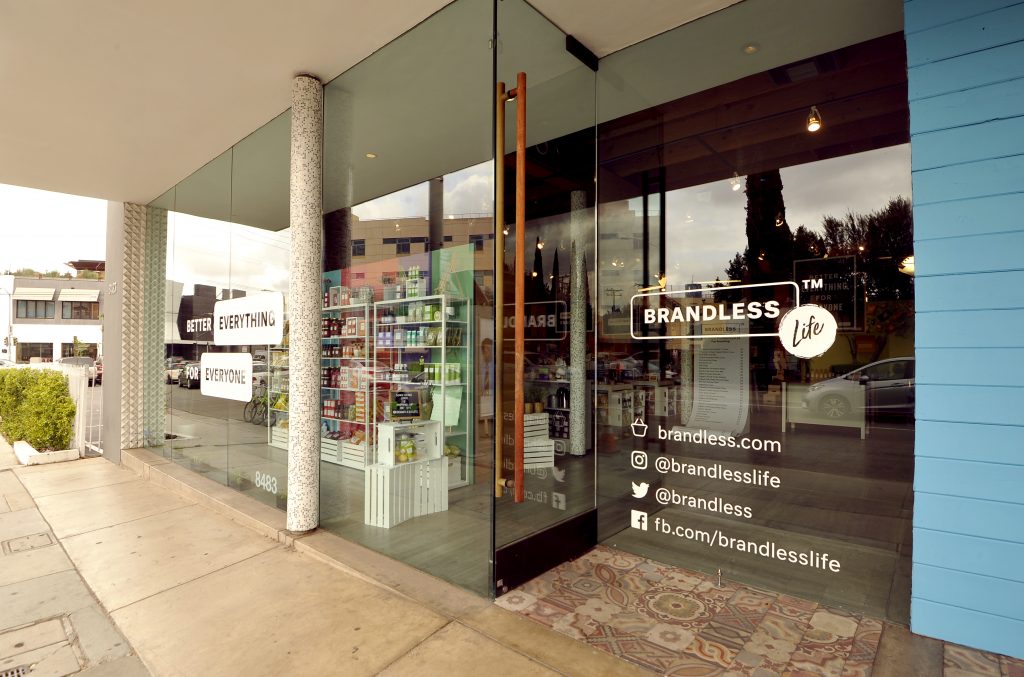
Like many online-first companies, Brandless built its audience through digital channels. However, the team recognized that physical retail could strengthen the relationship between the brand and its community.
Pop-up stores allow e-commerce brands to offer something that online platforms cannot fully replicate: the ability to experience products in person.
Visitors to the Brandless pop-up could sample items such as organic snacks, beverages, and household products. The opportunity to see and try the products firsthand helped customers better understand the company’s focus on ingredient transparency and ethical sourcing.
According to Lee Anne Grant, Head of Business Development and Partnerships at Brandless, the most valuable aspect of the pop-up was the direct interaction with customers.
“People loved the opportunity to experience our products in real life,” she explained. “The pop-up allowed us to get to know them in person and hear their feedback.”
A Pop-Up Designed Around Community
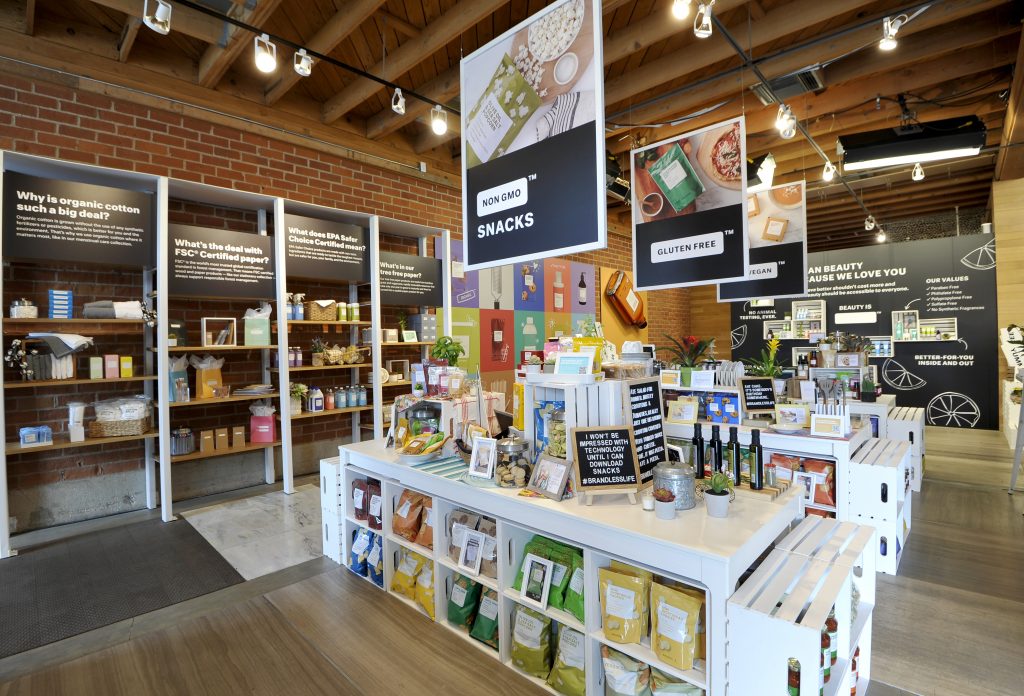
Unlike many retail activations that focus on product displays, the Brandless pop-up was designed primarily as a gathering space.
The concept included a full calendar of events featuring speakers and workshops focused on topics such as wellness, nutrition, entrepreneurship, and social impact.
The company hosted more than 30 events during the activation, bringing together creators, founders, and community leaders for discussions and demonstrations.
The initiative also included a philanthropic component. For every speaker who participated in the program, the company donated meals to local food banks, reinforcing the brand’s emphasis on social responsibility.
This approach demonstrates how pop-up stores can be used not just for selling products, but for building meaningful connections with customers.
Why Los Angeles Was the Ideal Test Market
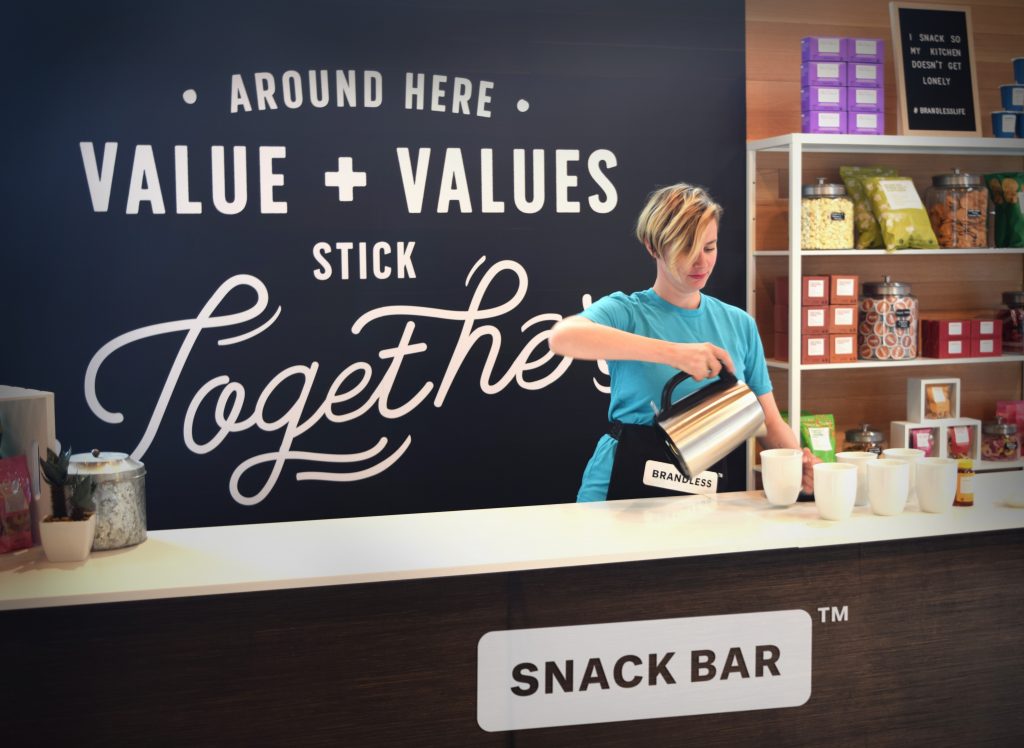
Although Brandless had customers across the United States, the company chose Los Angeles for its first pop-up activation for strategic reasons.
Los Angeles is known for its diverse communities and strong interest in health, sustainability, and entrepreneurship. The city also attracts creators and thought leaders who are active in industries aligned with the Brandless mission.
This made it an ideal environment for hosting conversations and events around the themes that define the brand.
The company also used the pop-up as a content creation hub. Many events were streamed or shared online so that customers across the country could participate digitally.
For e-commerce brands, combining physical activations with digital engagement can amplify the impact of a pop-up store.
Choosing the Right Space for a Community-Focused Pop-Up
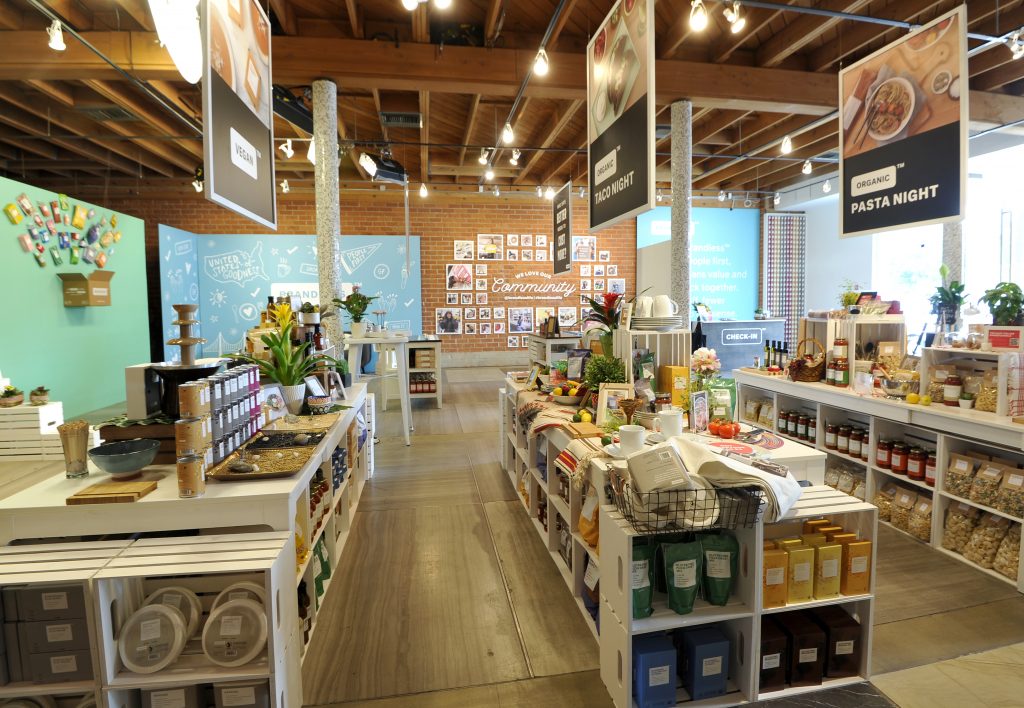
The Brandless team selected a bright storefront space on Melrose Avenue that reflected the clean, modern aesthetic of the brand.
Large windows and an open interior layout helped create an inviting environment for demonstrations, conversations, and gatherings.
The layout allowed the team to create multiple zones within the space, including:
- Areas for product tastings and demonstrations
- Seating zones for talks and workshops
- Relaxed gathering spaces designed for conversation and community
The team even incorporated lounge areas with beanbags and informal seating to encourage guests to stay longer and interact with one another.
Pop-up venues with flexible layouts are particularly valuable for brands planning a mix of retail and event programming.
The Impact of the Pop-Up Experience
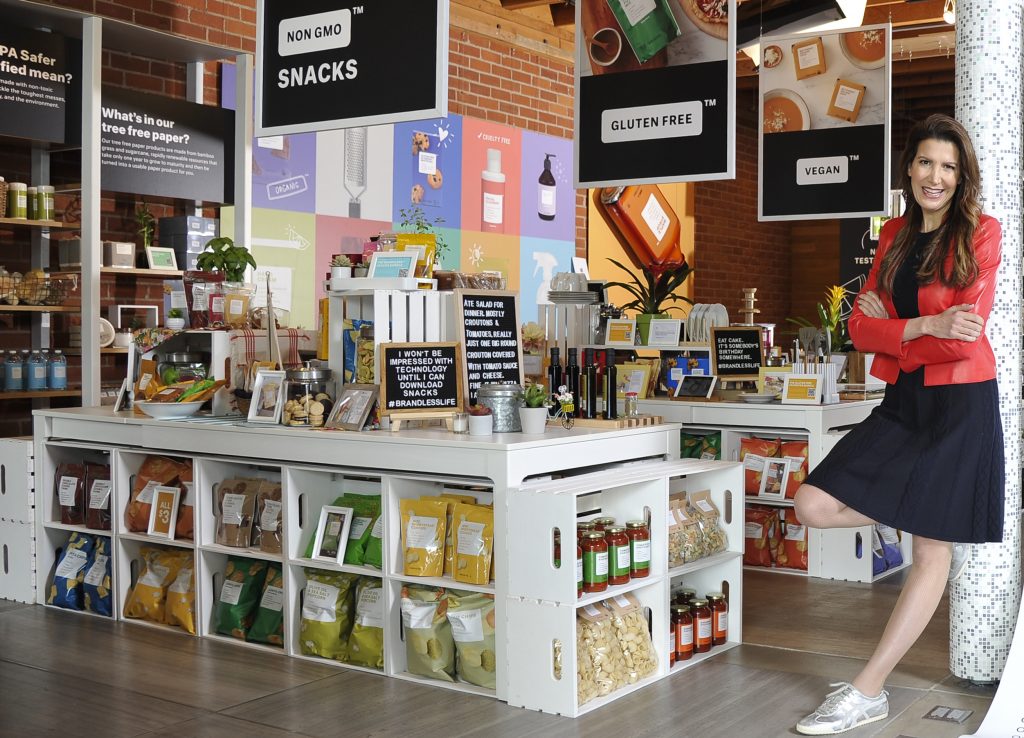
Both physical and digital engagement exceeded expectations during the activation.
The store attracted strong foot traffic from the surrounding neighborhood, while the events helped introduce the brand to new audiences.
At the same time, the pop-up generated significant online activity. Social media posts and livestreams allowed people outside Los Angeles to participate virtually, expanding the reach of the experience.
This hybrid approach demonstrates how pop-up stores can strengthen both offline and online engagement.
Why Pop-Ups Work for E-Commerce Brands
For direct-to-consumer brands, pop-up retail offers several advantages:
- It allows customers to experience products physically before purchasing
- It creates opportunities for direct customer feedback
- It helps brands build deeper relationships with their communities
- It generates content and social media engagement
Many digital brands use pop-up stores as a first step into physical retail, testing markets before committing to permanent locations.
Brands interested in exploring this strategy can read this guide on bringing an e-commerce brand to life with pop-up stores.
Launching Your Own Pop-Up Retail Experience
Pop-up stores continue to be a popular strategy for e-commerce companies looking to expand beyond digital channels. Whether focused on product discovery, community engagement, or brand storytelling, temporary retail spaces offer a flexible way to test new ideas.
Companies planning a similar activation can explore pop-up retail spaces in Los Angeles or browse retail spaces for rent to find locations suited for short-term brand experiences.

- How Knotel Used a Pop-Up Showroom in New York to Demonstrate Its Agile Office Concept - March 11, 2026
- How Amnesty International Used a Pop-Up Store in Amsterdam to Launch the “World Peace” Campaign - March 10, 2026
- How Brands Use Pop-Up Spaces During Art Basel Miami to Reach Global Audiences - March 10, 2026
Related posts:
 Inside Diesel’s Knockoff Pop-Up Shop in SoHo
 Dundas London Launches a Summer Pop-Up Store in Chelsea
 How TCHO Uses Pop-Up Shops to Bring Its Chocolate “Flavor Labs” to Customers and Power Growth
 How Co-Star Austin Uses Pop-Up Retail to Support Emerging Brands
 How Dr. Hauschka Celebrated Its 50th Anniversary With a Pop-Up Shop in London