We use cookies and similar technologies to track your activity and improve your experience.
Sort by
Recommended
See on map

Event Space
∙
New York
350 sq ft
from $2,400 per day
5(1)
See on map
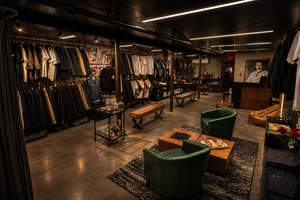
Event Space
∙
New York
1,000 sq ft
from $3,000 per day
See on map

Boutique / Shop
∙
New York
400 sq ft
from $960 per day
5(1)
See on map
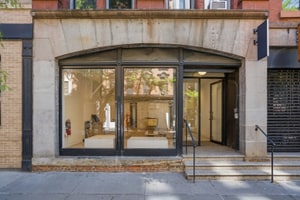
Boutique / Shop
∙
New York
3,800 sq ft
from $14,400 per day
See on map

Pop-Up Gallery and Exhibition Space on Mott Street, New York
Mott Street is Nolita's most closely watched retail street for emerging brands and one of the strongest streets in lower Manhattan for a temporary art show. The run of very small, independent shopfronts draws a style-led, international crowd that includes buyers and press as much as casual shoppers, and that audience crosses over directly into the gallery world. A pop-up gallery here puts work in front of people already walking the street to discover what is new.
The street runs through the heart of Nolita, and the old cathedral on Mott and Prince occupies a full block behind a brick wall, breaking the retail frontage in the middle of the district. That gap gives each side of the street its own character: the stretch north of Prince reads as Nolita proper, while the stretch south shades toward a different mix of shops and restaurants.
What makes Mott Street suit an exhibition
The units on Mott Street are genuinely small. Most are a single narrow room with a small window and almost no storage, in low tenement buildings with apartments above. That scale is a constraint for stock-heavy retail, but it works in favor of a tightly curated exhibition: a focused body of work fills the room without competing for attention, and the intimate format suits the kind of slow looking that art needs.
Wall space matters more than square footage for most exhibitions, and the narrow proportions of a typical Mott Street unit put continuous hanging surface on both long walls. Ceilings in these tenement ground floors sit lower than in the loft buildings of SoHo further west, which favors works at eye level over large-scale installation. Natural light is limited by the small frontage, so most shows here rely on supplementary lighting.
The audience and the rhythm of the street
Trade builds through the afternoon and peaks at weekends. The crowd skews young, heavily international and style-conscious. Mornings are quiet enough that opening early rarely earns its cost, and the district empties in the evening as the crowd moves east. For an exhibition opening, that means a late-afternoon private view catches the street at its busiest, and weekend hours are where the walk-in volume sits.
Mott Street through Nolita is where a young brand takes its first New York space, and the district's whole retail economy is built around that cycle of short tenancies, high turnover and an audience tuned to discovery. A pop-up gallery fits that pattern exactly: the format is temporary, the audience expects rotation, and the street rewards what is new.
Mott Street in context
Elizabeth Street runs parallel one block east and is Nolita's quietest, most design-led retail street, with very small frontages occupied by independent labels. Mulberry Street runs parallel to the west through what remains of Little Italy. Together, the three streets hold the densest run of small independent shopfronts in the area.
Prince Street and Spring Street cross Mott Street east to west, continuing from SoHo. The character changes as they cross Lafayette: the units shrink, the brands get smaller, and the crowd thins. Lafayette Street, covered in the Nolita, NoHo and the Bowery guide itself forms the western boundary between SoHo and Nolita, wider and busier, holding larger units and more established names than Mott Street proper.
For gallery and exhibition space elsewhere in the city, Chelsea and the Upper East Side carry established gallery districts. 10th Avenue in Chelsea is the heart of the West Chelsea gallery corridor. Mott Street is a different proposition: smaller, more intimate and geared toward discovery rather than the established circuit.
How to keep costs down
Rates on Mott Street vary by the exact position on the block, the size of the unit, the floor and the time of year. Several levers are in the renter's hands:
-
Timing. Late summer, particularly August, is the quietest month for Manhattan. Demand peaks around the fashion weeks in February and September and through the run-up to the December holidays.
-
Duration. A longer booking usually earns a better per-day rate than a single weekend does.
-
Fit-out. A raw space costs less than a finished one. If the exhibition brings its own walls, lighting and signage, the raw unit is the better buy.
-
Floor. Ground floor with a street-facing window commands the most. A first-floor space in the same building asks less, though visibility from the street drops.
-
Flexibility. Being open on dates, or able to take a space at short notice when a host has a gap, is the single biggest lever a renter controls.
Getting there
Nolita is served by the Bowery, Prince Street and Spring Street subway stations. The area is well connected and walkable from most of lower Manhattan. The busiest station nearby is Prince Street, which sits well outside Manhattan's fifty busiest, so footfall here is local and intentional rather than through-traffic, which suits a destination exhibition.
Below Houston Street, the grid breaks down into the older street pattern of SoHo and Chinatown. Browse Mott Street listings for current availability.
FAQ
What kind of exhibition works best in a Mott Street space?
The units are small and intimate, often a single narrow room. A tightly curated show, a solo artist presentation, or a small group exhibition fills the space well. Large-scale installations that need height or open floor area suit the loft buildings of SoHo or Chelsea better.
When is the best time to book a pop-up gallery on Mott Street?
Demand peaks around New York Fashion Week in February and September, and again in the run-up to the December holidays. The quietest stretch is late summer, especially August, when rates are most negotiable and the street is at its calmest.
How does Mott Street compare to Chelsea for a pop-up gallery?
Chelsea is the established gallery district with larger spaces, higher ceilings and an audience of collectors and dealers. Mott Street is smaller, more affordable and geared toward discovery. An emerging artist or a brand running a first exhibition often finds the intimate scale and the walk-in crowd on Mott Street a better fit than a larger Chelsea space.
Can I use an exhibition space on Mott Street for a brand activation or product launch?
Yes. The same small street-level units that suit art shows work for a compact product launch or press preview. The audience on the street is already attuned to new openings, and the format suits a short, high-impact activation. Deposits, insurance and other terms are agreed directly with the space owner and vary by listing.
How far ahead should I book exhibition space on Mott Street?
It depends on the season. During peak periods, spaces book well in advance. In quieter months, shorter lead times are realistic. Being flexible on exact dates gives you the widest choice and the strongest negotiating position.
For a broader view of art gallery and exhibition space for rent across all cities, or to explore the rest of Nolita, start from the neighborhood page and filter by your dates.


