Why Barcelona for Events
Barcelona draws event planners for its scale, cultural calendar and accessibility. The city hosts major annual events, Sónar in June, Mobile World Congress in the spring, Barcelona Design Week in September, that create peak demand periods. Outside those windows, rates soften and availability widens. A compact grid of neighborhoods means attendees can move between districts in under twenty minutes by metro or on foot, which simplifies logistics for multi-venue activations or series events.
The city's Mediterranean climate allows outdoor terraces and open-air activations through most of the year, and the Catalan cultural calendar, Sant Jordi book fair in April, La Mercè festival in September, anchors spontaneous foot traffic without requiring paid promotion.
Understanding 'Cheap' in Barcelona
Affordability is relative to venue type and district. Central Barcelona's Eixample grid offers mid-sized lofts with high ceilings and flexible layouts, typically at lower rates than Paris or Milan equivalents because supply is larger. The Gothic Quarter and El Born carry premium pricing for their medieval character and cultural draw, but rent far less than equivalent London or New York space. Poblenou's converted industrial campuses offer the largest floor plates at the lowest rates, ideal for production, installation or large-scale events where you need height and vehicle access.
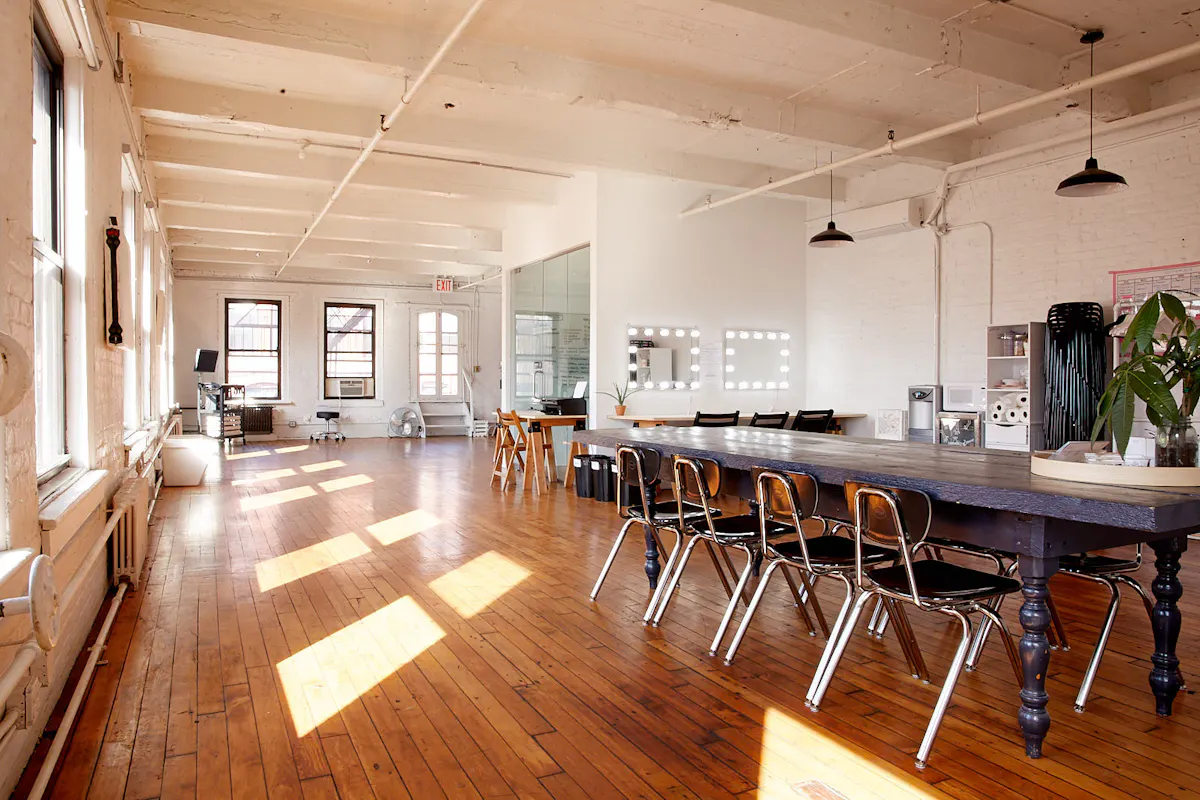
Budget event centers here prioritize location and flexibility over finish. Many are raw lofts, converted workshops or artist studios with polished concrete, painted brick or simply exposed structure. That aesthetic suits product launches, art events and creative activations far more than corporate banquets, and the rates reflect it.
Neighborhoods and Their Event Character
The Eixample Dreta (right-hand grid above Plaça de Catalunya) centers on Passeig de Gràcia and Rambla de Catalunya, the city's two principal boulevards. Mid-sized ground floors here suit corporate events, product launches and conferences seeking a business-district setting. The grid's geometry creates eight-sided crossings at every block, and corner units command visibility unmatched elsewhere.
The Barri Gòtic (Gothic Quarter) and El Born hold the city's smallest and most characterful venues: narrow medieval streets, stone vaults, small squares opening off lanes. These districts anchor Barcelona's design and cultural reputation and draw creative buyers and press. Rents are mid-range and the audience is international and discerning.
El Raval, west of La Rambla, is the city's most ethnically mixed central district and home to the contemporary art museum and a wide modern rambla cut through the older street pattern. The square in front of the art museum is one of Europe's best-known gathering spaces, which gives surrounding streets a young creative crowd. Independent retail and streetwear retail line the main commercial streets, so an event here reads younger and more experimental.
Sant Antoni, southwest of the Eixample, has become Barcelona's most active district for independent food and retail openings. The restored nineteenth-century market hall anchors the district with food market, clothing market and Sunday traders. Rents are below El Born with stronger local resident catchment, making it ideal for supper clubs, food events and brand launches targeting the city's own population rather than tourists.
Poblenou, in the east, was Barcelona's industrial heart and is now a creative and technology district. Surviving factory complexes have been converted into creative campuses and event venues, often gated compounds around courtyards invisible from the street. These are the city's largest and cheapest usable floor plates, with height, vehicle access and courtyard space. For a production, installation or large temporary event, Poblenou is the default answer. Retail here is almost entirely inside an enclosed shopping center let on scheme terms, so street-front activation is limited.
Event Types and Seasonality
Product launches and pop-ups cluster around the spring and autumn calendar peaks: Mobile World Congress in late winter, Sónar and Barcelona Design Week in early summer, La Mercè and Primavera Sound around September. August empties the city of residents, though visitor numbers stay high, so the guest composition shifts dramatically. A neighborhood format will find its customers gone; a central tourist-facing one will not.
Private dinners and intimate gatherings work year-round in El Born and Sant Antoni, where the evening economy of bars and restaurants keeps streets busy late. The Christmas trading period extends through early January (when children receive gifts in Spain), so holiday events book strong and run later than in English-speaking markets.
Conferences and corporate events favor the Eixample grid and Montjuïc's exhibition halls, where scale, parking, and hotel proximity align with business-travel logistics.
Getting Your Guests There
Barcelona has a dense metro network reaching every district in this guide. Most journeys between central neighborhoods take under twenty minutes. The city is compact enough, hemmed between the sea and the Collserola hills, that customers can reasonably visit several districts in one trip. The airport sits about fifteen kilometers southwest with a metro line and dedicated bus to the center, so it is simpler to reach than Milan's or New York's.
Loading in the Gothic Quarter and El Born is genuinely difficult: streets are medieval, many are pedestrian, and access is restricted to timed windows. Plan fit-outs for early morning, small vehicles and carry-in for larger items.
Key Operational Details
Catalan consumer law requires businesses open to the public to serve customers in either official language. Permanent signage and displayed price lists must be at least in Catalan; bilingual or trilingual presentation is normal and supported by public translation resources.
Sunday and holiday trading is restricted in Catalonia, except inside declared tourist zones where opening is unrestricted. Much of central Barcelona sits in such a zone; much of the rest does not. Confirm your venue's trading rights before finalizing dates.
The city operates a low emission zone covering much of the ring road on weekdays, which excludes the most polluting vehicles. Fit-out trucks and deliveries need their emissions class checked before booking.
Spain liberalized sale periods in 2012, so retailers and event planners may discount whenever they choose. The traditional rebajas dates in January and July are convention rather than law.
FAQ
What counts as 'cheap' for an event center in Barcelona?
Affordability varies by district and floor area. The Eixample and Sant Antoni offer mid-sized lofts at rates below Paris or Milan equivalents. Poblenou's converted industrial spaces carry the lowest rates per square meter because they offer the largest floor plates. Gothic Quarter and El Born premium Barcelona's cultural reputation, so they rent for more, but still below equivalent London or New York space. Budget typically means raw or minimally finished: polished concrete, exposed brick, artist studios. That aesthetic suits product launches, art and creative events far better than black-tie banquets.
What event types work best in Barcelona?
Product launches, pop-ups, art exhibitions, and private dinners align perfectly with Barcelona's independent retail and design reputation. Corporate conferences favor the Eixample grid and Montjuïc's exhibition halls. The city's evening economy of bars and restaurants supports late-night events and supper clubs, especially in El Born and Sant Antoni. Creative activations, installations and large temporary events belong in Poblenou's industrial spaces, which offer height, vehicle access and courtyard area unavailable elsewhere in the center.
When is the best time to book a cheap event center in Barcelona?
Demand peaks around Mobile World Congress in late winter and spring, Sónar and Barcelona Design Week in early summer, and the run-up to Christmas. August empties the city of residents, so rents soften and availability widens if your event targets tourists rather than locals. Outside the major congress and festival calendar, rates are lower and choice is wider. Book several months ahead during peak periods; off-season bookings can often be made weeks in advance.
Which neighborhoods offer the best value for events?
Poblenou delivers the most space for the least cost because of its scale and industrial heritage. Sant Antoni balances low rents with strong local foot traffic and an independent retail and food reputation. The Eixample grid offers mid-market rates with business-district connectivity. The Gothic Quarter and El Born are premium for their cultural draw but still cheaper than equivalent London or New York venues of comparable character. Your choice depends on your guest composition: residents and locals, tourists, business travelers, or creative press.
Do event centers in Barcelona offer seasonal discounts?
Rates vary by season and event calendar. Spring and early summer peak around major congresses and festivals, pushing rates higher. August and winter off-seasons typically soften pricing. Rates are also sensitive to day-of-week: weekday corporate events often book at lower rates than weekend private events. Negotiate directly with space owners through the Storefront platform; terms are set individually and not standardized.
Why choose Storefront for event centers in Barcelona?
Storefront's Barcelona selection is curated across multiple neighborhoods and price points, from raw lofts in Poblenou to characterful medieval spaces in El Born. Rent by the day, week, or longer. You communicate directly with space owners to agree rates, deposit, cancellation and cleaning terms, no middleman markup. Listings are qualified before they go live: the address is real, photographs are present, and the owner is contactable. Browse by neighborhood, confirm logistics with your host, and book on the platform.
Explore more: Event Space Rental · Poblenou