Why Ground Level Matters for Chicago Retail
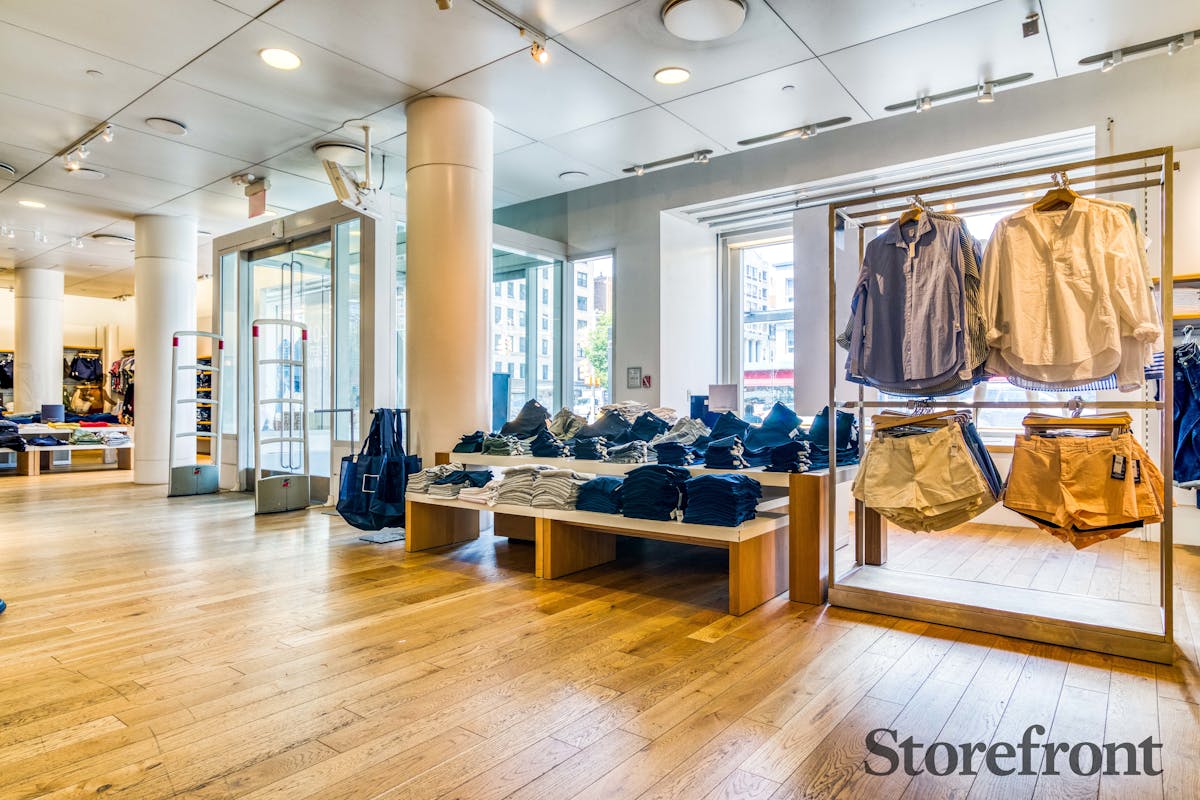
Ground floor retail gives brands what no upper-level space can: direct street frontage, natural foot traffic, and the ability to stop a passerby mid-stride. In a city where commercial life plays out along long arterial corridors rather than in a single shopping core, street level access is the difference between a space that draws walk-in trade and one that requires deliberate navigation.
Chicago's grid makes this especially clear. Addresses count outward from State and Madison, and the shops that perform sit on the corridors where pedestrians already move: North Milwaukee, Armitage, Randolph, Halsted. A ground floor unit with a window facing that foot traffic converts differently from anything above it. For a pop-up shop, a seasonal retail activation, or a flagship launch, that conversion is the whole point.
Chicago Neighborhoods for Ground Floor Retail
Ground level retail varies significantly across Chicago's districts. The sourced facts below describe what each area actually offers.
-
River North sits a five-minute walk from both the Loop and the Magnificent Mile, making it the densest concentration of restaurants, bars, hotels and design showrooms in Chicago. Ground floor units here trade to hotel guests, conventioneers and visitors rather than a local residential customer.
-
Logan Square is built around Milwaukee Avenue, a diagonal corridor with a near-continuous run of independent retail, bars, record shops and food from the square toward Wicker Park. Ground floor spaces here reach an established neighborhood customer on one of the strongest independent corridors in the United States.
-
Lincoln Park runs its retail across several distinct corridors. Armitage Avenue between Halsted and Racine is Lincoln Park's premium shopping street: restored Victorian storefronts under the Brown Line, carrying apparel, beauty, children's wear, jewelry and homeware. It has a long history of short-term and seasonal occupation, which makes it unusually accessible for brands testing Chicago.
-
The West Loop and Fulton Market split into two commercially distinct zones. The northern strip around Fulton and Lake is luxury-facing; the area around Randolph, Madison and Monroe mixes office, residential and food. Ground floor retail on Randolph has set record rents and attracted national operators, so competition for street-level units is real.
-
The South Loop holds the Field Museum, the Shedd Aquarium and the Adler Planetarium on the lakefront, drawing several million visitors a year. The gap between that visitor volume and the retail offer is the widest in central Chicago, which makes ground floor units here an opportunity for brands willing to serve that flow.
Typical Use Cases for Street Level Retail in Chicago
Street level retail in Chicago suits a range of commercial formats.
-
Pop-up shops benefit most from a ground floor address: window display, impulse entry and same-day foot traffic all require street-level access.
-
Flagship store launches use ground floor Chicago space to build brand presence in a new market. Chicago functions as a US test market because it is demographically broad, geographically central and cheaper to operate in than the coasts.
-
Seasonal retail runs well here from late spring through summer and through the holiday window that opens when Michigan Avenue lights up in mid-November and runs to Christmas Eve.
-
Brand activations and experiential retail need the spontaneous audience that only a street-facing space delivers.
-
Independent boutiques testing a new corridor often take short-term ground floor space before committing to a longer lease.
Explore Pop-Up Store Rental for an overview of the format, or browse retail space in Chicago for the full city inventory. For a neighborhood-level view, River North is a strong starting point for brands wanting central visibility.
For context on the value of a Chicago pop-up specifically, Pop-Up Shops in Chicago: The Complete Guide to Opening a Temporary Retail Space covers the investment case in detail.
Requirements depend on the space and the local authority, and are worth confirming before booking.
Chicago is the only major US city with a license class written specifically for pop-up retail. A brand testing a ground floor space for a long weekend is looking at a twenty-five dollar license rather than a negotiation.
One detail that matters: the license attaches to the operator, not to the address. A single license covers the holder across different commercial locations for its whole term. A brand can run a Logan Square weekend and a West Loop fortnight on the same paperwork. The one constraint is that a user may not operate at the same location for more than ninety days in a year.
For general retail activity at a ground floor commercial space, the host building owner does not need a separate host license provided the operator holds the right paperwork. That keeps the process straightforward for both sides.
Seasonality: When Ground Floor Space Performs Best
Chicago's year is divided sharply by climate, and ground floor retail performance follows it.
Summer, from late May to early September, is the strongest window for street-level space. Chicago moves outdoors completely: the neighborhood corridors fill, evenings run long, and a ground floor unit with an open front trades at a multiple of its winter rate.
The holiday window from mid-November to Christmas Eve is the downtown peak. The lights along Michigan Avenue and the department store displays pull visitor traffic that nothing else in the Chicago calendar matches. Ground floor retail with street frontage captures that flow directly.
Winter from late November to March is the sharpest constraint. Sustained temperatures below freezing and wind off Lake Michigan collapse sidewalk footfall. Ground floor spaces trade through it only with an interior proposition strong enough to justify opening a door. A pop-up planned for January needs to earn its entry.
The two shoulder periods, April into early June and late September into November, are reliable trading windows. The autumn shoulder brings the best weather of the Chicago year and the run-in to the holidays.
FAQ
What is ground level retail space?
Ground level retail space is a commercial unit on the street floor of a building, with direct access from the pavement and typically a window or frontage facing pedestrian traffic. In Chicago, where commercial activity concentrates on long arterial corridors, a ground floor address with street frontage is the standard format for any retail business that depends on passing trade.
Why is ground floor retail better for visibility in Chicago?
Chicago's commercial life plays out on named corridors rather than in a single center. A ground floor unit on one of those corridors sits directly in the flow of pedestrians already moving along the street. There is no staircase, no elevator and no deliberate navigation required: the space is visible from outside and enterable on impulse, which is the basis of walk-in trade.
Which Chicago neighborhoods have the most ground floor retail options?
River North, Logan Square, Lincoln Park (particularly Armitage Avenue), the West Loop and Fulton Market corridor, and the South Loop all carry significant ground floor retail inventory. Each serves a distinct customer and a distinct use case, so the right neighborhood depends on the brand's target audience and the nature of the activation.
Can I book a ground level retail space in Chicago short-term?
Yes. Many Chicago hosts are familiar with the format and Armitage Avenue in particular has a long history of seasonal and short-term brand occupation.
What use cases suit street level retail in Chicago?
Pop-up shops, flagship launches, seasonal retail, brand activations and independent boutiques all benefit from a street level address. The combination of direct visibility, walk-in access and Chicago's broad, dense pedestrian corridors makes ground floor space the default choice for any retail format that depends on spontaneous customer entry rather than planned visits.