


Why Ground Floor Positioning Matters
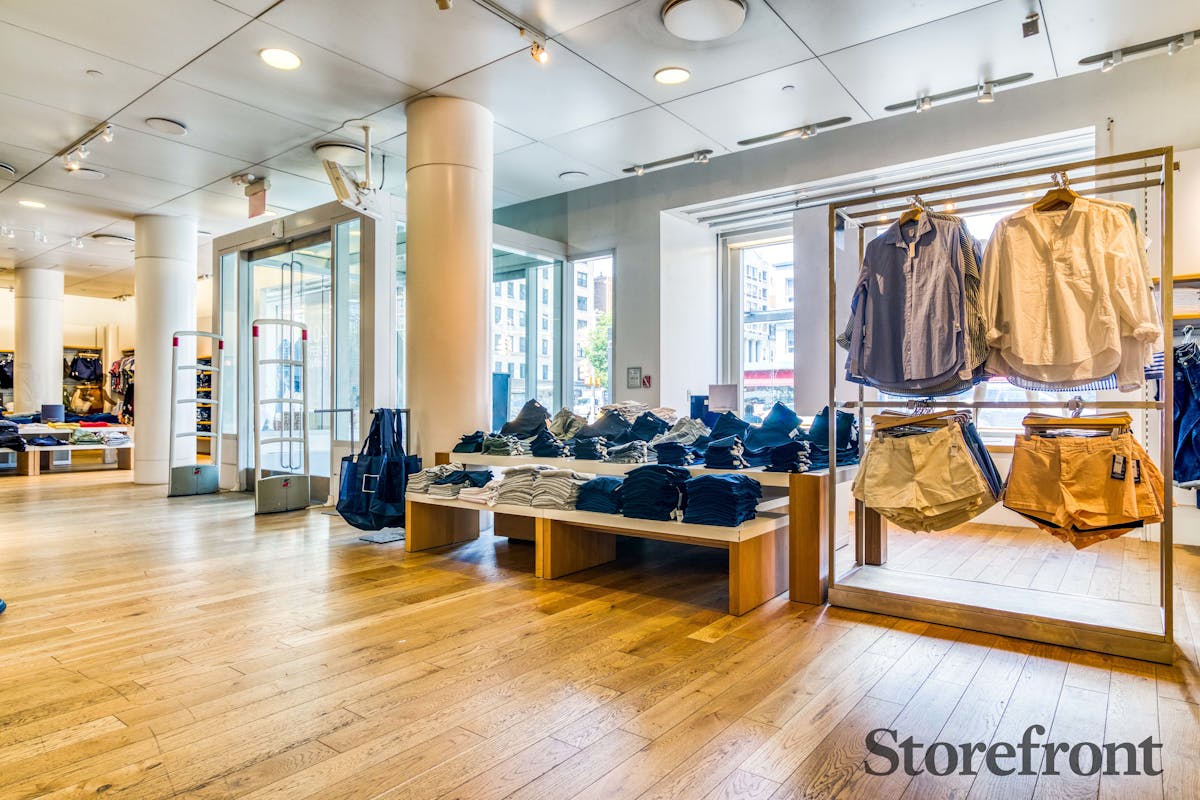
Ground level retail is commercial space that sits at street level, directly accessible from the sidewalk without stairs, escalators, or elevators. Pedestrians see your products and branding without any navigational effort. That direct street exposure matters most for pop-up shops, sample sales, product launches, and brand activations where walk-in discovery drives volume.
A basement or upper-floor space requires a deliberate decision to visit. A ground floor unit on a busy block earns traffic from people who had no prior intention of stopping.
Ground Floor Retail vs. Other Short-Term Formats
New York also offers shared pop-up collectives, food hall stalls, kiosk positions in malls, and multi-brand market formats. Each suits a different objective.
A standalone ground floor shop gives you full control over visual merchandising, hours, and brand environment. There is no shared aesthetic, no neighboring brand to manage around, and no revenue split with a collective operator. For brands running a flagship experience, a sample sale, or a product launch that needs a distinct spatial identity, a standalone street level unit is the appropriate format.
Kiosk and shared-market formats suit lower-investment tests or food and accessories concepts that benefit from built-in footfall from a host venue. They trade control for convenience. If your activation requires a dedicated room, a branded window, or a changing area, a ground floor shop is the right starting point.
NYC Neighborhoods by Renter Profile and Foot Traffic Pattern
New York's ground level retail markets differ significantly by audience type, weekly foot traffic rhythm, and the kind of activation they suit.
SoHo is the highest-demand short-term retail district in New York. Its cast-iron loft buildings deliver wide ground-floor frontage and high ceilings, which is why it carries more flagship and pop-up activity than any other Manhattan neighborhood. The audience comes for shopping rather than to pass through, which means conversion rates here are strong for fashion, beauty, and lifestyle brands. Demand surges in October and November ahead of the holiday season, and ground floor inventory at the best positions moves quickly. Brands planning a Q4 activation in SoHo should allow meaningful lead time. Find available retail space in New York in SoHo through the dedicated submarket page.
Nolita sits immediately east of SoHo and reads as its boutique-scale counterpart. Shopfronts are narrower, blocks are shorter, and the audience skews toward independent and emerging labels. It suits beauty brands, food concepts, and fashion labels that want street level visibility with a more intimate feel than SoHo's wider corridors.
The Lower East Side has the highest concentration of small independent storefronts in downtown Manhattan. Evening and weekend footfall is strong, fed by a dense bar and music scene. It is where new labels tend to test New York at street level, and it suits limited-edition drops, brand collaborations, and food pop-ups that benefit from a younger, discovery-minded crowd. Foot traffic is strongly weekend-weighted, with Friday through Sunday evenings the peak window.
Chelsea is the center of the New York contemporary gallery scene. Ground floor spaces there tend to be large, column-free, and suited to exhibitions, showrooms, and brand activations rather than conventional shop formats. The audience is art-literate and engaged. Showroom activity around the fashion weeks in February and September concentrates here alongside SoHo and the Garment District.
The Flatiron District carries a heavy weekday office population anchored around Madison Square Park. Foot traffic is weekday-weighted, which suits B2B showrooms, trade appointments, and brand activations that target a professional daytime audience rather than a weekend shopper.
Greenwich Village combines a large student population with a low-rise street grid of small independent shops. Footfall is steady across the week rather than concentrated on weekends, making it one of the more consistent short-term retail markets in the city.
The East Village has a dense bar and restaurant economy and a long association with independent music and vintage retail. Ground floor units are typically small. It suits independent brands, vintage concepts, and food activations with a late-evening audience.
Foot Traffic Seasonality and Booking Windows
Demand for ground floor retail in New York peaks around the fashion weeks in February and September, through the run-up to December, and again in the spring sample-sale season. Late summer is the quietest stretch, when much of the industry leaves the city and August foot traffic in Manhattan's business and shopping districts thins substantially.
Halloween on 31 October drives a distinct wave of short-term store openings through September and October. Thanksgiving and the Black Friday weekend that follows open the heaviest trading period of the year. Valentine's Day on 14 February is one of the few points of lift in the January and February trough.
Weekend foot traffic in downtown shopping districts is typically higher than midweek. New York places no restriction on Sunday retail trading, so a ground floor space in Manhattan can plan on a full seven-day week.
For timing, the sample sale is a New York institution and one of the largest single uses of short-term retail space in the city. Brands take raw or temporary ground floor space for a few days to sell through stock, most often in SoHo, Chelsea, and the Garment District.
Operational Considerations for Ground Floor Retail in New York
A few practical points shape how ground floor retail works in the city.
Certificate of occupancy. The binding document on any New York building states what each floor may lawfully be used for and how many people it may hold. A space marketed as retail may carry a certificate that says otherwise. Reading it is the first diligence step on any Manhattan space.
ADA access. A great many Manhattan storefronts have a stepped entrance or a below-grade level. Ground level does not always mean step-free. How the space is entered should be established before committing to it, since a store open to the public is a place of public accommodation under the Americans with Disabilities Act.
Signage and facade changes. Large parts of Manhattan sit inside designated historic districts. Most exterior changes to a facade, including installing or replacing signs and lighting, require review by the Landmarks Preservation Commission. A brand planning external branding on a landmarked storefront needs to allow for that approval.
Assembly and events. Once a space gathers a crowd rather than shoppers, it becomes a place of assembly and may need its own certificate, with the Fire Department setting occupancy and egress conditions. A launch event in a shop that trades as retail by day can require a separate approval for the evening.
Deliveries and load-in. Commercial loading is restricted by posted hours on most Manhattan blocks, and commercial vehicles must stay on designated truck routes except for the final approach to a delivery. Combined with a scarcity of loading docks, deliveries are the most commonly underestimated logistical challenge in a Manhattan ground floor fit-out.
Congestion toll. Since January 2025, driving into Manhattan south of and including 60th Street incurs a congestion toll. Almost every downtown retail district covered here sits inside that zone, so fit-out vans and delivery vehicles are tolled trips.
For a broader look at short-term retail formats and what to look for in a space, the Pop Up Store Rental hub covers formats, timelines, and site selection.
If budget is a constraint, cheap retail space in New York surfaces lower-cost options across the city, including ground floor inventory at accessible price points.
For a broader search across space types including Storefront With Apartment combinations, the main retail space in New York search covers the full inventory.
FAQ
What is ground level retail?
Ground level retail is commercial space located at street level, directly accessible from the sidewalk. It sits on the ground floor of a building with a frontage that opens onto a public street. This position gives a space direct pedestrian visibility without requiring visitors to navigate stairs or elevators.
What is the difference between ground level, ground floor, and street level retail?
The three terms refer to the same thing. Ground floor retail, ground level retail, and street level retail all describe commercial space situated at pavement height on the first floor of a building. All three appear in New York property listings and describe the same practical advantage: direct sidewalk access with no change in elevation from the street.
Which New York neighborhoods have the strongest ground floor retail availability?
SoHo leads for foot traffic volume and brand visibility, with wide frontages and a shopping-focused audience. Nolita suits smaller-format and emerging labels. The Lower East Side is strongest on weekends and evenings. Chelsea suits showrooms and gallery-format activations. The Flatiron District and Greenwich Village carry reliable weekday populations. Each neighborhood attracts a different shopper, so matching the area to your audience matters as much as the space itself.
When should I book a ground floor retail space in New York?
Demand peaks around the February and September fashion weeks, through October and November ahead of the holidays, and during the spring sample-sale season. August is the quietest month. For SoHo during Q4, ground floor inventory at desirable positions moves early. For lower-demand periods or outer neighborhoods, lead times are shorter, but confirming availability well in advance of any fixed activation date is always the safer approach.
What permits do I need for a ground floor retail pop-up in New York?
The certificate of occupancy governs what the space may lawfully be used for and how many people it may hold. Exterior signage in a historic district requires Landmarks Preservation Commission approval. Events that gather a crowd may need an assembly permit separate from the retail use. Serving food requires a temporary food service establishment permit. Alcohol service runs through the New York State Liquor Authority on its own timetable. Each permit type has its own lead time, so confirming requirements early is the practical first step.
Can I customize a ground floor retail space for a short-term rental?
Most short-term ground floor retail spaces allow renters to dress, brand, and configure the space within the landlord's house rules. Standard practice includes temporary fixtures, branded signage, display units, and visual merchandising. Terms vary by listing. Confirm fit-out permissions, load-in windows, and any restrictions on facade changes with the host before booking.


