
Fashion brands increasingly use pop-up stores not as short-term sales tactics, but as strategic tools to test markets, launch collections, experiment with retail formats and reconnect with audiences.
For a broader strategic overview, see our guide to how fashion brands use pop-up stores.
For cross-sector comparisons, explore pop-up shop strategies by industry.
Below are five examples that illustrate different strategic approaches..
FILA: Reintroducing Heritage in SoHo, New York
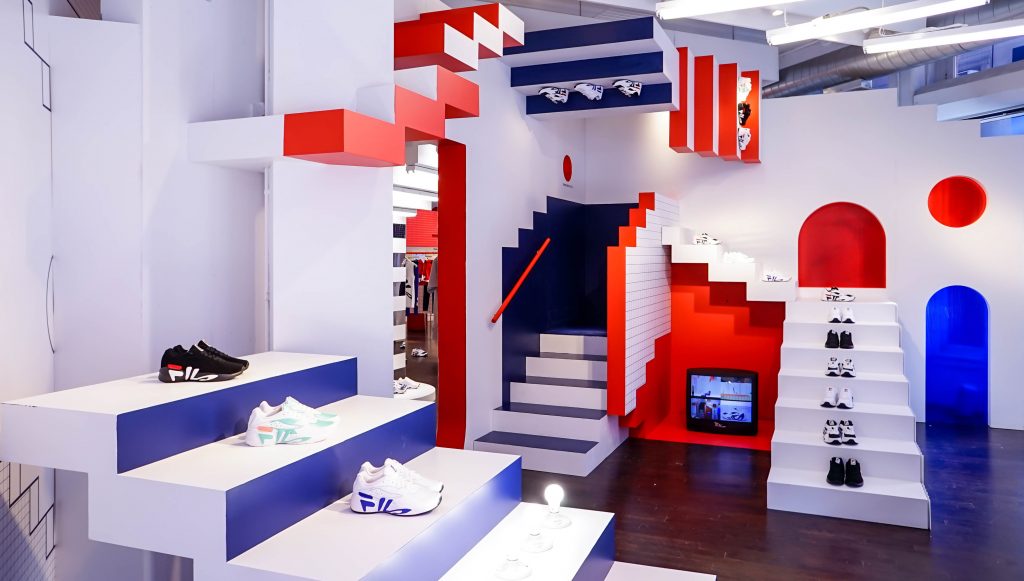
FILA returned to physical retail in New York City through a dedicated heritage pop-up in SoHo.
Rather than committing to a permanent flagship, the brand used a temporary activation to relaunch its Mindblower sneaker and reconnect with both long-time fans and younger audiences. The immersive store environment incorporated warped visual elements and collaborative limited-edition displays.
This activation demonstrates how established brands can:
- Reintroduce archival products
- Create immersive storytelling environments
- Test demand in competitive markets like NYC
- Drive cultural relevance without long-term risk
Read the full case study: Inside FILA’s Heritage Pop-Up Store in SoHo, NYC
Rails: Entering the Paris Market Through Le Marais
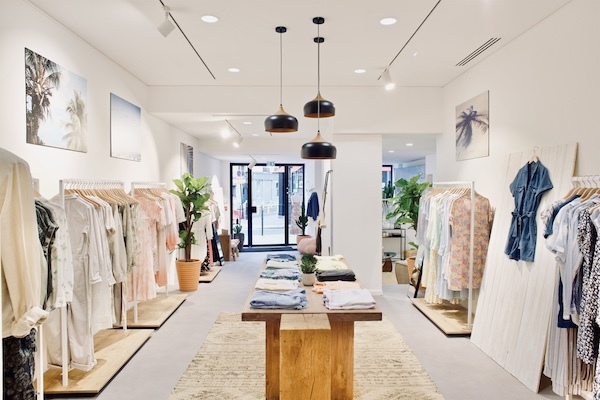
Los Angeles-based brand Rails used a pop-up store in Le Marais to test its first dedicated European retail footprint.
The temporary space allowed the brand to evaluate customer response, refine positioning and introduce its collections to Parisian consumers before committing to a permanent store. Located on Rue de Poitou, the activation aligned the brand with one of Paris’s most influential fashion neighborhoods.
This case highlights how pop-ups function as low-risk international expansion tools.
Full case study: US retailer launches European expansion with pop-up in Paris
7 For All Mankind: Testing and Repositioning in Paris
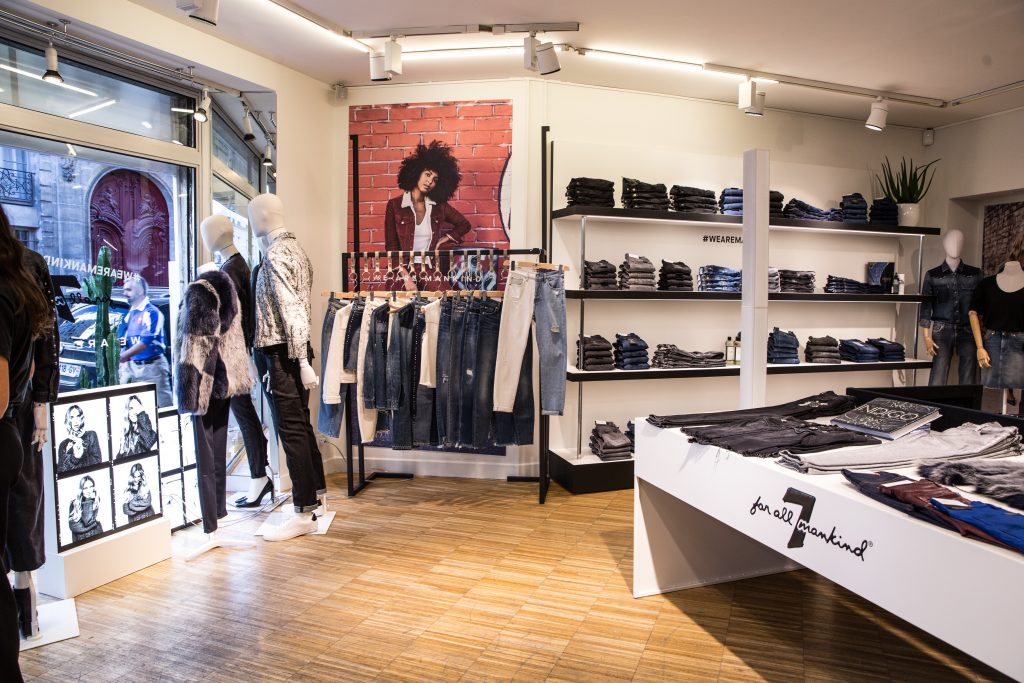
Premium denim label 7 For All Mankind opened a temporary store in Le Marais to test the French market while repositioning itself within the premium denim segment.
The pop-up allowed the brand to:
Build awareness among Parisian consumers
Assess neighborhood performance
Reach high-end clientele
Understand local real estate dynamics before long-term investment
Short-term retail provided flexibility while the brand evaluated its next steps.
Read more:
7 For All Mankind from Los Angeles to Paris
Nike: Leveraging Cultural Timing and Digital Integration
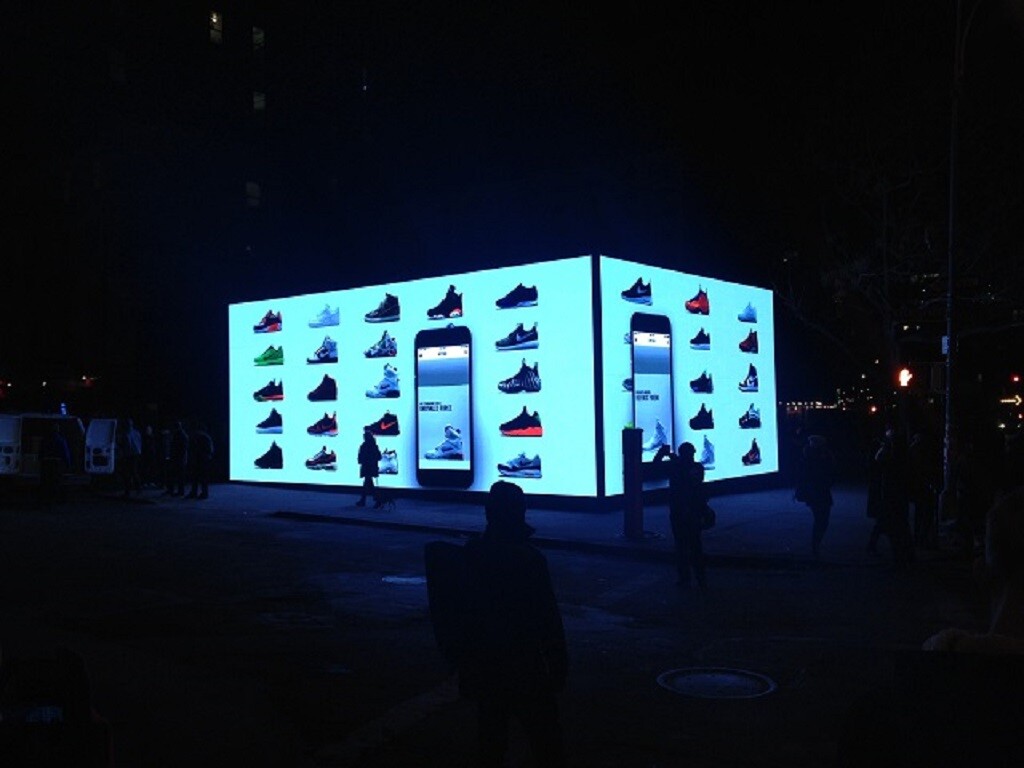
Nike used a pop-up activation in New York during NBA All-Star Weekend to promote its SNKRS app and customization features.
The space, designed like a giant shoebox, aligned with a major cultural event and allowed customers to engage with digital tools in a physical environment. By tying the activation to a high-profile moment, Nike maximized foot traffic and brand visibility.
This example shows how pop-ups can amplify product launches when timed strategically.
Zara: Testing Hybrid Retail Before Scaling
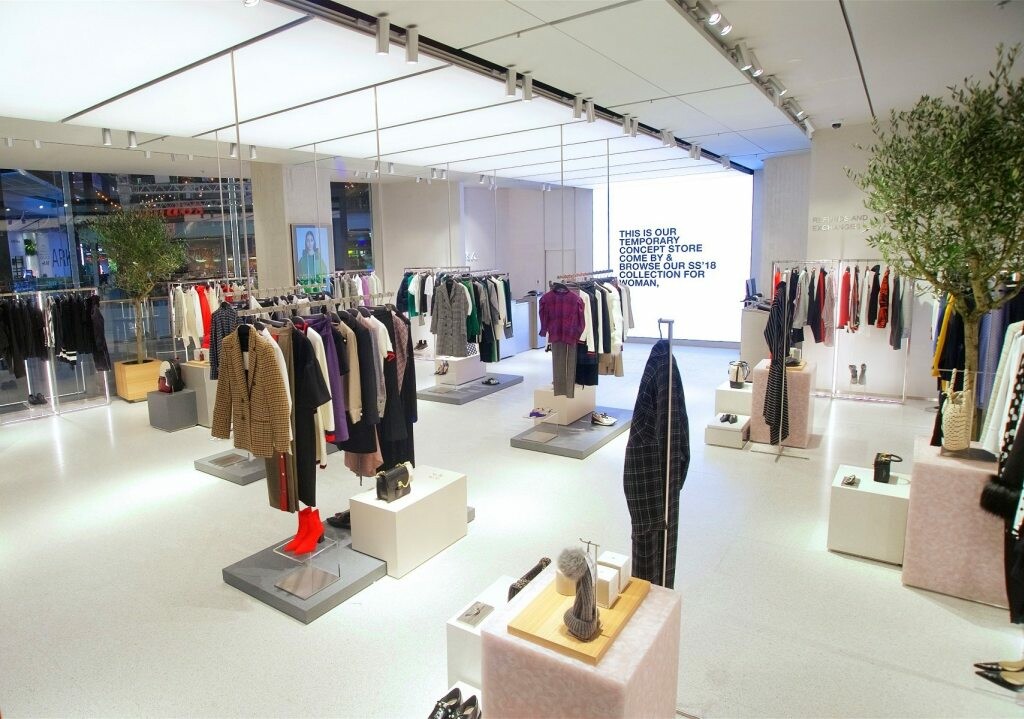
Zara used a temporary London location to experiment with digital-first retail solutions.
Customers could order online within the space, use touchscreens to browse products and interact with connected mirrors. The pop-up functioned as a testing environment for hybrid retail concepts before wider implementation.
Rather than serving as a traditional merchandising store, the activation allowed Zara to validate operational innovations in a controlled setting.
What These Fashion Pop-Ups Reveal
Across New York, Paris and London, these activations demonstrate several consistent themes:
- Temporary retail supports international expansion
- Pop-ups enable heritage repositioning
- Hybrid retail models can be tested before scaling
- Cultural timing increases visibility
- Neighborhood choice directly impacts brand perception
Fashion brands continue to rely on pop-ups because they offer strategic flexibility permanent stores cannot.
For a deeper look at how immersive retail environments influence performance across sectors, see our analysis of experiential retail case studies.
Looking for an event space or boutique for an extraordinary experience? Discover our +10 000 spaces around the world!

Written by
Adrien Kerbrat is Chief Revenue Officer and co-founder of Storefront. With more than 10 years in commercial real estate, he is an expert on the French market and short-term retail across Europe. Based in Bordeaux and often in Paris, he writes on pop-up strategy, retail location, and the French retail landscape.
More from Adrien Kerbrat →Related posts:
 How London Designer Lulu Sophia Is Scaling Her Pop-Up Showrooms
 How Design Brand Resident Used a Pop-Up Showroom in New York to Introduce Its Furniture Collection
 Campus Pop-Ups: How Brands Use Pop-Up Stores to Reach Students and Build Engagement
 How Fashion Brands Use Pop-Up Stores to Launch Collections and Drive Cultural Relevance
 How Fashion Brand Molly Bracken Used a Pop-Up Store to Enter the Paris Market