
Santa Monica is its own city, not a Los Angeles neighborhood. It sits on the coast at the western end of the county, it was incorporated on 30 November 1886, and it has run its own affairs ever since. Its city line is the reason a brand can be a ten minute drive from a Los Angeles address and be dealing with a completely different set of rules.
It is also small. The commercial city is a handful of streets you can walk between, which makes it unusual in Los Angeles and changes how you should think about choosing an address here.
Three economies in one small city
Most places in Los Angeles run on one thing. Santa Monica runs on three at once, and they pull in different directions across the week.
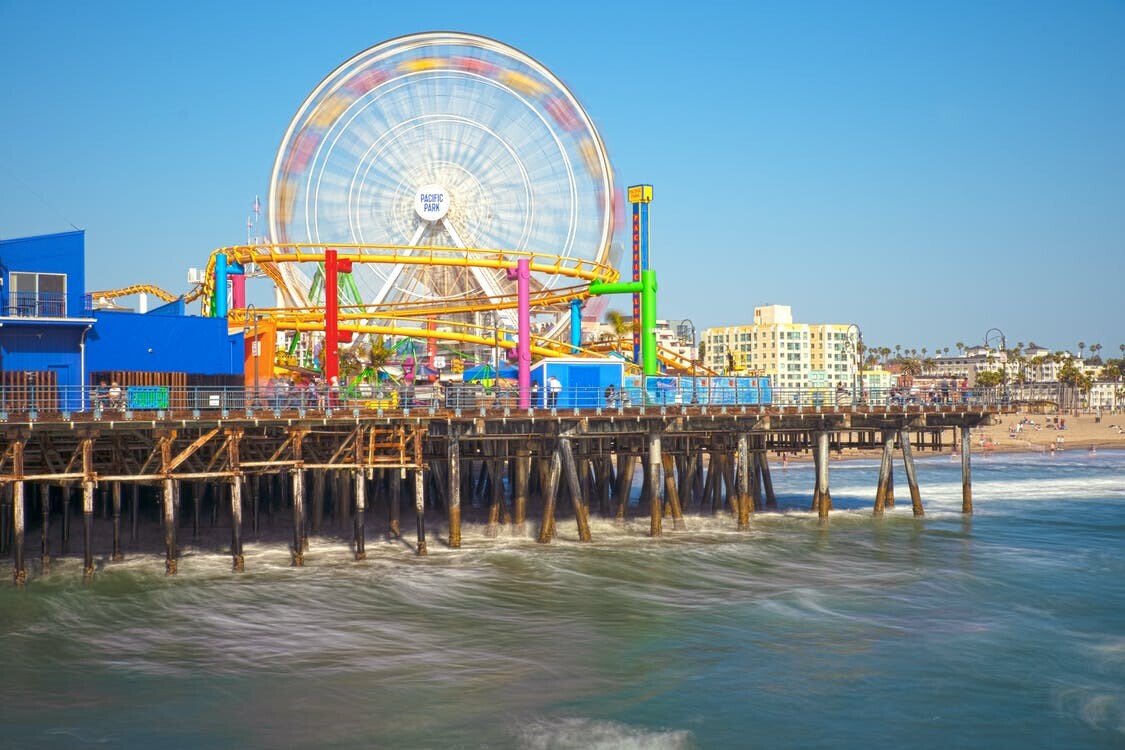
- Visitors. The beach, the Pier, which has stood since 1909, and the hotels along Ocean Avenue. This is a resort economy and it peaks in summer and at weekends.
- Employers. Santa Monica is the center of what gets called Silicon Beach, and it holds the headquarters of companies including Snap, Hulu, Universal Music Group and a cluster of game studios. That is a weekday, daytime population with budgets.
- Residents. A wealthy residential base that shops locally rather than driving inland, which is what keeps Montana Avenue and Main Street trading independently of the tourist streets.
A space that works for one of those three often works badly for the others. Naming which one you are after is the single most useful thing you can do before you start looking.
The commercial streets, one by one
Santa Monica is a city where the street genuinely tells you the customer. These are not interchangeable.
Third Street Promenade
Three pedestrianized blocks between Wilshire Boulevard and Broadway, and the most-visited retail address in the city. It is also the one going through the most change. Vacancy across the Promenade and the blocks around it ran at roughly one in five storefronts through 2026, and the city has responded with a three million dollar downtown strategy.
The detail that matters commercially: the city and Downtown Santa Monica, Inc. have been rewriting the zoning specifically to let landlords subdivide large units into smaller ones, including spaces opening onto the Promenade’s alleys. Banana Republic gave up a 45,000 square foot unit, and the head of Downtown Santa Monica put the problem plainly: there is not a long list of retailers in today’s market who want forty thousand square feet.
The stated strategy names experiential retail and pop-ups as part of the answer, alongside smaller permanent tenants. Muji and Innisfree both took space on that basis. For a brand planning a short run, this is about as receptive as a prime American retail street gets: landlords are actively looking for shorter and smaller, and the city has cleared the way. There is also now an entertainment zone between Wilshire and Broadway permitting open containers, which changes what an evening activation can do.
Santa Monica Place
The mall at the southern end of the Promenade, reopened in its current form in 2010 as an open-air center. It carries the Promenade’s footfall into a managed environment, so it suits a brand that wants the crowd without taking a street unit.
Montana Avenue
Ten blocks of boutiques, small offices and restaurants in the north of the city, serving the residential streets around it rather than visitors. The customer is local, wealthy and repeat. It has almost nothing in common with the Promenade despite being a few minutes away. Browse space on Montana Avenue.
Main Street
Runs south toward Venice and reads as the border between the two. An eclectic mix of clothing, restaurants and specialty retail with a younger, more independent character than Montana and a weekend rhythm. If the brief is coastal and independent rather than coastal and polished, this is the stretch.
Wilshire and Santa Monica Boulevards
The two arterials that carry the working commercial stock. They are where the practical space is, they run the width of the city, and they are less about footfall than about being able to get a vehicle to the door. Browse space on Santa Monica Boulevard, space on Wilshire Boulevard or space on Pico Boulevard.
For brands
Popping up in Santa Monica?
Explore short-term spaces in Santa Monica with Storefront.
Explore Santa Monica spaces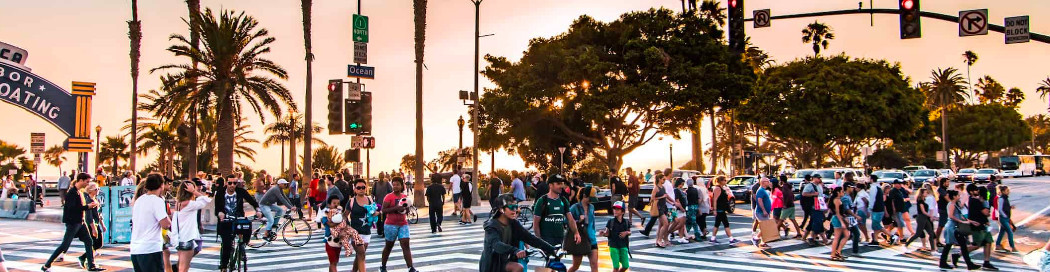
What brands come here to do
Events lead, and by a distance. After that it splits between meeting and conference space, which the weekday employer population drives, and retail, which the visitor and resident economies drive. Rooftops come up often enough to be worth naming separately: the combination of ocean light and a low skyline makes them a genuinely distinctive product here rather than a generic upsell.
| What | Why Santa Monica suits it | Browse |
|---|---|---|
| Events and venues | Ocean frontage, hotels along the beach, and a city practiced at large outdoor activations. | event space in Santa Monica |
| Meetings and conferences | A dense weekday employer base in a small area, so attendees can walk between things. | meeting space and conference space |
| Retail and pop-up | Four distinct shopping streets and a downtown actively courting shorter, smaller tenants. | retail and pop-up space in Santa Monica |
| Galleries and studios | An art audience the city inherits from Frieze week and a strong photographic light. | gallery and studio space |
| Photo and film shoots | Beach, pier, palm-lined streets and low buildings, all inside one permit jurisdiction. | shoot space in Santa Monica |
| Food and drink | A visitor economy at weekends and an employer economy at lunch, on the same streets. | food and drink space |
Arriving, and the one thing Santa Monica has that the rest of the coast does not
A rail terminus in the middle of the commercial district. The Metro E Line ends at Downtown Santa Monica station, two blocks from the Promenade, and runs through to 7th Street in Downtown Los Angeles in about forty five minutes. No other beach city in the county has that.
It matters more than it sounds. For a public event it means you can tell guests to arrive without a car and be believed, in a region where that is usually optimistic. For anything ticketed, it widens the catchment to the whole E Line corridor. Parking in Santa Monica is structured and paid rather than free, so the train is often genuinely the better instruction to give, not the polite one.
The Santa Monica calendar
Three things move demand here, and only one of them is the weather.
The beach season
Memorial Day weekend in late May to Labor Day in early September, when visitor traffic is at its heaviest. Book earlier than feels necessary for anything in that window.
June gloom
A coastal overcast sits over the beach cities into the afternoon through much of June while inland Los Angeles is clear and warm. It measurably dampens beach footfall in a month people assume is peak summer, and it is the reason a coastal launch is often better placed in July. Anyone planning from outside California will not know this and it catches people out every year.
Frieze week
Frieze Los Angeles is held at the Santa Monica Airport campus in late February, with around a hundred galleries and a week of satellite openings and brand activations around it. This is a Santa Monica event rather than a Los Angeles one, and it is the single densest week in the city’s year for short-term brand space. Exact dates are confirmed closer to the time.
Worth knowing for the long view: the airport is scheduled to close permanently under a federal agreement, and the 227 acre site is expected to become public land. That does not affect a booking now, but it will reshape the south of the city in time.
The Olympics
Santa Monica is a regional partner for the Los Angeles Olympic Games rather than a competition venue. The beach volleyball tournament went to Long Beach after talks ended. A Nations Village is planned at Crescent Bay Park, and the city’s own analysis expects more value from tourism and partner activations than from hosting a sport. For brands, that is the more useful read: the demand here will be for hospitality and activation space, not for anything adjacent to a field of play.
The city line, and what follows from it
Santa Monica issues its own business licenses under its own municipal code, and requires one of anyone conducting business in the city before they begin trading. It runs its own filming permits, its own community event permits, and separate permits for street performers and for venues with live entertainment. None of that goes through the City of Los Angeles.
The state layer is the same everywhere: anyone selling or leasing goods subject to sales tax in California needs a state seller’s permit. It is the municipal layer that changes at the city line, and the line itself is easy to miss. The Venice boundary runs a few blocks north of Rose Avenue, so two addresses a short walk apart can sit in different jurisdictions with different paperwork.
Practical version: confirm which city the address is in before you file anything or quote a timeline to anyone.
How Santa Monica compares
- Venice. Immediately south and inside the City of Los Angeles. Younger, more independent, and a different permit regime across the Rose Avenue line.
- West Hollywood. Also its own city, inland, and stronger for showrooms and the design trade. No beach season to plan around.
- Beverly Hills. Its own city again, the region’s principal luxury retail address, and a weekday rather than a weekend rhythm.
- Downtown LA. Forty five minutes east on the same rail line. Larger floors, older building stock, and the deepest pool of space in the region.
Our Los Angeles guide covers how the coast, the Eastside and the center fit together, and why in this region the street name usually tells you more than the neighborhood name.
Common questions
Is Santa Monica part of Los Angeles?
No. It is its own incorporated city, and has been since 1886. It is surrounded by the City of Los Angeles on its inland sides, but permits, business licensing, filming and event approvals all go through Santa Monica.
What is Santa Monica best for?
Events first, then meeting and conference space, then retail. The event strength comes from the ocean frontage, the hotels and a city used to running large outdoor activations. The meeting demand comes from the weekday employer base.
Which street should I be looking at?
Third Street Promenade for visitor footfall, Montana Avenue for a wealthy local customer, Main Street for a younger independent one, and Wilshire or Santa Monica Boulevard for practical working space. They serve genuinely different customers.
When is Santa Monica busiest?
Between Memorial Day and Labor Day for visitors, and Frieze week in late February for short-term brand space. June is the one to watch, because the coastal overcast makes it quieter on the beach than the calendar suggests.
Can people get there without a car?
Yes, more easily than to anywhere else on the coast. The Metro E Line terminates at Downtown Santa Monica, two blocks from the Promenade, and reaches Downtown Los Angeles in about forty five minutes. Parking is paid and structured, so the train is often the better instruction.
Is the Promenade’s vacancy a reason to avoid it?
For a short run, it is the opposite. Landlords and the city are both actively trying to fill space with smaller and shorter tenants, the zoning has been changed to allow units to be subdivided, and pop-ups are named in the city’s own downtown strategy. A receptive landlord on a prime pedestrian street is a good position to be negotiating from.
Where to look next
Browse event space in Santa Monica, retail and pop-up space, meeting rooms, galleries and studios, food and drink space or everything across the city.
By street: Santa Monica Boulevard, Wilshire Boulevard, Pico Boulevard and Montana Avenue.
Nearby: Venice Beach, West Hollywood, Beverly Hills and Culver City. Our Los Angeles guide, Downtown LA guide, West Hollywood guide and Hollywood guide cover the rest of the region.

Written by
Adrien Kerbrat is Chief Revenue Officer and co-founder of Storefront. With more than 10 years in commercial real estate, he is an expert on the French market and short-term retail across Europe. Based in Bordeaux and often in Paris, he writes on pop-up strategy, retail location, and the French retail landscape.
More from Adrien Kerbrat →Related posts:
 Hollywood Neighborhood Guide: Pop-Up Shops, Event Spaces, and Showrooms in Los Angeles
 Shoreditch Neighborhood London Guide: London’s Hipster Hangout and Pop-Up Capital
 Mayfair Neighborhood Guide: Luxury Pop-Up Shops, Showrooms, and Galleries in London
 Pigalle Neighborhood Guide: Pop-Up Shops, Showrooms and Creative Spaces
 What Is Local SEO and How Do I Get My Business Found?