South Beach is not laid out like a normal retail district. Its trade sits on a small number of long parallel streets rather than a network, and each of those streets does a different job. Choosing the wrong one is the most expensive mistake available here, because the rents are close and the outcomes are not.
There is also a legal point worth knowing before anything else, which catches out brands every season: South Beach is not in the City of Miami. This guide covers what each street is for, who you actually rent from, what the Art Deco rules will and will not let you do to a storefront, and how the season changes the answer.
South Beach is in a different city from Miami
South Beach sits in the City of Miami Beach, a separate municipality from the City of Miami across the bay. Its permits, its Certificate of Use and its signage rules are Miami Beach’s own.
That means anything you have read about City of Miami requirements does not apply here, and a checklist built for a Wynwood or Downtown project will send you to the wrong department. Mid Beach and North Beach are in the same city as South Beach, so they share its rules even though they are very different markets.
The four streets, and what each one is for
Lincoln Road: the footfall street
Lincoln Road is a pedestrianized eight-block mall closed to traffic, lined with chains, restaurants and cafes. It carries the heaviest sustained footfall of any retail street in Miami and it is the one place in the city that behaves like a European high street.
The detail that matters for a temporary project is the wide public space between the frontages. It is used for markets and installations, which means a presence on Lincoln Road does not always require a unit. It is a visitor street rather than a resident one, so plan for an audience that is passing through the city, not living in it.
Collins Avenue: the retail spine
Collins Avenue runs parallel to the ocean and carries the fashion chains and the larger-format stores. If your project needs a conventional shop with depth and a proper frontage, this is the street with that stock. It continues north into Mid Beach, where its character changes completely.
Ocean Drive: visibility, not sales
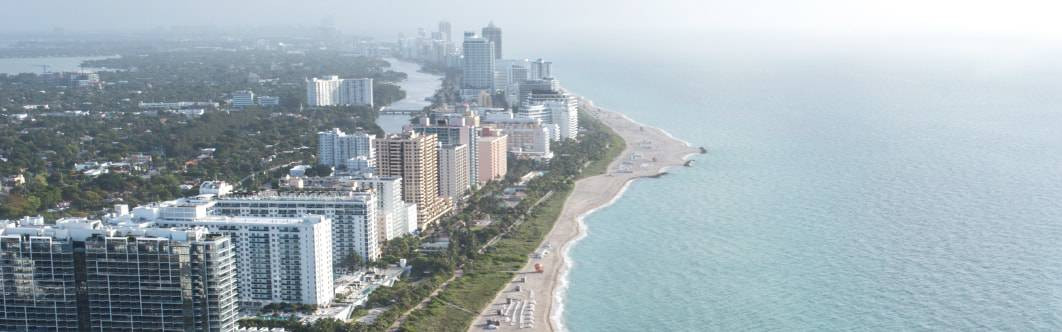
Ocean Drive is the postcard face of Miami, lined with Art Deco hotels and their terraces. Its trade is hospitality and tourism rather than retail, so treat it as a location for visibility and content rather than for sales per square foot. Brands that judge it on takings are disappointed. Brands that go there for the footage are not.
Española Way: the small-unit option
Española Way is a short pedestrian street of Mediterranean-revival buildings given over to restaurants and small independent retail. It is the most atmospheric small-unit location in South Beach, and it works for a single-brand pop-up in a way Lincoln Road does not, because the scale of the units matches the scale of the project.
For brands
Planning an event in South Beach?
Find your event space with Storefront.
Explore South Beach event spacesThe hotels are the counterparty most brands miss
A large share of South Beach retail does not sit in standalone units at all. It sits inside hotels, in lobbies, on terraces and in courtyards. That makes the hotel operator the counterparty for a great deal of the short-term space on the island.
Brands routinely miss this by looking only at storefronts, then conclude there is nothing available. For a short run, a hotel partnership is often the realistic route to a South Beach address, and it comes with an audience already on the premises. If your format is a showroom, a launch or an invitation-only evening, the hotel is frequently the better call than a leasing agent.
The Art Deco district decides what your storefront can look like
The Art Deco Historic District covers much of South Beach and its buildings are protected. Alterations to a facade, to signage and even to color are controlled.
For a temporary occupier the practical rule is to assume the frontage is inherited. If your concept depends on a wrapped storefront or heavy exterior branding, check what is permitted before you design it, not after. The look of the district is the asset that brings the audience, and the same rules that preserve it are the ones that stop you altering it.
South Beach is the most seasonal address in Miami
High season runs from late autumn through spring, with a marked drop over the summer. South Beach is the most seasonal retail location in the city, and a twelve-month view of its footfall looks nothing like a twelve-month view of Brickell or Downtown.
For a short project that is an advantage rather than a problem, because you can simply choose the right weeks. The December art week is the densest of them, when the whole city draws a national and international audience. If your dates are flexible, set them against the season before you set them against anything else.
Parking is the first question your visitors will ask
Parking on Miami Beach is scarce and expensive, particularly in South Beach in high season, and the residential streets are permit-controlled. For a beach-side space this is the most common practical complaint from customers.
Answer it up front rather than leaving people to work it out. Name the nearest garage in your invitations and on your listing, say whether valet is available, and if you are running an evening event, assume a meaningful share of guests will arrive by rideshare and plan a drop-off point that does not block a lane.
Mid Beach and North Beach are not South Beach
The three beach districts get written about as one and they behave nothing alike.
- Mid Beach. Large oceanfront hotels along Collins, little street retail between.
- The Faena District. A hotel, theater and arts complex. It anchors art week here.
- North Beach. A Miami Beach address at a fraction of the rent, year-round locals.
Mid Beach customers are overwhelmingly hotel guests and residents rather than day visitors, so the audience is smaller, wealthier and captive. That suits a concession or a hotel-sited pop-up far better than a street unit, and as in South Beach the hotels are the practical counterparty. The district is only a few blocks deep between the ocean and Indian Creek, which is why it has so little commercial frontage. Almost nobody arrives on foot.
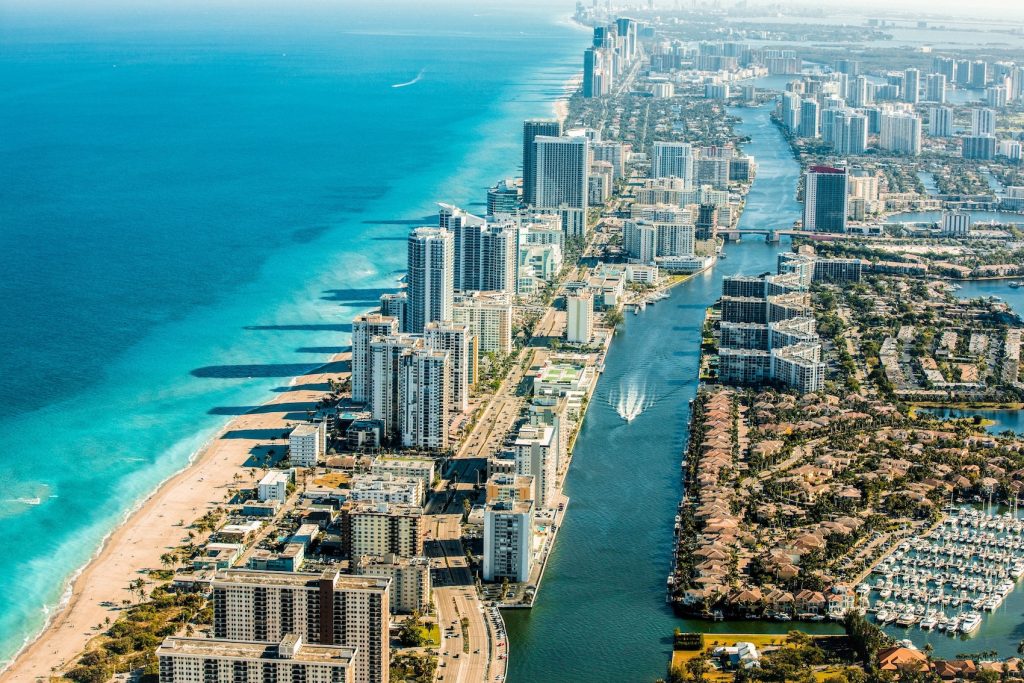
North Beach sits above roughly 63rd Street and is more residential, more affordable and largely Spanish-speaking, with commercial runs at Normandy Isle and around Ocean Terrace. It is in the City of Miami Beach, so the permitting is identical to South Beach even though the market is not.
How South Beach compares with the mainland
If South Beach is not the fit, the mainland neighborhoods solve different problems. Wynwood is the contemporary art and pop-up core, with warehouse stock and a creative audience. The Design District is the luxury and design address, and it trades year round rather than seasonally. Brickell is the business district, which is why its demand is events, meetings and offices rather than retail, and Coconut Grove is the village end of the city.
For the December art week specifically, the Art Basel Miami neighborhood guide compares all of them against that one week, and the dates and schedule guide covers the timing.
For brands
Need a showroom or pop-up in South Beach?
Explore short-term spaces in South Beach with Storefront.
Explore South Beach spacesCommon questions
Do I apply to the City of Miami for a South Beach space?
No. South Beach is in the City of Miami Beach, which handles its own permits, Certificate of Use and signage approvals. Guidance written for City of Miami projects, including anything about Wynwood or Downtown, does not apply.
Can I brand the outside of a South Beach storefront?
Within limits, and you need to check them early. Much of South Beach is in the Art Deco Historic District, where facades, signage and color are controlled. Design on the assumption that the frontage is inherited and put your branding inside the glass.
Which street should I choose for a pop-up?
Lincoln Road for footfall and for installations in the public space between the frontages. Española Way if you want a small unit with atmosphere. Collins Avenue if you need a conventional shop with depth. Ocean Drive only if the objective is visibility and content.
When is the best time of year?
Late autumn through spring, and the December art week is the single densest period. Summer is markedly quieter in South Beach, more so than on the mainland, so a summer project is better placed in Brickell, Downtown or Wynwood.
Is it easier to rent from a hotel than from a landlord?
Often, for a short run. A large share of South Beach retail sits inside hotels, so the operator controls lobby, terrace and courtyard space and is used to hosting temporary activity. It also gives you an audience already on site.
Where to look next
South Beach rewards projects that pick the right street and the right weeks, and it punishes projects that treat it as one undifferentiated address. Decide first whether you are buying footfall, atmosphere or visibility, because the four streets sell those separately.
To see what is available: event spaces in South Beach, showrooms, pop-up and retail spaces, the whole of South Beach, or Mid Beach next door.

Written by
Adrien Kerbrat is Chief Revenue Officer and co-founder of Storefront. With more than 10 years in commercial real estate, he is an expert on the French market and short-term retail across Europe. Based in Bordeaux and often in Paris, he writes on pop-up strategy, retail location, and the French retail landscape.
More from Adrien Kerbrat →