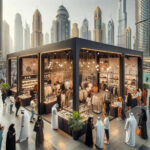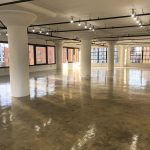
The Miami Design District was assembled rather than grown. It is anchored by more than 200 global luxury brands, among them Hermès, Dior, Cartier, Balenciaga, Fendi and Chanel, in purpose-built low-rise architecture, and it reads as one designed place rather than as a high street that filled up street by street.
That origin decides everything about how you get in. The district has effectively one landlord, space is let on brand adjacency rather than on footfall alone, and a brand is being selected as much as it is renting. This guide covers what that means in practice, why Palm Court is the address within the address, how the art programming carries the daytime footfall, and where to look when the core blocks have nothing.
One landlord, and what that changes
The district is developed and let by Miami Design District Associates, a partnership between Dacra, founded by Craig Robins, and L Catterton Real Estate, itself established by Catterton, LVMH and Groupe Arnault.
Two consequences follow, and both are unusual. The tenant mix is curated, so short-term space appears as a deliberate program rather than as a vacancy to be filled, which is the opposite of how most districts work. And the counterparty is the same across the whole quarter, so the conversation you have about one unit is the conversation you have about all of them. Approach it as a partnership pitch rather than a space search and you will get further.
Palm Court is the address within the address
Palm Court is the central open plaza of the district and the point most activations and installations are built around, particularly during the December art week. A space facing it carries a different value from one on the outer streets, and the two should not be priced or judged as though they were the same district.
If your project is an installation or an activation rather than a shop, the plaza is the thing to ask about by name.
For brands
Need a showroom in the Design District?
Find your space in the Miami Design District with Storefront.
Explore Design District showroomsWhy a design or homeware brand reads as native here
The district takes its name from the design and furniture showrooms that were there before the luxury fashion arrived, and interiors trade still occupies part of it.
That history is doing real work. A homeware, furniture or design brand reads as belonging here in a way it would not in Wynwood, where the same brand would read as a visitor. If you sit in that category, the Design District is the one Miami address where the neighborhood argues your case for you before you have said anything.
The art programming is the footfall engine
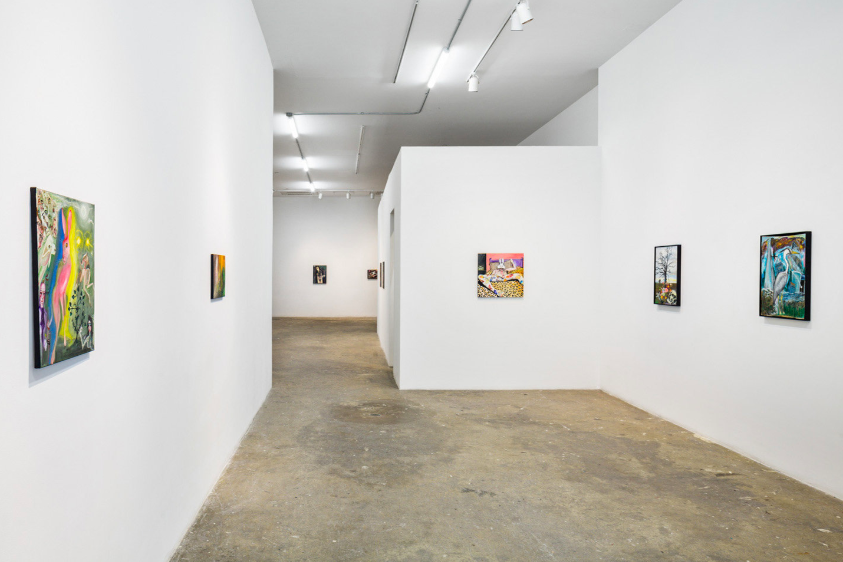
The Institute of Contemporary Art, Miami sits in the district with free admission and a sculpture garden, and public art is placed through the streets and courtyards.
This matters commercially rather than culturally. The art programming is what gives the quarter daytime footfall that is not purely transactional, which means people are in the streets without already being mid-purchase. For a temporary project that is a warmer audience than a pure shopping destination delivers, and it is why an activation here does not need to interrupt anyone to get attention.
Open-air, so the season runs the other way
The whole quarter is open-air, with streets, courtyards and terraces rather than an enclosed mall. It trades comfortably through the winter high season and is harder work in August, which is the reverse of an indoor center where summer is the refuge.
Plan a Design District project into the cooler months if you have the choice. If your dates are fixed in high summer, weight your programming toward the evening and toward the covered and shaded parts of the quarter.
December art week is the week that pays
The largest art fair in the Americas is held at the Miami Beach Convention Center each December and anchors Miami Art Week. For retail it is the single most valuable week of the year: brands take short-term space across Miami Beach, the Design District and Wynwood specifically to be open while the fair is on.
The mechanism is worth understanding. It is the satellite fairs, gallery openings and brand activations around the main event that put temporary retail into the Design District and Wynwood rather than onto Miami Beach, because they site themselves where the audience already walks. So the fair is the reason the audience is in town, and the satellites are the reason it is on your street. The Art Basel neighborhood guide compares the districts against that week specifically.
Where to look when the core blocks have nothing
Space inside the core blocks is genuinely scarce rather than merely expensive, and units rarely reach an open market. That is a feature of a curated district with a single landlord, not a sign that nothing is happening. The practical answer is to widen the search by a few streets rather than to wait.
The geography helps more than people expect. The district sits directly against Buena Vista and the northern edge of Wynwood, so a few blocks separate the most expensive retail in Miami from some of its cheapest warehouse space. Naming the cross street matters more here than naming the district.
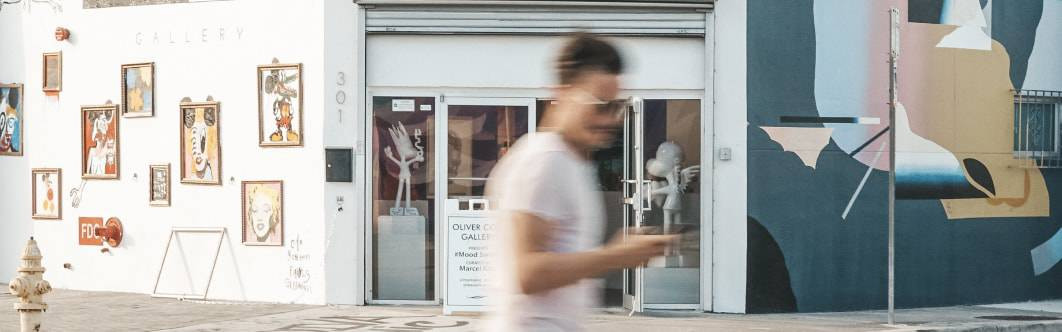
- Buena Vista. A few blocks out, at a fraction of the rent.
- Upper Buena Vista. A curated garden courtyard of very small units.
- Midtown Miami. Chain-led and modern, with regular floor plates and structured parking.
- Little River. Cheap warehouse floor area with roller doors and yards.
Buena Vista’s whole commercial case is adjacency: it is a few blocks from the Design District audience at a fraction of the district’s terms, on a street that runs directly into it. Upper Buena Vista is a landscaped cluster of converted houses around a garden courtyard, let as a single curated destination, so entry there is also a conversation with one operator, and the setting is the product. Midtown sits between Wynwood and the Design District and absorbs the traffic moving between them, particularly during art week, which is its main asset since it has no destination draw of its own. Little Haiti and Little River continue north, with Little River offering the lowest rents of the group and almost no passing footfall, which makes anything there a destination with an invited audience.
For brands
Planning an activation in the Design District?
Explore short-term spaces in the district with Storefront.
Explore Design District spacesCommon questions
Who do I approach for space in the Design District?
The district is developed and let by a single partnership, so the counterparty is the same across the quarter. Because the tenant mix is curated, short-term space is programmed rather than simply available, and the approach that works is a partnership pitch about fit rather than an enquiry about a unit.
Is the Design District better than Wynwood for a pop-up?
It depends entirely on the category. Luxury fashion, beauty, jewelry, homeware and design read as native in the Design District. Streetwear, emerging labels and anything wanting raw warehouse volume belong in Wynwood, a few blocks away and a great deal cheaper.
When is the best time to be there?
December art week is the single most valuable week of the year, and the winter high season generally suits the open-air format. August is the hardest month, because the quarter has streets and courtyards rather than an enclosed, cooled mall.
What if there is nothing available in the core blocks?
Widen the search by a few streets rather than waiting. Buena Vista sits directly against the district at much lower rents on streets that run into it, Upper Buena Vista offers very small curated units, and Midtown gives you modern floor plates and parking between here and Wynwood.
Does the art programming actually bring buyers?
It brings people into the streets who are not already mid-purchase, which is a different and often better starting point. Free admission at the contemporary art institute and public art through the courtyards give the quarter daytime footfall that a pure shopping destination does not generate.
Where to look next
The Design District rewards brands that fit its mix and frustrates those that treat it as a normal leasing market. Decide first whether you are pitching for a place in a curated quarter or simply looking for a unit, because those are two different projects and only one of them works here.
To see what is available: showrooms in the Design District, event spaces, pop-up and retail space, gallery and exhibition space, or the whole of the Design District. Next door, Wynwood covers the warehouse end, South Beach the seasonal beach market, Coconut Grove the village end, and the Brickell guide covers the financial district.

Written by
Adrien Kerbrat is Chief Revenue Officer and co-founder of Storefront. With more than 10 years in commercial real estate, he is an expert on the French market and short-term retail across Europe. Based in Bordeaux and often in Paris, he writes on pop-up strategy, retail location, and the French retail landscape.
More from Adrien Kerbrat →