

A licence to occupy is a short-term agreement that gives a business permission to use a space without creating a tenancy. It is personal to the occupier, usually short, and does not grant exclusive possession. It is the agreement most pop-up shops, showrooms and short-term retail spaces are booked on, because it can be signed in days rather than weeks.
Where this applies. The term “licence to occupy” is standard in England and Wales, and that is the position this guide describes. Scotland and Northern Ireland have separate property law, so the detail differs there. Outside the UK the same commercial idea exists under other names, most often a short-term commercial lease or a licence agreement, and the legal position is genuinely different rather than just differently worded. If you are opening in the US, our guide to pop-up shop regulations, permits and licenses in New York is the better starting point.
If you are opening a pop-up, the speed is the point. A commercial lease is a heavyweight document built for a tenant who will be in place for years. A licence is built for someone who will be in place for weeks. Knowing which one you are being offered, and why, tells you a great deal about the deal in front of you. If you are at an earlier stage than that, start with what a pop-up shop actually is or the full walkthrough of how to open and run a pop-up store.
Licence to occupy vs lease: the four tests that decide it
What an agreement is called does not settle what it is. If a document grants exclusive possession of a defined space for a fixed term at a rent, a court can treat it as a lease even if the heading says “licence”. In practice four questions decide which one you have.
1. Exclusive possession. Can you exclude everyone else, including the owner, from the space? If yes, that points firmly to a lease. Under a licence the owner keeps the right to come in, and usually keeps keys.
2. Duration. Licences are short. Weeks and months, not years. The longer an arrangement runs, and the more it looks like a settled occupation, the harder it is to maintain that it was only ever a licence.
3. Whether it is personal to you. A licence is permission given to a particular business. It normally cannot be transferred, assigned or sublet. A lease is an interest in property, and leases can often be dealt with.
4. Who controls the space. If the owner sets the hours, retains access, provides services and can move you, that is consistent with a licence. If you control the premises and simply pay for them, that is a lease.
| Feature | Licence to occupy | Lease |
|---|---|---|
| Typical length | Days to a few months | Years |
| Exclusive possession | No | Yes |
| Transferable | Normally not | Often, subject to terms |
| Security of tenure | No | Possible, unless excluded |
| Owner access | Retained | Limited |
| Time to sign | Days | Weeks, usually with solicitors |
When a licence to occupy is the right agreement

A licence suits any use where the point is to be in a space briefly and then leave. That covers most of what brands actually do with short-term space.
- Pop-up shops and product launches. A few days to a few months, with a fixed end date you want to be certain of. Our guide to how long a pop-up shop should run covers choosing that window.
- Showrooms during a trade event. Wholesale buying appointments during a fashion week or design week, where the space is needed for a defined window and nothing longer. That is the normal basis for showroom space to rent.
- Concessions and shop-in-shop. Trading inside someone else’s store, where the host plainly keeps control of the premises.
- Seasonal and testing. Christmas trading, a market stall, or a short run in a new city to see whether the location works before committing to anything longer.
In all of those, the flexibility is the product. You are paying for a short, certain, low-commitment arrangement, and a licence is the instrument that delivers it. Our guide to budgeting a London pop-up shop walks through the costs that normally sit alongside the agreement, and the best streets for a London pop-up covers where those costs land hardest.
For brands
Looking at short-term space in the UK?
Browse short-term pop-up and retail spaces in London with Storefront.
Explore London pop-up spacesThe length of a typical booking is why this agreement exists at all. A typical London booking runs about a month, and in several European markets it is closer to ten days, which is far too short for a lease to make sense on either side. Our Pop-Up Index looks at where that short-term demand is concentrated.
When a licence is the wrong agreement
A licence is not a cheaper lease, and treating it as one causes problems later. Be wary if any of the following apply.
- You need to be there for a long time. If the plan is years, ask for a lease. A rolling series of licences to cover a long occupation is a weak arrangement and may not be what it claims to be.
- You need security of tenure. A licence gives you no right to stay on at the end. If continuity matters to the business, that is a lease conversation.
- You need to control who comes in. If your use depends on excluding other people, including the owner, a licence is a poor fit.
- You want to assign or sublet. Licences are generally personal and non-transferable.
- You are making significant alterations. Substantial fit-out investment on a short, terminable permission deserves careful thought about what happens if it ends early.
What a licence to occupy usually covers
Market practice varies, and no two documents are identical, but most licences for short-term commercial space deal with the same list.
- Term and termination. Start and end dates, and what notice either side can give. Check whether the owner can end it early, and on how much notice.
- The fee and what it includes. Whether utilities, service charge, cleaning, waste and business rates are inside the figure or on top. This is the single most common source of surprise.
- Permitted use. What you may do in the space. A licence for retail does not automatically allow food preparation, alcohol, events or late trading.
- Hours and access. When you can be in the building, including for fit-out before opening and clearing afterward.
- Insurance. What cover you are required to hold, and at what level. Public liability is almost always asked for.
- Condition and making good. What state the space must be returned in, and what you may fix to the walls and floor.
- Keys, security and the owner’s access rights.
Insurance is worth reading closely rather than skimming, because it is usually a condition of being handed the keys rather than an afterthought. Our guide to insurance requirements for a London pop-up shop covers what owners typically ask for.
Making good is the clause most often missed at budgeting time. Our shop fit-out guide covers what that obligation means in practice and how it changes what you should install.
Do you need planning permission for a pop-up?
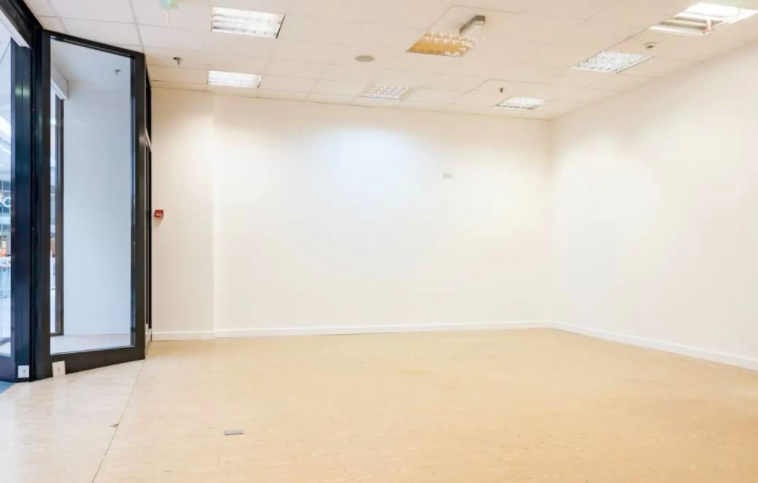
Usually not, and this is a point that causes needless worry. In England most shops, cafes and similar premises sit in Use Class E, which is deliberately broad. Moving between uses inside the same class generally does not require planning permission, so opening a short retail pop-up in a unit that was already a shop is normally not a change of use at all. Wales and Scotland classify uses differently, so check locally.
It is a different question if you are taking a space that was not previously commercial, moving into a use outside that class, putting up new signage, serving alcohol, or trading late. Licensing, signage consent and local authority rules are separate from the occupation agreement and worth checking early. Our guide to UK shop regulations for a London pop-up goes through those in more detail, and the complete guide to starting a pop-up shop in London puts them in sequence.
What to check before you sign
- Does the fee include business rates, utilities and service charge, or are they extra?
- Can the owner terminate early, and on what notice?
- Does the permitted use actually cover what you intend to do?
- What insurance must you hold, and do you have it in place before the start date?
- Is there access before opening for fit-out, and afterward to clear out?
- What condition must the space be returned in?
- Can you put anything on the walls, and does that need approval first?
- Who is responsible if something in the building fails during your occupation?
Frequently asked questions
Is a licence to occupy legally binding?
Yes. It is a contract, and both sides are bound by it. What it does not do is create an interest in the property or give the occupier the protections that come with a tenancy.
How long can a licence to occupy run?
There is no fixed maximum, but the longer it runs the more likely it is to be characterized as a tenancy instead, particularly if the occupier has exclusive possession. Short-term space is usually licensed in weeks or months.
Does a licence to occupy need to be registered?
No. Because it does not create an interest in land, there is nothing to register at the Land Registry. That is part of why it can be completed quickly.
Can a licence to occupy become a tenancy?
In effect, yes. If the arrangement in practice gives exclusive possession of a defined space for a term at a rent, it can be treated as a tenancy whatever the document is called. Substance beats the label.
Who pays business rates under a licence to occupy?
It depends entirely on the agreement. For short-term space the owner often keeps rates within the fee, but this is not automatic and should never be assumed. Ask the question directly and get the answer in writing.
Do I need public liability insurance under a licence to occupy?
Most owners require it as a condition of occupation, and will ask for evidence before handing over keys. If you are employing anyone, employer’s liability is a separate legal requirement in the UK.
What is the equivalent outside the UK?
The closest common equivalent is a short-term commercial lease or a licence agreement, but the protections and obligations differ by country and sometimes by city. Treat the principles here as a way to ask better questions locally, not as the local answer.
Finding space on a licence
Most short-term commercial space is offered on exactly this basis, which is what makes it possible to book a space for a defined window and open quickly. You can browse pop-up spaces in London, or look at showroom spaces in London if you need a space for buying appointments.
For an overview of how the booking process works end to end, start from short-term pop-up store rental or the wider view of retail space for rent.
For brands
Ready to find a space?
Tell us the city, the dates and the kind of space, and we will come back with options.
Find a pop-up spaceOne closing note. This guide describes how these agreements normally work and what to look for, which is not the same as advice on your situation. Any licence you are asked to sign is a contract, terms differ between owners, and the position is not identical across the UK. If the commitment is significant, or anything in the document is unclear, have a solicitor look at it before you sign.

Written by
Nicholas Roberts-Moore is Chief Marketing Officer at Storefront, based in London. He specializes in AI-powered marketing and the UK retail and real estate markets, helping brands turn short-term retail into measurable growth. A former journalist, he writes on pop-up strategy, retail trends, and the future of physical retail.
More from Nicholas Roberts-Moore →Related posts:
 What is a pop-up shop? Everything you need to know to try short-term retail
 How to Set Up a Pop-Up Art Gallery: 8 Steps to Renting and Launching Your Exhibition
 Offline Marketing Ideas for Pop-Up Shops
 The 5 Types of Pop-Up Shops (With Examples) & How to Choose the Right One
 Automotive Pop-Up Shops: How Car Brands Use Temporary Showrooms to Launch, Test and Sell