

Pop-up stores are no longer just for retail brands. Increasingly, banks, fintech companies, and financial service providers are using temporary spaces to connect with customers in more flexible and engaging ways.
These activations, often referred to as pop-up banks or pop-up branches, allow institutions to deliver services, build trust, and test new formats without the commitment of a permanent location.
As digital banking continues to grow, the role of physical space is evolving. Pop-up banking is emerging as a way to combine convenience, visibility, and human interaction in a modern, experience-driven format.
What is a pop-up bank?
A pop-up bank is a temporary banking space, sometimes called a micro-branch, designed to operate in high-footfall locations for a limited time.
These spaces can support a wide range of services, including:
- Opening accounts and onboarding new customers
- Issuing debit cards or financial products
- Demonstrating mobile banking apps
- Providing in-person financial advice
- Showcasing new banking technologies
Unlike traditional branches, pop-up banks are designed to be flexible, quick to deploy, and tailored to specific audiences or campaigns.
Why banks are investing in pop-up branches
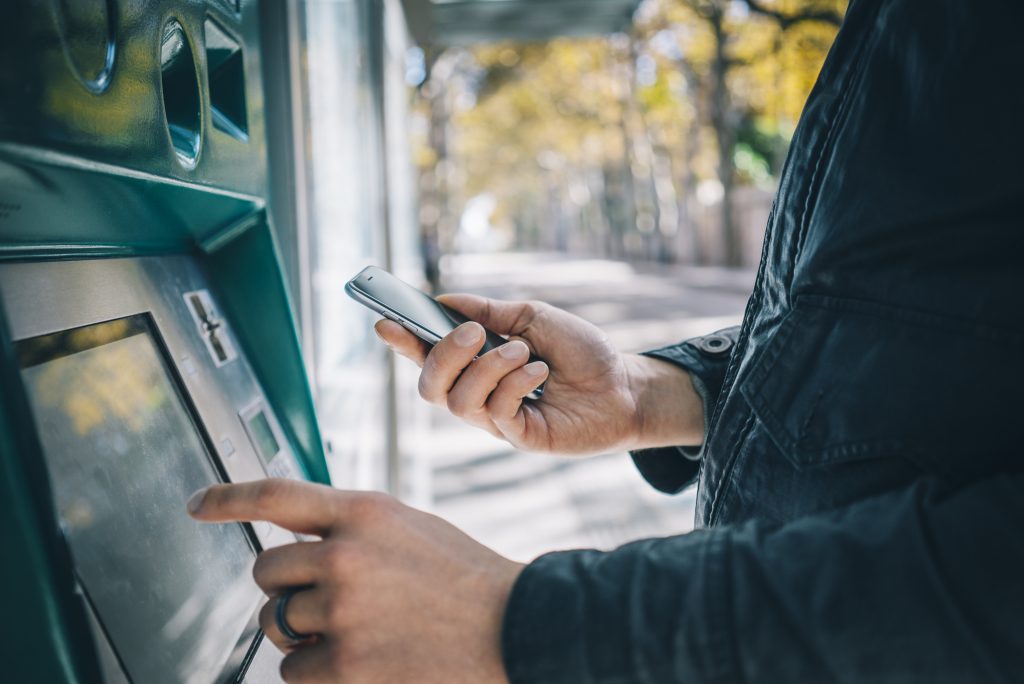
The decline of traditional banking branches has led financial institutions to rethink how they interact with customers in physical spaces.
While digital tools have made banking more convenient, customers still value face-to-face interaction, especially for complex decisions. Pop-up branches allow banks to provide that human connection while remaining agile.
They are particularly useful for:
- Testing new markets before opening permanent branches
- Reaching younger or digitally native audiences
- Launching new services or products
- Increasing visibility in competitive urban environments
This approach mirrors broader retail trends, where brands use temporary spaces to bridge digital and physical experiences. For a deeper look at this shift, this guide to ecommerce brands opening pop-up shops explains how physical activations support online growth.
Real examples of pop-up banks and micro-branches
Several major financial institutions have already experimented with pop-up banking formats.
Banks such as PNC, UniCredit, Bank Austria, and National Australia Bank have launched temporary micro-branches to test new service models and engage customers in more accessible environments.
TD Bank has also explored pop-up banking concepts by creating temporary spaces equipped with tablets and digital tools. Staff members use these setups to guide customers through new apps and digital services, helping bridge the gap between online banking and in-person support.
Other banks have experimented with more experiential formats. Umpqua Bank, for example, designed a pop-up space that resembled a café rather than a traditional branch, featuring interactive screens, seating areas, and community-focused design.
These examples show that pop-up banks are not just smaller versions of traditional branches. They are reimagined environments focused on experience, education, and engagement.
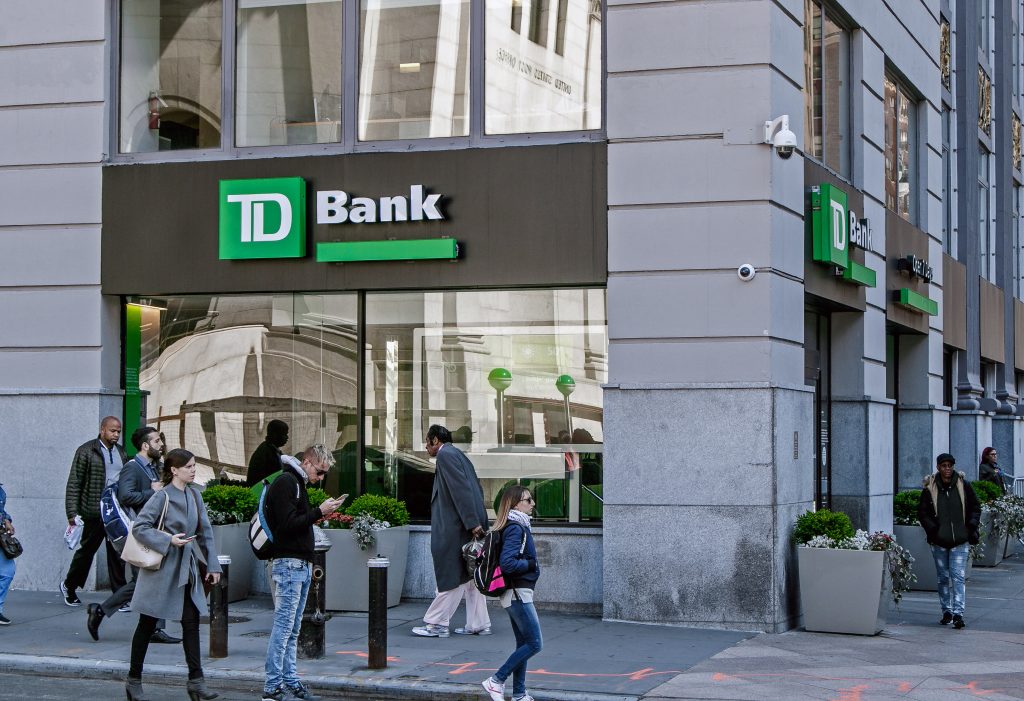
Pop-up banks in high-footfall locations
A key advantage of pop-up banking is the ability to operate in high-traffic areas where customers already spend time.
This includes shopping districts, business hubs, and central neighborhoods with strong footfall.
Financial institutions can quickly deploy pop-up spaces in major cities to maximize visibility and engagement:
These locations allow banks and financial brands to reach both existing customers and new audiences in a more dynamic setting.
For brands
Ready to launch your pop-up?
Find and book your short-term retail space with Storefront.
Find a spaceUsing pop-up banks to educate and build trust
Pop-up banks are not just transactional spaces. They are increasingly used as environments for education and customer support.
Financial services can be complex, and many customers benefit from in-person guidance when adopting new tools or making important decisions.
Pop-up formats provide a more approachable setting where customers can:
- Learn how to use mobile banking apps
- Understand financial products
- Ask questions in a low-pressure environment
This approach is particularly effective for younger audiences and first-time customers who may be less familiar with financial systems.
It also connects closely with broader student-focused activations. If you want to explore how brands engage this audience, this guide to campus pop-ups and student-focused retail activations shows how temporary spaces are used to reach students and young consumers.
Pop-up activations and younger audiences
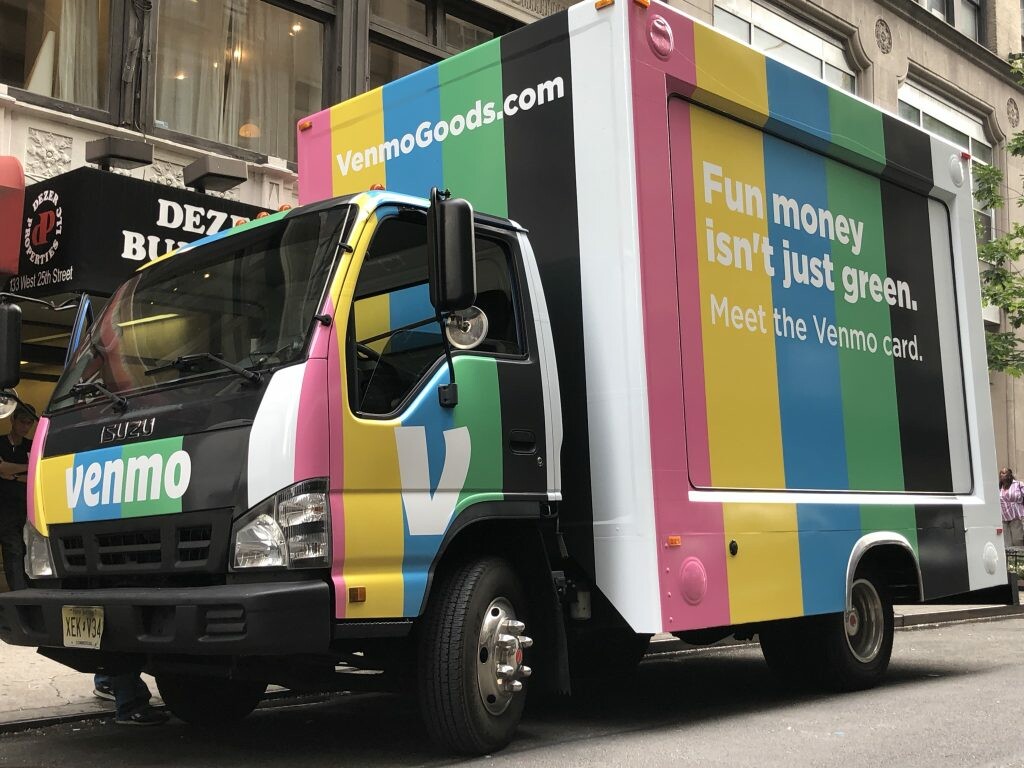
Financial services brands are increasingly adopting experiential pop-up formats to engage younger, digitally native audiences.
A strong example is this Venmo mobile pop-up activation in New York, which was launched near New York University to promote its debit card.
Instead of creating a traditional banking environment, Venmo used a mobile pop-up truck to deliver a highly visual and interactive experience. The activation encouraged visitors to step inside, engage with the brand, and share content on social media.
This approach allowed Venmo to connect with its target audience in a way that felt relevant, social, and experience-driven.
It highlights how pop-up formats can be used not just for service delivery, but for brand building and awareness at scale.
Why pop-up banks are part of the future of financial services
The role of physical space in financial services is changing, but it is not disappearing.
Pop-up banks offer a way to:
- Maintain a physical presence without long-term commitments
- Deliver personalized support where it matters most
- Test new formats and technologies quickly
- Adapt to changing customer expectations
They reflect a broader shift toward flexible, experience-led environments that prioritize engagement over permanence.
For financial institutions looking to innovate, pop-up banking provides a practical and scalable solution.
Conclusion
Pop-up banks and temporary micro-branches are redefining how financial services connect with customers.
By combining flexibility, accessibility, and real-world interaction, they allow institutions to deliver more meaningful and engaging experiences.
As customer expectations continue to evolve, pop-up banking will play an increasingly important role in bridging the gap between digital convenience and human connection.
FAQ: Pop-Up Banks and Financial Services
What is a pop-up bank?
A pop-up bank is a temporary banking space where financial institutions offer services such as account setup, consultations, and product demonstrations in high-traffic locations.
Why are banks using pop-up branches?
Banks use pop-up branches to test locations, reach new audiences, reduce costs, and provide in-person support without long-term leases.
What services can a pop-up bank offer?
Pop-up banks can offer account opening, debit card issuance, financial advice, app demonstrations, and access to ATM or digital banking tools.
Where are pop-up banks typically located?
They are usually placed in high-footfall areas such as shopping districts, city centers, and busy urban neighborhoods.
Are pop-up banks replacing traditional branches?
Pop-up banks are not replacing traditional branches entirely but are becoming a flexible complement that allows banks to adapt to changing customer behavior.
For brands
Ready to launch your pop-up?
Find and book your short-term retail space with Storefront.
Find a space
Written by
Adrien Kerbrat is Chief Revenue Officer and co-founder of Storefront. With more than 10 years in commercial real estate, he is an expert on the French market and short-term retail across Europe. Based in Bordeaux and often in Paris, he writes on pop-up strategy, retail location, and the French retail landscape.
More from Adrien Kerbrat →Related posts:
 What is a pop-up shop? Everything you need to know to try short-term retail
 How to Set Up a Pop-Up Art Gallery: 8 Steps to Renting and Launching Your Exhibition
 Offline Marketing Ideas for Pop-Up Shops
 The 5 Types of Pop-Up Shops (With Examples) & How to Choose the Right One
 Automotive Pop-Up Shops: How Car Brands Use Temporary Showrooms to Launch, Test and Sell