

Pop-up stores are increasingly used by startups to test new ideas, reach target audiences, and experiment with different neighborhoods before committing to permanent locations. Dazzle Bar, a Bay Area startup focused on cosmetic dental care, used this strategy to introduce its concept across San Francisco through a series of temporary locations.
The company launched a pop-up tour across the city, opening five pop-up shops in partnership with Storefront to test demand and connect with potential customers in different neighborhoods. By rotating through multiple spaces, the brand was able to refine its concept while building awareness in high-traffic areas.
Startups exploring similar strategies can browse available San Francisco pop-up shops to test new markets or host short-term activations.
A New Approach to Dental Care
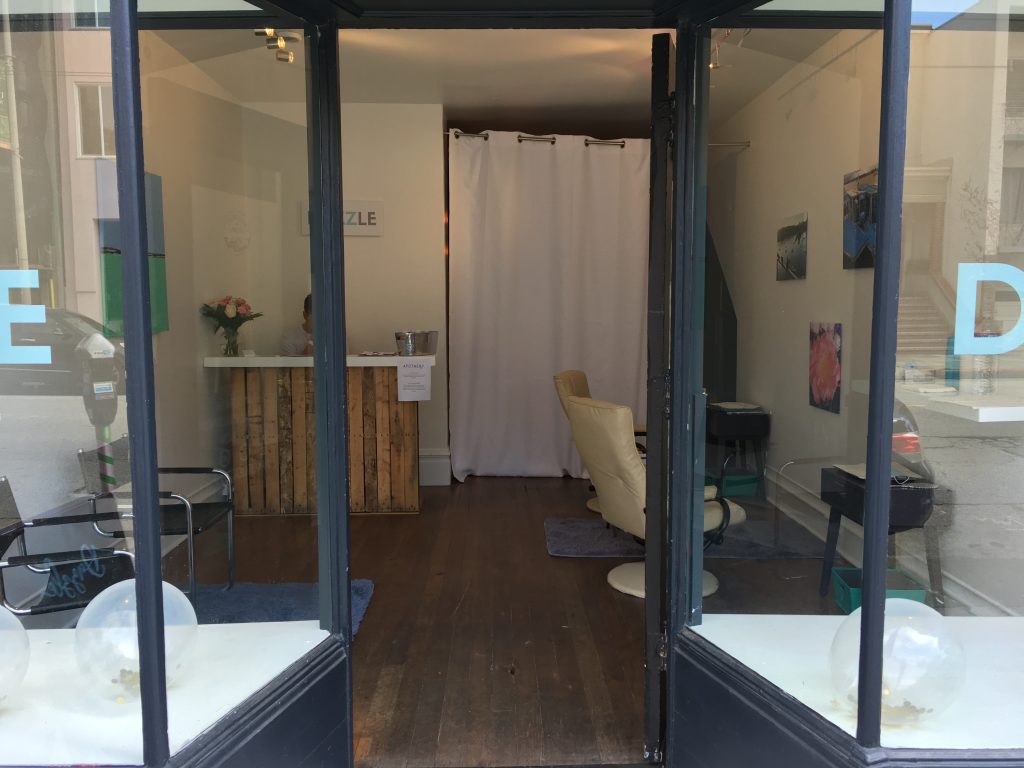
Dazzle Bar created a concept that sits somewhere between beauty services and dental care. Instead of a traditional clinic, the brand focuses on quick, cosmetic treatments such as teeth polishing and whitening.
The idea is to make oral care feel more like a wellness or beauty experience than a clinical appointment.
“We want to provide people a quick and easy way to get a quick polish or whitening,” explained the team. “It’s meant to be like Drybar, in terms of regular maintenance. You can come in to pamper yourself — maybe with friends or before a night out.”
The founders built the concept around the idea that preventive oral care and cosmetic treatments could be offered in a more approachable environment.
Why Dazzle Bar Chose Pop-Up Stores
As an early-stage startup, Dazzle Bar used pop-up retail to experiment with its concept before committing to permanent spaces.
The company partnered with Storefront to launch five temporary pop-up shops across San Francisco, each located in neighborhoods with different demographics and customer behaviors.
“We are testing out our concept mostly as we are a startup,” explained the team. “Storefront has been great because we’re able to rent a space for a short amount of time in different locations.”
This approach allowed the brand to gather real-world feedback from customers while observing how the concept performed in different parts of the city.
Pop-up stores are widely used by startups across industries for this type of market testing. Brands considering similar strategies can learn more in this guide on pop-up shop strategies by industry.
Testing Neighborhoods Before Opening Permanent Locations
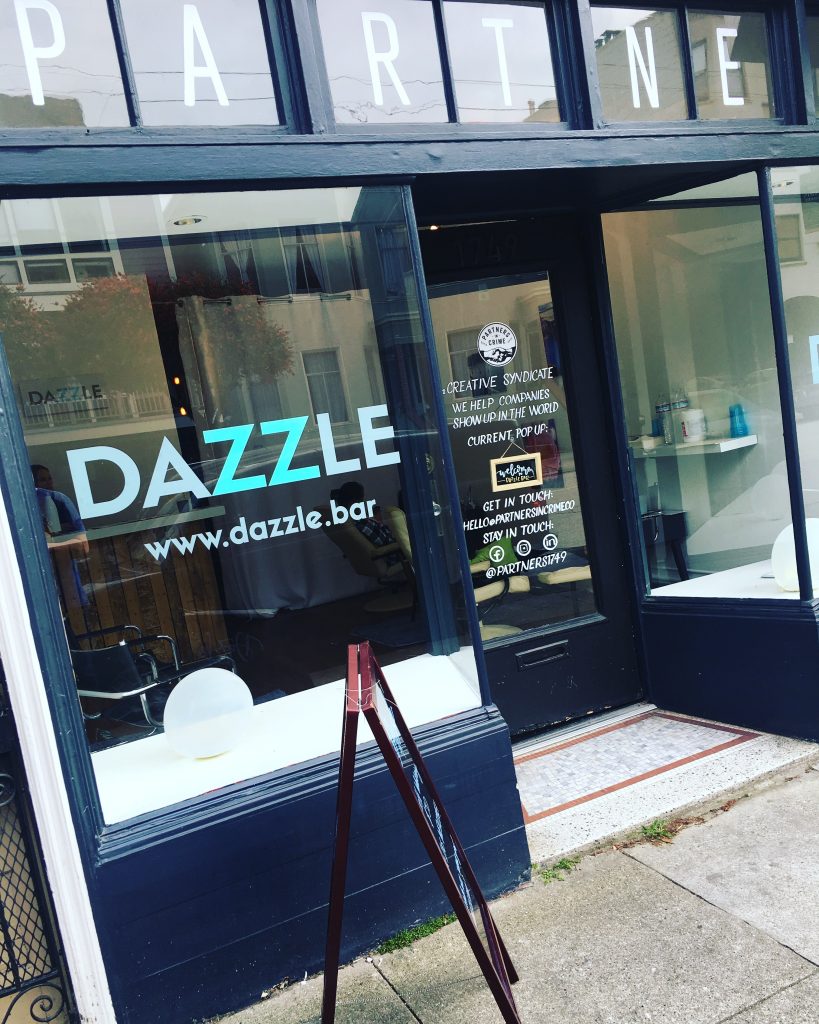
Each pop-up location served as a test case to determine where a permanent studio might eventually work best.
One of the early pop-ups operated for about a month in the Marina district, giving the team time to understand customer demand, refine operations, and observe local interest.
“The first month in the Marina was the perfect opportunity for us to test out the location and stabilize,” the team explained. “We’ve been using that time to scope our permanent locations in the same area.”
For startups, temporary retail spaces offer the flexibility to experiment with neighborhoods without long-term commitments or costly leases.
Marketing a Pop-Up Service Business
To promote the pop-up tour, Dazzle Bar used a mix of digital marketing and local visibility.
Social media platforms like Instagram and Facebook helped build early awareness through targeted ads and organic content. At the same time, choosing locations with strong foot traffic allowed the brand to attract walk-in customers who discovered the service while exploring the neighborhood.
Word-of-mouth also played a key role in spreading awareness once customers experienced the treatments.
The combination of online marketing and in-person discovery is one of the reasons pop-up stores can be effective for service-based businesses.
Why Pop-Up Tours Work for Startups
Dazzle Bar’s five-location pop-up tour demonstrates how temporary retail spaces can help startups validate their ideas and connect with customers quickly.
Pop-up tours allow brands to:
- Test multiple neighborhoods before opening permanent locations
- Introduce new service concepts to local audiences
- Gather feedback from real customers
- Build brand awareness through short-term activations
For entrepreneurs exploring similar strategies, this guide explains the key steps involved in how to open a pop-up store.
With the right concept and location strategy, pop-up retail can become a powerful tool for testing ideas and growing a brand

- How Knotel Used a Pop-Up Showroom in New York to Demonstrate Its Agile Office Concept - March 11, 2026
- How Amnesty International Used a Pop-Up Store in Amsterdam to Launch the “World Peace” Campaign - March 10, 2026
- How Brands Use Pop-Up Spaces During Art Basel Miami to Reach Global Audiences - March 10, 2026
Related posts:
 How Birchbox Used a Pop-Up Shop in Chelsea Market to Bring Its Beauty Discovery Experience Offline
 Kendrick Lamar’s DAMN. Pop-Up Store in New York: How Music Artists Use Temporary Retail to Engage Fans
 How Bulletin Uses Pop-Up Stores to Build Its Brand in New York
 Kanye West Yeezus Tour Pop-Up Store in NYC
 J.Hilburn’s SoHo Pop-Up: A Luxury Menswear Brand Steps Into Physical Retail