

Finding a pair of jeans that fits perfectly is a challenge familiar to many shoppers. Sizing inconsistencies, different cuts, and limited in-store options often make the process frustrating. The founders of Unspun saw this as an opportunity to rethink how denim is designed, produced, and purchased.
Founded by Beth Esponnette, Walden Lam, and engineer Kevin Martin, Unspun is a technology-driven fashion brand that combines 3D body scanning with advanced fit algorithms to create custom-fit denim. To introduce this new concept to consumers, the company launched a pop-up store in Hong Kong, using temporary retail as a testing ground for its innovative approach to fashion.
Pop-up stores are frequently used by emerging brands to experiment with new retail formats and customer experiences. Many startups begin by exploring available pop-up shops in Hong Kong before expanding their retail presence.
A Technology-Led Approach to Denim
Unspun’s mission is to transform the traditional apparel supply chain.
Instead of producing large quantities of standard sizes, the brand uses 3D imaging technology and proprietary fit algorithms to create jeans tailored to each individual customer. This approach not only improves fit but also reduces the environmental impact associated with mass production.
The company’s long-term goal is to become a “no-inventory” retailer, producing garments locally and only after they are purchased. By eliminating overproduction and unsold stock, this model aims to significantly reduce waste within the fashion industry.
Introducing this concept to customers requires more than an online store. A physical retail environment allows visitors to experience the technology firsthand and better understand the custom-fit process.
Why Unspun Chose a Pop-Up Store
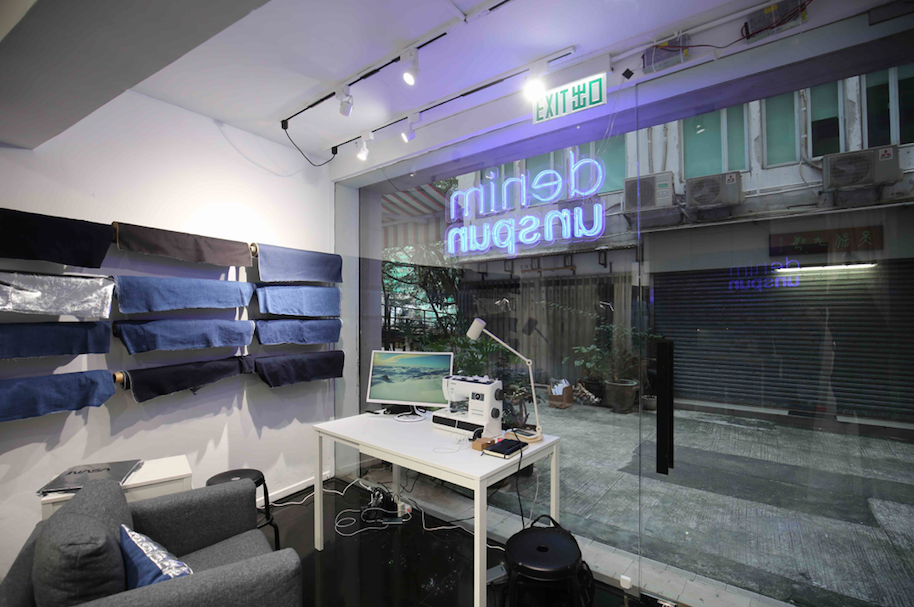
To test its concept with real customers, Unspun launched a pop-up store in Hong Kong. The temporary retail space allowed the brand to introduce its technology while gathering valuable feedback from shoppers.
The founders approached the store experience with a strong focus on customer interaction.
“Everything we do starts with the customer,” explains co-founder Beth Esponnette. “When customers walk in, we spend a lot of one-on-one time with them to understand what they are looking for. Together, we go through choosing different fit options and materials.”
The in-store 3D body scan itself takes only 25 to 30 seconds, but the overall customer experience often lasts more than half an hour as visitors explore different fabrics, cuts, and customization options.
This format highlights how pop-up stores can serve as testing environments for new retail technologies while creating deeper engagement with customers.
Brands interested in experimenting with similar concepts can discover flexible retail opportunities through platforms such as Storefront, which connects companies with short-term retail spaces around the world.
Designing an Intimate Customer Experience
Unlike many pop-up activations located in high-traffic shopping districts, Unspun deliberately chose a quieter street for its Hong Kong pop-up store.
The location at 41 Circular Pathway offered a calm environment where the founders could spend more time with each visitor. This slower pace allowed the team to guide customers through the scanning process and explain the brand’s production model.
Because each interaction involved personalized consultation and technology demonstrations, the space functioned almost like a workshop rather than a traditional retail store.
This type of intimate retail experience is one of the advantages of pop-up formats. Temporary spaces can be designed specifically around a brand’s concept rather than following the conventions of traditional stores.
Finding the Right Pop-Up Location
Securing the right location was a key step in launching the pop-up store.
According to Beth Esponnette, using Storefront made the process significantly faster than traditional leasing channels.
“Storefront was an especially useful channel for us to find the right location. While we found other exciting options as well, securing those locations could easily take months. Storefront secured the location in a matter of hours.”
The team also noticed that the space already had a reputation as a pop-up venue, which helped attract returning visitors.
“We’re benefitting from repeat visits as we see customers coming in that know this location is a pop-up venue.”
For companies considering similar activations, browsing available pop-up store rental opportunities can help identify short-term retail spaces suited to experimental concepts.
Using Temporary Retail to Test Future Expansion
The Hong Kong pop-up store was only the first step in Unspun’s retail strategy.
As the company continued developing its technology and production model, it planned additional activations to reach new audiences and refine the customer experience. These included a mobile retail concept known as the Unspun Luxe Truck and another temporary pop-up location in the city.
Pop-up stores allow innovative brands like Unspun to introduce new ideas, gather feedback, and test operational models before scaling up their retail presence.
By combining technology, sustainability, and experiential retail, Unspun’s pop-up store demonstrated how temporary retail spaces can support experimentation and innovation in the fashion industry

- Before and After: 3 Pop-Up Store Transformations That Bring Spaces to Life - March 18, 2026
- Offline Marketing Ideas for Pop-Up Shops - March 18, 2026
- How to Promote a Pop-Up Shop on Social Media - March 18, 2026
Related posts:
 How Dustykid Used a Christmas Pop-Up Store in Hong Kong to Connect With Its Online Community
 OnTheList Launches Pop-Up Store with Storefront in Hong Kong
 How Butterboom Used Pop-Up Stores to Bring Online Fashion Brands Into Hong Kong Retail
 How Miss Runner Used a Pop-Up Store in Hong Kong to Build Its Activewear Community
 How ghd Used a Pop-Up Store in Hong Kong to Strengthen Brand Awareness in Asia