We use cookies and similar technologies to track your activity and improve your experience.
Sort by
Recommended
See on map
Fast Responder
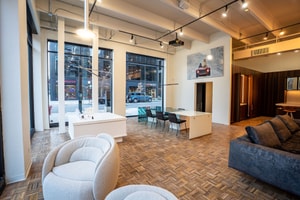
Event Space
∙
River North
2,400 sq ft
from $1,800 per day
Fast Responder
See on map

See on map
Fast Responder

See on map

Event Space
∙
Near North
4,000 sq ft
from $3,600 per day
See on map
See on map

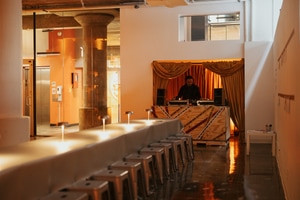
Event Space
∙
Goose Island
1,900 sq ft
from $600 per day
See on map

See on map

See on map

Office Space
∙
River North
5,112 sq ft
from $2,001 per day
See on map

See on map

Event Space in River North, Chicago
Check our latest articles:
7 Case Studies That Prove Experiential Retail Is the Future;What Is a Pop-Up Shop? Definition, Costs & How It Works
Why River North for Your Next Event
River North sits immediately north of the Chicago River and west of Michigan Avenue, placing it within a short walk of both the Loop and the Magnificent Mile. That position is the district's real value for event planners: guests arrive from every direction, and the neighborhood itself carries one of the highest concentrations of restaurants, bars and hotels in Chicago. For a brand activation, product launch or press event, few districts in the city put a venue closer to so many different audiences at once.
The district grew out of a warehouse and gallery quarter, and the building stock reflects it. Late-nineteenth-century masonry loft buildings with high ceilings, wide bays, big windows and freight elevators line the blocks around Superior, Huron and Franklin. That former gallery-and-loft infrastructure is unusually well suited to exhibitions, launches and evening events: white walls, open floor plates and alley loading that makes build-in and build-out straightforward.
Corporate Events and Brand Activations
River North is where corporate event demand meets a permanent floating audience of hotel guests, conventioneers and suburban visitors. A pop-up event on these blocks reaches them without a media spend. Product launches, press previews and brand showcases trade well to that audience, especially formats that keep evening hours and align with the district's natural rhythm from six onward.
For an event space in Chicago that needs to reach both a trade audience and a consumer one, River North delivers both in the same week. The design trade comes through theMART, and the evening crowd fills the surrounding streets.
Loft and Gallery Event Spaces
The blocks that were once the largest concentration of commercial art galleries in the United States outside New York still carry a serious core of gallery spaces. For a loft event space or gallery-format venue, the district offers a building type that is hard to find elsewhere in Chicago: timber and steel frames, freight elevators from the warehouse era, and ground floors large enough to host a seated dinner or a standing reception without dividing the room.
These loft buildings were designed to be reconfigured, which is why they take a temporary fit-out well. A brand bringing its own build finds raw space with rear alley access and ceiling heights that accommodate installation work, projection and rigging.
Industrial and Warehouse Venues
River North's industrial heritage left behind a stock of warehouse event spaces with the bones that production teams look for: wide column spacing, concrete and timber floors, loading access through the alley, and enough electrical capacity for lighting rigs and AV. The aesthetic reads as industrial without needing a set dresser, and the freight elevators move heavy items between floors.
A pop-up event in River North using one of these warehouse-format venues benefits from the contrast between the raw interior and the polished restaurant strip outside. Guests step off Hubbard or Ontario into a space that feels like a different city.
theMART and the Design Trade
theMART, the former Merchandise Mart, sits on the river at the district's southern edge and is one of the largest commercial buildings in the world. It holds the Midwest's design and furnishings showrooms, event floors and a public food hall, and its river facade is used as a nightly projection screen. During a design trade show, theMART's own station on the Brown and Purple Lines delivers a national buying audience directly into the district.
For a design, furniture or interiors brand, a temporary event space within walking distance of theMART during show week reaches an audience that no street location elsewhere in Chicago can assemble. The surrounding blocks carry the trade counters and fabricators that support the showroom economy, so the whole supply chain is here.
The River North Event Calendar
River North's year follows the convention and hotel calendar rather than the retail one, which makes it the most weather-resistant event district in Chicago. A February trade show fills hotels and restaurants while neighborhood corridors across the city sit empty. The design trade's own show weeks bring a national audience into theMART, and the surrounding streets benefit directly.
The district's daily rhythm matters as much as the annual one. The restaurant and bar strip on Hubbard, Ontario and Ohio draws a large crowd every evening from six until late. An event venue here that opens at six is opening into the district's peak, and the foot traffic outside becomes part of the atmosphere.
Summer adds the Chicago Riverwalk along the south bank opposite River North, turning the river edge into a promenade with bars, boat docks and seating. A venue near the water trades a very different summer from its winter.
How to Spend Less on a River North Event Space
River North has more available event space than its foot traffic suggests, because the district's ground floors were built for a gallery and showroom economy that has partly moved on. That produces a landlord base used to short terms and willing to negotiate. Several levers bring the cost down.
Timing is one of them. Off-peak months and midweek dates ask less than peak season and weekends. A longer booking usually earns a better daily rate, because a host prices continuity rather than a single let. A side street a few doors off the main restaurant strip asks less than the strip itself while keeping much of the passing trade. And a raw, unfurnished space costs less than a finished one, so a brand bringing its own build should look for the shell rather than the styled venue.
Being flexible on dates, or able to take a space at short notice when a host has a gap, earns better terms than a fixed date will.
Nearby Districts for Events
If the brief calls for a different feel, several other Chicago districts carry strong event space inventory. West Loop sits twenty minutes west and trades on its restaurant-row identity and converted industrial stock. Lincoln Park offers a residential, tree-lined setting on the North Side. Logan Square draws a younger, creative audience further northwest. For a broader view of what is available, browse event space across Chicago or read the guide to Pop-Up Shops in Chicago: The Complete Guide to Opening a Temporary Retail Space.
FAQ
What types of corporate events work best in River North?
Product launches, press previews, brand activations and trade showcases all suit the district. The hotel population provides a built-in evening audience, and the proximity to theMART during show weeks gives trade-facing events a concentrated professional crowd. The loft and gallery building stock handles both seated and standing formats without heavy modification.
How does the district's evening rhythm affect event planning?
River North is quiet in the morning, busy at lunch and very busy from six onward every night. A daytime-only format works but misses the district's strongest hours, so consider extending into the evening if the format allows.
What makes River North easier to load in and build out than downtown?
Alley loading is available on most blocks, and the loft buildings retain freight elevators from their warehouse era. That combination means large objects, staging and AV equipment move in through the rear without blocking a public sidewalk, which is harder to arrange in the Loop across the river.
Is River North a good fit for a first event in Chicago?
For a brand testing Chicago for the first time, the district's central position and mixed audience offer a broad read. Hotel guests, conventioneers, downtown workers and suburban visitors all pass through. Our event space rental pages set out how booking works, whichever city you are in.
When is the quietest time to book an event space here?
January and February are the weakest weeks across most of Chicago, but River North is the exception when a convention or trade show is running. Check the convention calendar before fixing a winter date.


