


What counts as cheap retail space in London?
Cheap retail space rental in London is defined more by flexibility than by a fixed price. Short-term licences, off-pitch locations and smaller footprints all bring the cost down compared with a traditional lease on a flagship street. The neighbourhoods below consistently offer the most accessible entry points for brands looking to trade without committing to a long-term tenancy.
Duration matters too. A unit booked by the day costs more per day than one booked by the week, but the total outlay is lower and the risk is smaller. For a first physical presence in London, a short run in an affordable neighbourhood is often the sharpest route in.
Affordable neighbourhoods for retail space in London
The most budget-friendly retail space in London sits east and south of the centre, where Victorian and Georgian high-street stock is plentiful and short-term lettings are well established.
-
Shoreditch: Former warehouse and light-industrial buildings give wide ground-floor frontage at rates well below the West End. The customer skews young and trade peaks at weekends, which suits a brand testing a new product or running a short activation.
-
Brick Lane: Small frontages, lower rents and a weekend market rhythm make this one of the most accessible entry points for vintage, independent and emerging labels. Trade concentrates heavily on Saturdays and Sundays.
-
Hackney: A large borough with an independent commercial base spread across several high streets. Units are modest in scale and the customer is predominantly local, which rewards brands with a clear neighbourhood fit.
-
Dalston: Small ground-floor units along Kingsland Road and Kingsland High Street with a strong evening economy. Rents are lower than central London and the area suits independent and nightlife-adjacent brands.
-
Camden: Very high visitor numbers built around the canal and the market halls. Units are small and independent, and the format is heavily weekend-weighted. One of the most established short-term retail routes in the city.
-
Stratford: Anchored by one of the largest shopping centres in Europe and the Olympic park. Retail here is mall-format and managed rather than street frontage, but the footfall is consistent and the rents are lower than the West End.
-
Spitalfields: A covered Victorian market hall trading seven days a week, with permanent units around the edge and short-term stalls inside. One of the most established routes into temporary retail in London, and a genuine option for a brand that wants a first physical presence.
-
Battersea: The power station redevelopment has added a managed retail destination alongside the established village retail of Northcote Road. The two offer different propositions: managed estate versus independent high street.
Small retail space for rent in London
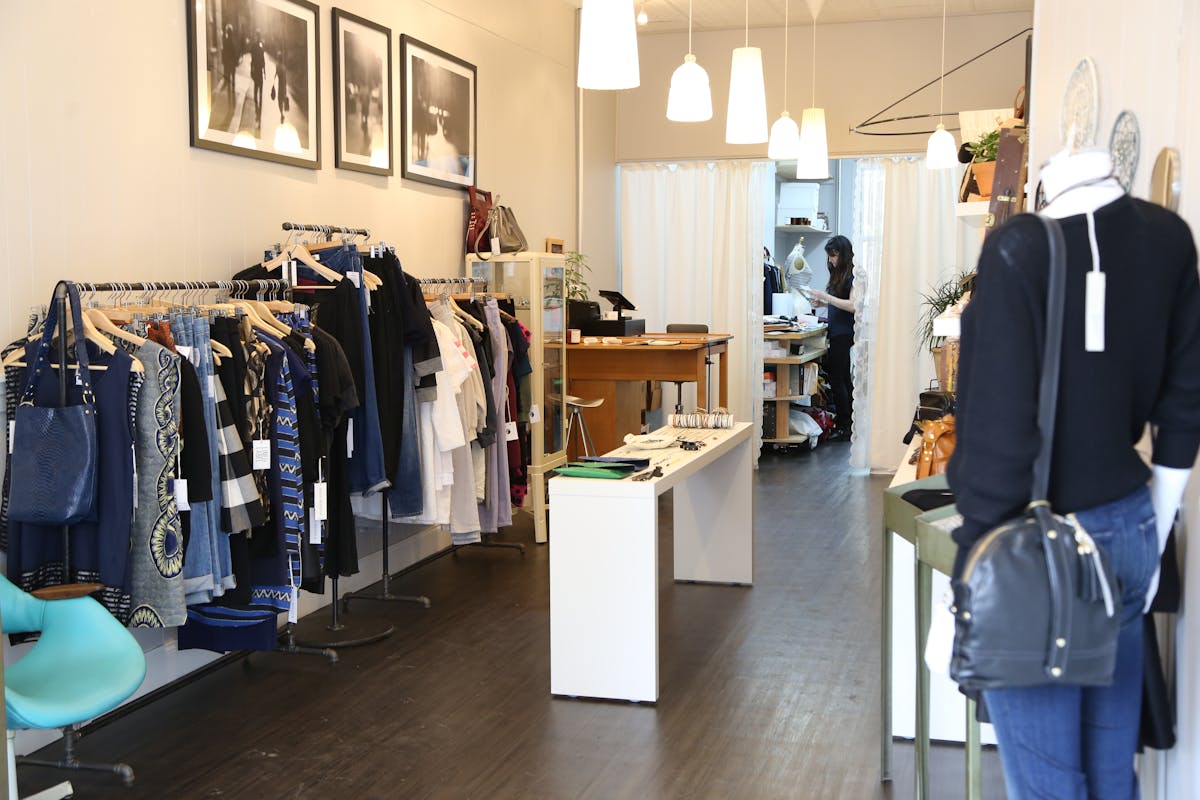
Most of London's off-pitch stock is small by international standards. Outside the flagship streets, a typical ground-floor shop is a narrow Victorian or Georgian frontage over one or two floors, often with a basement. That scale suits a compact pop-up, a sample sale or a brand showroom better than a large-format activation.
Small retail space for rent in London is also the fastest to book. Owners of smaller units are more likely to offer short licences, and the commitment is often days rather than months. For brands used to American floorplates, working vertically, ground floor for retail, basement for stock, is the standard approach.
For a broader view of what is available across the city, the retail space in London search covers the full range of unit types, sizes and locations. For brands focused on the West End specifically, Oxford Street listings cover the busiest shopping corridor in the United Kingdom.
If you are considering a combined live-and-trade format, shop with flat London covers units where residential and retail space sit together.
For context on the broader pop-up market and how short-term retail works, the Pop Up Store Rental project page covers the format in detail.
Before booking, it is worth reading Insurance for Pop-Up Shops in London: Key Types of Cover and What to Know to understand what cover a short-term retail occupier typically needs.
FAQ
Which London neighbourhoods have the cheapest retail space?
East and south London consistently offer the most affordable short-term retail space. Shoreditch, Hackney, Dalston, Brick Lane and Camden all have established short-let markets with smaller footprints and lower asking rates than the West End. Spitalfields and Stratford are also worth considering for brands that want footfall without central London pricing.
Can I rent retail space in London by the day?
Yes. Many listings on this page are available by the day, the week or the month. Short-duration licences are common in London, particularly in market-led districts and off-pitch locations. The total cost is lower on a shorter booking, even if the daily rate is slightly higher than a monthly arrangement.
What size of retail space suits a pop-up in London?
Most budget retail space in London runs to a single ground-floor room with a compact frontage, often with a basement for storage. That is enough for a product launch, a sample sale or a short brand activation. Larger formats are available on managed estates and in former industrial buildings in Shoreditch and Stratford, but they come at higher rates.
How far in advance should I book cheap retail space in London?
For peak periods, including the fashion weeks in February and September, the Christmas trading run and the autumn design and art festivals, booking several weeks ahead gives the widest choice. Outside those windows, short-notice bookings are common, particularly in market halls and independent high-street units.
Does cheap retail space in London include furniture and fittings?
It varies by listing. Some units are bare shells suited to branded fit-out; others come with fixtures, shelving or furniture already in place. Check each listing individually, as what is included is agreed directly with the space owner.


